
The national average price for a gallon of regular gasoline declined six cents for the week ending Thursday, driven by the shift to winter-blend gasoline.
Winter-blend gasoline is “cheaper to produce and costs less for consumers,” AAA said in an Oct. 22 statement. The blend is cheaper because it uses butane and other less costly additives than the summer blend.
Another reason for the price decline is decreased travel. Colder temperatures keep drivers indoors, reducing demand for fuel and putting downward pressure on gas prices. AAA estimates that fuel prices can dip between 10 and 30 cents per gallon during winter months.
However, despite the gasoline price decline for the recent week, “high crude oil prices are preventing steep declines at the pump,” AAA said.
“This month is poised to set a record as the most expensive October ever for gas prices following similar records set in August and September of this year.”
Brent crude futures jumped on Thursday and continued the trend on Friday.
Futures traded at $116.13 per barrel as of 9:50 a.m. EDT on Friday, up more than 2.6 percent from Thursday’s close. Oil prices jumped amid rising tensions in the Middle East that threaten global oil supplies.
On Wednesday, the U.S. State Department ordered non-emergency government employees and their families to leave Saudi Arabia following increased attacks on the country by Iran-backed Houthis.
Saudi Arabia was the third-largest producer of crude oil and certain hydrocarbons last year.
As such, disruptions to Saudi supplies threaten to push prices higher. The U.S. Embassy in Riyadh said the State Department was expecting hostilities between Saudi Arabia and the Houthis to escalate rapidly.
On Oct. 13, state-owned Saudi Aramco, the world’s largest oil company, came under attack.
Earlier, on Oct. 5, Saudi Aramco chief executive Amin Nasser warned it could take up to two years to rebuild crude oil stockpiles depleted amid the Middle East conflict.
Meanwhile, Iran said on Thursday that four ships carrying oil cargoes in the Middle East region were hit and caught fire. The US–Iran conflict is showing no signs of easing. Washington announced new sanctions on Oct. 21 targeting vessels and entities linked to Tehran’s shadow fleet network.
Earlier on Oct. 19, President Donald Trump said in a Truth Social post that fuel prices would come down when the U.S.–Iran war concludes, adding that this will happen quickly.
In an Oct. 23 post at ING Bank, authors Warren Patterson, head of commodities strategy, and Ewa Manthey, commodities strategist, said that the oil markets are increasingly concerned about renewed escalation in the Persian Gulf.
“Re-escalation seems the most likely path. As a result, our expectation that ICE Brent would average $80/bbl over 4Q26 is looking unattainable. Even if tensions don’t re-escalate, the mere possibility is likely to keep a sizeable geopolitical risk premium embedded in prices,” the authors wrote.
US Gasoline Prices
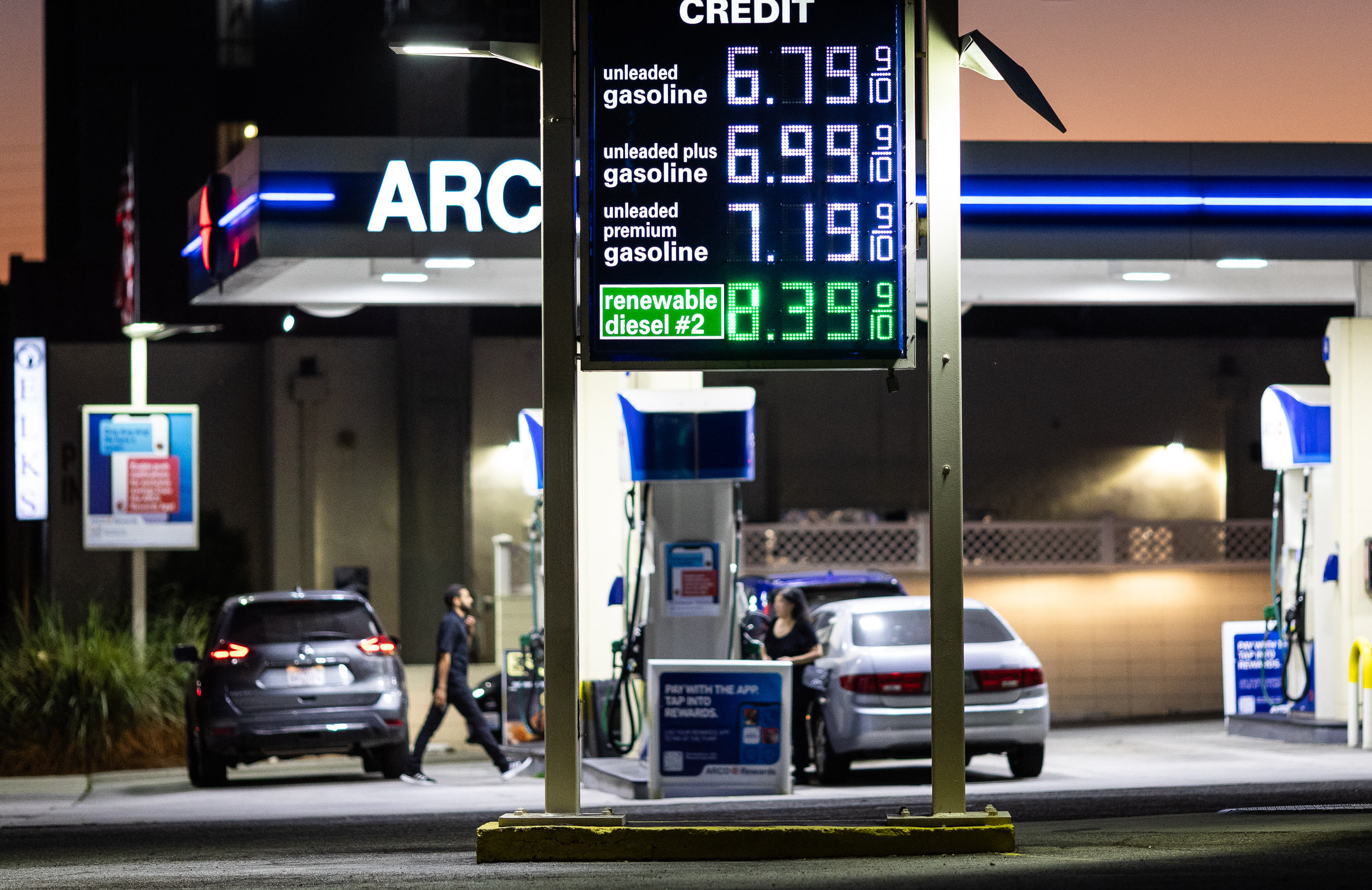
On Friday, the national average regular gasoline price rose slightly from Thursday by around two cents to $4.29 per gallon. California, Hawaii, Washington, Nevada, and Oregon had the most expensive gasoline on Friday. In California, the average price exceeded $6 per gallon.
The lowest prices were in North Carolina, Georgia, Texas, Louisiana, and South Carolina, all below $4 per gallon on Friday.
The Trump administration has taken steps aimed at easing the upward pressure on gasoline and diesel prices.
On Sept. 29, the government offered to lend energy companies up to 40 million barrels from the Strategic Petroleum Reserve. Later, on Oct. 10, the Energy Department announced an emergency release of up to four million barrels of crude oil from the reserve to mitigate supply disruptions caused by Hurricane Isaias.
This month, Trump announced a deal with Russia that would enable Moscow to supply diesel to international markets, including the United States.
Trump also recently announced a new Department of Agriculture program that offers $8 billion to farmers during harvest season amid rising diesel costs. The program will use a formula to offset the increased diesel costs farmers bear.