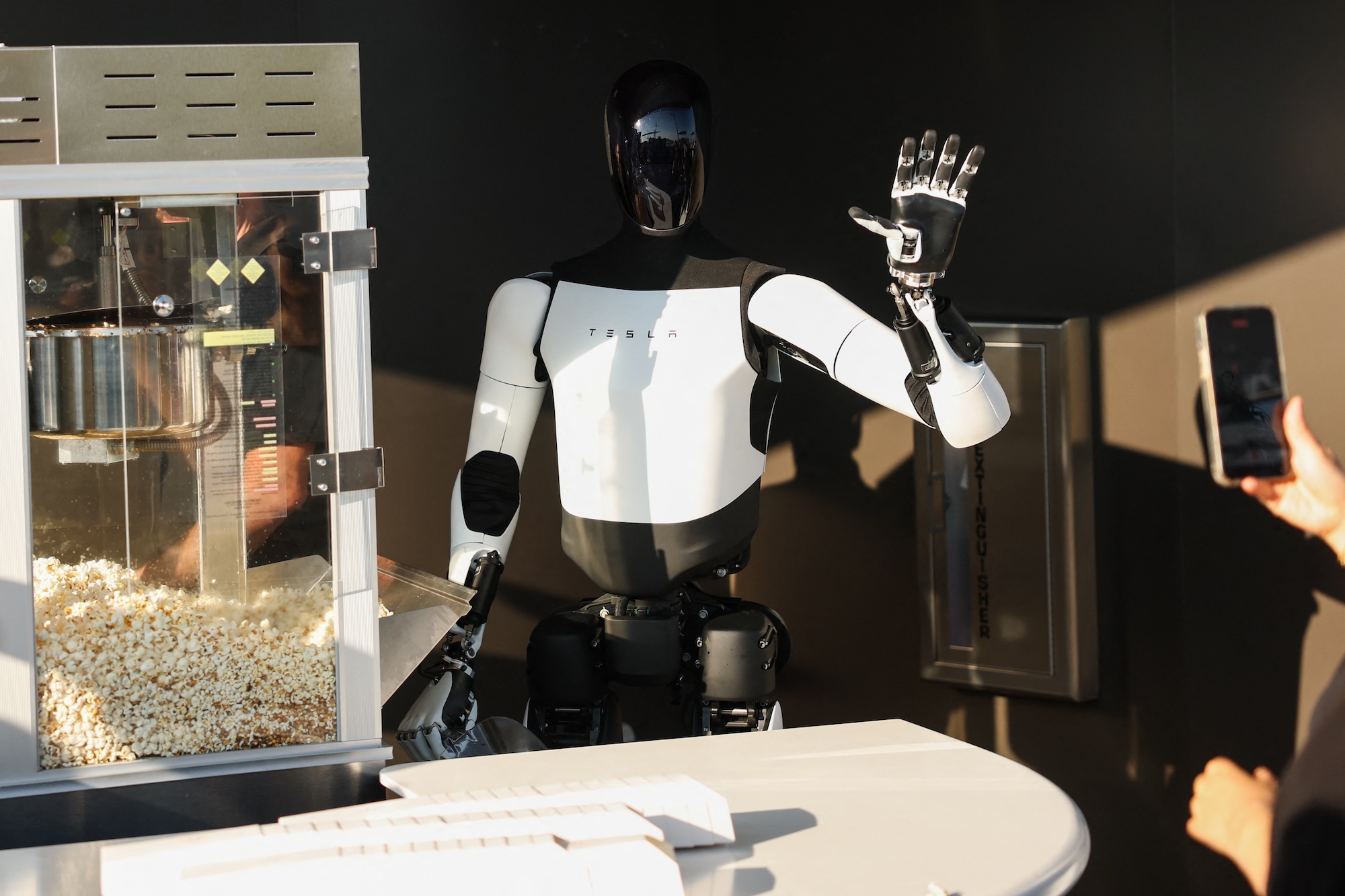
Tesla unveiled its latest “master plan” on Sep. 2, casting artificial intelligence, self-driving technology, and humanoid robots as the future of the company, with CEO Elon Musk saying that the Optimus robot will eventually account for the vast majority of Tesla’s value.
In a post on X, Musk wrote “~80% of Tesla’s value will be Optimus” in response to a user suggesting the plan’s core steps are to scale full self-driving software and robots. The comments highlight Tesla’s growing emphasis on automation at a time when its core electric vehicle business faces slower sales and shrinking margins.
Dubbed “Master Plan Part IV,” the document presents Tesla’s mission as delivering “sustainable abundance,” a vision in which AI-driven tools reshape transport, labor, and energy “at a scale that we have yet to see.”
Describing how it aims to usher in a world “we’ve only just begun to imagine,” Tesla outlined a vision in which autonomous humanoid robots take over boring and dangerous jobs, self-driving cars improve safety and reduce pollution in cities, and solar generation paired with large-scale battery storage makes clean electricity more reliable and affordable.
While the plan is shy on details, Musk said on a recent earnings call that Tesla intends to ramp up production of Optimus to 1 million units annually within five years, with a third prototype expected by the end of 2025. The robot, first introduced in 2021, is designed to handle tasks ranging from factory work to household chores.
“Optimus three is an exquisite design in my opinion,” Musk said. “As I have said many times before, it will be the biggest product ever,” he continued, adding that he believes Tesla is “by far the best in the world at real-world AI.”
On the call, Tesla’s executive team also pointed to its robotaxi fleet, launched in limited form in June, as part of the same push into autonomy. The service remains small in scale, however, with operations restricted to select areas, and Tesla faces legal and regulatory scrutiny over its driver-assistance systems. A U.S. jury in August found the company liable in a crash involving Autopilot and ordered the company to pay $243 million in compensation, underscoring the risks tied to self-driving vehicles.
Tesla’s new plan is the fourth installment in a series of strategy roadmaps that have mixed ambitious goals with marketing punch. The first, in 2006, laid out a straightforward approach of funding cheaper cars with profits from more expensive ones to advance the overarching aim of shifting away from burning hydrocarbons toward “a solar electric economy, which I believe to be the primary, but not exclusive, sustainable solution,” Musk wrote.
A decade later, “Part Deux” promised solar roofs, energy storage, electric trucks and buses, and widespread autonomy. In 2023, Tesla introduced “Master Plan Part 3,” presenting it as a global framework for achieving a sustainable energy economy.
Several of the pledges made in the plans remain unfulfilled. Tesla has all but exited the solar roof business, the Semi truck has been slow to scale up production, and the company abandoned plans for a low-cost EV that was once described as central to its growth. Against that backdrop, the latest plan leans more heavily on robotics and broad language about human progress, with few concrete targets beyond scaling Optimus.
Investors are watching how Tesla reconciles those long-term ambitions with near-term pressures. Automotive sales still account for almost three-quarters of revenue, but deliveries have declined for several quarters, and profit margins have narrowed. The company also faces the loss of some tax incentives under the One Big Beautiful Bill Act. The measure also removes automaker penalties for failing to meet fuel-economy standards—the backbone of Tesla’s lucrative carbon credit business—putting at risk as much as $2 billion in annual revenue that made up nearly 39 percent of net income last year.