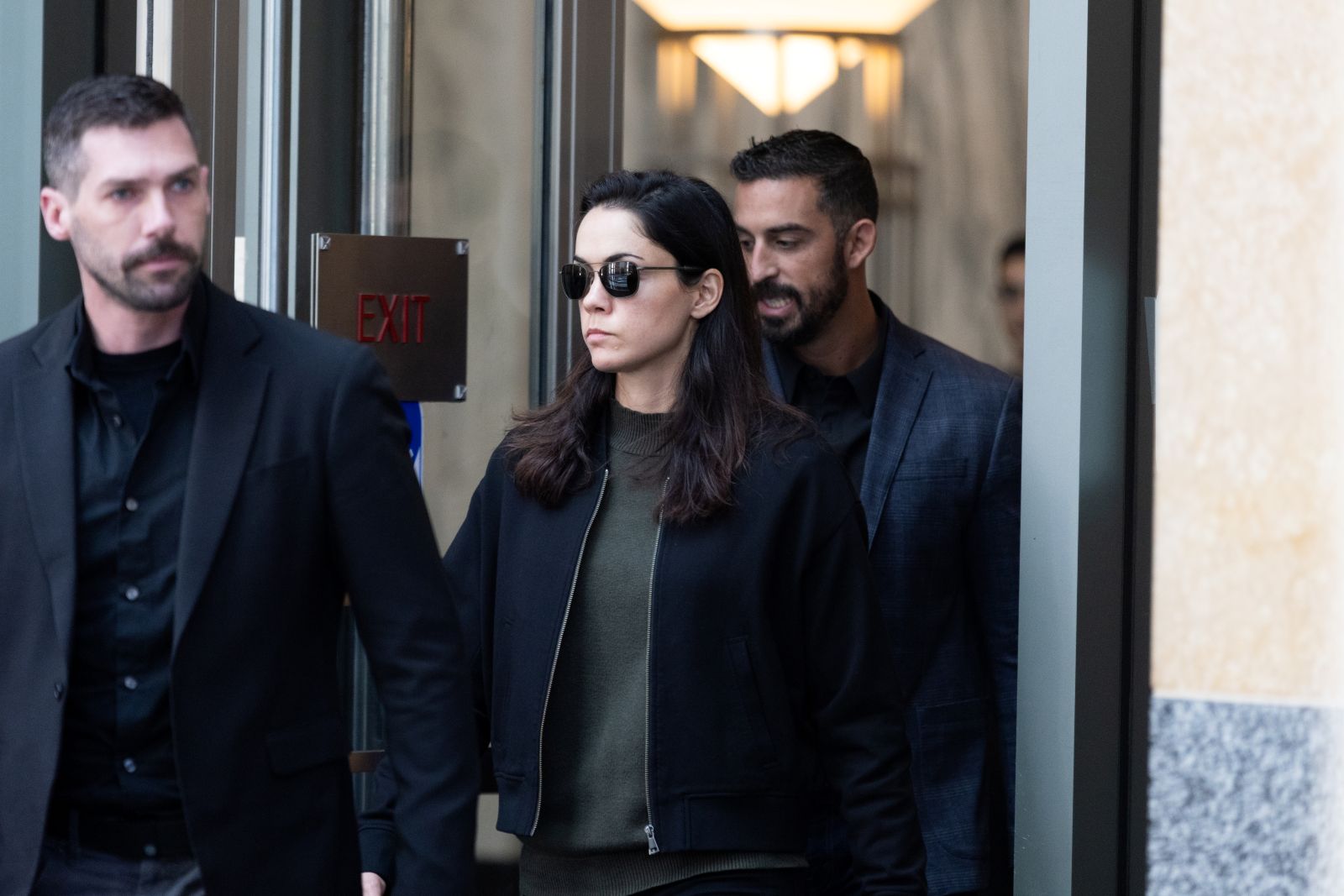
Shivon Zilis, a longtime associate of Tesla CEO Elon Musk and a former board member at OpenAI, took the stand on May 6 in a trial accusing the company’s founders of betraying their philanthropic mission to create artificial intelligence (AI) for the good of all humanity.
Musk, who is also the father of Zilis’s four children, sued cofounders Sam Altman and Greg Brockman in 2024, alleging that they bilked him out of $38 million in donations, then restructured as a for-profit corporation by exclusively licensing their flagship product to Microsoft—betraying a founding mission to operate as an open-source charity that would counter the risks of profit-driven AI.
OpenAI and Microsoft deny the allegations, arguing that Musk abandoned the company in 2018 to start his own for-profit competitor, xAI, when other founders rejected his bid to take full control of the operation.
After working in AI-focused venture capital, Zilis joined OpenAI as an informal adviser in 2016 and served on its nonprofit board from 2020 to 2023.
As a trusted liaison between Musk and the other founders, she was often at the center of intensifying disputes over the company’s future, which came to a head in late 2017 and early 2018.
“There were often tricky topics that maybe wouldn’t land well over text, or they wanted to make super sure they hit [Musk] when he was in a good headspace and had time to think about it,” Zilis said, describing Musk’s work schedule as “maniac mode.”
As she worked for Musk’s Tesla and Neuralink at the time, she had enough access to “pick that moment and had a history of conveying it well to get outcomes.”
Her goal, she said, was “maximum possible achievable alignment between the parties” as they engaged in intensifying discussions about how to fill a crucial funding gap without compromising the company’s mission.
“They were kind of bad at speaking to each other sometimes,” she said.
For both parties, her testimony offers potential insight into a contested timeline of events leading to Musk’s departure and the ensuing legal battle.
‘Inside Source’
Central to Musk’s case is a sweeping and urgent claim about the development of artificial general intelligence (AGI), or the point at which machine intelligence meets or surpasses human cognitive abilities and can operate autonomously, which many experts view as an existential threat to humanity.
He cites the risks of runaway AGI as the express motivation for founding OpenAI—open-sourced to prevent consolidation of power and driven by a commitment to human flourishing rather than profit.
But attorneys say this is contradicted by his previous attempts to fold the company into Tesla, an idea briefly floated and rejected by other founders, and by his efforts to build a closed-source, for-profit AI lab of his own.
OpenAI casts Zilis as a Musk ally who continued to do his bidding from inside the company when things became adversarial, including assisting him with plans to poach employees for his own competing AI venture.
Defense attorneys on May 6 methodically picked through Zilis’s internal communications with Musk and the other founders, highlighting contradictions and attempting to impeach her deposition testimony.
When asked whether it was part of her job to funnel information to Musk while serving on the board, Zilis said, “Certainly not.”
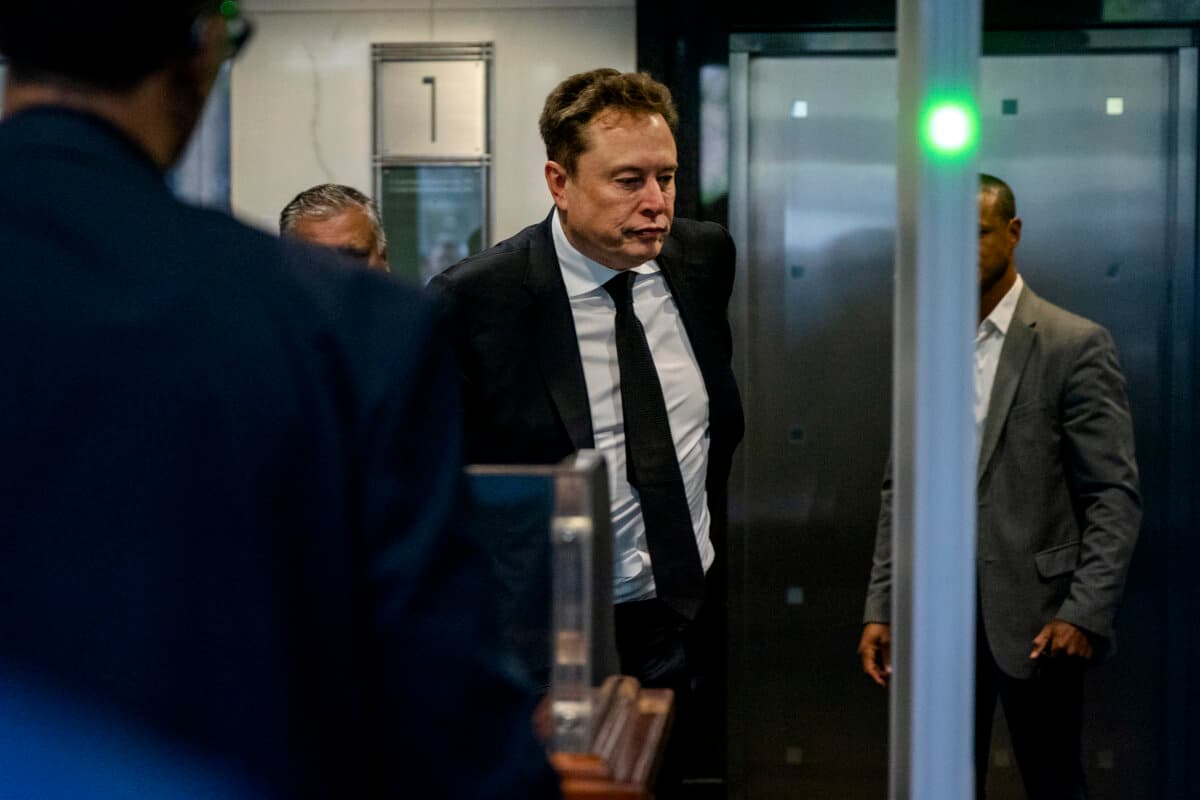
Elon Musk arrives at the federal courthouse as opening statements begin in the trial over Musk's lawsuit against OpenAI in Oakland, Calif., on April 28, 2026. (Karl Mondon/AFP via Getty Images)
Under cross-examination by Sarah Eddy, an attorney for OpenAI, Zilis suggested that there was more nuance to internal documents showing that Musk intended to poach employees after he left OpenAI and started his own competing lab.
When Musk resigned from OpenAI’s board in February 2018, Zilis texted him for guidance.
“Do you prefer I stay close and friendly to OpenAI to keep info flowing or begin to disassociate?” she said.
She also said, “[The] trust game is about to get tricky.”
Musk responded: “Close and friendly, but we are going to actively try to remove three or four people from OpenAI to Tesla. More than that will join over time, but we won’t actively recruit them.”
Zilis explained that her role had been to maintain alignment between Musk and the three other primary cofounders, which included Altman, Brockman, and former chief scientist Ilya Sutskever.
“I was asking whether or not, in his heart of hearts, he wanted to continue,” she said.
“They were kind of going through this weird half breakup, but still meeting, [Musk] was still donating. They were still intending to be friendly. And so I was just trying to see where his head was at.”
Amid a battle over the future structure of the company, Musk stopped $5 million quarterly payments in 2017, but continued paying rent for OpenAI’s offices through 2020.
In a text exchange the day Musk resigned from the board, Zilis suggested that he might be able to get Sutskever to jump to Tesla, while Musk mused that OpenAI would have “little chance” of being a serious force if he decided to focus on a Tesla AGI lab.
“It was an idea on paper,” Zilis told the court. “He didn’t build it.”
Musk’s AI lab, xAI, has been a subsidiary of SpaceX since February. On May 6, Musk announced that it would be dissolved as a separate entity, with all AI products now under SpaceXAI.
Zilis acknowledged that Musk had floated plans as early as 2017 to create an AGI lab in Tesla, saying, “It just never got legs.”
Tesla AI has been focused on “practical applications” such as Autopilot, or self-driving capabilities, and the AI-specific chips needed to build it, while those at OpenAI have been focused on fundamental research and demonstrations of capabilities “they believe were on the path to building AGI,” Zilis said.
Zilis defended the idea, conveyed in exchanges with Sutskever in which she was relaying Musk’s idea for joining OpenAI with Tesla, that the AGI work might be “buried” in the electric car company—in other words, not open-sourced.
“There was a belief held by all four parties that ... there are multiple phases to this whole AGI thing,“ Zilis said. ”In the early phase, it essentially behooves you to make sure you do not ignite an arms race.
“If you believe that AGI is more likely to be bad for humanity than good, it stands to reason you want it to happen as late as possible. And there were a lot of discussions regardless of structure of, ‘How do we not ignite [arms] race conditions?’”
Concerns
Zilis said she became concerned about Altman’s leadership during her time on the board, echoing other former board members who have pointed to safety and management issues. She cited as an example the fact that ChatGPT was released without first informing the board.
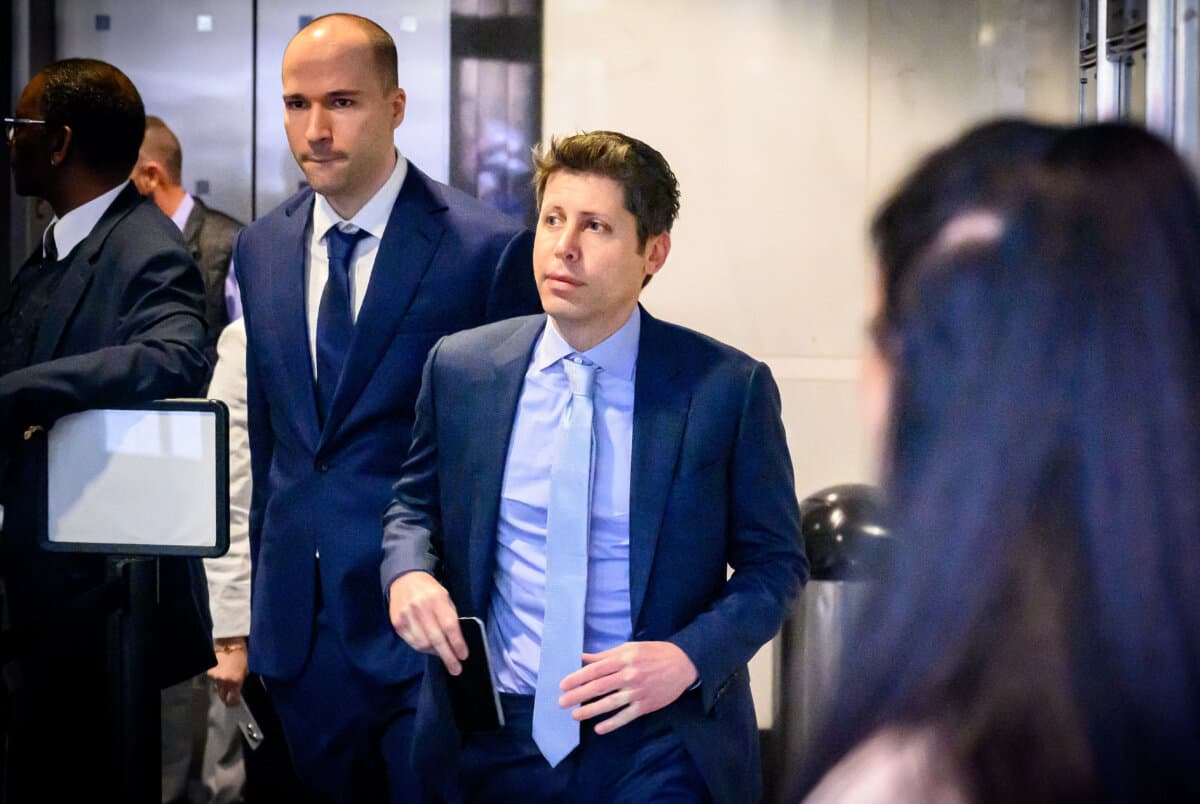
OpenAI CEO Sam Altman (R) and cofounder and President Greg Brockman arrive at the federal courthouse during proceedings in the trial over his lawsuit against OpenAI in Oakland, Calif., on April 30, 2026. (Josh Edelson/AFP via Getty Images)
She also said she was uneasy about a deal with Helion, a nuclear energy company in which both Altman and Brockman have ownership stakes, to be a “massive power provider” for OpenAI.
“I knew there was a lot of excitement about nuclear in general, but that the technology was still speculative and not yet proven or commercialized,” Zilis said.
“It was well understood that as you look to the future, more than people, more than chips, more than software, the bottleneck to building these ever more powerful models was going to be the actual amount of power provided.”
Discussions over the deal, she said, lacked “candor” and “substance.”
Brockman, who has an ownership stake in several companies with which OpenAI has contracted, testified that the Helion deal is a “non-binding” roadmap for future agreements.
Zilis also said she came to share Musk’s concerns that Microsoft’s progressive investments in OpenAI, beginning in 2019, suggested that it had been “captured” by the tech giant.
Defense attorneys said her own voting record suggested otherwise: On the OpenAI board, Zilis approved multibillion-dollar deals with Microsoft in 2021 and 2023.
Relationship With Musk
When questioned in April by the lead counsel for OpenAI about the nature of his relationship with Zilis, Musk first only described her in professional terms; later, he acknowledged that she was the mother of four of his children and that they lived together.
Testifying earlier this week, Brockman said that Zilis has been a friend for more than a decade but that he was unaware of her relationship with Musk until after she gave birth to his twins in 2021, only finding out that he was the father through public reporting.
“She said it was via [in vitro fertilization] and that it was entirely platonic with [Musk],” Brockman said.
Other board members wanted to remove her, but he and Altman voted to let her stay, he said.
“We trusted her to keep the [Musk] conflict under control,” he said.
On the stand on May 6, Zilis described meeting Musk through Brockman and Altman.
“There had been kind of a (romantic) one-off at the offset,” she said. “Then we were friends and eventually colleagues.”
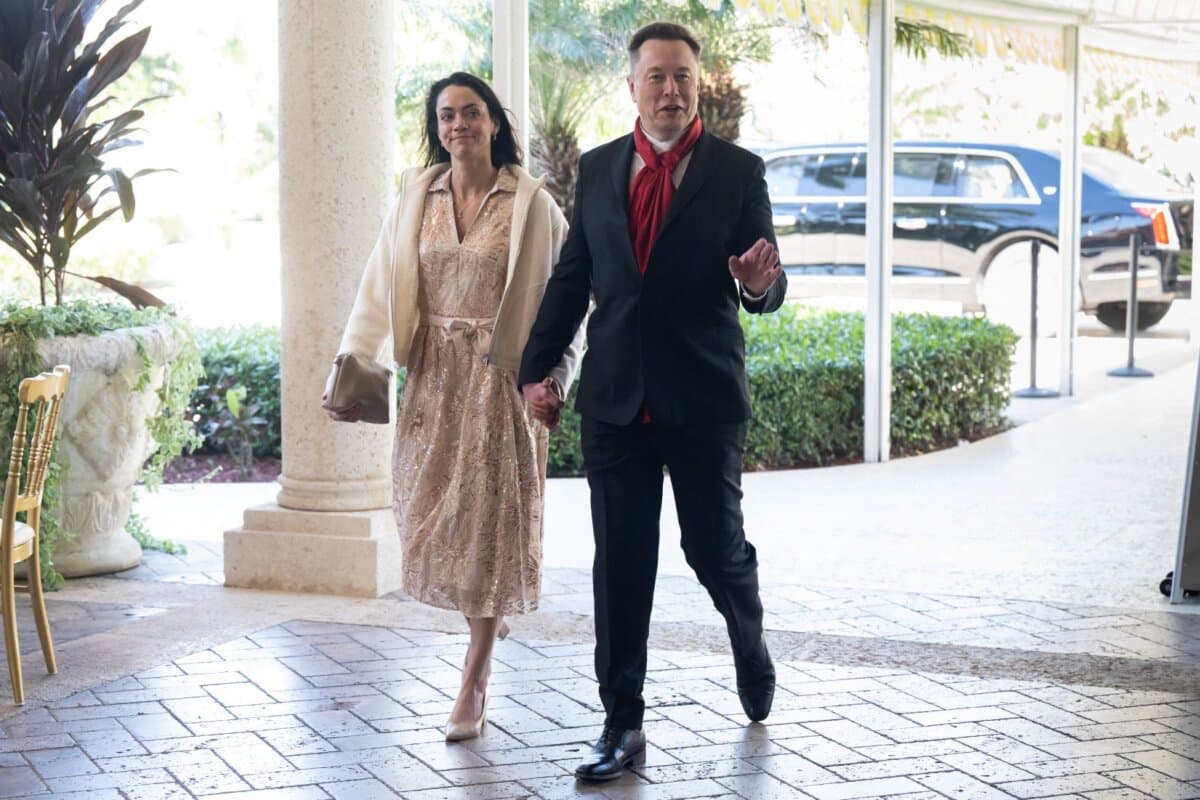
Elon Musk, CEO of Tesla and SpaceX, and Shivon Zilis, a venture capitalist, arrive to attend the wedding of Dan Scavino, White House deputy chief of staff, and Erin Elmore, the Department of State director of art in embassies, at Mar-a-Lago in Palm Beach, Fla., on Feb. 1, 2026. (Saul Loeb/AFP via Getty Images)
She accepted Musk’s offer to donate sperm for an in vitro fertilization pregnancy because health circumstances had interrupted what might have otherwise been a conventional path toward motherhood.
The two agreed on “complete confidentiality” regarding paternity, and she did not disclose it to the OpenAI board.
Then she got a call from an unknown number one morning.
“It was Business Insider saying they had somehow ... gotten sealed court documents illegally that shared the genetic paternity of my children,” she said.
It did not make sense to burden children with the “insane” security risks that come with proximity to Musk, especially if he was just a donor.
Since then, Musk’s role has evolved.
When asked whether he is involved in their lives, she said, “Yeah, he’s their dad.”
Zilis was originally a party in the suit against OpenAI but dropped her claims.
The trial will resume on May 7, with continued testimony from the plaintiffs’ witnesses, including former AI policy researcher Rosie Campbell and professor David Schizer, who will testify about the legal and corporate structure of OpenAI’s conversion from a nonprofit to a for-profit structure.