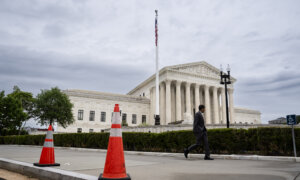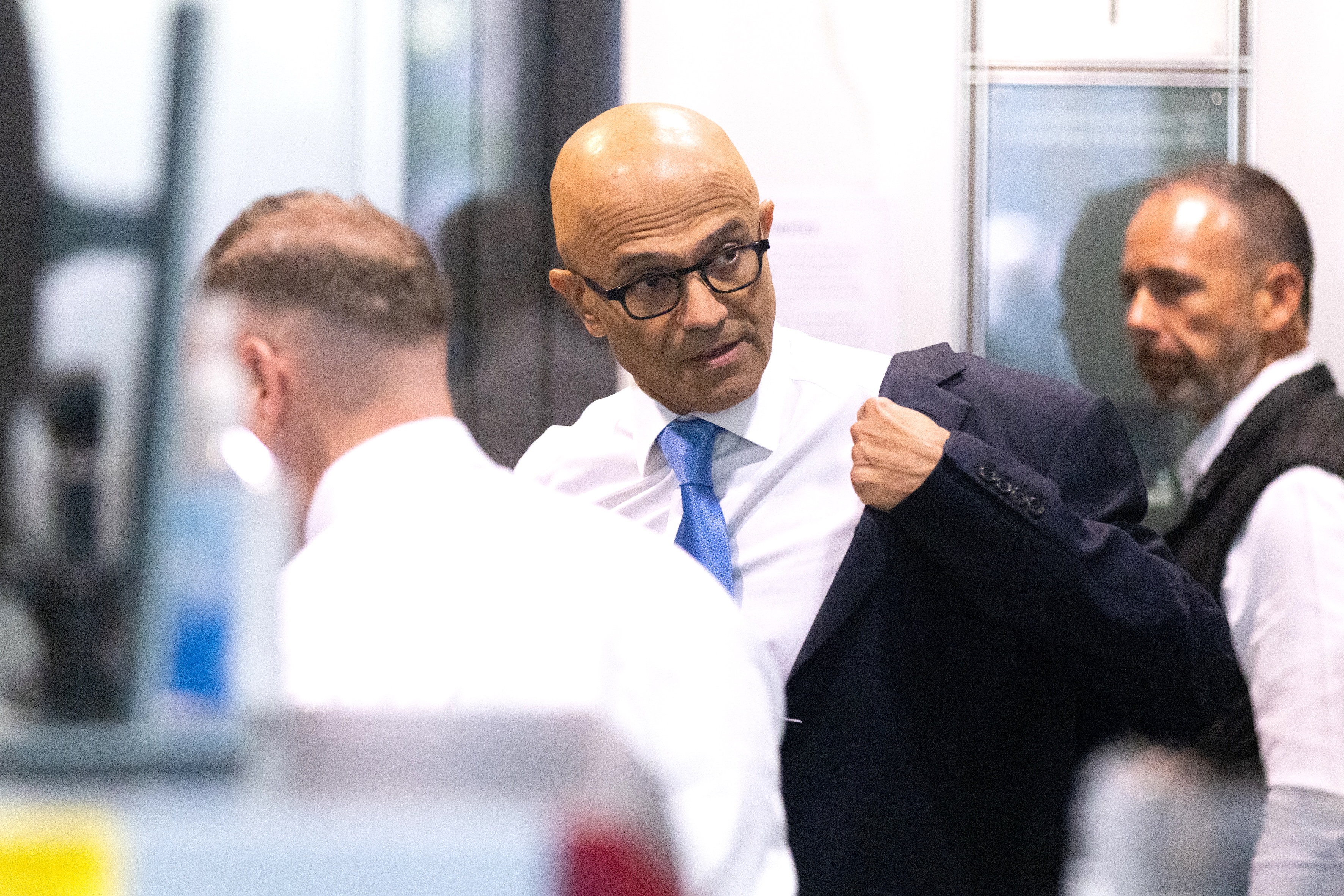
OAKLAND—Microsoft CEO Satya Nadella on Monday told a federal court that his company’s landmark partnership with OpenAI—a total of $13 billion invested in a series of intellectual property licensing agreements since 2019—has helped the embattled artificial intelligence lab further its nonprofit mission.
“I’m very proud of the fact we took the risks when no one else was willing to sponsor this fledging lab that had an idea this particular technology could make a real difference,” Nadella said, pointing to the commercial products, including OpenAI’s ChatGPT and Microsoft’s Copilot, that have been launched as a result.
Nadella took the stand in the third week of a civil jury trial in which Tesla CEO Elon Musk is accusing OpenAI of betraying its founding mission—to operate an open-source, nonprofit lab that would develop artificial intelligence for the benefit of all humanity.
Instead, Musk claims, his co-founders looted the charity, flipped to a for-profit venture, and exclusively licensed the lab’s flagship product to Microsoft.
Musk co-founded OpenAI with Sam Altman, Greg Brockman, and Ilya Sutskever in 2015 and provided $38 million in early funding. The company is now valued at $852 billion, with an initial public offering (IPO) expected later this year.
Both OpenAI and Microsoft deny the allegations, arguing Musk abandoned the company in 2018 to start his own for-profit competitor, xAI, when other founders rejected his bid to take full control of the operation.
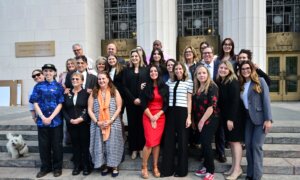
Speaking to reporters after court on Monday, Marc Toberoff, an attorney for Musk, drew attention to what he said is a conflict of interest at the heart of Nadella’s entanglement with OpenAI’s shift to a for-profit venture.
“Satya Nadella took the stand and confirmed that he has a fiduciary duty to maximize profit for Microsoft … At the same time Mr. Nadella confirmed that he was the one to personally vet and approve the [new] board members of the [OpenAI] nonprofit,” Toboroff said, referring to the CEO’s involvement in a messy 2023 governance shakeup at OpenAI that saw Altman ousted and reinstated in a matter of days.
“So here, you have a fully for-profit, giant corporation essentially choosing the board members of the nonprofit that we’re told somehow governs the for-profit.”
Central to Musk’s case is an urgent warning about the development of artificial general intelligence (AGI), or the theoretical point at which machine “intelligence” meets or surpasses human cognitive abilities and can operate autonomously, which many experts view as an existential threat to humanity.
He cites the risks of runaway AGI as the express motivation for founding OpenAI—open-sourced to prevent consolidation of power, and driven by a commitment to human flourishing rather than profit.
In his lawsuit, Musk suggests OpenAI’s values do not align with Microsoft’s, given Nadella’s and Microsoft co-founder Bill Gates’s minimization of his concerns as preemptive “panic”—and that under Altman, safety has taken a backseat to commercialization.
Brett Taylor, current chairman of OpenAI’s nonprofit foundation, testified Monday that the company’s nonprofit and for-profit missions remain the same: to ensure Artificial General Intelligence (AGI) benefits all humanity.
“Our mission is still front-and-center,” Taylor said, but added that the new corporate venture “can attract a broad range of investment, which we think significantly derisks our ability to achieve our mission over time.”
Taylor explained that following a 2025 restructure approved by California and Delaware Attorneys General, the nonprofit board still controls both the foundation and its for-profit public benefit corporation (PBC). This is despite the nonprofit’s minority 26 percent stake in the for-profit corporation, compared to Microsoft’s 27 percent.
The ‘Coup’
Musk alleges Microsoft “methodically entrenched itself” into OpenAI, helping to engineer a 2023 “coup” and seize the company’s board of directors after board members voted to fire Altman and Brockman, both of whom were reinstated just days later.
Nadella said he offered jobs to Altman, Brockman, and any other potentially departing OpenAI employees because employees were planning to quit en masse.
Altman and Brockman were fired on Nov. 17. Internal documents revealed in court show that by Nov. 18, Nadella had Microsoft’s lawyers draw up paperwork for a new company that would house the refugee AI venture.
“I didn’t want them to create a separate company or the employees to get picked off by these recruiters,” Nadella said.
The Microsoft CEO said he couldn’t get a straight answer from OpenAI’s board about the shake-up. Board members cited Altman’s “consistent pattern of lying”—along with concerns about safety protocols and a lack of candor—as key reasons for wanting him gone.
Nadella said he was unconvinced by the board’s statement, suggesting instead that “jealousy” or miscommunication may have played a role.
“It’s sort of ‘amateur city’ as far as I’m concerned,” he said. “I wanted to make sure we helped the OpenAI Board get control of their own employees. I was very concerned [they] were going to leave en masse and that would be very bad for OpenAI and for Microsoft.”
Former OpenAI board member Helen Toner, who was among those to vote to remove Altman in 2023, testified last week that Microsoft was a critical, if indirect, player in the company’s current configuration.
The fact that Microsoft had offered to hire Altman, Brockman, and all other OpenAI employees “changed the calculus for us about what the best way to pursue the nonprofit mission was,” Toner said.
While OpenAI technically had a say about who would be added to the board, she said, Microsoft’s involvement “significantly increased the credibility of employees’ threats that they would leave en masse and give Sam significantly more leverage to demand his own reinstatement to avoid the company falling apart.”
Nadella on Monday acknowledged internal communications in which he vetoed proposed board members and approved others, leading to the ultimate reconstitution of OpenAI’s nonprofit board after members who had fired Altman themselves resigned.
Where former board members had expertise in AI safety and governance, plaintiff’s attorneys charged, Nadella’s picks were simply there to further Microsoft’s financial interests.
“I proposed mostly general business leaders,” Nadella said. “I didn’t think the challenge was safety. The challenge was just thinking about what it means to ensure the board had the rights or maturity to make sure OpenAI doesn’t blow up.”
Taylor, the foundation’s current chairman, said the outgoing board technically appointed the new board.
$92 Billion Return
According to a Microsoft memo to its board of directors in January 2023, the financial terms of its initial agreement with OpenAI gave it a target redemption amount (TRA)—an expected overall return on its $13 billion investment—of $92 billion. This amount was to increase with inflation adjustments and an additional 20 percent annual boost from 2025 until the target was met.
“Not bad,” Steven Molo, attorney for Musk, said of the agreement. He noted that the 20 percent increases, once they kicked in, would have more than doubled the $92 billion in less than four years.
“You should write ‘92,’ or ‘zero’ or ‘negative!’” Nadella shot back, saying Microsoft took risks both in investment and research and development by outsourcing its AI capabilities to a startup, wagering its “scarce resources,” and providing the necessary computing power.
“There was significant capital outlay beyond the specific $13 billion … to support what was going to be the ongoing development of the OpenAI intellectual property,” Nadella said.
Molo also pointed out that OpenAI’s updated 2023 partnership gave Microsoft expanded access to the company’s technology—notably, now inclusive of AGI—as well as exclusive rights to commercialize its intellectual property, and a right to embed 20 engineers across its operations in the first three years.
The result, Nadella acknowledged, was that one in 10 engineers at OpenAI would be Microsoft employees.
OpenAI and Microsoft have lauded their 2023 partnership for making the OpenAI Foundation one of the “best-resourced non-profits in the world.” As a result of the 2025 restructure, which replaced the profit-sharing agreement with direct equity stakes, the nonprofit holds a 26 percent equity stake in the for-profit entity—the value of which now approaches $200 billion, according to recent testimony from OpenAI representatives.
But David Schizer, former dean of Columbia Law School and an expert on tax law and nonprofits who testified for the plaintiff on May 7, questioned the trade-offs.
While partnering with for-profit investors can create equity to attract talent, Schizer said, “you have to be sure the nonprofit’s economic interests are protected. It can’t be structured in a way that the value it’s creating makes other people rich but doesn’t sufficiently fund the nonprofit.”
Under the 2023 agreement, OpenAI needed to make $275 billion to repay all its investors and their TRAs. Of that, the OpenAI Foundation was allocated a TRA of $6.08 billion based on its IP “investment” valued at $60.8 million, Schizer explained.
Per the agreement, even before the annual 20 percent increases post 2025, Schizer said the nonprofit would receive only 2.22 percent of the $275 billion, while Microsoft would receive around 15 times that at $92 billion.
“The nonprofit is only getting about 2.25 percent of that, it just raises questions,” he said. “Is Microsoft’s contribution really [15 times] more important? I mean, if it was, maybe they should have just done this without the nonprofit.”
Moreover, per the 2023 terms, Schizer said, the 20 percent annual increases for investors would come at a loss to the “residual” profits that were to go to the nonprofit after all the TRAs to investors were paid in a liquidity or distribution event, like an IPO of $852 billion.
On the stand Monday, Nadella suggested that Microsoft—as an early, foundational investor—could have expected a bigger equity position if the restructure had not been done as a PBC and rather as a regular company.
But the risks, he said, have paid off in a well-funded nonprofit that is furthering OpenAI’s mission.
“My understanding has always been that the non-profit approved the creation of the for-profit entity so they could continue to pursue the mission,” Nadella said.
Pressed by Molo, Nadella acknowledged he had little idea about the stated focus or the activities of the nonprofit—which include “AI resilience,” life sciences and curing diseases, as well as supporting other nonprofits.
Despite the fact that the OpenAI Foundation until recently had no full-time employees and had made scant charitable grants, Toberoff, the plaintiff’s attorney, told reporters, “Mr. Nadella, like others on the side of OpenAI in this case, keep emphasizing that as a result of their gallant efforts, the OpenAI nonprofit is the most well-funded nonprofit in the world.”
But the new foundation, he said, has little if anything to do with the original mission of the nonprofit that Musk agreed to help create and fund.
“That nonprofit was to develop safe AGI for the good of humanity, not for the personal gain of any person or entity. OpenAI to this day touts that mission, yet this gloriously funded nonprofit is not developing AGI … it does not have any expertise in AI safety or governance,” Toberoff said.
He pointed out that OpenAI’s nonprofit and for-profit boards are composed of the same people who were vetted by Microsoft; all but one nonprofit board member are also voting members of the PBC board.
“We’re told that the board members of the for-profit, whose duty it is to maximize profits, are the same as the nonprofit. So I ask, is the nonprofit really controlling what the for-profit does? Or is it vice versa?” he said.
OpenAI CEO Sam Altman is expected to take the stand by Wednesday.