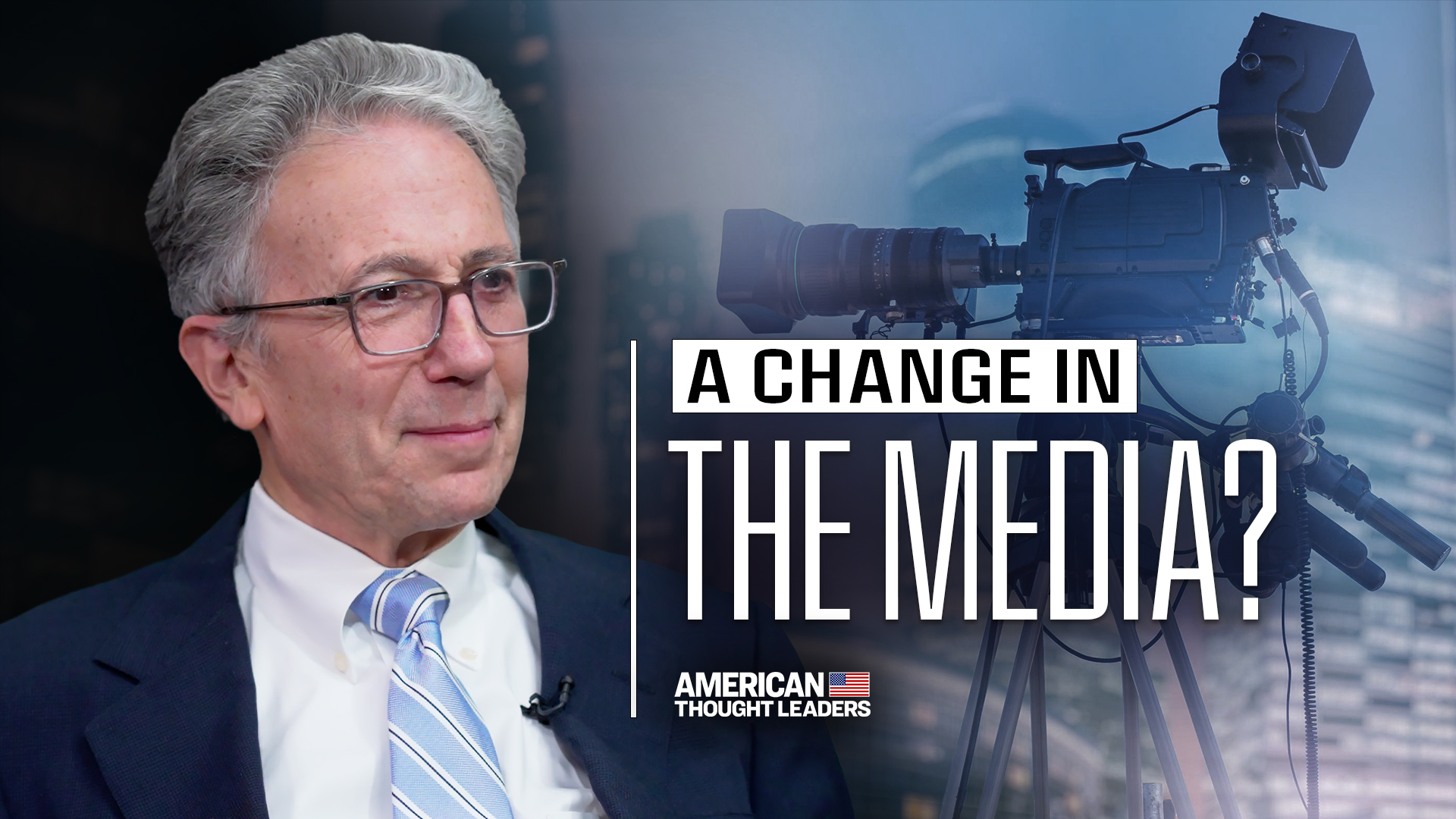

[RUSH TRANSCRIPT BELOW] Michael Pack is a documentary filmmaker and the president of Palladium Pictures. During Donald Trump’s first presidency, he led the U.S. Agency for Global Media (USAGM), which oversees America’s state-funded news networks, including Voice of America.
“The budget is something like $900 million,” he says. “It’s only a mid-sized government agency, but it’s one of the largest broadcasters in the world. They’re broadcasting over 70 languages to hundreds of millions of people a week. So it’s really a potent tool, and it’s designed to promote American ideas and values abroad.”
In this episode, we discuss his recent films, the future of media, and how the U.S. government can better leverage public diplomacy as a tool against its adversaries.
“We could do nothing better, really, than to knock [China’s internet] firewall down. I think if people in China had a chance to hear the range of ideas out there, it would change the country more than almost anything else. And it’s not expensive,” he says.
Views expressed in this video are opinions of the host and the guest, and do not necessarily reflect the views of The Epoch Times.
RUSH TRANSCRIPT
Jan Jekielek:
Michael Pack, such a pleasure to have you back on American Thought Leaders.
Michael Pack:
It’s great to be back. Thank you for having me on, Jan.
Mr. Jekielek:
Last time we spoke on camera over four years ago, you were the head of the U.S. Agency for Global Media [USAGM] in Trump 45, the previous Trump administration. We talked about many things. The big thing we talked about was actually your vision to have USAGM provide balanced information in juxtaposition to what you characterized as a biased news media in America. Has anything changed?
Mr. Pack:
No, and I think that mission is more important than ever. I mean, it’s the core mission of the five broadcasters that are under the umbrella of USAGM; Voice of America, Radio Free Europe, Radio Liberty, Radio Free Asia, Middle East Broadcasting, and Cuba Broadcasting. So it’s all five of them, and they’re a big entity. The budget is something like $900 million. So it’s only a mid-sized government agency, but it’s one of the largest broadcasters in the world.
It’s really a potent tool, and it’s designed to promote American ideas and values abroad. And as you know better than most, Jan, those ideas and values are under attack from China, from Russia, from all of our adversaries. They have a different vision of the world and we should be there explaining our vision of the world. That’s what USAGM is for, and it’s needed now more than ever.
Mr. Jekielek:
I was talking about your criticism of the domestic media in this instance, although you’re absolutely exactly right. But has anything shifted in that realm?
Mr. Pack:
It does seem like, as we go into the second Trump administration, that the media is a little more open-minded about Trump and his ideas. It’s the same group of people, and we'll see. The challenge will be, if something starts to go wrong under the Trump administration, as things always do when you’re president and the world is a complex and dangerous place, how will the media cover that when there is a challenge?
But at the moment, it looks like there might be a change. Meta giving up its biased fact-checking department. You see newspapers that used to endorse a political candidate not doing it now. So there seems to be openness, but we'll see. I have cautious optimism about that.
Mr. Jekielek:
You had a vision for USAGM of promoting American values, and indeed, I think that’s part of its charter. But there are very different visions about what that actually means.
Mr. Pack:
That’s right. Concerning the people running that agency and the individual broadcasters, so far, President Trump has only mentioned Kari Lake for the Voice of America, but they will have a challenge. These organizations become very biased over the years, very anti-Trump, for one thing, but very biased and often sympathetic to the very governments they’re supposed to be critical of. But one recent notorious example is when the VOA, Voice of America, refused to label Hamas a terrorist organization.
For a while, they put the word terrorist in quotes. And then under further pressure, they finally called it a terrorist organization. But this was a time when CNN and MSNBC and the New York Times called Hamas a terrorist organization. This is an instance of the VOA being, loosely speaking, to the left, even of legacy media. That suggests it’s a symptom of a very deep bias. That'll be the job of Kari Lake and others to try to get fixed and hold them.
I was often accused of trying to turn the VOA and these others into Trump TV, but nothing could be further from the truth. I simply wanted to adhere to its charter. The charter of the VOA now applies to all of them, to reflect the views of the administration along with counter views, and to reflect the diversity of views of the American people. If they simply adhere to the charter, they would be a force for tremendous good in the world. To some extent, they are now.
There are heroic journalists in all these organizations, especially working under communist and authoritarian regimes and risking their lives. But they could be a much greater force for good. There’s great potential. I’m hoping that the next Trump team will tap into that potential.
Mr. Jekielek:
Some people, and frankly, on both sides of the spectrum, or even beyond that, would describe USAGM as a propaganda agency. How do you respond to that?
Mr. Pack:
I think that it’s designed to present news in a fair and objective way, but it is true that the Voice of America reporters are paid by the U.S. government, so they’re not exactly like a CNN or New York Times reporter. But I don’t think it’s propaganda. I don’t think that would be useful, and I don’t think that would be fair.
Mr. Jekielek:
There’s a lot of talk about cuts, right? Doge is supposed to cut $2 trillion, right? Is USAGM something that should be on the chopping block, given some of the problems that you just described?
Mr. Pack:
We proposed to consolidate the five broadcasters into one. You could still have brands called Radio for Europe and Radio Liberty, for example. But why have five legal departments, five personnel departments, and five comms departments? So we proposed a consolidation that would save $200 million on the budget. I mean, they surely could do that. And that’s out of a $900 million budget, that’s a significant cut.
It could be made efficient and brought into the modern world and save a lot of money. There is a lot of extra staff. It could be a leaner, meaner organization, so you could save money. But like a lot of organizations, it actually needs to fulfill its mission. If it fails to fulfill its mission, it’s not worth spending a penny on it.
Mr. Jekielek:
One thing that we did talk about last time is the use of firewall circumvention software, most notably in China, where the biggest firewall is.
Mr. Pack:
I think it’s a huge, huge issue and a huge opportunity, really, for the U.S. government. USAGM has a pot of money for internet firewall circumvention technology, and there are similar pots of money in other parts of the government, like the State Department and the Defense Department, but they don’t coordinate, and it’s not enough. To take the China example, and that is the big one, they spend a huge amount of money building up their firewall, and it’s a unified, concerted effort. And the U.S. government should have a unified, concerted effort to circumvent that firewall.
I think it should be beyond USAGM. Even though I think USAGM tries to do a good job in that area, it’s not really the business of journalists and broadcasters to do that. It’s really a technological engineering task. And it should be a sort of all-of-government task. There should be a group put together with representatives from USAGM, but also from other parts of the government. There should be a big, unified budget to do it.
We should start to spend something like the money to get around the firewall that China spends on building it up. That would do a huge amount. We believe here in the United States in the free exchange of ideas and we believe our ideas would win if they are, if people have a chance to hear them. The Chinese government builds the firewall because it knows very well that their ideas would not work if there were really a free exchange of ideas.
So we could do nothing better really than to knock that firewall down. I think if the people in China had a chance to hear the range of ideas out there, it would change the country more than almost anything else. It’s not expensive compared to the military and all the other things we have to fund in relation to China. It’s a really important thing. I would like it to be given priority in the next Trump administration if I had my way, which I don’t.
Mr. Jekielek:
It also strikes me as one of the nicest ways to approach the communist regime in China.
Mr. Pack:
It’s not an act of aggression to say that people should hear lots of viewpoints. It’s not like building up the military or patrolling the South China Seas or anything else. It’s not a hostile act. It is just an act that reflects our view that the world needs a free exchange of ideas and that the best ideas need to be the ones that win, not the ones that are simply sponsored by an authoritarian government.
Mr. Jekielek:
And it would signal the return of the United States to the use of public diplomacy, namely engaging the people of countries as opposed to the regimes.
Mr. Pack:
That’s right. Public diplomacy is way cheaper than military action. So yes, we need to use our soft power better than we have so far.
Mr. Jekielek:
You’ve been a filmmaker for many decades now. You produced the film, Created Equal. This is one of my favorite films of the last 10 years. You’re making a series of short documentaries, most recently The Prime Minister vs. The Blob. Let’s talk about your work as a journalist and a filmmaker.
Mr. Pack:
That’s right. I’ve been making documentaries for many decades. We’ve done over 15 that have been nationally broadcast on PBS. The last one was Created Equal: Clarence Thomas and His Own Words, still available on Amazon for those who want to watch it. Anybody can find any of our films through our current website, https://palladiumpictures.com/ But because of the success of the Clarence Thomas film, we did really well. It was in movie theaters until COVID shut them down. It had a national broadcast on PBS that was very well viewed, and now it’s streaming. It got great reviews, won awards and got a lot of attention.
So we were given the funding to up our game, to produce more and do more. So we started this new company, Palladium Pictures, and it has really three pillars. One is the traditional long-form documentary, like Created Equal, that we’ve been doing for years. But it has two other pillars as well.
One of them is short-form documentaries that we’re doing in collaboration with the Wall Street Journal opinion section to reach a sort of different audience. And those are designed to be about ideas and events that usually from the recent past that have been misreported, underreported, or memory-holed. The first two are now available for free on the Wall Street Journal website, wsj.com, or via our website. The first one is about the worst anti-Semitic race riot in American history in Crown Heights in 1991. I think it has lessons for today about anti-Semitism, which is on the rise.
Mr. Jekielek:
What happened back then? It’s important to know about this.
Mr. Pack:
It was 1991, a hot summer day, and there had already been a little tension between the black community and the Jewish community. Louis Farrakhan was in his heyday. Leonard Jeffries, a CUNY professor chair of their African-American history study department, uncle of Hakeem Jeffries, talked about blacks being sun people, whites being ice people, and Jews being responsible for the slave trade. There was a lot of tension in the air.
This section of Brooklyn, Crown Heights, is where the Chabad community is. It is a Hasidic sect run by, at that time, their very famous Rabbi Schneerson, who was alive and he was very much revered. Every month he went to visit the graves of his wife and his predecessor. Because he was such a famous religious figure he had a police escort.
When he was returning back from that visit, his first two cars of his motorcade went through a light, and the third car, which had his assistants in it, ran either a yellow or a red light, hit another car, careened off that car, hit a pillar, and then ran into two young black children who were playing on the street, hurting one, and eventually the other one died of his wounds. So that caused a riot in the Hasidic community.
He was accused of doing it on purpose, although how you could hit a car and then careen off another pillar and hit somebody on purpose, I don’t know. But it whipped up a frenzy. A guy named Charles Price whipped up the crowd and they went careening through the neighborhood looking for Jews to beat up. Charles Price and a group of others ran into this Hasidic student, Yankel Rosenbaum and said, there’s a Jew, get him. They attacked him and stabbed him. He died of his wounds, and that further inflamed the riot.
It went on for two or three days. Al Sharpton came the next day. There were a lot of riots and a lot of marches and anti-semitic slogans. Houses were trashed. Jewish merchants were terrorized. The police and the mayor really did very little until the mayor and police chief themselves were attacked and then this was into the third day, and then they ended the riot. They turned to their deputy police chief, told him to end it, and he ended it in hours. The issue is, why did it go on so long? Why is the city of New York unable to
stand up to this anti-Semitic violence? What does it say about today? That’s the general thrust of the film.
Mr. Jekielek:
What does it say about today?
Mr. Pack:
It says that if you have a democratic government, they have trouble standing up to violence on the left, period, and especially anti-Semitic violence. I don’t believe the mayor, Mayor Dinkins, was himself even a little bit anti-Semitic. He was the first black mayor of New York. But he just couldn’t stand up to Al Sharpton and others that were whipping up the crowds.
If there had been anti-Semitic violence from the right, if there had been neo-Nazis, no problem for Mayor Dinkins. But I think he just could not stand up to anti-Semitic violence from the left. And you see that, you saw that recently on college campuses, where college presidents, also not anti-Semitic, just couldn’t stand up to defend Jewish students when they’re under attack from what they perceive to be progressive forces defending Hamas. I'll encourage people to watch the film. Indeed, watch the film.
Mr. Jekielek:
Let’s talk about your film, The Prime Minister vs. The Blob, which I had the pleasure of seeing not too long ago. I noticed that you take the idea of taking a balanced approach very seriously.
Mr. Pack:
I’m glad you brought that up, Jan. There are a lot of great progressive, woke, left-of-center filmmakers, and this is in a way a renaissance for documentary filmmaking. There are more of them than ever, and they’re on Hulu and Netflix and Amazon and everywhere. And the quality has gone up over the years. But they all have one point of view. We did a documentary, as you point out, about Clarence Thomas. Another group with a different bias did many documentaries about Ruth Bader Ginsburg, and that’s fine.
But we need both kinds of documentaries out there. So we really need more documentaries, more media period on the sort of conservative, non-woke side. And we want to reach the middle. I think what is out there on our side that is successful tends to be speaking, preaching to the choir, which I think has a use as well. There are the red meat conservative documentaries and that’s fine. I know many of the people that produce them. But we need to reach people in the middle. The way you reach them is by a fair, unbiased presentation of the facts and by telling a good story. So we are careful to do both those things.
In the Crown Heights film, we interviewed Al Sharpton. I tried very hard, and I think I did, to be fair to his point of view. He has a strong point of view, and he has a right to express it. We try to stick to the facts and not engage in character assassination or biased reporting. It is the same thing with the Liz Truss documentary, which you saw at that wonderful screening.
As you know, Liz Truss was the shortest prime minister in British history, 44 days until she resigned, with 49 days total, until the next prime minister came into office. So the issue is, why so short? What happened? The major media story is that she proposed a mini-budget that crashed the pound, and then it was such a financial disaster that she was forced from office. There’s truth to that story, but there’s really way more to it than that.
A lot of the crashing of the pound had to do with her battles with the Bank of England and other forces in the government that were opposed to her Thatcherite, more conservative economic views. We wanted to present the story from multiple points of view. We have a long interview with Liz Truss, but we have a long interview with people also from the Labour Party, conservatives who don’t agree with her, cabinet members who disagree with her on different things. We try to present the story in a straightforward manner so that viewers can make up their own minds.
Mr. Jekielek:
I take a lot of inspiration from your work as well in this area. We have a lot of people that, of course, really love and appreciate our work. But ultimately, it’s really important to try to reach the people that don’t.
Mr. Pack:
Indeed. And I think there are a lot of people out there. In a way, the election indicates that there are lots of people who are instinctively critical of the woke agenda, but don’t really understand why. They know it’s wrong, but they kind of need facts and information. And I think that there’s really a need for people like us at Palladium Pictures and The Epoch Times, and we need many others in this space to present the facts from another point of view, really. And there’s just not enough of us. So I hope that this moment leads to a resurgence of more people joining the work that you and I are both doing, Jan.
Mr. Jekielek:
There’s a third thing that you’re doing at Palladium, which I find very exciting. In fact, I’m going to be recommending one of our filmmakers to apply to your incubator, which has made its first batch of films recently. Please tell us about that. There might be budding filmmakers who are keen to get some support in their work.
Mr. Pack:
Because of what we’ve been talking about, because there’s just a dearth of good documentaries on our side, one of the reasons for it is there are just not enough talented filmmakers. There’s really a shortage. Part of the reason for that is because the left, loosely speaking, has invested huge amounts of money in culture since the 60s. I like to say they spend like tens of billions of dollars in this space. And on the right, we spend tens of millions of dollars, a thousand times less.
They’ve built institutions. They’ve built systems of training. They’ve built an ecosystem for young left-of-center filmmakers, starting in film school. You know, every university in America has a film school. They are consciously woke as a general rule. Often they advertise that they’re going to train
advocacy filmmakers, and they graduate tens of thousands of people every year. Even if only 10% of them have talent and succeed, that’s still a very big talent pool, and we don’t have that.
In order to help start to redress that problem, we have this training program, this incubator program, to sort of develop the talent that we have. The program is not for people right out of film school, but for people who have made a few films. They can go to our website, palladiapictures.com, where there’s an incubator button, and apply.
Every year we accept four or six. We are just now reviewing the second group. But we'll do it every year. And the goal is to teach people to make films that are fact-based, that are designed to reach the center, and that are story-oriented. We are very proud of the first group of four.
This incubator is run by my son Thomas, which I’m proud that he has done. He started it from zero. We pull from people who maybe work at conservative organizations and have done documentaries maybe for think tanks or nonprofits, but they’ve never done their own film. They need to learn how to tell a story, not just make an essay.
Thomas always says documentaries combine journalism and art, and we really work with these people on both of those wings. I’m amazed at how far along all four of them came, and we are very pleased about the group that’s coming this year. I hope that you do send more people to us for next year. And I hope that your listeners, if they know anybody like that, send them to our website to apply.
Mr. Jekielek:
Let’s talk about a couple of the films. The one that has the most prominent is The Bird and the Bee.
Mr. Pack:
Yes. That’s about the censorship of the Babylon Bee, first by Facebook, and then by Twitter until Elon Musk bought it. And it’s a great story. You know, the filmmaker interviewed all the bee people. You know, they’re funny, amusing guys, and it’s a good story. But it’s got a very important theme. They are a satire site and they were banned from Facebook. How does that happen? That’s one of the reasons Elon Musk bought Twitter. I think it’s a great story to tell.
But the film, while each film is important, I think it’s also good that that filmmaker learned better to tell that kind of narrative story. Not a story about free speech, good or bad, or internet censorship, good or bad, but a story. Something that happened to these people at the Babylon Bee that viewers can identify with, even if you don’t like them or agree with them.
Mr. Jekielek:
Seth Dillon often likes to talk about one of their parody articles, which talked about a CNN washing machine that was brainwashing people. This article was actually fact-checked in a serious way.
Mr. Pack:
That’s right. Yes, they fact-checked satire. Seth Dillon is great in this film, mocking Twitter, and rightly so. The other three are great, too, and they’re all on varied topics. One of them is about the first interracial basketball game in American history, which happened in Durham, South Carolina, during World War II.
It’s a great story of these two teams coming together and what happens, and there was fear of the detention. It’s just a great story, and a story about a great black basketball coach that led the black team and who ended up being inducted in the Hall of Fame and is a great character too.
One of them is about a murder in Northern California in Mendocino County. And it’s about tensions between ranchers and drug dealers and hippies up there. And I think it’s a good look at that culture and especially the pressures on the ranchers, which you don’t hear about very much.
Mr. Jekielek:
We recently did a reader’s survey on what should be the highest priorities for this administration. At the top by a significant margin was the question of the border and immigration, which of course the film, Cartels and Cowboys, indeed puts a human face on.
Mr. Pack:
That’s right. Without that, this murder would not have happened in Humboldt County, and it’s only one of many. I think it is a high priority. Let me also just briefly mention the fourth, which I think will be interesting to your viewers as well. It’s about embryonic adoption. Because of IVF, people create multiple embryos, implant some, and the others are then called spares. But if you believe they’re a human, they’re a life, what will you do with them? There are now 1.5 million of them in America.
Mr. Jekielek:
Basically, these are frozen embryos we’re talking about.
Mr. Pack:
Frozen embryos, but they have been fertilized. They’re embryos, they’re not just eggs. If you think they’re alive, as actually I do, what to do about them? You may not like IVF. The Catholic Church, for instance, does not, and now the Southern Baptist Convention also took a negative stand. But these 1.5 million embryos exist and what to do about them? This documentary looks at people who are adopting them.
While it’s very hard to adopt a live human being because of the long waiting list, it’s relatively easy to adopt these frozen embryos and implant them. I think it’s a wonderful thing that these evangelical Christian couples do, and it’s nice to see. This is a great documentary looking at these four couples and their thinking, their tensions, and their difficult moral decisions around these things.
Mr. Jekielek:
Prior to seeing this film, Spares, I had never realized this was a thing you could do. Lots of people don’t know about it, and that’s an amazing thing right there. How did you choose these directors?
Mr. Pack:
My son Thomas runs this program, so I have to give him credit for it. But he went out to solicit people to apply, and he still does that. In our first year we got 65 applicants, of which we chose four. There are two rounds. They have to submit an idea and a CV.
First round is pretty easy, and if we seem interested, there’s a second round where they submit a more detailed treatment and budget. Then we interview them and they pitch the project via Zoom and we talk to them. It has to be an interesting subject. But they have to, we think, have potential to grow as filmmakers and want to grow as filmmakers. And they have to have the capacity to make a film.
They can’t be so young that they’ve never done a film. We’re giving them this money and they’re all over the country. They have to manage the money, manage the budget, manage the process, and complete the film. But they have to be excited to learn this kind of filmmaking.
It’s been an interesting process. In the end, the top ones are relatively easy to pick after you go through the process. You can see who really wants it, who’s thinking about it in a serious documentary way.
Mr. Jekielek:
The film, The Bird and the Bee, about the travails of Babylon Bee, addresses the issue of censorship in America and beyond. How do you think things are going to change with respect to the perception and understanding of censorship and the application, aside from what you mentioned, which is about Facebook having changed?
Mr. Pack:
Seth Dillon and the others make this point that they were bailed out when Elon Musk bought Twitter. But you can’t really rely, as they say, on a benevolent billionaire forever. So I hope things change. It’s a pretty complicated legal question, but these social media companies so overstep that there’s been a reaction to it, and not just in the case of the Babylon Bee.
You and I were talking about the Great Barrington Declaration, and that’s perhaps an even more serious example of this kind of censorship, where actually alternate medical opinions by people from Stanford, Oxford, and Harvard were suppressed by the government, by the actions of the government. There is now public awareness about this problem, and I think there will be change. I’m optimistic that there will be change.
Mr. Jekielek:
I should clarify what I said about Facebook. Mark Zuckerberg promised he’s going to do this and seems to be taking steps to do it. As to what will actually happen, we don’t know yet.
Mr. Pack:
That’s true. I mean, at the end of the day, what are these people really, are they really committed to free speech? I think Elon Musk is really singular in the depths of his commitment to free speech. You do get a feeling that for these others, it’s a transactional moment, but we'll see.
Mr. Jekielek:
Are you seeing some kind of filmmaking renaissance coming that you’re trying to be part of? How do you view that?
Mr. Pack:
I am hopeful about that. There’s an awareness of the failure of traditional media, traditional documentaries, and traditional streaming services. There’s clearly a need and a demand. There’s clearly an audience for these kinds of films. I think people will rise to do it. That’s how free markets work, actually.
As we discussed, I was in the government. I think it’s very hard to fix the government. I salute the efforts of Elon Musk and Vivek Ramaswamy to try to fix it. I think it’s very challenging to reform the government. But actually, documentaries remain a relatively free market.
Anybody could start a streaming service. Anybody could start a production company. We can produce these films. And I think if there were enough films and documentaries that were high enough quality, it would actually change the culture. So I am optimistic about that.
Mr. Jekielek:
Beyond USAGM, what advice do you have for the new leaders that will be confirmed in the near future in the new government?
Mr. Pack:
I would say that this is a moment where we’re heading into the new administration. People are very optimistic. A lot of these people rightly think of themselves as change agents and disruptors and they have a lot of experience, but a lot of them don’t have that much experience with government. I would say it’s a mistake for them to think that this sort of woke bureaucracy is defeated and that they will roll over. It’s a moment where they’re down, but they will regroup and come back.
To take USAGM as just an example, they’ve spent four years Trump-proofing that agency. They’ve done lots of things that will make it hard for the next administration to take any kind of action. They’ve adopted legal changes. They’ve changed the status of the Voice of America director. They’ve changed the status of the board. They’ve passed legislation that now can only be changed by new legislation. These people are very committed to their viewpoint. You know, they’re not easily led, and they will fight back.
I would caution the next team that’s coming in to be prepared for that. Optimism is great and energy is great, but they should be prepared. In a way, sometimes the next move is when the empire strikes back. There’s going to be a counter move.
Now, it’s true that I and those of us from the first Trump administration suffered historic levels of attack. VOA, who never covered the director of the USAGM before, published pieces attacking me personally. Imagine one part of an agency attacking another. It was outright war. Whether it’s going to be that bad this time, I don’t know.
But I think it’s a mistake to write these people off. These people have deep commitments to their views, deep commitments to their way of structuring their organizations. It’s going to be a battle, and the incoming people should be prepared for a battle.
Mr. Jekielek:
What lessons have you gained from producing The Prime Minister vs.The Blob?
Mr. Pack:
One of the things that was really interesting to me about that is I knew a lot about the battles with the administrative state here in the U.S. You and I have talked just now about my own battles in the first Trump administration. But the Liz Truss documentary made clear that it’s not an American problem. It’s a problem all across the West.
It’s because the elites are all the same. They go to the same colleges. They’re schooled in the same ideas. They’re essentially the same class of people. I think the Liz Truss documentary is a good response to people who think, well, the reason Donald Trump had so much opposition in his first administration was because he’s such an odd guy. He’s on social media all the time. He’s full of all these weird expressions. He’s an out-of-the-box guy. If he were just a more mild person, he wouldn’t have faced those oppositions.
Liz Truss is not like Donald Trump in those ways. She had been in government for10 years. She had had senior positions under several prime ministers. She’s got a much more mild personality than Donald Trump, I think it’s fair to say. to both of them. But it didn’t matter.
She suffered the same opposition because the blob did not agree with her ideas on economics, on the environment, on trans rights, on whatever.
And it didn’t matter what her personality was. It’s a battle of ideas. It’s not really a battle of personality. And it’s a battle across the West.
Mr. Jekielek:
I really enjoyed speaking with you, Michael. A final thought as we finish?
Mr. Pack:
The big themes that we’ve talked about are important, that it’s very important to encourage new kinds of media that can speak to the people, for instance, who voted for Donald Trump or the people who are uncommitted in the middle of the country, a process that both the Epoch Times, Palladium Pictures, and a few others are involved in doing. But I hope more join that process in the months to come.
Mr. Jekielek:
Michael Pack, it’s such a pleasure to have you on the show.
Mr. Pack:
Thank you very much, Jan. Pleasure to be on.