
After federal prosecutors charged a Chinese man for registering to vote and casting a ballot under his former landlord’s name, experts are questioning Massachusetts’ verification processes.
Yupeng Sun, a Chinese national living in Andover, allegedly submitted an online voter registration in the name of his former landlord, who was not a U.S. citizen, on Oct. 10, 2024.
Massachusetts regulations—which took effect in June 2023—require applicants using the state’s online voter registration system to have reliable citizenship information documented in their motor vehicle records before they submit an application online.
If that citizenship documentation is missing, the regulation states that the applicant “shall be unable to submit an online application.”
“How did Sun manage to successfully, allegedly, impersonate a green card holder?” Logan Churchwell, research director at the Public Interest Legal Foundation, told The Epoch Times.
“Based on the regulation, a system functioning according to the letter should’ve halted the impersonation at the outset.
“Massachusetts seems to have everything it needs in place to verify citizenship, but there could be malfunctioning parts needing fixes.”
The Massachusetts Secretary of the Commonwealth’s Office has not explained how the application was able to proceed under that requirement.
Prosecutors allege that Sun used his former landlord J.L.’s real name; date of birth; former Malden, Massachusetts, address; and Massachusetts driver’s license number to register online.
J.L., a Chinese citizen and lawful permanent resident, was not eligible to vote.
The Massachusetts Secretary of the Commonwealth’s Office did not respond to questions about what citizenship information was contained in J.L.’s registry record, how an online application submitted in his identity was able to proceed under the regulation, or whether the state has reviewed the process since learning of the case.
Three weeks after registering, prosecutors allege, Sun went to Malden City Hall, identified himself as J.L., received an early ballot for the presidential election, and signed J.L.’s name on the ballot envelope.
Malden City Clerk Carol Ann Desiderio previously told The Epoch Times that the ballot was processed and counted in the final certified vote. The city had identified no problem with J.L.’s registration or ballot before federal investigators contacted it.
Don Palmer, a former chairman of the U.S. Election Assistance Commission and former state elections director who is now a senior legal fellow at the Heritage Foundation, said election administrators should verify both identity and citizenship before placing an applicant on the voter rolls.
“There needs to be a mechanism to confirm the eligibility of applicants under state and federal law, and you should not simply rely on the assertion of the applicant,” Palmer told The Epoch Times.
Palmer called the allegation that one noncitizen used another noncitizen’s identity to register and cast a ballot an example of inadequate citizenship verification.
He said online registration systems should use existing government records and technology to confirm both identity and eligibility.
“States need to use existing technology and databases available to them to assist in confirming eligibility of voters; otherwise, these failures will continue to hurt voter confidence,” Palmer said.
Charles Stewart III, an MIT political scientist who studies election administration, said the allegations involve unusually extensive identity theft and that determined impersonators can evade many identity safeguards.
Boston Records
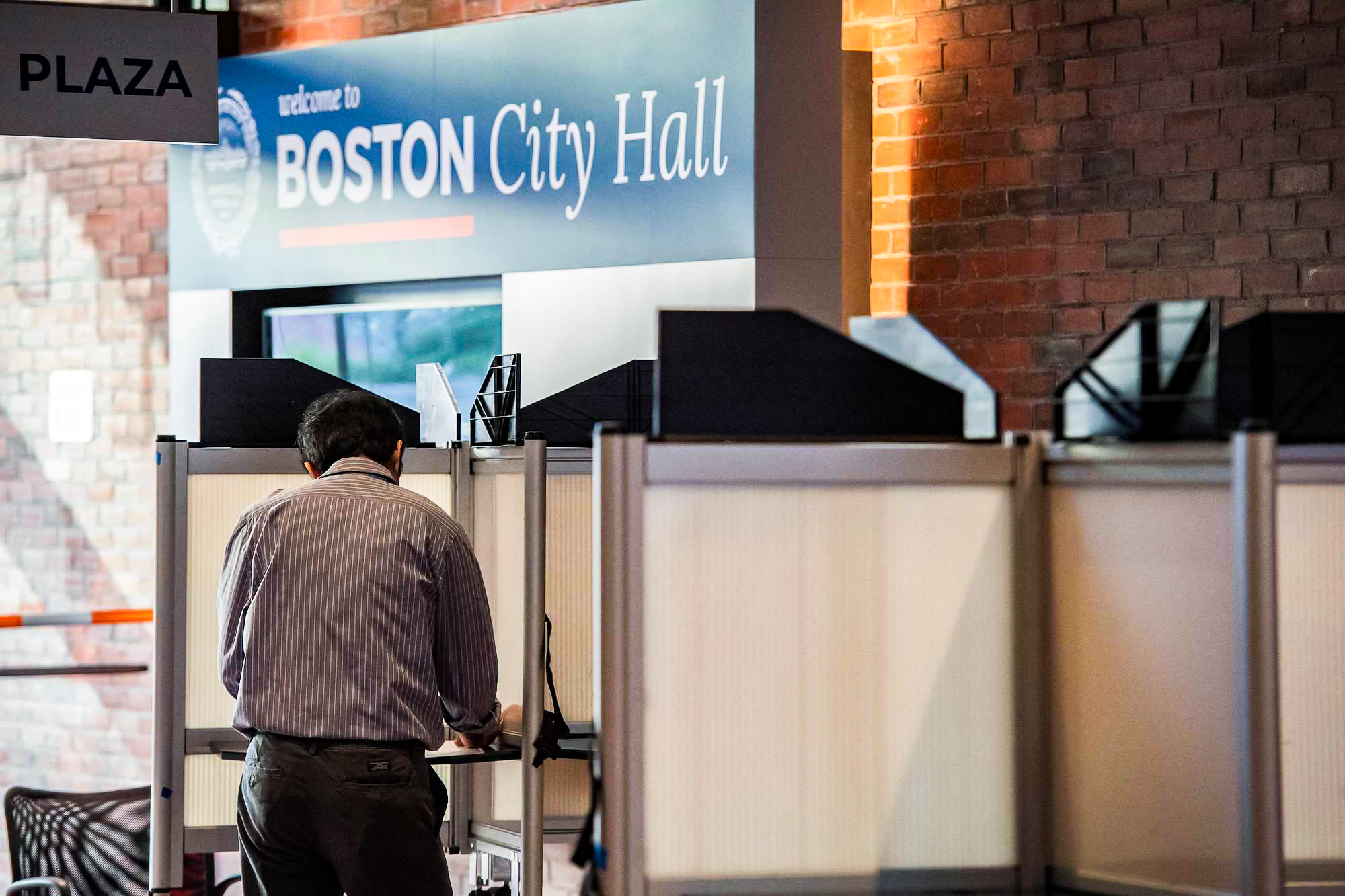
The Public Interest Legal Foundation separately provided The Epoch Times with a spreadsheet it compiled from voter records obtained from the City of Boston.
The catalog contains 70 voter registrations that had been canceled because of noncitizenship.
Of those, 22 are marked “Yes” in a column showing whether at least one vote was recorded in the registrant’s name. Sixteen are marked “No,” while 32 don’t have a yes-or-no entry.
In one case, the spreadsheet notes that Boston believed that a vote credit may have been mistakenly assigned to the registrant instead of his wife.
Several entries state that noncitizenship was discovered through Boston’s annual resident listing. Others identify the Registry of Motor Vehicles as the source of the original voter registration.
The City of Boston did not respond to questions about how the 70 registrations were identified or whether the individuals associated with the 22 voting histories were noncitizens when those votes were recorded.
The city’s public-records office acknowledged The Epoch Times’ request for the underlying records and stated that it would work to respond within 10 business days.