News Analysis
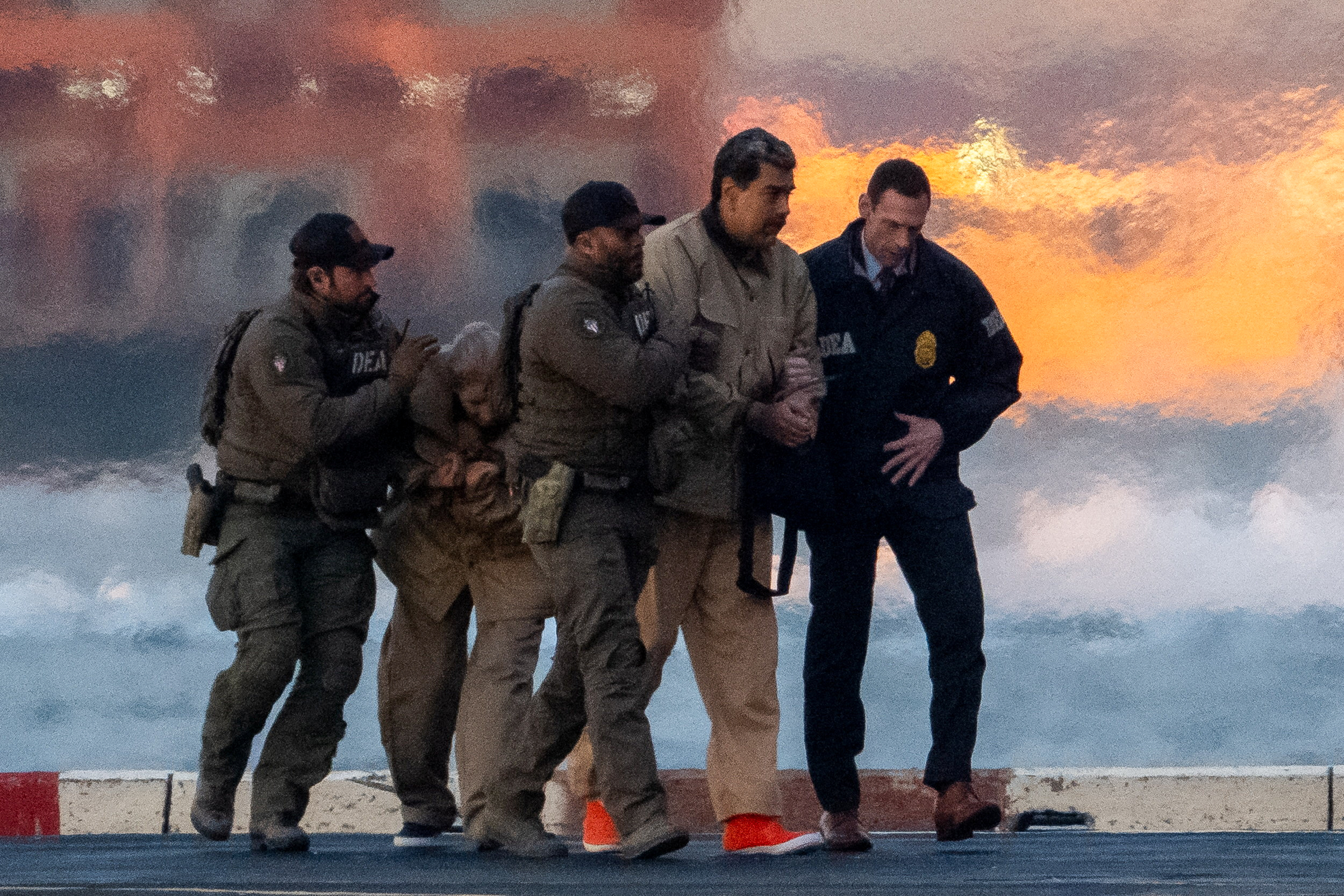
The U.S. operation that captured Venezuelan leader Nicolás Maduro and transported him to New York to face drug trafficking charges earlier this month has triggered a surge of debate among analysts and netizens in Taiwan and China over whether Washington has established a new precedent for dealing with authoritarian leaders.
Within days of the Jan. 3 military strike ordered by U.S. President Donald Trump, Chinese social media lit up with comparisons between Venezuela and China since both are authoritarian regimes.
Trump acted swiftly to define the limits of the operation. In a Jan. 8 interview with The New York Times, he dismissed comparisons between Venezuela and other geopolitical hotspots, such as Taiwan. He said that Venezuela represented a “real threat“ to America, reiterating that Maduro’s regime enabled criminals and drug trafficking to flow into the United States.
The U.S. president also suggested that Taiwan does not present a similar direct threat to China, implying Beijing has no valid reason for military intervention against the self-governing island. Some Taiwanese analysts viewed his remarks as both reassurance and warning, indicating that Beijing should not expect U.S. restraint during the Trump administration.
A Chilling Effect on Authoritarian Leaders
Some analysts say the successful capture of Maduro has produced a chilling effect among authoritarian regimes, particularly in China, heightening anxieties about personal vulnerability at the highest levels of power.
John J. Tkacik, a former U.S. diplomat who served in both Taipei and Beijing, wrote in a column published by the Taiwan-based newspaper Liberty Times on Jan. 11 that Washington’s aggressive approach toward the Maduro regime runs deeper than concerns about narcoterrorism and illegal immigration.
“The core issue,” Tkacik wrote, “is Maduro’s close alignment with the Chinese Communist Party (CCP),” according to a translation of the original article.
Tkacik now directs the Future Asia Project at the U.S.-based think tank International Assessment and Strategy Center.
By comparison, he noted, drug trafficking challenges in Colombia and Mexico are more severe, yet have not prompted similar U.S. action.
Some observers say the argument is resonating in Beijing, where the Maduro operation is being closely watched.
Soleimani-Style Warnings
Bill Gertz, a veteran national security correspondant for The Washington Times,
said on X last month that if China were to launch a military attack on Taiwan, a “Soleimani drone strike”—referring to the 2020 U.S. killing of Iranian General Qassem Soleimani—could be replicated in Beijing, potentially targeting the CCP’s top Politburo standing committee members as well as Chinese leader Xi Jinping.
Tony Hu, a former Department of Defense official, recently told Taiwan-based SET News that the United States has the technical capability to carry out such an operation. He cited both the Soleimani strike and the Maduro raid as evidence of the United States’ operational reach.
“The capability is not in question,” Hu said. “The only question is whether the United States would choose to do it.”
Yu Tsung-chi, former president of Taiwan’s National Defense University’s Political Warfare College, shared that perspective. He recently told The Epoch Times that a Chinese military attack on Taiwan could trigger a devastating response from the Trump administration.
Yu stated that the Maduro operation clearly indicates that the United States maintains overwhelming military superiority and has the ability to detain authoritarian leaders if deemed necessary.

People walk by a mural depicting slain Iranian general Qasem Soleimani (L) alongside Venezuelan leader Hugo Chávez (R), in Caracas, Venezuela, on Jan. 4, 2023. (Federico Parra/AFP via Getty Images)
Risks of the ‘Decapitation’ Strategy
Other scholars urge caution.
Cheng Chin-mo, an associate professor of diplomacy at Tamkang University in Taiwan, said that a leadership “decapitation” is rarely a primary military objective, particularly when it risks escalation or even nuclear confrontation.
“It is difficult to imagine this kind of operation occurring between two major nuclear powers,” Cheng told The Epoch Times. While the United States moved swiftly to stabilize Venezuela after Maduro’s capture—seeking cooperation with remnants of the old regime to avoid civil war—such restraint would be far harder to guarantee in a conflict with China, he said.
Rather than direct strikes on Beijing’s leadership, Cheng said Washington is more likely to pursue long-term containment through technological, economic, and financial pressure—aimed at weakening the regime or bringing about internal collapse, akin to the Soviet Union’s gradual implosion.
Strategic Messaging and Information Warfare
Why, then, talk about the possibility of targeting Xi at all? Hu, the former Defense Department official, suggested that Gertz’s remarks about a “Soleimani drone strike” on Chinese officials were unlikely to be spontaneous.
“Someone wanted that message out,” he said, describing Gertz as a long-standing conduit for Pentagon perspectives.
The timing coincides with renewed scrutiny of the U.S. National Defense Authorization Act for fiscal year 2026, which calls for expanded U.S.–Taiwan joint military planning, particularly in unmanned systems and counter-drone operations.
Yu says these moves reflect a broader shift in U.S. strategy—from defensive deterrence to more overtly offensive signaling—and points to China’s recent military exercises that included simulated blockades and missile drills encircling Taiwan.
“In Beijing’s case,” Yu said, “the highest level of deterrence is one aimed directly at Xi Jinping himself.”
Zhongnanhai Disappears
Adding to the intrigue, Chinese netizens recently noticed that searches for “Zhongnanhai” on several Chinese map platforms returned no results or redirected users to unrelated locations. Online commentators mocked the move as evidence of official panic, joking that Beijing had erased its own power center from the map.
Zhongnanhai is a compound in Beijing that serves as a residence for the CCP officials and houses various offices for the Party’s top leadership.
Some Chinese netizens—despite heavy censorship—openly expressed hope that U.S. forces might one day capture Xi. Satirical posts referencing pop songs were removed from some Chinese platforms because they made jokes about Xi’s possible capture.
Yu rejected the notion that obscuring Zhongnanhai on maps could prevent U.S. intelligence from collecting information. “Civilian satellites can be blocked,” he said, “but not reconnaissance satellites. Whatever the United States needs to know, it already knows.”
Cheng offered a different interpretation, saying that the CCP’s concern is less about an actual strike and more about losing its grip on power. He said that allowing public discussion of leadership vulnerability undermines the psychological control that authoritarian systems rely on.
“That reaction itself exposes the fragility of a dictatorship,” he said.
Some of the experts above say that, whether intended as deterrence, psychological signaling, or domestic political theater, Maduro’s capture sends a clear message across the Taiwan Strait: sovereign immunity can no longer be taken for granted.
Fei Zhen contributed to this report.