
WASHINGTON—A law that shields tech companies from litigation over content on their platforms has drawn criticism for years. Now, pressure to lift it is mounting on Capitol Hill.
A Feb. 4 press conference raised concerns regarding Section 230 of the Communications Decency Act, which allows social media platforms and other tech firms to avoid lawsuits for third-party content that they host.
Actor Joseph Gordon-Levitt spoke at the event and highlighted Americans’ widespread distrust of Big Tech.
“One of the only things that the American public seems to agree broadly on right now—left, right, and center—Republicans, Democrats, Independents—we all agree that we don’t trust these Big Tech businesses, and we don’t like the influence they’re having on our lives and the lives of our kids,” he said.
Gordon-Levitt spoke alongside Sen. Dick Durbin (D-Ill.); former House Majority Leader Dick Gephardt, a Democrat; South Carolina state Rep. Brandon Guffey, a Republican; and advocates including the parent survivors of children whose suffering they linked to social media.
Those parents included Kristin Bride, whose 16-year-old son committed suicide after he was cyberbullied on an app hosted by Snapchat.
“It’s essential that tech companies are held accountable for the safety of their products,” Bride said.
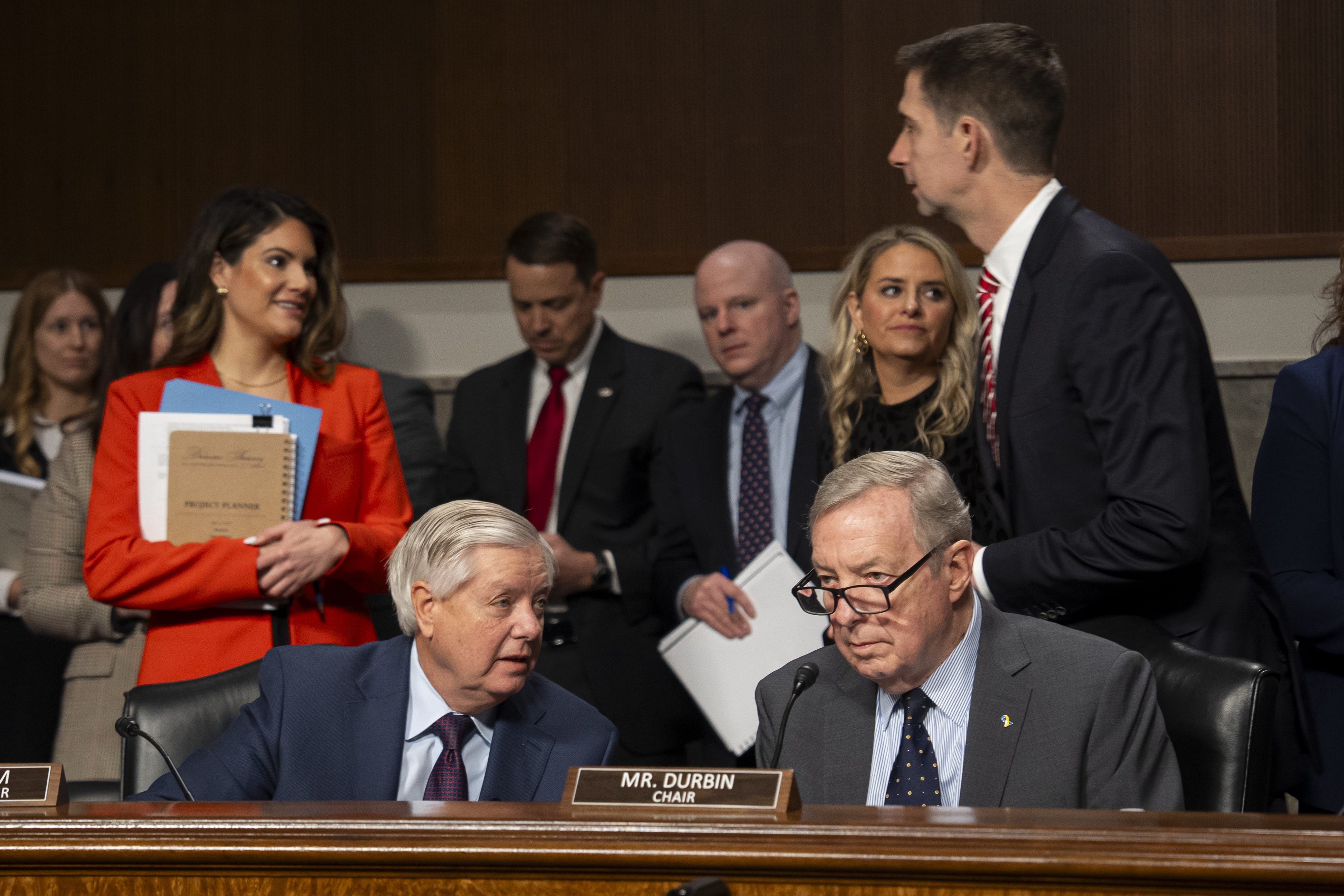
In December 2025, Durbin and Sen. Lindsey Graham (R-S.C.) introduced a bill that would end Section 230 immunity two years after its enactment.
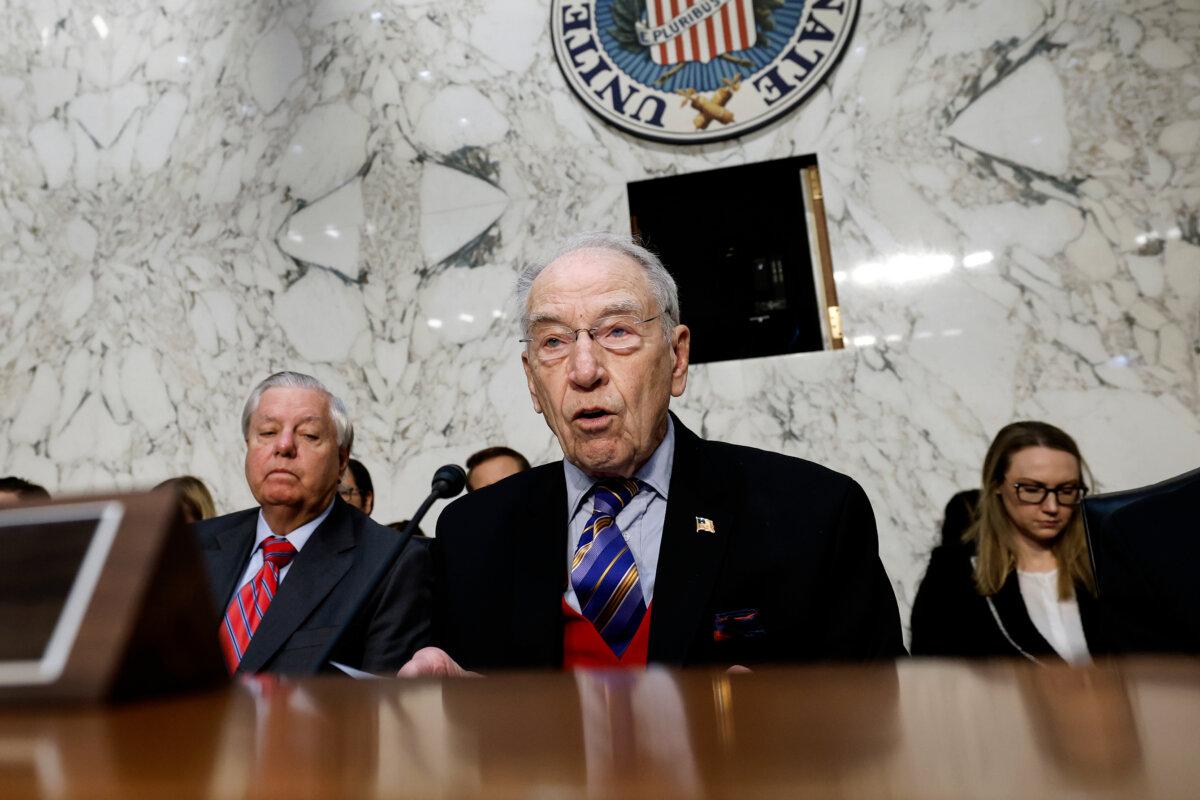
Senate Judiciary Committee Chairman Chuck Grassley (R-Iowa) speaks in Washington on Jan. 30, 2025. (Anna Moneymaker/Getty Images)
The legislation is cosponsored by other senators from both parties on the Senate Judiciary Committee, which would play a key role in any push to change Section 230. Durbin is the committee’s ranking member. Judiciary Chair Chuck Grassley (R-Iowa) is another cosponsor.
“I want to see this thing pass 100–0,” Gordon-Levitt said.
Dani Pinter of the National Center on Sexual Exploitation (NCOSE), a speaker at the press conference, told The Epoch Times that the legislation’s sunset provision would help lawmakers resist Big Tech’s lobbying pressure on the issue.
“This cuts through all of that—says, 230 is going to be gone, whether you like it or not, in two years, and so let’s get something done that’s meaningful,” she said.
The press conference’s speakers also included Sarah O’Quinn of the Center for Countering Digital Hate, a group that has warned of “conspiracy theories, misinformation, hate speech,” and other content enabled by Section 230.
Americans of different political persuasions may disagree about what conspiracy theories, misinformation, and hate speech really are, as well as whether and when they should be restricted.
Pinter of NCOSE, a nonpartisan group, suggested the bill’s sunset provision would give lawmakers time to come to a solution on that issue and others that might be accepted on both sides of the aisle.
“We have two years to figure this out,” she said.
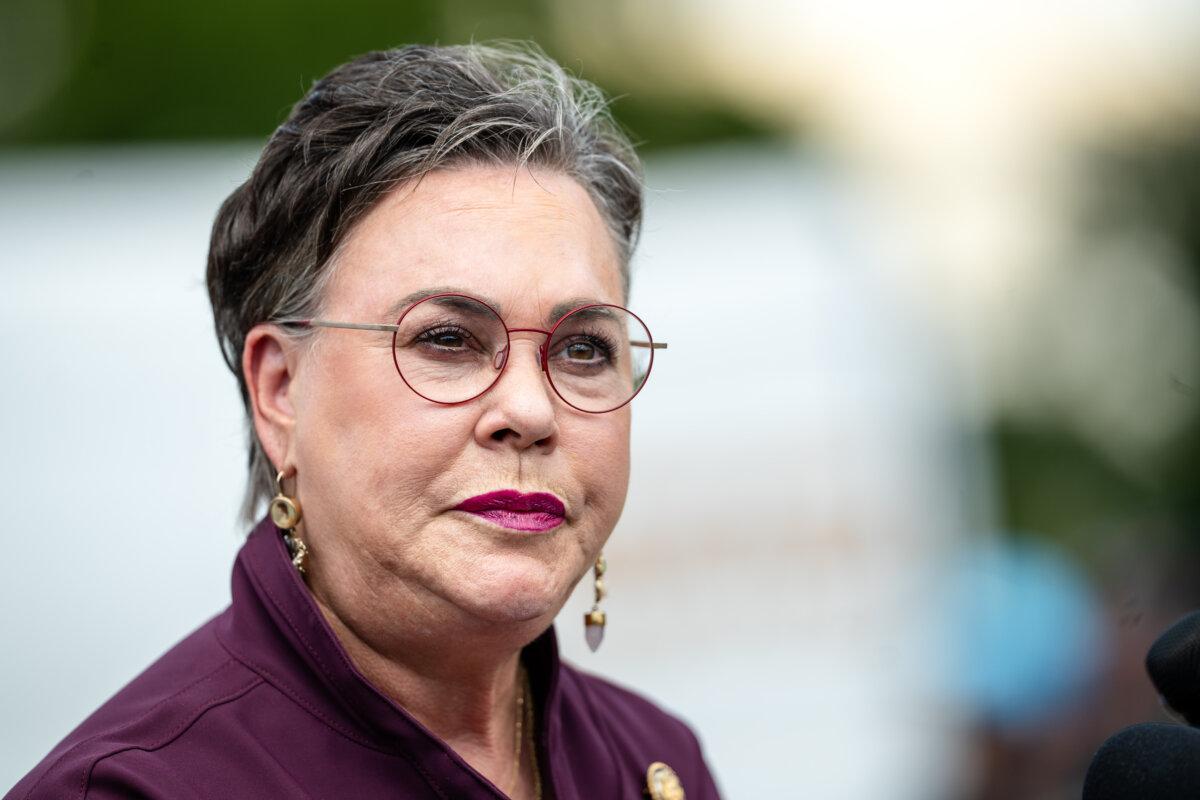
Republican Study Committee Article One Task Force Chair Rep. Harriet Hageman (R-Wyo.) at the House Triangle on Capitol Hill in Washington on Sept. 2, 2025. (Madalina Kilroy/The Epoch Times)
For now, the Durbin and Graham bill is in the Senate’s commerce committee. A similar bill in the House from Rep. Harriet Hageman (R-Wyo.) that would end Section 230 at the end of December 2026 was referred to that chamber’s equivalent committee.
Sen. Josh Hawley (R-Mo.), a cosponsor of the Senate bill, told The Epoch Times he hopes to see committee action on the legislation as well as wider Senate action on the STOP CSAM Act, which passed the Senate Judiciary Committee with unanimous support in December 2025.
Sen. Sheldon Whitehouse (D-R.I.), another cosponsor, told The Epoch Times that the cosponsorship of Grassley means the bill is in “a very, very good place to be.”
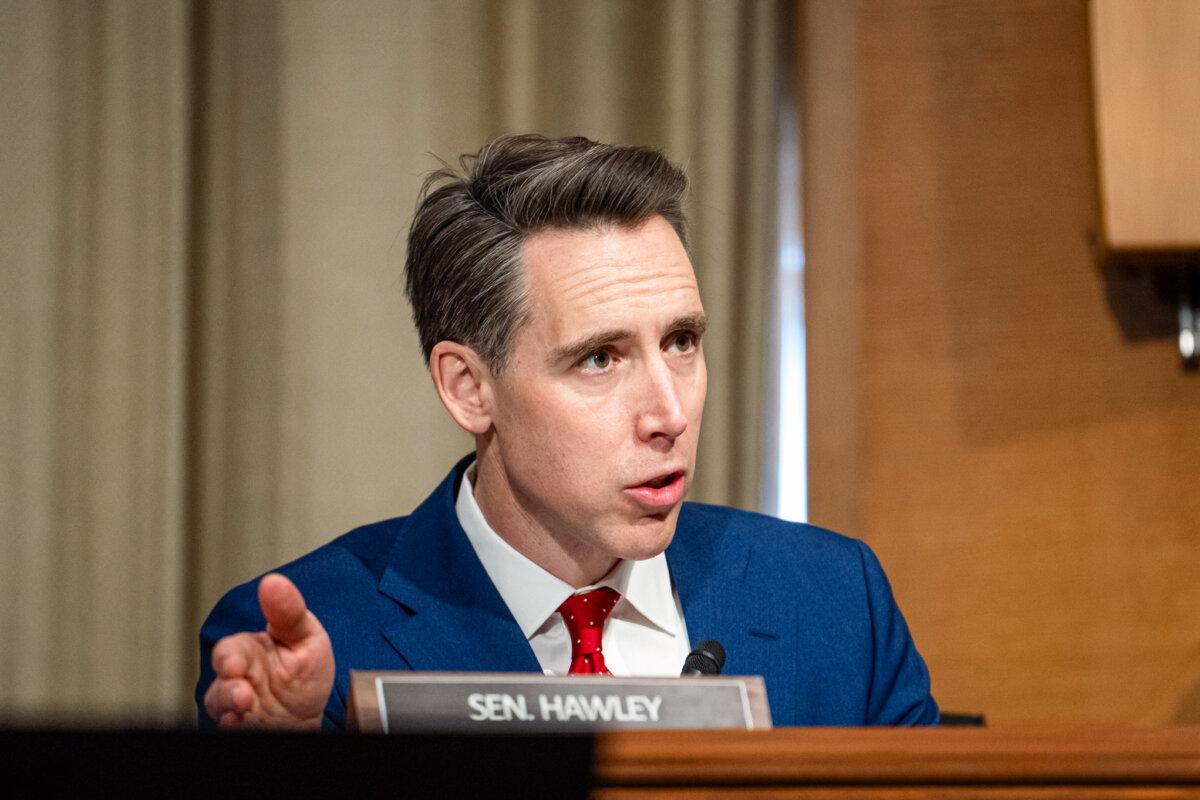
Sen. Josh Hawley (R-Mo.) speaks on Capitol Hill in Washington on Feb. 13, 2025. (Madalina Vasiliu/The Epoch Times)
“I think it sometimes takes a while for a big pot to come to a boil, and I think the pot that has come to a boil is how fed up both sides of the aisle are with the lack of accountability of some of these platforms,” he said.
Correction: A previous version of this article misstated Sen. Dick Durbin’s (D-Ill.) party affiliation. The Epoch Times regrets the error.