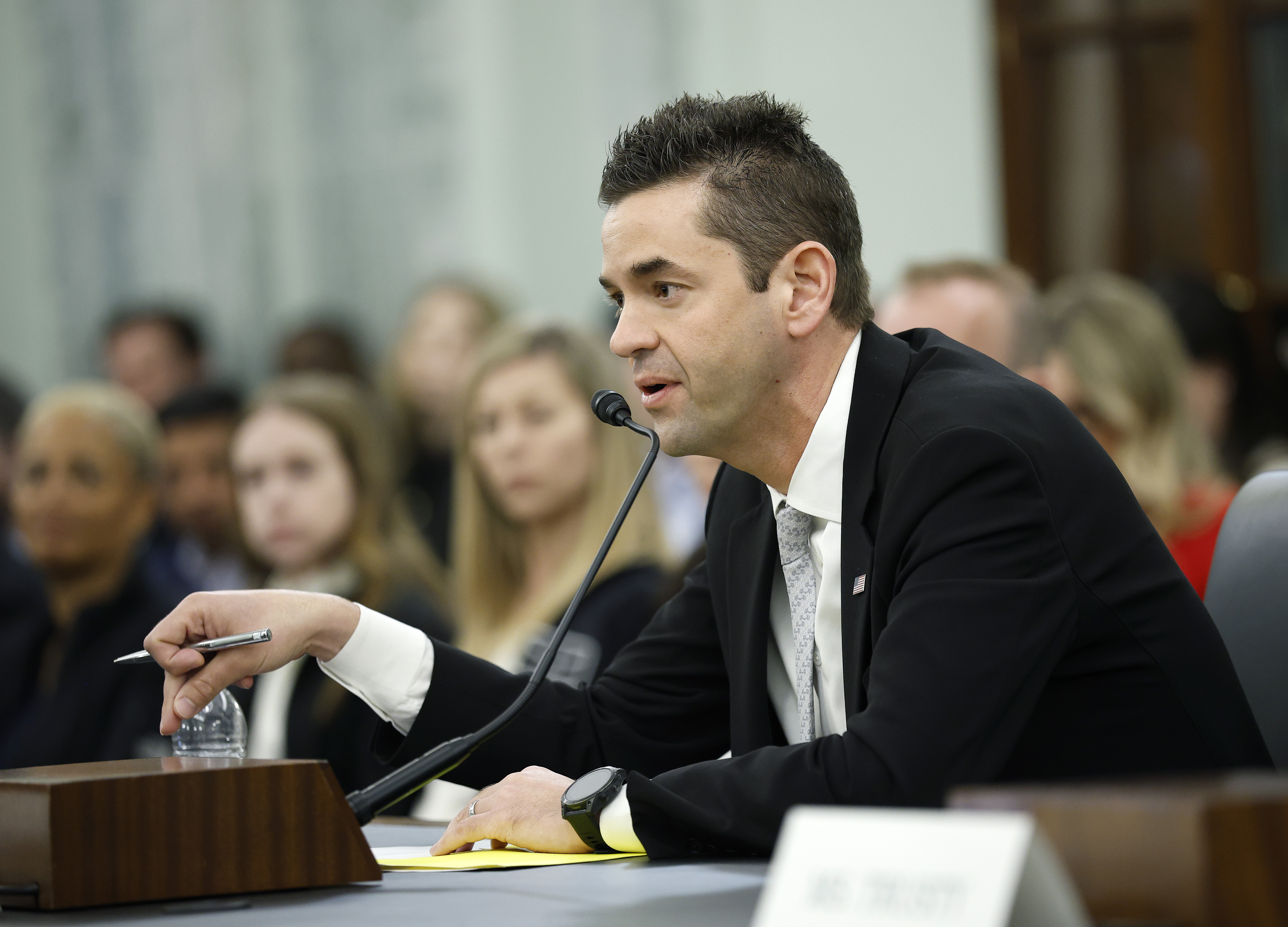
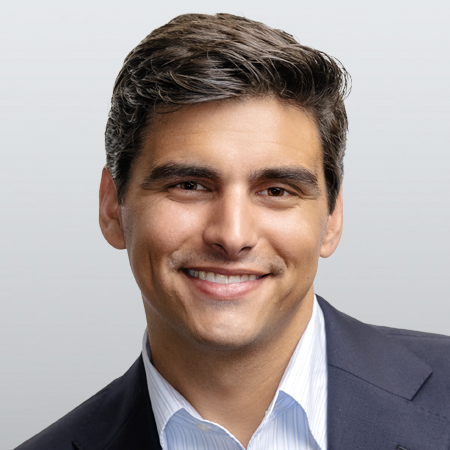
Jared Isaacman on Dec. 3 resumed his bid to become NASA’s next administrator, stating he would lead with urgency as the agency returns humans to the Moon before communist China and retains supremacy in low Earth orbit.
“I know it’s not lost on anyone in this room that we are in a great competition with a rival that has the will and the means to challenge American exceptionalism across multiple domains, including in the high ground of space,” Isaacman told the Senate Committee on Commerce, Science, and Transportation.
“This is not the time for delay, but a time for action.”
Isaacman arrived on Capitol Hill with dozens of support letters, including one signed by 36 astronauts, following several months of progress at NASA under acting administrator Sean Duffy.
Here are the key takeaways.
Mission-Focused Urgency
If approved by the Senate, Isaacman would assume leadership of a space agency on the verge of several deadlines under pressure from the Chinese Communist Party, which has ambitions to land on the Moon by 2030.
Congress has ordered the establishment of a continuous human presence on or around the Moon by 2028.
Artemis II, the first manned mission to fly around the moon since 1972, is slated for launch in early 2026. Funds provided in the One Big Beautiful Bill Act provide for at least Artemis V—the fourth manned mission to the Moon—and the establishment of the Gateway space station in lunar orbit.
The International Space Station is set to be decommissioned by 2030, and while several spacefaring companies—such as VAST—work to have their own stations in orbit ahead of that date, committee members expressed concerns about losing ground to China and its Tiangong space station.
“We will never accept a gap in capabilities again, not with our space station presence in low Earth orbit or our ability to send American astronauts to the Moon,” he said.
“We will strive to build an orbital and lunar economy that can fund the future we all want to see in space someday and not rely exclusively on the taxpayer.”
Empowering Private Competition
Isaacman said by the time Artemis V comes and goes, private companies like SpaceX and Blue Origin would have already developed the capabilities needed for NASA to “have numerous options available to us to have routine and affordable missions to the lunar surface.”
As for low Earth orbit, Isaacman’s sense of urgency lay in maximizing what the space agency could still get out of the aging orbiting laboratory to open what he called an orbital economy to trigger action from the private sector.
In either arena, he said, helping to fuel urgent development would foster competition.
“I think that competition is fantastic,” he said. ”I think the best thing for SpaceX is a Blue Origin right on their heels, and vice versa.”
He also assured the committee members that this push to sustain a lunar presence would result in the critical components needed to win the next race beyond the Moon to Mars, including reusable heavy-lift launch capabilities like the SpaceX Starship, and nuclear propulsion.
Nuclear Development
Isaacman expressed his support for NASA’s development of nuclear propulsion and surface power capabilities.
“I think NASA should be evolving to work on grand—almost mini-Manhattan-Project—nuclear programs that have the benefit for surface power applications, especially when you’re out of sunlight, or you’re undertaking discovery missions, let’s say past Mars, for example, or even actually on the surface of Mars for manufacturing propellant,” he said.
Duffy disclosed in early August that NASA’s lunar base would be powered by nuclear fission.
‘Project Athena’ Addressed
Isaacman also faced questions about a leaked document called Project Athena, which he described as “a draft document” based on his interactions with NASA leadership, senators, and their staff, containing thoughts on the agency’s direction.
Sen. Andy Kim (D-N.J.) asked him about suggestions presented in the 62-page document, including the possible reduction of thousands of civil servant positions, taking NASA out of taxpayer-funded climate science, and reevaluation of a sustained lunar presence.
Isaacman said that the document was created more than six months ago and that he intended to update it with new information. Now, he said, there was “overwhelming clarity” from the administration regarding establishing a sustained lunar presence.
“I certainly do stand behind the idea that if anyone’s going into a position of great responsibility, it’s better to go in with the plan than none at all,” he said.
Sen. Ed Markey (D-Mass.) questioned Isaacman about paying Musk’s spacefaring company an undisclosed amount of money for his two trips to orbit.
“My relationship with Mr. Musk is the fact that I led two missions to space and SpaceX, because it’s the only organization that can send astronauts to and from space since the shuttle was retired,” Isaacman said.
“And in that respect, my relationship is no different than that of NASA.”
Sen. Gary Peters (D-Mich.) noted that Isaacman donated approximately $2 million to Trump’s Super PAC after losing the nomination.
The political donation, he said, came about as he was considering a political career.
Trump previously nominated Issacman but withdrew the nomination in late May, “after a thorough review of prior associations,” the president wrote in a post on Truth Social confirming the withdrawal.
Obedience to Congress
Kim’s concerns about Project Athena, especially the reconsideration of a sustained lunar presence, were based on the apparent contradiction to mandates passed by Congress that Isaacman now said he supported.
Those mandates included establishing a human presence on or around the Moon.
Isaacman’s suggestion to cut jobs and start relying on the private sector to collect data also appeared as the lawmakers faced requests from President Donald Trump to cut NASA’s science funding by 50 percent in his 2026 budget request.
Markey alleged that the leaked document was Isaacman’s proposed plan to benefit Musk, saying it “would strip NASA for parts and instead transfer taxpayer funds directly to the bank accounts of Starlink and SpaceX.”
Isaacman assured all of the senators present that he would work to “maximize the scientific value of every dollar that Congress supports the agency,” and follow the laws passed by Congress.