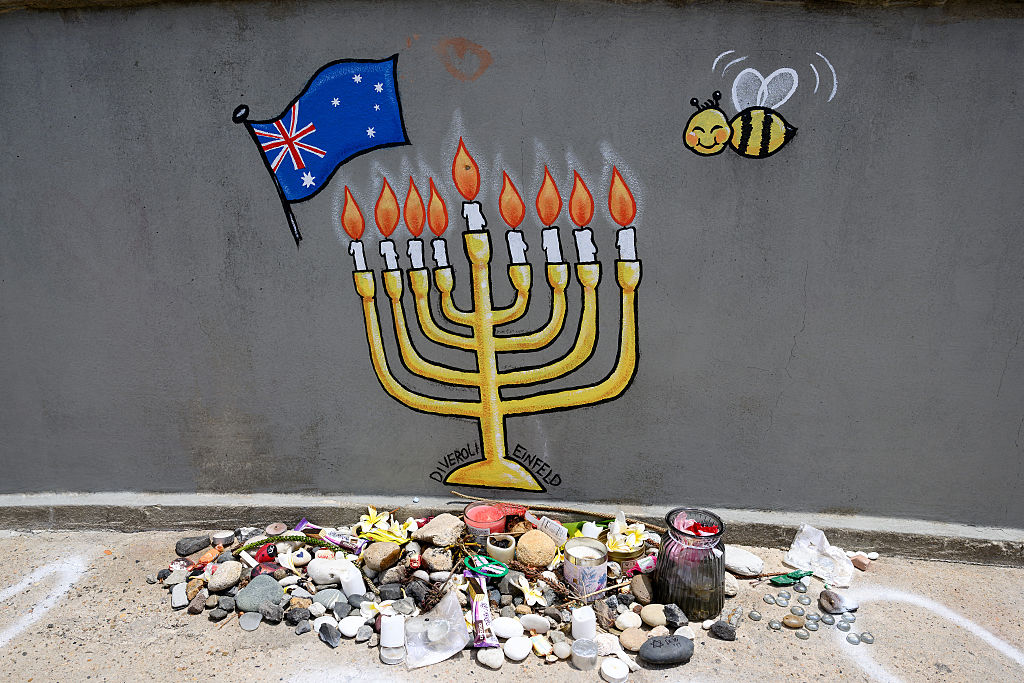


For many, Australia conjures up images of quiet suburbs, beaches, and safety, while the U.S. is perceived as the epicentre of violence and mass shootings—but new data suggests that contrast may be misleading.
Surprising figures from researcher John Lott Jr., founder of the U.S.-based Crime Prevention Research Center, and South Australian academic Kesten Green suggests Australians are 67 percent more likely than Americans to be victims of violent crime outside of homicide.
“The thing about Australia is that people really are misinformed about many issues down here,” Lott Jr. told The Epoch Times, during a speaking tour down under following the Bondi Beach mass shooting that targeted a Jewish celebration.
“People seem to have the impression that violent crime is low in Australia compared to the United States.
“In fact, violent crime is much, much higher in Australia.”

John Lott, founder of the Crime Prevention Research Center, and author of a number of books on guns and gun control, including most recently, “Gun Control Myths.” (The Epoch Times)
An Initial Look Suggests Crime Rates Are Similar
At a cursory glance, violent crimes stats between Australia and the United States appear quite similar.
The physical assault rate in Australia was 17 in 1,000 people, according to the Australian Bureau of Statistics, compared to the U.S. figures from the National Crime Victimisation Survey at 19.1 per 1,000.
Two out of 1,000 Australians were victims of robbery compared to 2.2 out of 1,000 Americans.
While 6 in 1,000 Australians over 18 years old experienced sexual assault, compared to America’s rate of 2 out of 1,000.
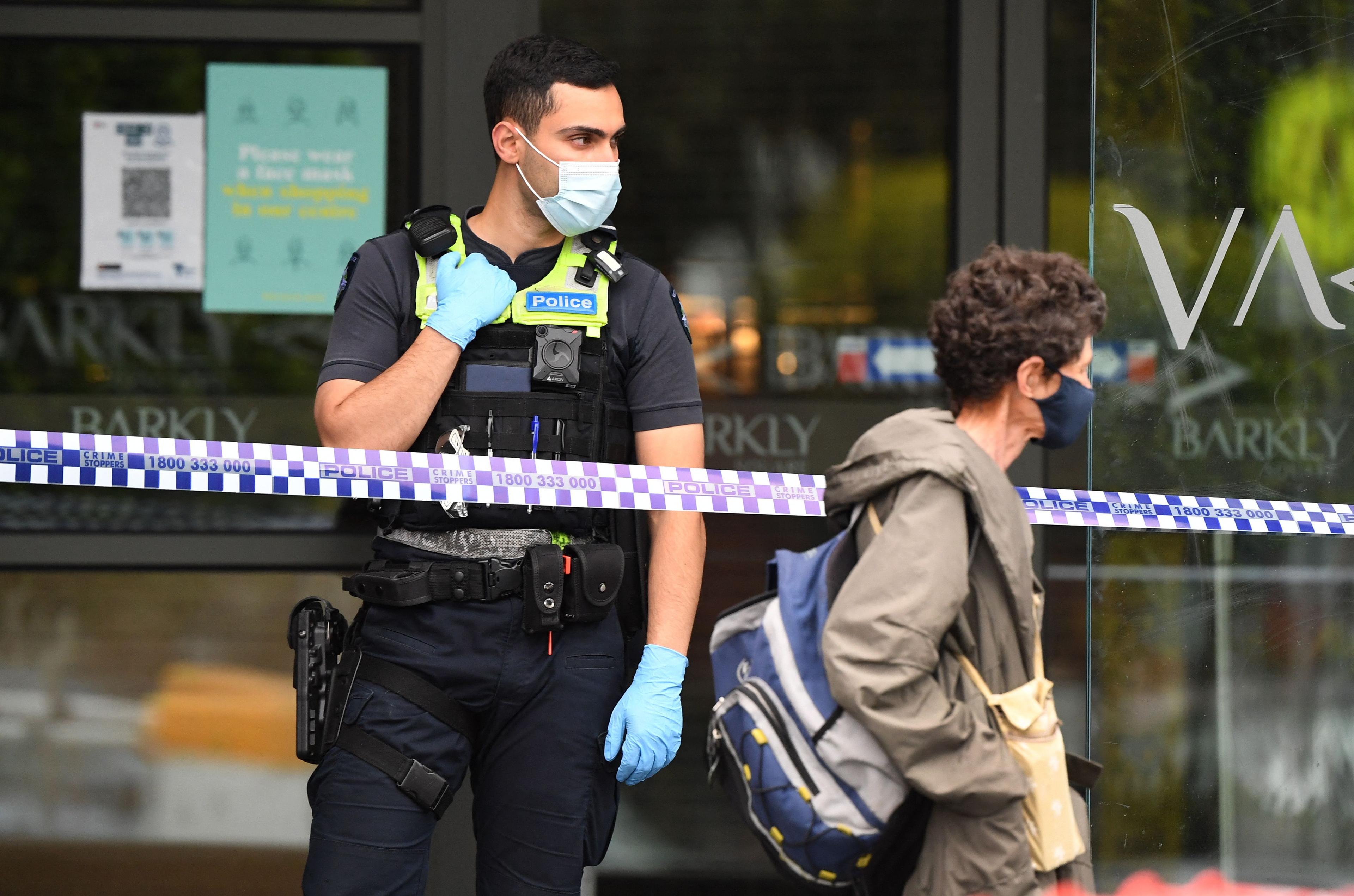
A policeman stands guard outside a shopping centre in Melbourne, Australia on Oct. 18, 2021. (William West/AFP via Getty Images)
But the Difference Lies in How Data is Collected
So how did Lott Jr. and Green come to their conclusion?
The difference lies in unwrapping the discrepancies in how data is collected.
Australia’s Crime Victimisation Survey (CVS) collects data over a 12-month period relying on phone interviews with those with lived experience with crime.
What it measures is “prevalence,” that is, the figure where individuals have experienced a crime at least “once in the reference period.”
Yet the problem with this approach is if a person experiences one type of crime multiple times during the recording period, it is still considered one instance of crime.
“You could have been victimised five times, and would still count as one case over the year,” Lott Jr. said.

Police tape near the site of a stabbing incident in the west of Sydney, Australia, on Feb. 2, 2017. (Saeed Khan/AFP via Getty Images)
He suggests ABS crime victimisation stats may not always reflect reality, particularly for crimes like domestic violence or sexual assault, where repeat offences are likely.
The ABS methodology does caution that its surveys cover people or households that have “experienced at least one incident of a selected type of crime in the 12 months prior to interview.
“A person/household may have experienced more than one incident of the same crime type, but is only counted as a victim once,” they say.
In contrast, the U.S. NCVS focuses on crime “incidence”—the total number of times a person or household have been victimised.
Further, instead of 12 months, it collects data over a six month period.
There are also demographic differences. The NCVS includes people aged 12-14 in its reporting, whereas Australia’s CVS does not.
The NCVS interviews are also conducted in person, which allows for follow-up phone calls or interviews and better data collection.
“However, the Australian survey data is obtained solely by phone, not in-person surveys,” Lott Jr. wrote in a research article. “It makes the Australian crime data look better relative to the NCVS data for the United States.”
Lott Jr. also noted during the interview that about 19 percent of rapes and sexual assaults are reported to police in Australia, compared to 45 percent in the United States.

Police tape is seen at a crime scene in Perth, Australia, on Dec. 23, 2016. (Paul Kane/Getty Images)
Comparing the Australian and US ‘Victimisation’ Rate
Lott Jr. and Green account for these differences using a tool called the “repeat victimisation“ multiplier.
This converts Australia’s crime “prevalence” stat into an estimated “incidence” rate.
Both researchers found that during 2023-24, Australia’s rate was 39 per 1,000 compared to the U.S. 23.3 per 1,000—67 percent more likely for Australians than Americans.
Using this method, Australians 127 percent more likely to experience physical assault, 21 percent more likely for robbery, 254 percent for sexual assault, and 192 percent for burglary.
In terms of homicides, Australia fares better sitting around 0.98 per 100,000 (262 deaths) according (pdf) to the Australian Institute of Criminology (AIC). The ABS also reveals there were 448 victims of homicide and related offences in 2024, resulting in a victimisation rate of 2 victims per 100,000.
In contrast, the U.S. Bureau of Justice Statistics (pdf) says the American homicide rate was 5.9 per 100,000 persons, with the victimisation rate varying between 5.0 and 6.0 in the past 10 years.
What Did Australian Authorities Have to Say?
The ABS responded to Epoch Times inquiries reiterating the disclaimer in its research.
While the New South Wales Bureau of Crime Statistics and Research (NSW BOCSAR) confirming they also record crime incidence, not prevalence, cautioning that their data is not indicative of total crime rates.
“Many crimes which occur are not reported to police and will therefore not be recorded,” they told The Epoch Times.
What is the Way Forward?
An ongoing debate exists between advocates of tougher punishment against those for improving the lives of people before they commit a crime.
“What research is increasingly showing is that imprisonment itself and punishment more generally is actually criminogenic—it makes it more likely that people are going to re-offend,” says David Brown, an emeritus law professor at the University of New South Wales.
“A large number of crimes are what we call expressive crimes—that is they are affected by anger, rage, depression, drug or alcohol use, indicators of psychological disturbances,” Brown said in a press release.
“So people are not turning their mind in a rational, calculating way, using cost-benefit of whether the punishment outweighs the benefit.”
Yet Lott Jr. advocates for tougher enforcement and penalties including higher arrest rates, convictions, longer sentencing, and also giving victims more leeway to defend themselves, including gun ownership and victim’s rights.
“If it’s riskier for criminals to go and commit crimes, you’re going to have fewer crimes being committed,” he said.
The researcher compared “hot burglary” or home invasion rates in the United Kingdom to the United States—Australia doesn’t have this isolated data.
Lott Jr. says 59 percent of UK burglaries occur while residents are at home, normally the evening, compared to 13 percent during the day in America.
“American burglars spend about twice as long casing a home before they break-in compared to their British counterparts,” Lott Jr. said.
“And the reason is, American burglars are worried about getting shot, and so they find ways to prevent themselves from getting hurt by going in the middle of the day—[normally 2.00 p.m. in the afternoon]—when people are less likely to be home.”
In contrast, UK burglars like to go in the evening when “people are at home so they can force people to tell them where their valuables are.”
“The American burglars are willing to forego that benefit so they can reduce the risk of being shot.”

A police sign outside a regional police station in Western Australia on April 19, 2024. (Susan Mortimer/The Epoch Times)