

Captured by the elites, career politicians, and unsure of its own messaging—these are the charges often levelled at the Liberal Party, and ironically, they echo the same decay that prompted its founder Robert Menzies to dismantle the UAP over 80 years ago.
The future of the legacy centre-right party has lingered for years now as it struggles to marry its moderate and conservative factions, leaving it unable to take clear positions on immigration, net zero, and against radical progressivism.
More recently, this malaise appears to have come to a head after two prolonged splits from the National Party since the May election, questions over leadership, and consistent poor polling that shows the conservative One Nation surging.
Dissolving the United Australia Party to Start Again
It’s 1945, and Liberal Party founder Robert Menzies makes the fateful decision to dissolve the former United Australia Party (UAP)—which had provided two prime ministers—to eventually set up Australia’s pre-eminent centre-right party.
The UAP was formed in 1931 as a protest party against proposed responses to the Great Depression: the then-Scullin Labor government pushed Keynesian policies that would see the state play a bigger role in the economy, and then-New South Wales Labor Premier Jack Lang wanted to simply stop paying back the country’s loans.
Joseph Lyon, a Labor minister, caused the 1931 Labor Party Split and formed the UAP along with Menzies, to guide the country out of the Great Depression with conservative economic policies.
Yet following Lyon’s death and by the 1940s, the party was a shell of its former self.
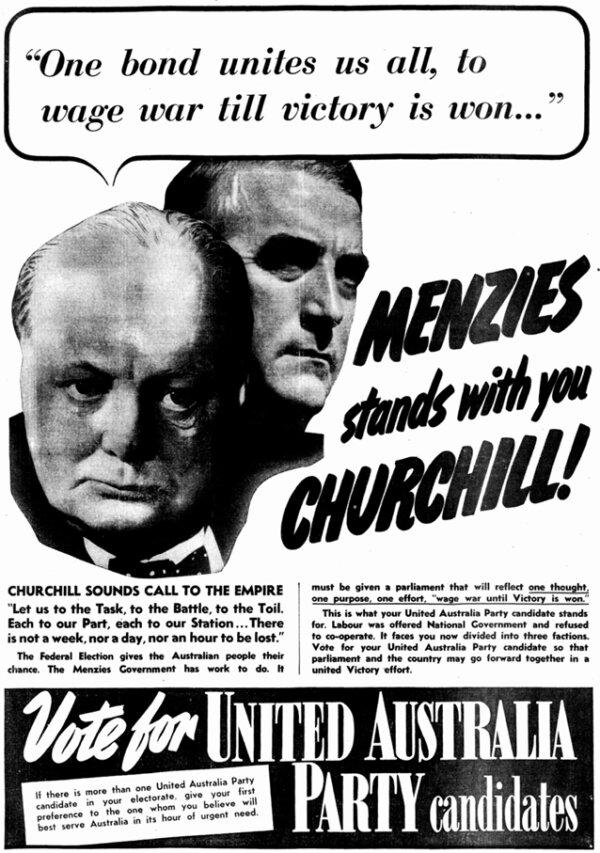
Photo of a United Australia Party campaign ad from 1940. (Public Domain)
“It had lost its raison d’être, it lost its reason to be, because its reason was to get Australia out of the Great Depression, and it was really successful at that,” said Zachary Gorman, historian at the Robert Menzies Institute.
“But by 1939 of course, the focus was no longer on the Depression, it was on the [Second World] War,” he told The Epoch Times.
A host of other issues that gripped the UAP back in the day, now appear to weigh down the Liberals.
They include capture by vested interests, factional infighting, party members who have made entire careers in politics, weak grassroots participation, and ultimately, an inability to prosecute a strong conservative message.
All accusations have been levelled at the Liberal Party in recent years, and ironically, forced Menzies to dissolve the UAP.
“The biggest similarity between the UAP in its final days and the Liberal Party now, is that the Liberal Party has lost any sort of sense of momentum or purpose,” Gorman says.
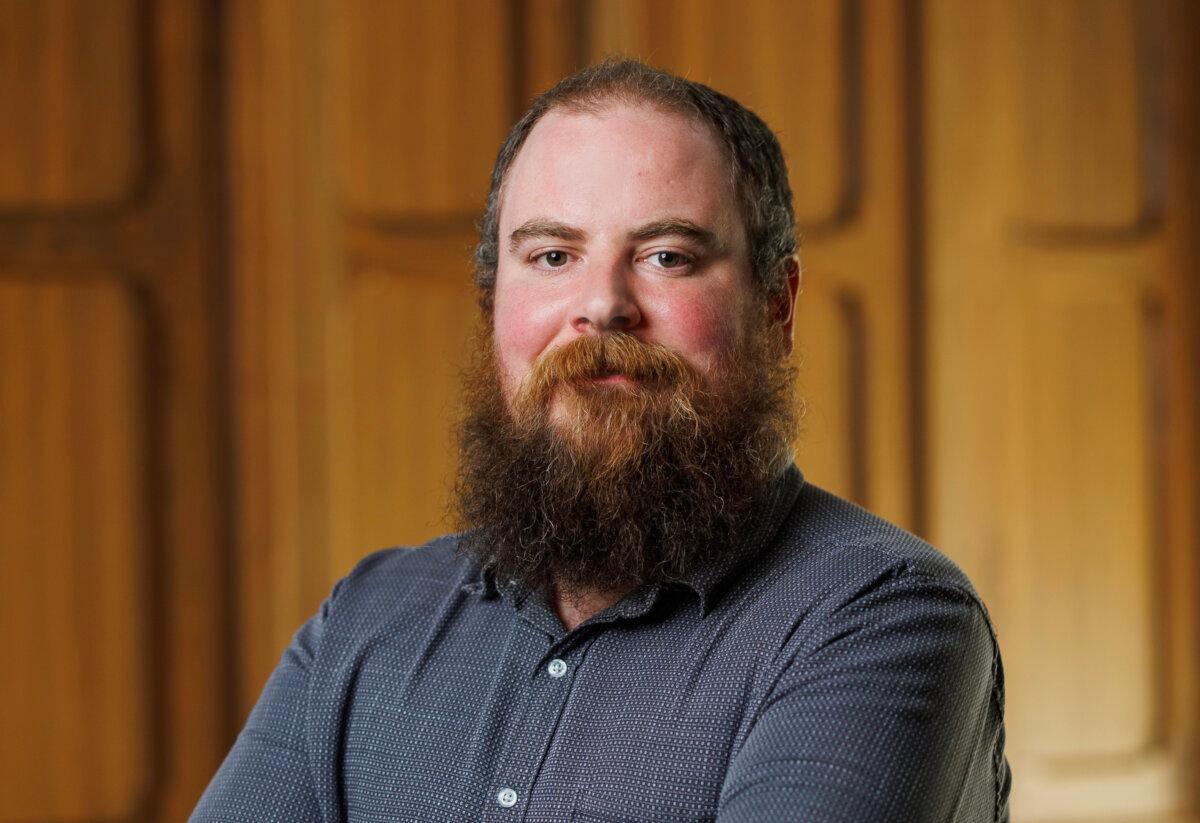
Zachary Gorman, historian at the Robert Menzies Institute, taken during the 2023 Menzies Conference Day 1. (Courtesy of the Robert Menzies Institute)
A Lack of Conviction is ‘Worthless’: Menzies
In 1931, Menzies declares, “We have suffered far too much from people who have no political convictions beyond a more or less genteel adherence to our side of politics.
“That kind of adherence is worthless. We must have people who believe things, and who are prepared to go out and struggle to make their beliefs universal (pdf).”
By the end of the UAP’s life, the party—and the Liberals now—appeared to realise this very warning.
“[The Liberal Party] doesn’t have the strong grassroots membership that it did in the 1940s and ‘50s, when it was at its strongest,“ Gorman says. ”The party itself is really hollowed out, and it has become a sort of vehicle for careerist politicians, much like the UAP.”
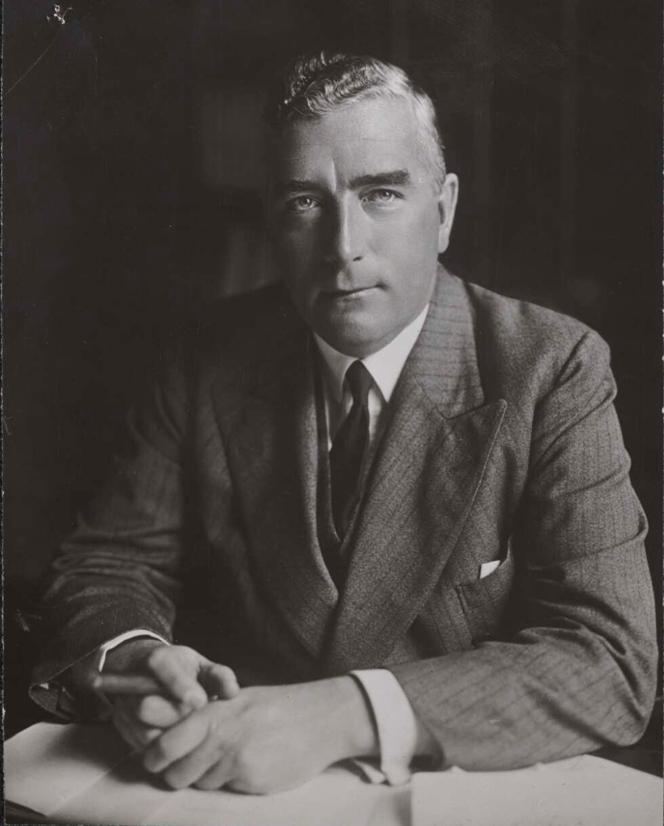
A portrait of Australia's longest serving Prime Minister Sir Robert Menzies. (Courtesy of the National Library)
“Probably the best example of [a career politician historically] is when it was led by Billy Hughes, whose career famously saw him join virtually every party barring the Country Party.
“So there was a lack of clear conviction from those who supported him, even if the financial perks of being in parliament weren’t as great back then.”
Hughes was the seventh prime minister of Australia, leading the nation through World War I. He remains the only politician to have served in parliament for more than 50 years.
Another similarity is the influence of a small band of powerbrokers.
“That was certainly Menzies’ perspective, that [the UAP] had become captive to vested interests and donor bodies—a lot of manufacturers who relied on protectionist tariffs to make their industries profitable,” Gorman said.
“Arguably, the modern Liberal Party is sort of dislocated from those original founding principles. It relies a lot more on focus groups and opinion polling to drive policy.”
One long-running problem with the party stems from the 1990s when university students were recruited en masse to join Liberal Party branches, particularly in Sydney.
Control of branches means control over who can join or not, who can run as candidate, and policy positions.
One Nation Rising
The latest poll from Roy Morgan finds One Nation’s vote sitting at 24.5 percent, compared to the Liberal-National Coalition’s 22.5 percent. During the May federal election, One Nation’s support sat at just 6 percent.
Meanwhile, the Labor government sits on 28.5 percent with the Greens on 13.5. The survey questioned 1,584 Australian electors over the week of Feb. 2 to 8.
One Nation’s surge has spurred a variety of responses. One is that the minor party lacks the policy or experience to run government, another claims it helps Labor remain in power by splintering the Coalition vote.
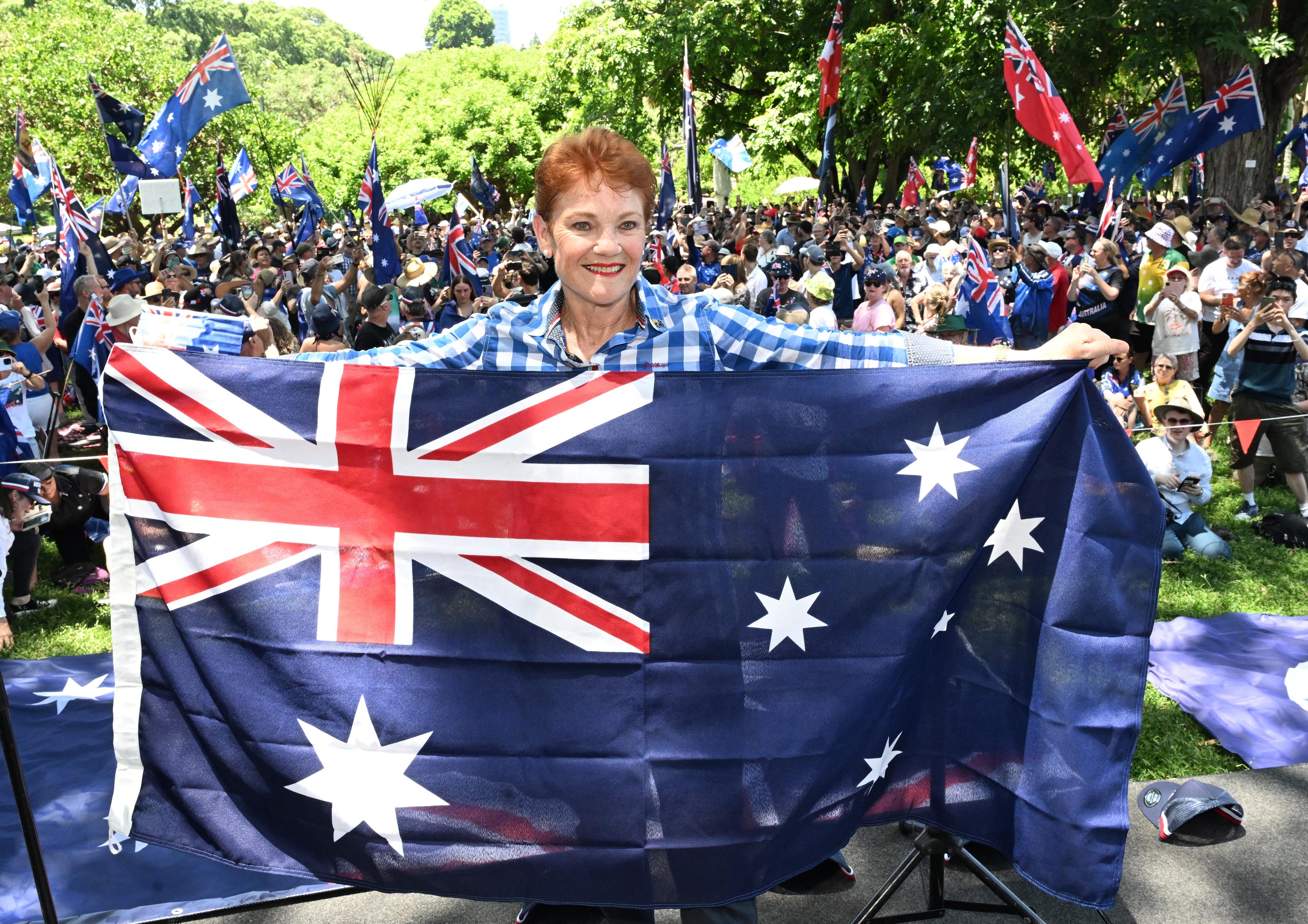
One Nation Leader Senator Pauline Hanson is seen with people attending the Australia Marches rally during Australia Day celebrations in Brisbane, Australia on Jan. 26, 2026. (AAP Image/Darren England )
Another argument is that the situation is nothing more than a blip and that conservative-leaning Australians will return to the Coalition once internal dramas settle down.
Yet pollsters Kos Samaras and Antony Green suggest broader ramifications.
“A party that didn’t exist 30 years ago is now competitive with the primary vote of the major parties in parts of the country where the Nationals and to a lesser extent the Liberal Party, once won seats without breaking a sweat,” Samaras wrote on X.
“Where other minor parties have surged and faded, [Pauline] Hanson’s outfit has consolidated the protest vote into something more permanent (possibly),” he said.
Green suggests keeping an eye on 25 lower house seats based on current polling patterns.
Liberal Party on the ‘Wrong Side’ of Key Issues: Analyst
Graham Young, director at the Australian Institute for Progress, says One Nation’s rise is due to the “incompetence” of the current Liberals.
“The change [and sudden rise in support for One Nation] happened halfway through the last federal election when people decided Peter Dutton was unelectable,” he told The Epoch Times.
“And since then, misjudged positions on issues like hate speech laws and immigration have accelerated the trend.”
Young also said the party was “operating opportunistically, not strategically.”
“By playing the politics each time they find themselves on the wrong side of issues. This is not restricted to the federal Coalition either—every state, bar Queensland, currently has major problems which look insoluble.”
Is There Light at the End of This Tunnel?
Gorman says party founder Menzies had a belief that political power must be fought and won, not to wait for “the Labor Party to make a mistake.”
He points to his opposition to the 1944 referendum to give the federal Labor government broad new powers.
“Even though the Labor government was in a very ascendant and popular position, the thing that gives him the political momentum to actually found the Liberal Party is that he leads the ‘no’ campaign in the 14 powers referendum of 1944, which is this attempt by Labor to really extend the control of the federal government, really increase the sort of interventionist nature of the federal government,” Gorman said.
On the back of his success with opposing the referendum, Menzies goes on to establish the Liberal Party of Australia, designed to focus on the needs of the middle class (the Forgotten People), and carry a philosophical idea that can outlive the UAP.
“The values of Australian liberalism have always had great appeal in Australia,“ Gorman says. ”I’m not convinced that the appeal to the electorate has died for those values, but I think that the Liberal Party is no longer a particularly good advocate for those values.
“I don’t think the [classical] liberal values will ever die, even if the party does.”