An old proverb—Ben Franklin included a shorter version in his essay “The Way to Wealth”—runs this way:
For want of a nail, the shoe was lost;
For want of a shoe, the horse was lost;
For want of a horse, the rider was lost;
For want of a rider, the battle was lost;
For want of a battle, the kingdom was lost,
And all for the want of a horseshoe nail.
The proverb reminds us that details matter. In its strictly military sense, it warns that logistics matters. According to one definition, logistics is “the aspect of military science dealing with the procurement, maintenance, and transportation of military matériel, facilities, and personnel.”
Attributed to both Prussian King Frederick the Great and to Napoleon is this more direct declaration: “An army marches on its stomach.”
On Veterans Day, many Americans likely think of those men and women still living among us who fought in the Pacific and Europe during World War II, in Korea and Vietnam, and most recently in the wars in places such as Iraq and Afghanistan. We watch movies like “Saving Private Ryan,” “We Were Soldiers,” and “Lone Survivor,” and rightly remember our fellow Americans who fought on the front lines for their country.
But behind those combatants stood countless others over the years who kept them supplied with everything from food and ammunition to hot showers and entertainment. Let’s look at the importance of the Transportation Corps and Quartermaster Corps in American military operations.
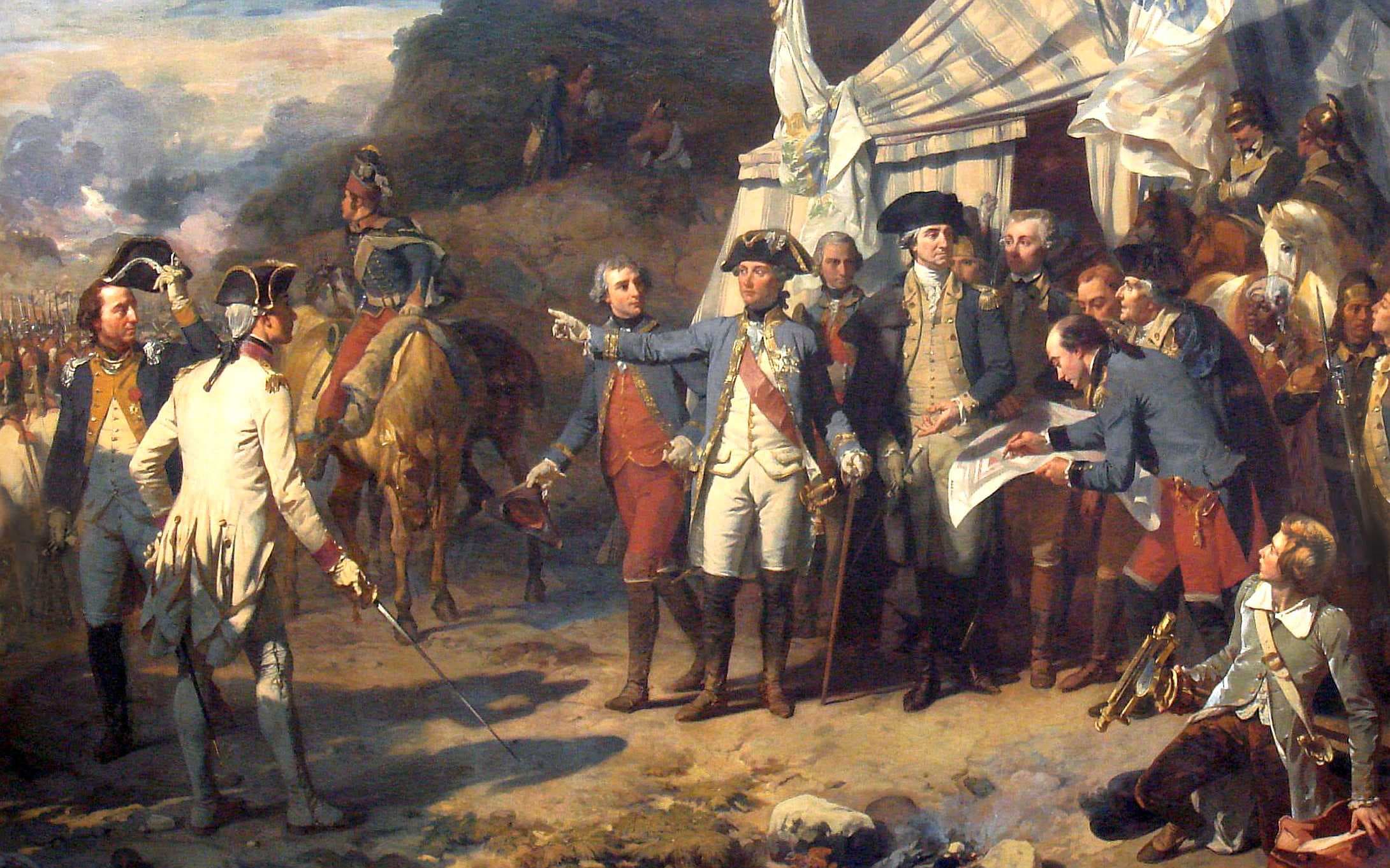
The "Siege of Yorktown (1781)" painting by Auguste Couder. The critical joint supply networks behind the front lines starved the British and secured American independence. (Public Domain)
Plans Live or Die at the Supply Line
On June 14, 1775, the Second Continental Congress officially established the Continental Army. Only two days later, it created the positions of quartermaster general and deputy for the army, revealing that these Founders well understood the necessity of supporting military forces.
In his paper “Logistical Operations During the Yorktown Campaign, 1781,” American military historian Richard E. Killblane shows readers the advances the American army made in supply and transportation that contributed to its victory over the British in this crucial battle. Here, he presents in great detail the precise planning that shaped the French and American vise that throttled the enemy and brought surrender: the numbers of wagons, horses, cattle for provisions, and other necessary provisions for land operations, and the French fleet that denied the British their own supply line.
Killblane rightly concluded: “The Yorktown Campaign on a smaller scale presented all the phases of force projection that would play themselves out on grander scales in later wars.” As Gen. John J. Pershing of World War I fame likely said almost 150 years later, “Infantry wins battles; logistics wins wars.”
A scene in the movie “Gone With the Wind” reveals that logistics and industry can also lose wars, no matter how brave or determined the fighting troops are. In a drawing room at a Georgia plantation, a group of Southern firebrands on the eve of war with the North are boldly declaring how quickly they’ll defeat the Yankees. The excited Mr. O’Hara calls on Rhett Butler, who’s been up North, for his opinion. He replies, “I think it’s hard winning a war with words, gentlemen.” We then witness this exchange:
Charles Hamilton: “What do you mean, sir?”
Rhett Butler: “I mean, Mr. Hamilton, there’s not a cannon factory in the whole South.”
Another man: “What difference does that make, sir, to a gentleman?”
Rhett Butler: “I’m afraid it’s going to make a great deal of difference to a great many gentlemen, sir.”
Charles Hamilton: “Are you hinting, Mr. Butler, that the Yankees can lick us?”
Rhett Butler: “No, I’m not hinting. I’m saying very plainly that the Yankees are better equipped than we. They’ve got factories, shipyards, coal mines ... and a fleet to bottle up our harbors and starve us to death. All we’ve got is cotton, and slaves and arrogance.”
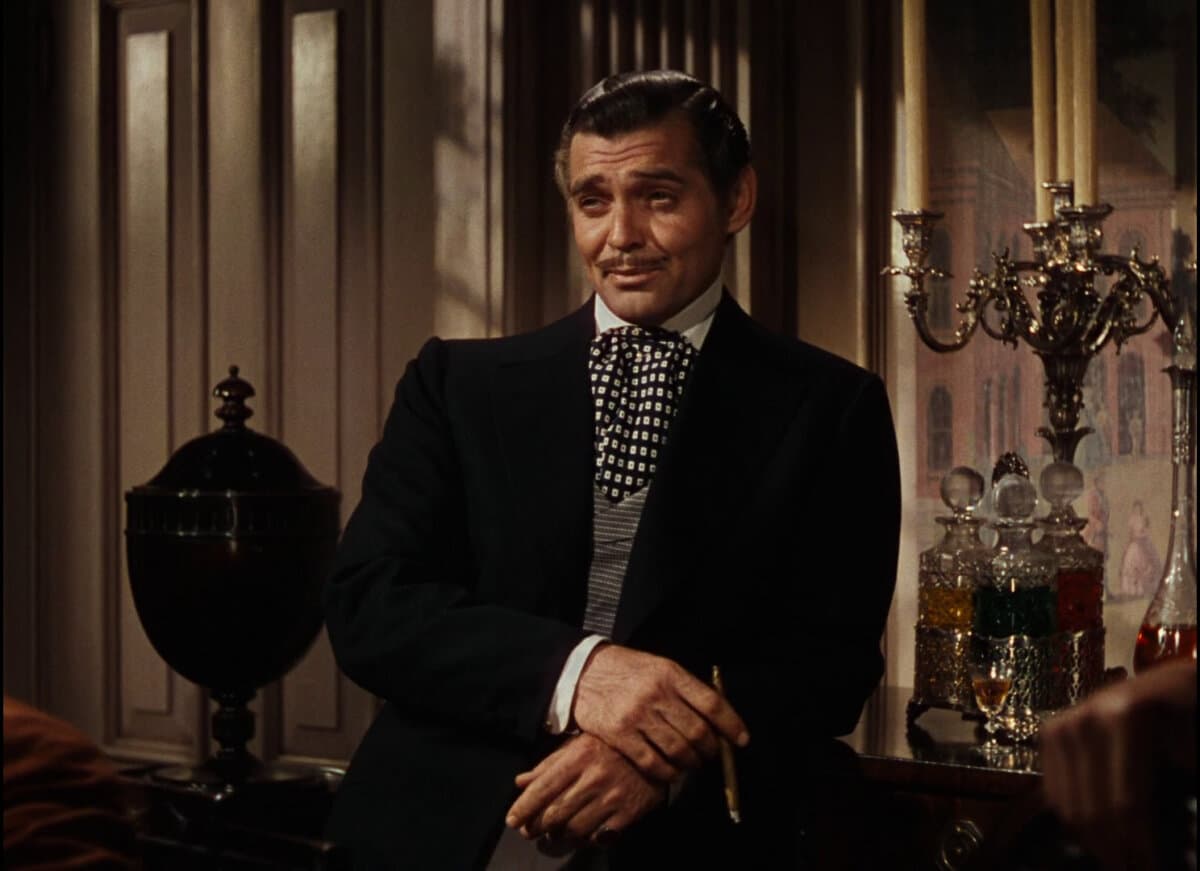
In the 1939 film “Gone With the Wind,” Rhett Butler (Clark Gable) explains that the North is better situated to win the Civil War. (MoveStillDb/Warner Bros., Metro-Goldwyn-Mayer, Selznick International Pictures)
A harsh judgment, but one that rang true. At war’s end, Robert E. Lee and the remnants of his army were racing toward Appomattox desperate for supplies, especially food, that they hoped had arrived from Lynchburg. With that logistical failure, the war effectively ended.
Logistics—the South’s comparatively limited industrial capacity and railway track mileage, and its inability to keep its ports open to trade—was instrumental in bringing the Confederacy to its knees.
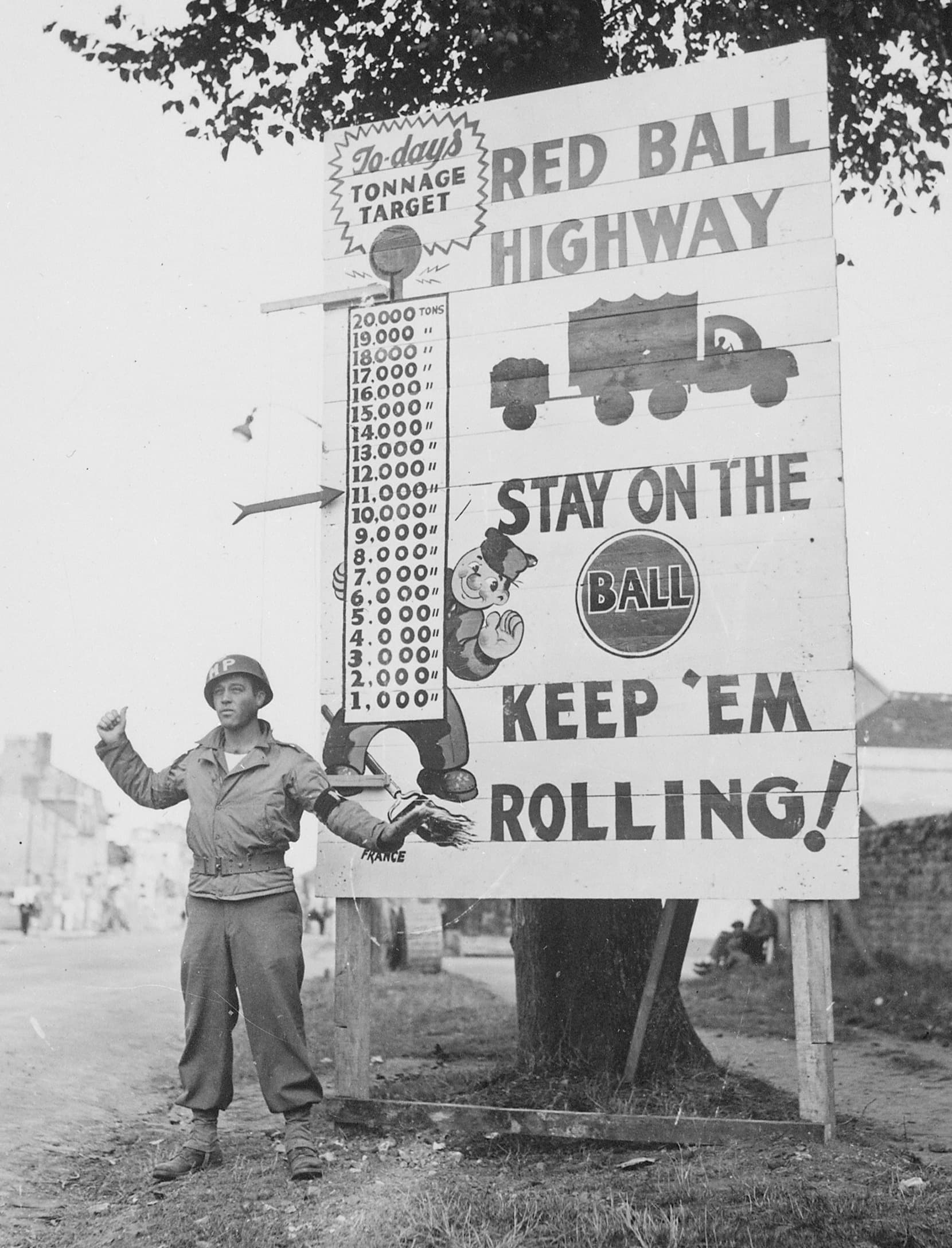
A roadside sign marks the Red Ball Express route, a legendary WWII convoy operated mostly by black soldiers. The relentless logistics lifeline delivered the vital supplies needed to sustain Allied troops moving forward to ultimately secure our freedom. (Public Domain)
Rolling to Victory
Two stellar examples of what Killblane meant by “force projection” occurred in 20th-century warfare.
By mid-August 1944, Allied forces had cut through the German resistance and the hedgerows of Normandy, and were slashing their way across France. This breakout was a cause for celebration, but there was a catch: how to keep the rapidly advancing troops supplied with enough fuel, food, and ammunition to maintain the press against the Germans.
Enter the Red Ball Express.
The term “Red Ball” originated back home in America, where railroad cars carrying high-priority cargo were marked with a red circle. With French railroads heavily damaged from Allied bombings and with Normandy still the main supply depot for the armies of America and Britain, quartermaster and transportation corps planners put into action almost 6,000 2.5-ton trucks running 24/7 from depots on the British Channel to the front lines.
Army segregation disproportionately assigned black soldiers to service and support units, with the result that African American troops made up the majority of the Red Ball Express drivers. For 82 to 83 days, all these men, white and black, performed above and beyond the call of duty, driving in pairs, getting little sleep, and often eating while maneuvering heavy vehicles on narrow and often dangerous roads, driving at times up to 60 miles an hour.
Some 23,000 men participated in the Red Ball Express. During this operation, which lasted less than three months, they delivered up to 12,500 tons of supplies daily to their comrades at the front. By the operation’s end, they had carried 412,000 tons of food, ammunition, and equipment into battle, performing one of the most incredible feats of logistics in the annals of warfare.
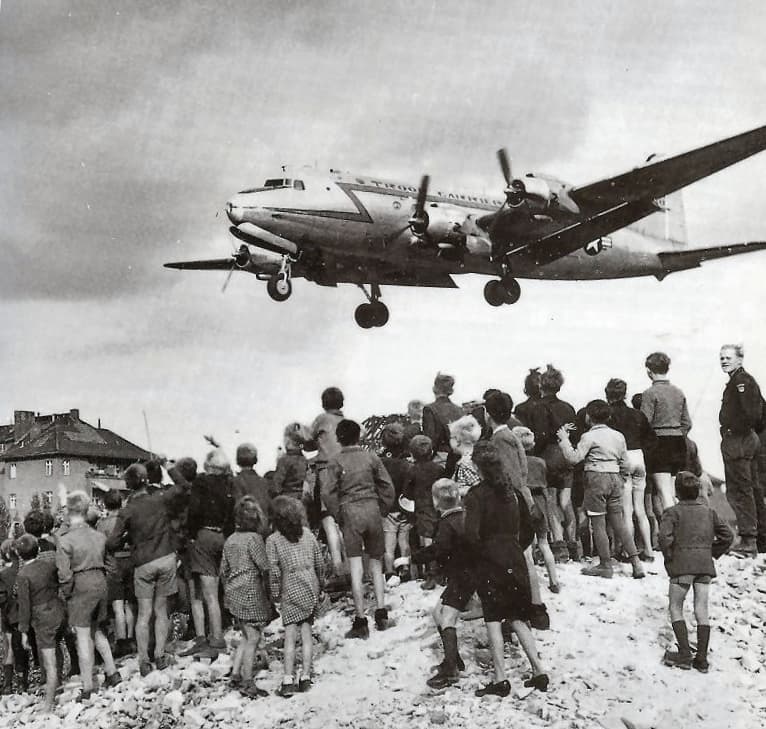
During the Berlin Airlift in 1948, American, British, and French planes flew food and supplies into Berlin after Soviet forces blocked all ground routes. In this photo, German children stand on a hill to watch a U.S. supply plane fly overhead. (Public Domain)
A Battle Won Without Bullets
The year 1948 found Germany divided in two: between the former allies, the United States, Britain, and France on one side and the Soviet Union on the other. East Germany was controlled by the Soviets, and Berlin itself was divided up between the two sides, an arrangement that persevered until the fall of the Berlin Wall in 1989.
In late June of 1948, angry that their three former allies intended to permit the formation of a federal government in the areas of Germany the allies controlled, the Soviet Union cut road, rail, and ship transportation to West Berlin. Left unchecked, this blockade would quickly bring ruin and starvation to the 2 million Berliners under the control of the other three countries. Not only that, but the Soviets were certain—some were jubilant over the move—that Western influences in Berlin would quickly wither on the vine, especially since the only routes left open to the city were the air spaces set up after the war.
But President Harry S. Truman refused to concede defeat, and so began what historian Don Smith called “the most remarkable supply operation in human history.”
What began as a temporary measure became a sustained supply operation. The airlift, including the American operation, codenamed “Vittles,” began late June of 1948 and continued through Sept. 30, 1949. Smith wrote: “Allied transport planes completed 277,569 cargo flights, carrying 2,325,509 tons of supplies, into West Berlin. West Berliners had suffered a great deal, but they had endured, and the Western Allies’ position in the divided city had remained strong.”
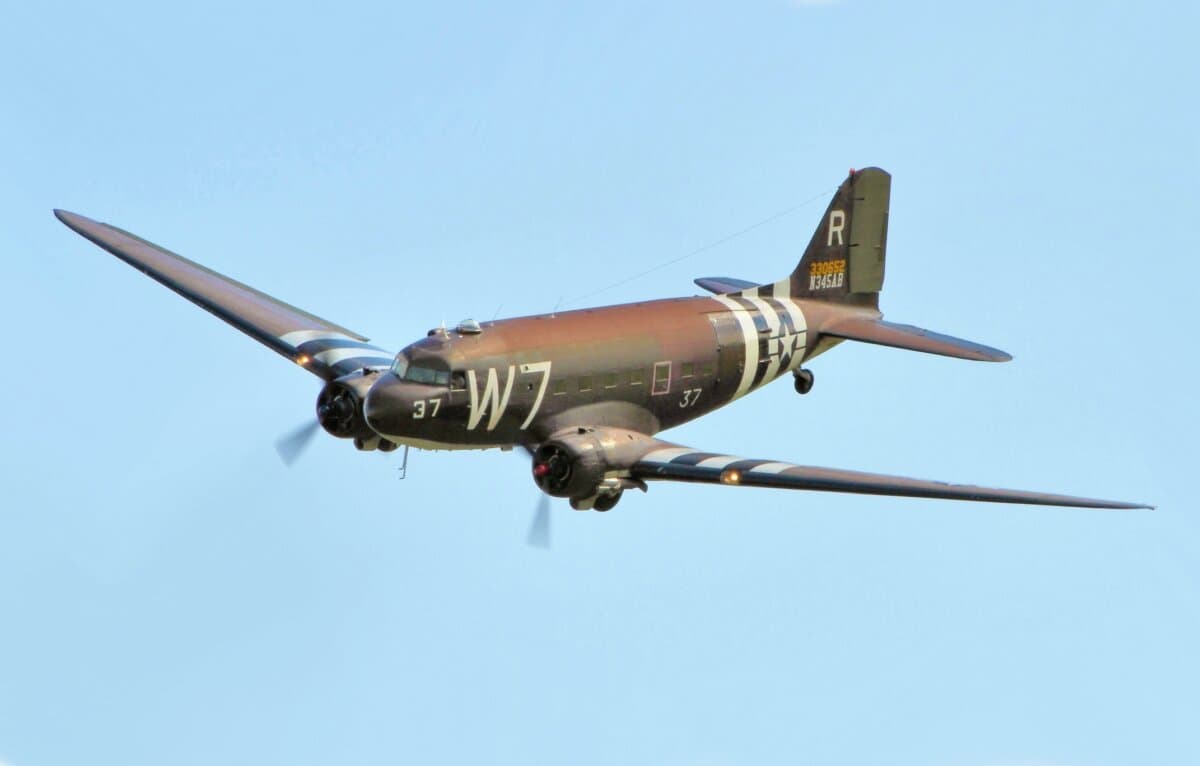
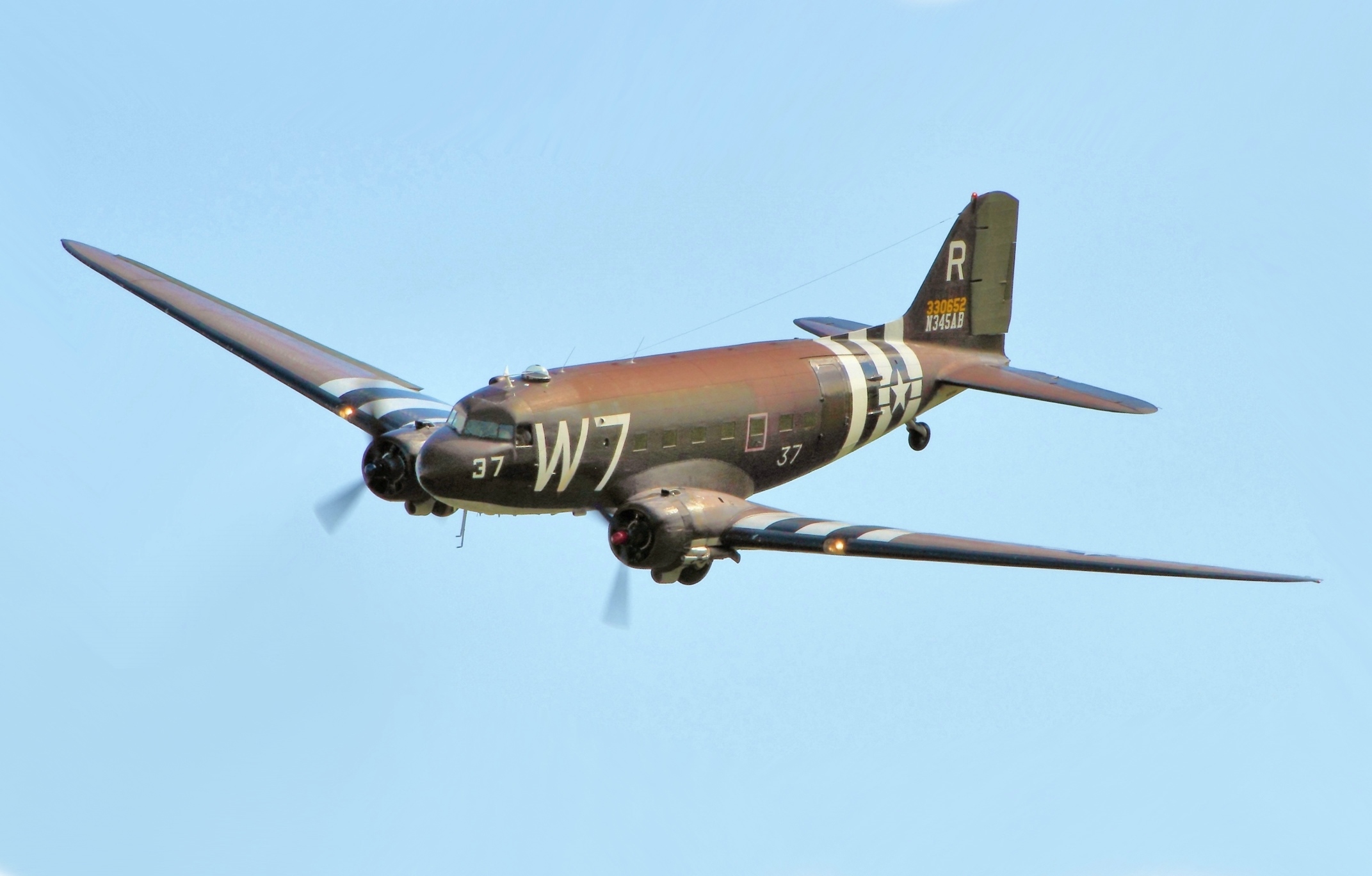
The C-47 transport plane was typical of the aircraft that flew crucial supply missions behind the front lines during World War II and for part of the Berlin Airlift. (<a href="https://www.flickr.com/people/24874528@N04">Airwolfhound</a>/ <a href="https://creativecommons.org/licenses/by-sa/4.0">CC BY-SA 4.0</a>)
Military governor of the U.S. zone in Germany, Maj. Gen. Lucius Clay, had during World War II “established a reputation in the Pentagon as a logistical and managerial wizard.” The task set to him and his staff, the requisition and distribution of goods for those 2 million Berliners, certainly taxed his abilities, but the rewards were rich. In May 1949, the Soviets buckled to the airlift without securing concessions, though the planes continued to arrive until September, delivering emergency stockpiles in case of another crisis.
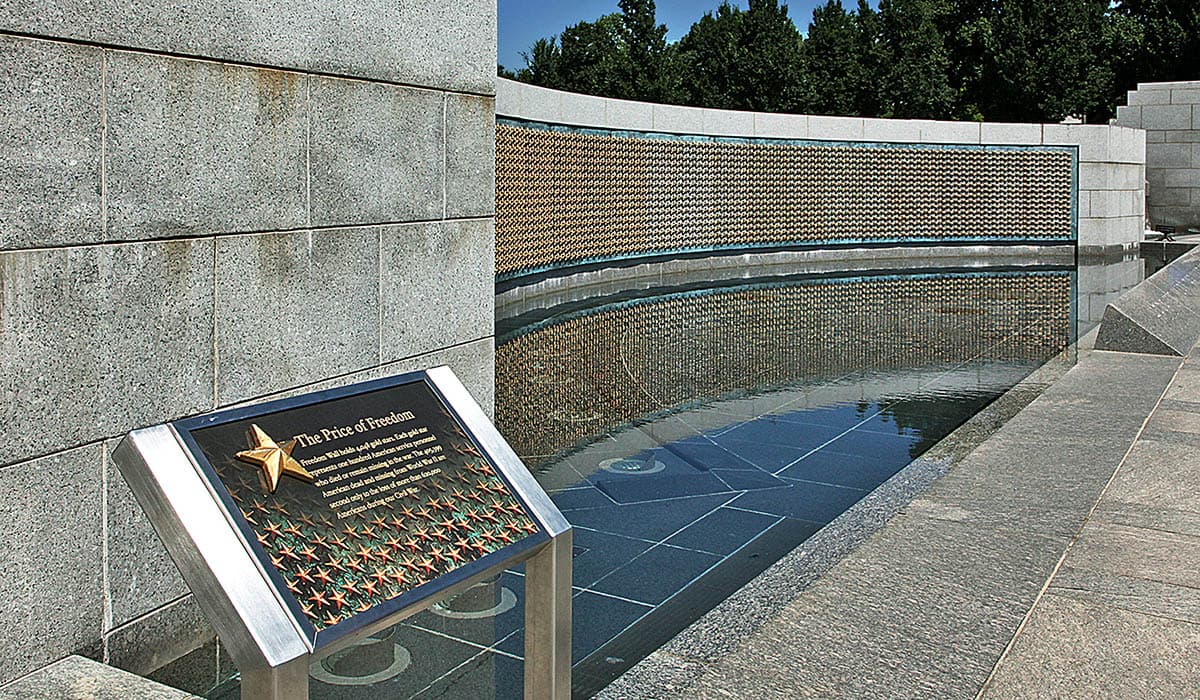
A view of the Freedom Wall at the National World War II Memorial in Washington, where each gold star represents 100 American service members who gave their lives to preserve our freedom. (Public Domain)
Though little known to Americans today, the Berlin Airlift represented a major triumph for the free West, combining technological and logistical finesse with defiance of Soviet aggression. It was a major victory in the early days of the Cold War.
One incidental story deserves inclusion here. Realizing that some German children he’d met had nothing but the essentials to eat, and sometimes little of those, 1st Lt. Gail Halvorsen independently began what came to be dubbed “Operation Little Vittles,” in which he dropped candy to children via parachutes made of handkerchiefs. This humanitarian gesture by “the Candy Bomber” grabbed the attention of the media and the public, earned the praise of West Berliners, and further magnified the differences between the free West and the communists.
On this Veterans Day, which falls during our celebration of America’s 250th anniversary, let’s remember that all of our military personnel—the living and the dead, both combatants and noncombatants, including not just those who supplied the troops but others such as engineers, medical personnel, and desk-riding strategists—deserve a salute of gratitude for helping to preserve our liberties and our way of life.
What arts and culture topics would you like us to cover? Please email ideas or feedback to features@epochtimes.nyc.