No one knows for certain the precise origin of “Aprilis,” which we now call April.
Some contend that it derives from the Latin “aperire,” meaning “to open.” It’s the month when the lands of the Northern Hemisphere shed the grim grip of winter and open themselves to verdant grasses and bright blossoms.
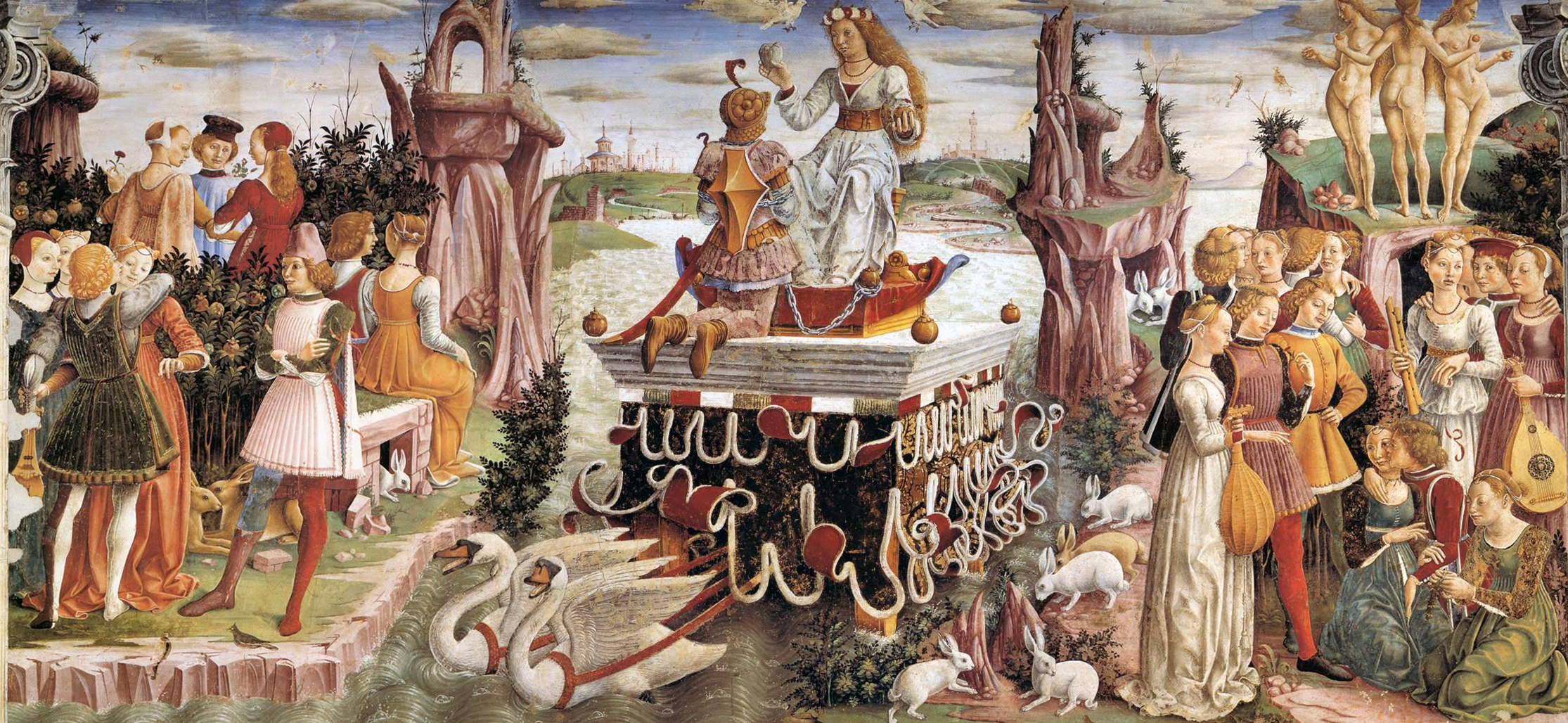
Others connect Aprilis to Aphrodite, which may explain why the Romans devoted the entire month to Venus, their name for that Greek goddess of love, fertility, and growth. They kicked off the celebrations on the very first day of the month with Veneralia, a festival that typically included bathing a statue of Venus and women wearing myrtle garlands, which symbolized love, youth, and fertility.
Perhaps the ancients linked together both meanings, tying the unlocking of the earth and the fertility of the fields to the female deity.
English poets have long connected April to new life and young love as well. Chaucer commenced “The Canterbury Tales” with a salute to “Aprill with his shoures soote,” or “April with his sweet showers.” In “Sonnet 98,” Shakespeare blended together nature and youth: “When proud-pied April, dressed in all his trim,/ Hath put a spirit of youth in everything.” Though not specifically referencing April, Robert Browning penned the famous line, “In the spring a young man’s fancy lightly turns to thoughts of love.”
In 1996, the Academy of American Poets established April as National Poetry Month. Given the Parnassian range of April’s attributes—from Robert Service’s “Drowned sunbeams and the perfume April blows” to T.S. Eliot’s “April is the cruelest month”—the fourth month of the calendar seems perfect for a festival of verse. Given, too, that this year marks the 30th birthday of that declaration, it seems only fitting that we look at a few poems—short ones, to hold the attention of those for whom long verse is a snooze—that weave together nature’s bounties with a touch of youthful longing.
The Rambling Poet
Welsh poet William Henry Davies (1871–1940) spent years living a hand-to-mouth existence in England and the United States, calling himself a “super-tramp” in his 1908 autobiography. While jumping a freight train in Canada, he slipped, and the train crushed his right foot, resulting in a below-the-knee amputation and a wooden leg. Back in Britain, he continued his destitute rambling, writing poetry and trying without success to sell it. Only when several poets and journalists took him under their wing did his verse gain him recognition and an income.
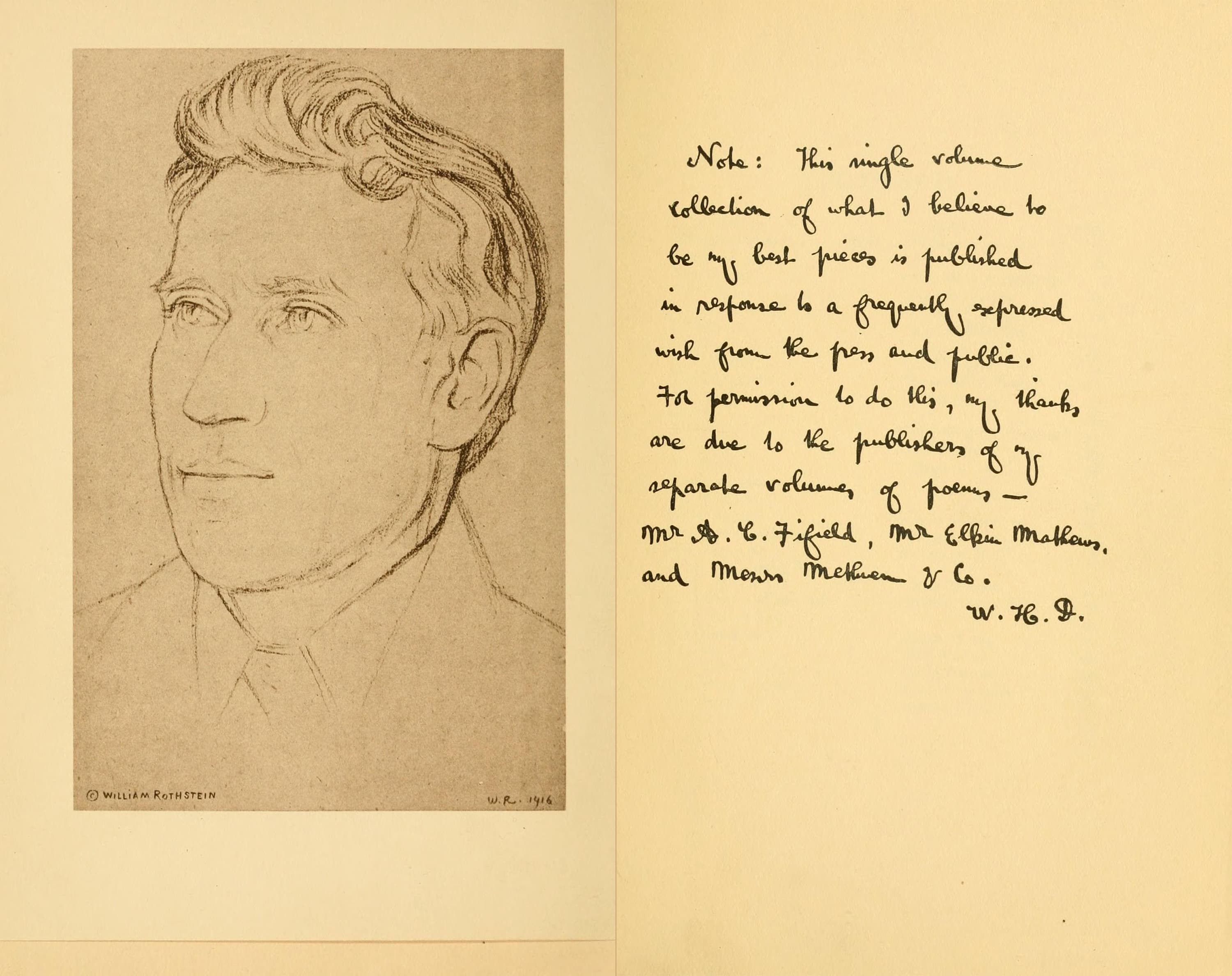
Frontispiece and note from the 1916 compilation “The Collected Poems of William H. Davies,” featuring “Laughing Rose.” Internet Archive. (Public Domain)
In “Laughing Rose,” Davies cleverly mixes the imagery of nature with that of love. Even “Rose” might be a woman or a garden flower, though an early bloomer for the British Isles.
“Laughing Rose”
If I were gusty April now,
How I would blow at laughing Rose;
I'd make her ribbons slip their knots,
And all her hair come loose.
If I were merry April now,
How I would pelt her cheeks with showers;
I'd make carnations, rich and warm,
Of her vermillion flowers.
Since she will laugh in April’s face
No matter how he rains or blows —
Then O that I wild April were,
To play with laughing Rose.
Read “Laughing Rose” aloud, as poetry was meant to be—and best experienced—and the merriment of love and nature appear in the poet’s cadence and word choice.
The Droll Poet
Urbane and with a droll sense of humor, Ogden Nash (1902–1971) was known for his light verse and his appearances on radio and television. The seven-word “Ice Breaking” is his best-remembered poem: “Candy/ Is dandy,/ But liquor/ Is quicker.”
Though Nash and Davies were radically different in experience and personality, Nash’s April girl shares some commonalities with laughing Rose. Nash compares the oscillations of April weather to the shifting moods detected—and delighted in—by a head-over-heels lover. Again, the mingling of the attributes of the month, including its name, with the object of desire make for delightful metaphors:
“Always Marry an April Girl”
Praise the spells and bless the charms,
I found April in my arms.
April golden, April cloudy,
Gracious, cruel, tender, rowdy;
April soft in flowered languor,
April cold with sudden anger,
Ever changing, ever true —
I love April, I love you.
Read aloud, the drumbeat lines march us into the arms of April.
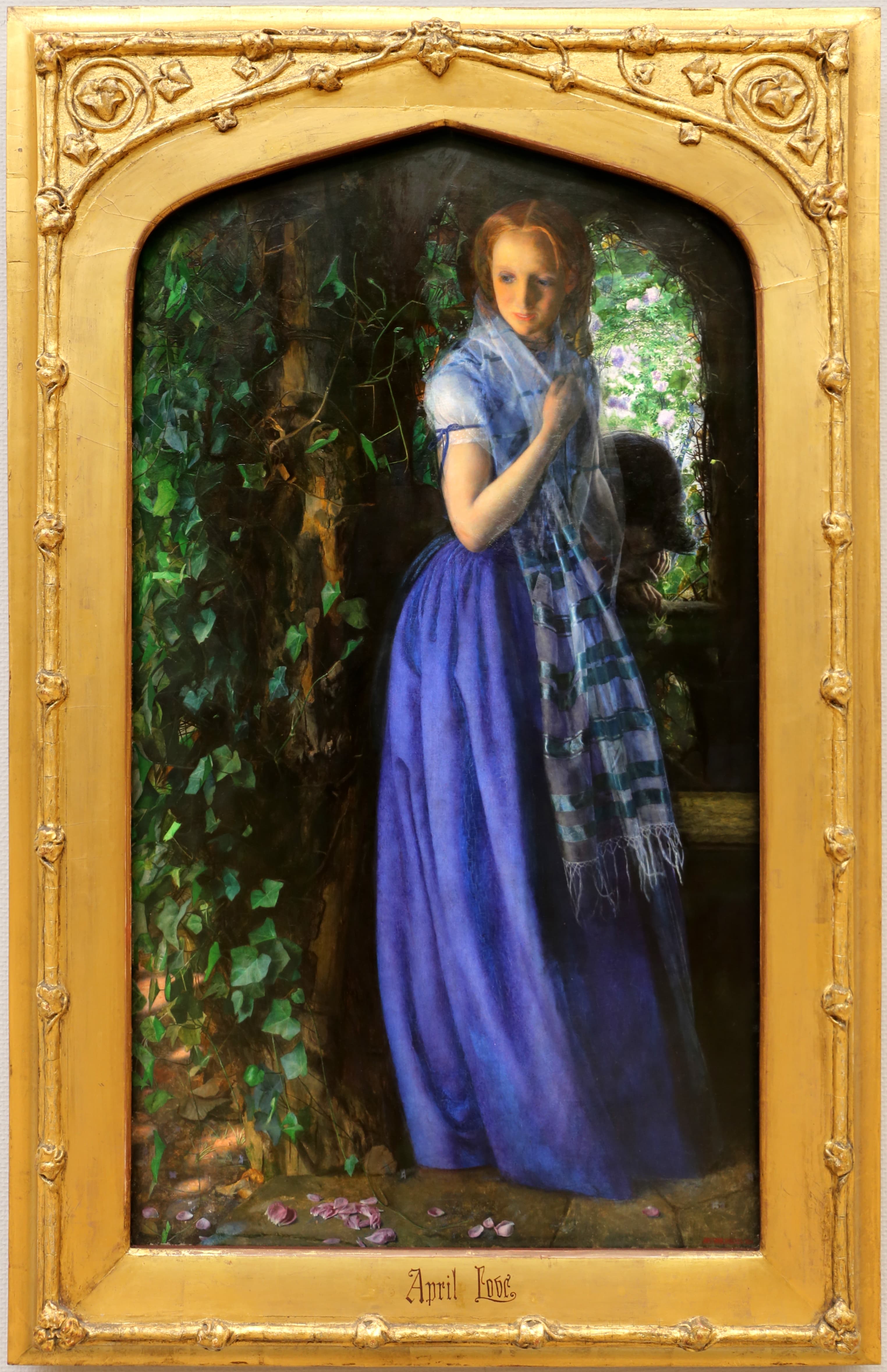
"April Love," 1855–1856, by Arthur Hughes. Oil on canvas. Tate Museum, London. (<a title="User:Sailko" href="https://commons.wikimedia.org/wiki/User:Sailko">Sailko</a>/<a title="Category:CC-BY-3.0" href="https://commons.wikimedia.org/wiki/Category:CC-BY-3.0">CC-BY-3.0</a>)
April’s Poet
Born to wealth, Sara Teasdale (1884–1933) was homeschooled until age 9 because of poor health. In her early 20s, she joined a group of young women like herself who were interested in the arts and literature and who published a magazine of their work. Her poetry became a sort of reflective mirror, a sort of diary in verse, as she grew. Critics praised her poems for their musicality, simplicity, and craftsmanship.
Teasdale composed several April poems. The ones below demonstrate her lyric skill. Short and simple in language, and told in the first person, they need little explanation, yet they resonate with all who have appreciated the “swift sweet rains of shining April” or who have won or lost in the game of love.
“Gray Eyes”
It was April when you came
The first time to me,
And my first look in your eyes
Was like my first look at the sea.
We have been together
Four Aprils now
Watching for the green
On the swaying willow bough;
Yet whenever I turn
To your gray eyes over me,
It is as though I looked
For the first time at the sea.
“But Not To Me”
The April night is still and sweet
With flowers on every tree;
Peace comes to them on quiet feet,
But not to me.
My peace is hidden in his breast
Where I shall never be,
Love comes to-night to all the rest,
But not to me.
“April Song”
Willow, in your April gown
Delicate and gleaming,
Do you mind in years gone by
All my dreaming?
Spring was like a call to me
That I could not answer,
I was chained to loneliness,
I, the dancer.
Willow, twinkling in the sun,
Still your leaves and hear me,
I can answer spring at last,
Love is near me!
“The Kiss”
Before you kissed me only winds of heaven
Had kissed me, and the tenderness of rain—
Now you have come, how can I care for kisses
Like theirs again?
I sought the sea, she sent her winds to meet me,
They surged about me singing of the south—
I turned my head away to keep still holy
Your kiss upon my mouth.
And swift sweet rains of shining April weather
Found not my lips where living kisses are;
I bowed my head lest they put out my glory
As rain puts out a star.
I am my love’s and he is mine forever,
Sealed with a seal and safe forevermore—
Think you that I could let a beggar enter
Where a king stood before?
Laughing With the Daffodils, Crying in the Rain
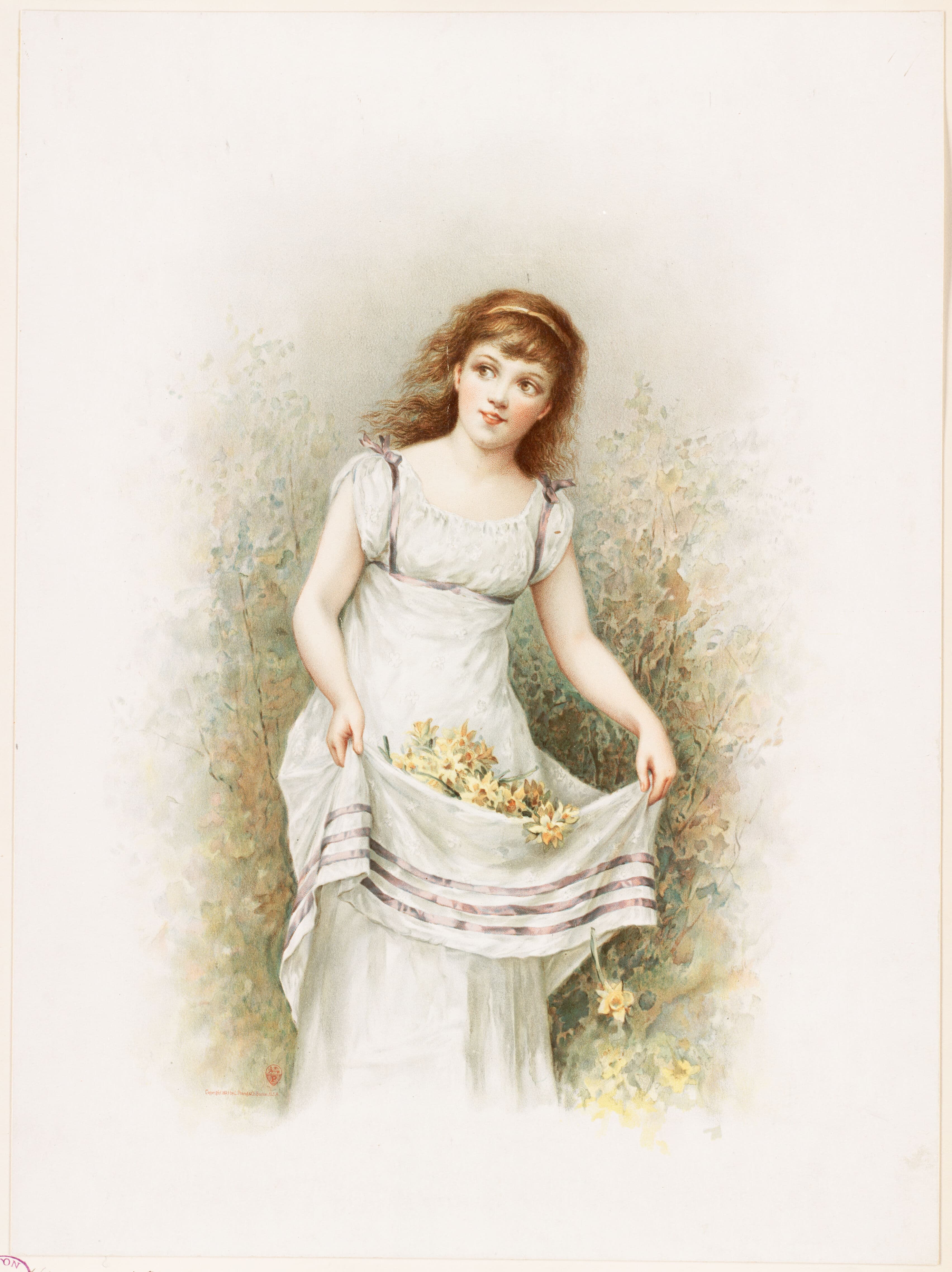
Woman gathering daffodils, circa 1893, published by Louis Prang & Company Collection. Boston Public Library. (Public Domain)
A good poem, like a good painting, enhances our vision and understanding of the world around us and enlarges the world within us. The poet points us to things we’ve failed to see, and gives us the words we could not find.
Ours is an age of extremes, sophisticated in its technology yet all too often crude or blind in its observance of the real, the true, and the beautiful. The screens we carry in our pockets have opened a world to us but also stunted our vision and appreciation of the world around us. With our attention hooked like a fish to a piece of glass and plastic, we may fail to notice the tulip standing bravely in a chill wind or the maple-blossomed beauty of a boulevard. We search online for love rather than in the face of that young man or woman reading a book 10 feet away in a café.
These poems sharpen our awareness of the fresh green gown worn by Aprilis, of the quickening of the breath and blood brought by love and romance in a season of sunshine, soft rains, nodding daffodils, and warmer breezes. The countless poets who have written and continue to write such verses still have things to tell us, but their words only work if we read them and have the ears—and the heart—to listen.
What arts and culture topics would you like us to cover? Please email topics and feedback to features @epochtimes.nyc