
As the United States ups its economic pressure to force the Iranian regime to abandon its pursuit of nuclear weapons, Washington’s squeeze on Tehran has extended to Beijing, a major source of support for the Iranian economy through illicit oil trade. Analysts say that is partly because the U.S. president is increasing his leverage ahead of his scheduled visit to Beijing in mid-May.
On April 15, Washington launched Operation Economic Fury to cut off Iran’s revenue streams.
On the same day, Iranian President Masoud Pezeshkian said that the United States “intends to take [Iran] down first, and then deal with China” when he received Chinese humanitarian supplies in Tehran. A U.S. naval blockade of Iran began two days prior.
Tune in to China Watch, a podcast on Chinese politics, technology, and business.
The Iranian president’s remarks may be an example of a junior partner trying to make the case for more support, but there’s an “element of truth,” said William Lee, chief economist at the consultancy Global Economic Advisors.
“The ultimate target here is China,” he told The Epoch Times.
He said that the United States wants to “starve China of the source of cheap oil.”
In association with the maximum-pressure economic campaign, the U.S. Treasury has warned two Chinese banks of secondary sanctions over supporting the Iranian economy and sanctioned a large Chinese independent oil refinery, Hengli Petrochemical (Dalian) Refinery Co.
The U.S. military intercepted a stateless ship in the Indian Ocean in late April. The vessel was en route to Southeast Asia, carrying millions of barrels of Iranian oil likely destined for China.
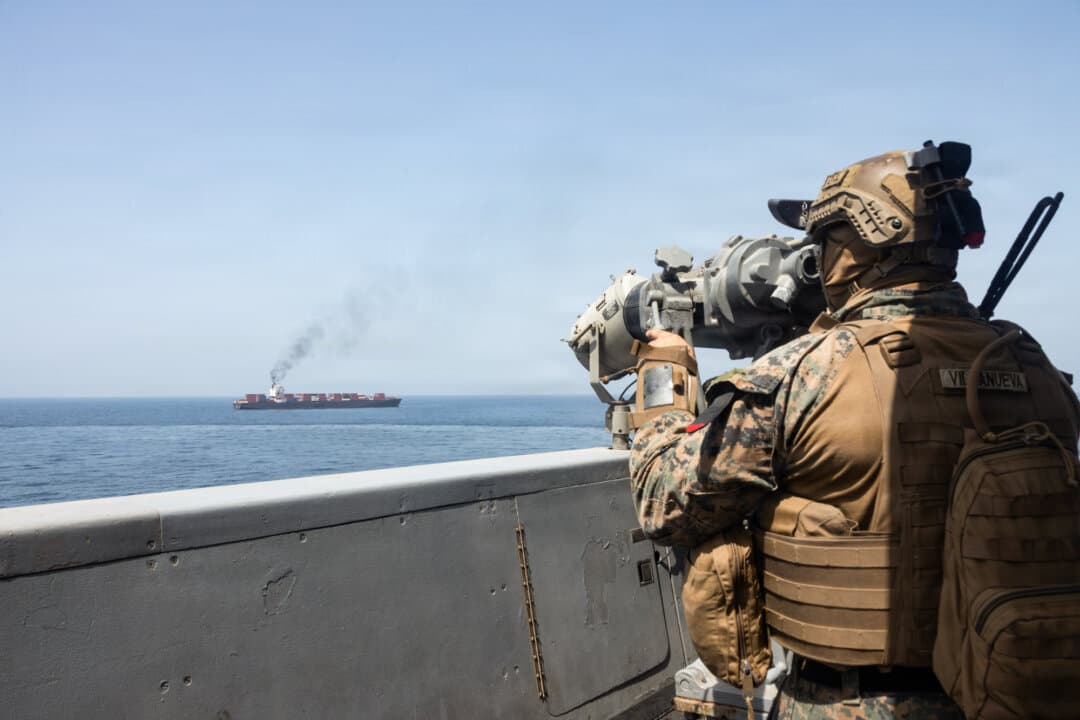
In this handout photo provided by U.S. Central Command, U.S. forces patrol the Arabian Sea near the M/V Touska by the Strait of Hormuz on April 20, 2026. Analysts say Washington is increasing pressure on Tehran ahead of the U.S. president’s mid-May visit to Beijing, a major source of support for the Iranian regime through illicit oil trade. (U.S. Navy via Getty Images)
Sanctioning a Large Chinese ‘Teapot’
Over the past decades, Beijing has purchased most of Iran’s oil despite U.S. sanctions. Oil revenue has kept the Iranian economy afloat, with funds channeled to its military. It has also provided China with a discounted energy source and a platform to conduct business in Chinese yuan, hence bypassing U.S. sanctions in the dollar system.
Cutting off funds to the Iranian military means restricting its revenue stream from its oil exports, of which China is the main customer. Unlike Chinese state-owned enterprises, which avoid buying Iranian oil for fear of subjecting major Chinese banks to secondary sanctions, independent oil refineries known as “teapots” rely mainly on Iran as a supplier.
On April 24, the U.S. Treasury sanctioned such a teapot. Hengli is one of Iran’s largest oil customers and has done business with Iran worth billions of U.S. dollars, the Treasury stated. The measure against Hengli was among a series of actions targeting the shadow fleet and Iran’s illicit oil trade.
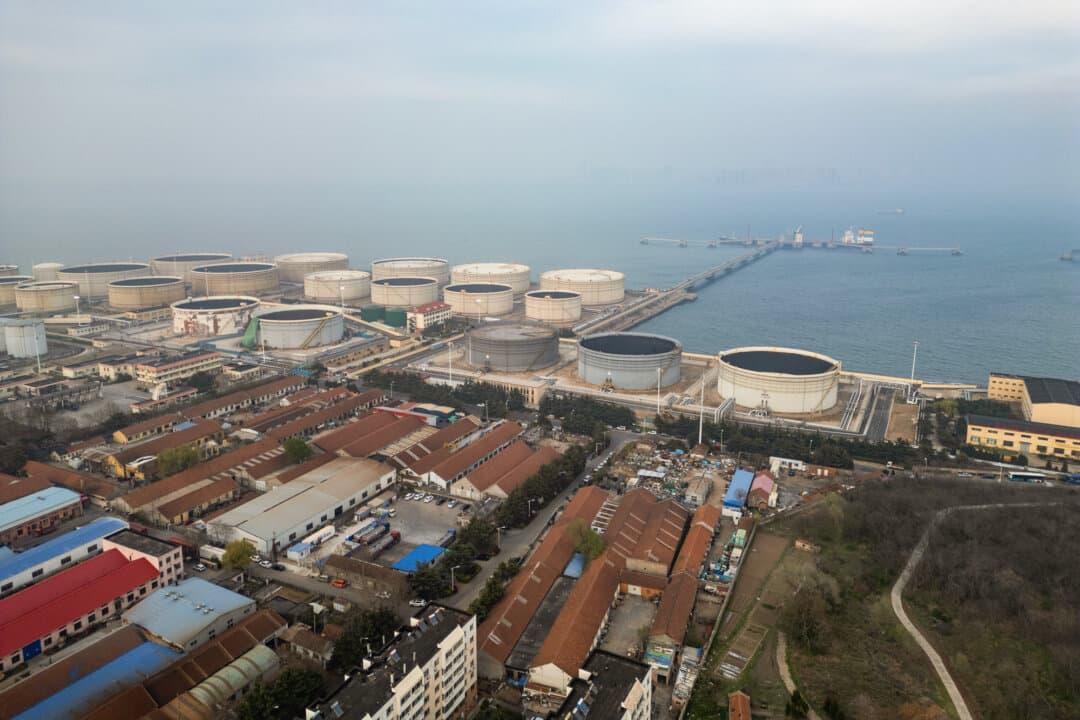
A group of oil tanks stores imported crude oil at Qingdao Port Crude Oil Terminal in Qingdao, Shandong Province, China, on April 12, 2026. For decades, Beijing has purchased most of Iran's sanctioned oil at heavy discounts. Iran has also provided China with a platform to conduct business in Chinese yuan, allowing it to bypass U.S. sanctions in the dollar system. (Staff/Getty Images)
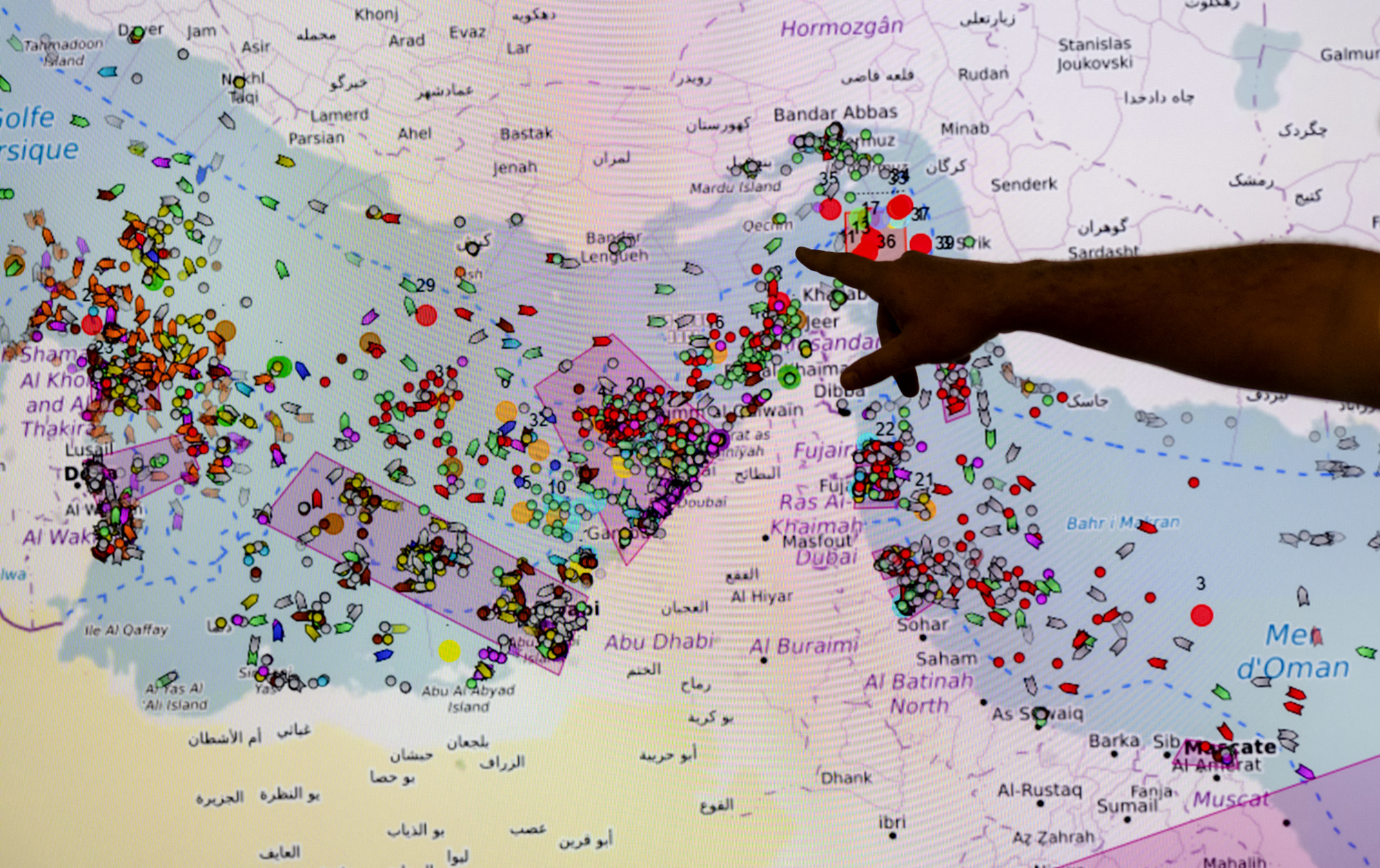
A shadow fleet is a network of aging tankers that transport oil by obscuring the origin and destination. United Against Nuclear Iran, a U.S.-based advocacy group, has tracked more than 500 vessels serving Iranian oil in recent years. Ship-to-ship transfers are usually conducted east of the Singapore Strait, near Malaysia, for Iranian oil bound for China, according to Ray Powell, director of the Sealight initiative at Stanford University’s Gordian Knott Center for National Security Innovation.
Hengli has a refinery capacity of about 400,000 barrels per day, according to Kpler, a commodities data firm that tracks global oil, gas, and shipping flows. That is about a third of China’s daily imports from Iran. Another analytical firm, Vortexa, tracked China’s imports of Iranian oil at between 1.4 million and 1.7 million barrels per day last year and 1.2 million barrels per day this year.
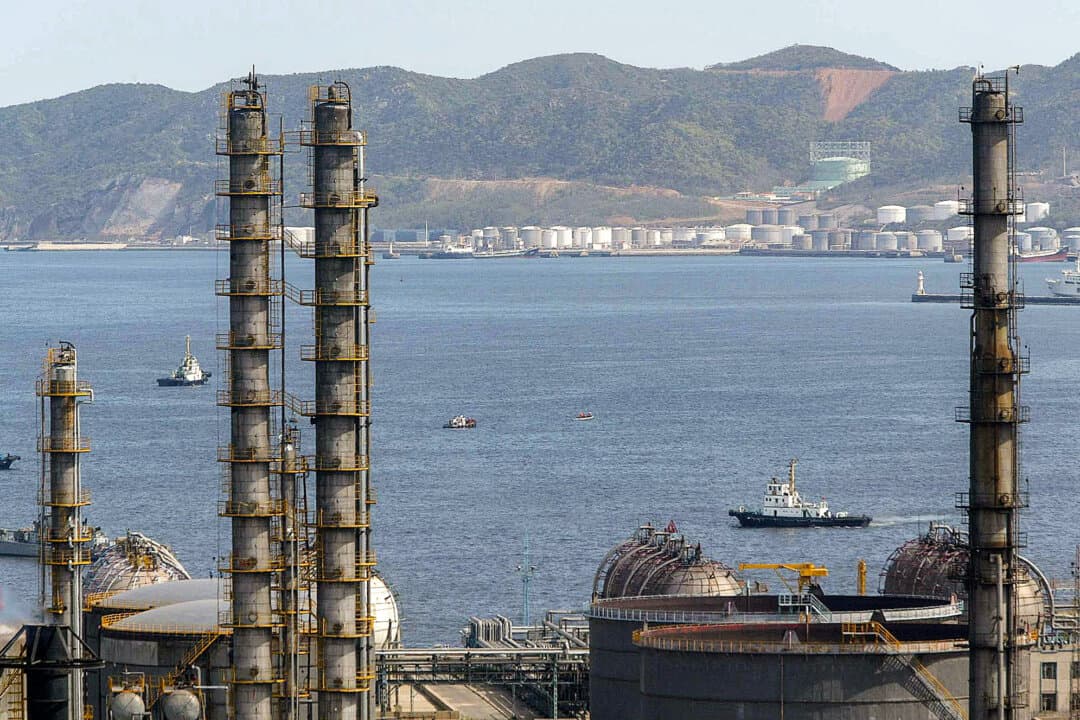
The Dalian Petrochemical Plant (foreground) sits near Dalian Bay in Dalian, Liaoning Province, China, on May 8, 2002. The U.S. Treasury has sanctioned Hengli Petrochemical (Dalian) Refinery Co. (Hengli) and warned two Chinese banks of potential secondary sanctions for supporting the Iranian regime. (Frederic J. Brown/AFP via Getty Images)
The company is located in Dalian, and Kpler estimated that the nearby port received Iranian oil, on average, 202,000 barrels per day last year and 253,000 barrels per day so far this year.
“[Hengli is] larger and therefore potentially more embedded in China’s banking system than prior targets,” said Max Meizlish, a research fellow at the Foundation for Defense of Democracies.
In addition to the banking system, the Chinese teapot is deeply entrenched in the regime’s politics and economics.
A 2018 state-owned media report revealed that Hengli is a minority-owned subsidiary of Sinochem Group, now Sinochem Holdings, a conglomerate managed by a commission under the Chinese State Council.
In the report, Hengli’s chairman positioned the company as an energy champion for the Belt and Road Initiative, Chinese leader Xi Jinping’s signature geopolitical platform for economic and military expansion.
In a filing to the Shanghai Stock Exchange on April 27, Hengli stated that it “has never engaged in any trade with Iran” and that “the Company will continue to utilize RMB-settled crude oil procurement channels,” referring to the official name of China’s currency, the renminbi.
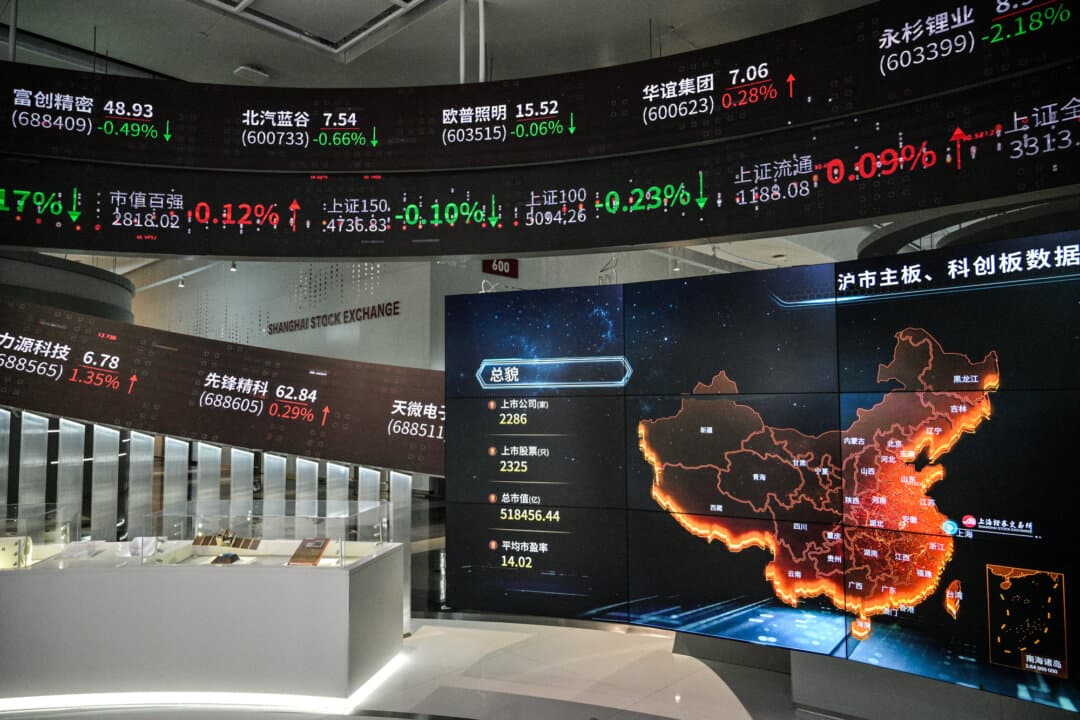
Screens display financial market movements at the Shanghai Stock Exchange in Shanghai on April 25, 2025. In an April 27 filing, Hengli told the exchange it “has never engaged in any trade with Iran” and would continue using Chinese yuan-denominated channels for crude oil purchases. (Hector Retamal/AFP via Getty Images)
If Hengli truly had no involvement in buying Iranian oil, it would not have needed to issue such a sanction-defense brief, emphasizing settling its supply in Chinese yuan in the wake of sanctions, said June G. Liao, a seasoned journalist and China expert.
On May 2, the Chinese Ministry of Commerce issued an injunction to block U.S. sanctions on Hengli and four other teapots that the United States sanctioned before the Iran war.
In response, U.S. Secretary of State Marco Rubio told The Epoch Times on May 5: “If you ignore our sanctions, you’re going to face secondary sanctions.
“We don’t do these things for symbolic purposes.”
Intercepting Shadow-Fleet Tankers
Chinese customs stopped reporting oil imports from Iran in 2022, and most Chinese purchases of Iranian oil are masked as imports from Malaysia.
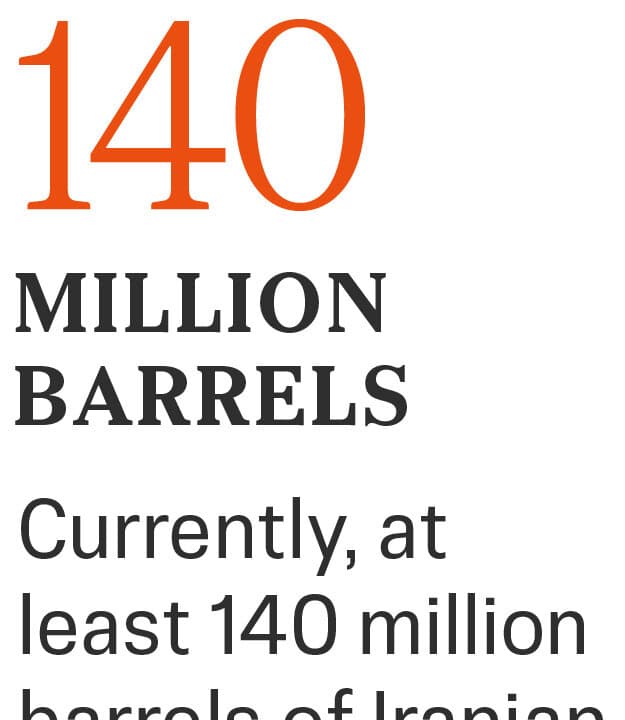
Currently, more than 160 million barrels of Iranian crude oil are at sea, and at least 140 million barrels are outside the blockade zone, Emma Li, a market analyst at Vortexa, told The Epoch Times.
However, Washington is also blocking such oil from generating revenues for Iran.
On April 20 and April 21, the U.S. military intercepted the stateless crude oil tanker M/T Tifani, which is “one of the best-documented shadow-fleet tankers,” according to Powell.
The ship was interdicted in the Indian Ocean near the Maldives while en route east. After the interception, the ship reversed course, and its destination remained unknown. The United States didn’t disclose any plans for the ship.
The Tifani had about 2 million barrels of Iranian crude oil on board, according to U.S. authorities. That load is worth more than $200 million, based on estimates by TankerTrackers.com.
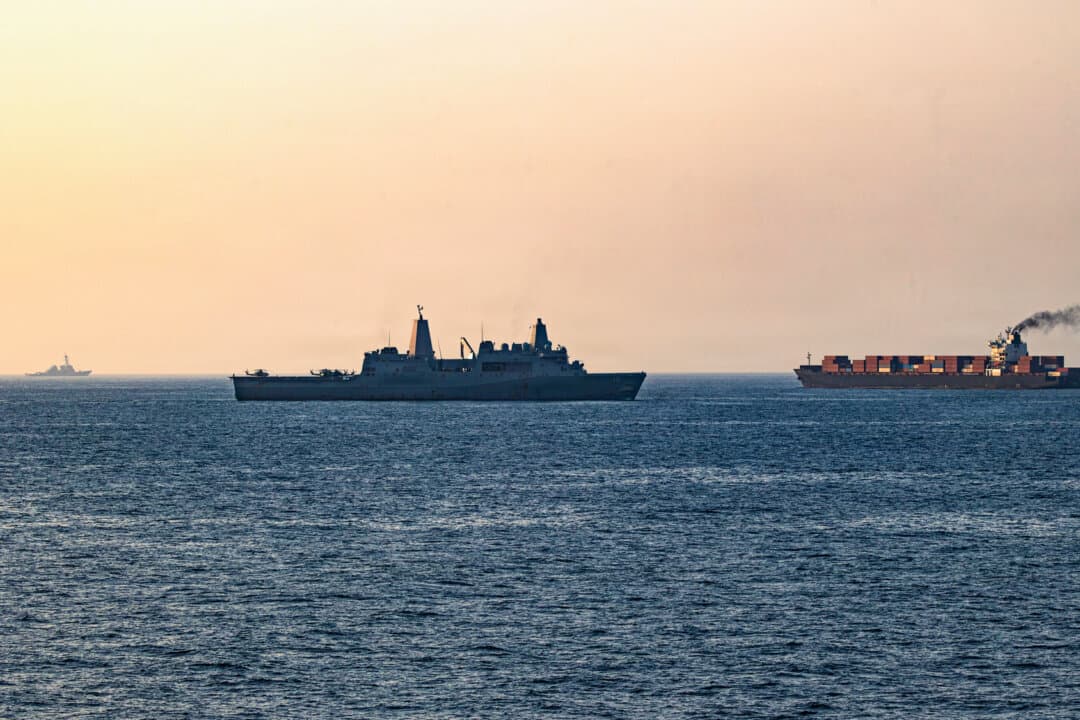
U.S. forces patrol the Arabian Sea near the M/V Touska by the Strait of Hormuz on April 20, 2026. Currently, more than 160 million barrels of Iranian crude oil are at sea, and at least 140 million barrels are outside the blockade zone, a market analyst at Vortexa said. (U.S. Navy via Getty Images)
Those ships had adjusted their routes by sailing along the coastlines of India’s and Pakistan’s territorial seas to avoid the U.S. blockade, knowing that the United States would not enter those waters to enforce it. However, once the shadow fleet tankers pass the immediate blockade area, they enter the Indian Ocean.
Given the interdiction of Tifani in the Indo-Pacific, the shadow-fleet tankers “can’t be sure they’re going to get to their destination,” Powell said. However, he considered the deterrence to be temporary.
On April 22, the U.S. military intercepted another stateless oil tanker, Majestic X, in the Indian Ocean between Sri Lanka and Indonesia, at about the same location where the Tifani was stopped. Both ships were on the U.S. sanction list. Majestic X had been heading for Zhoushan, China.
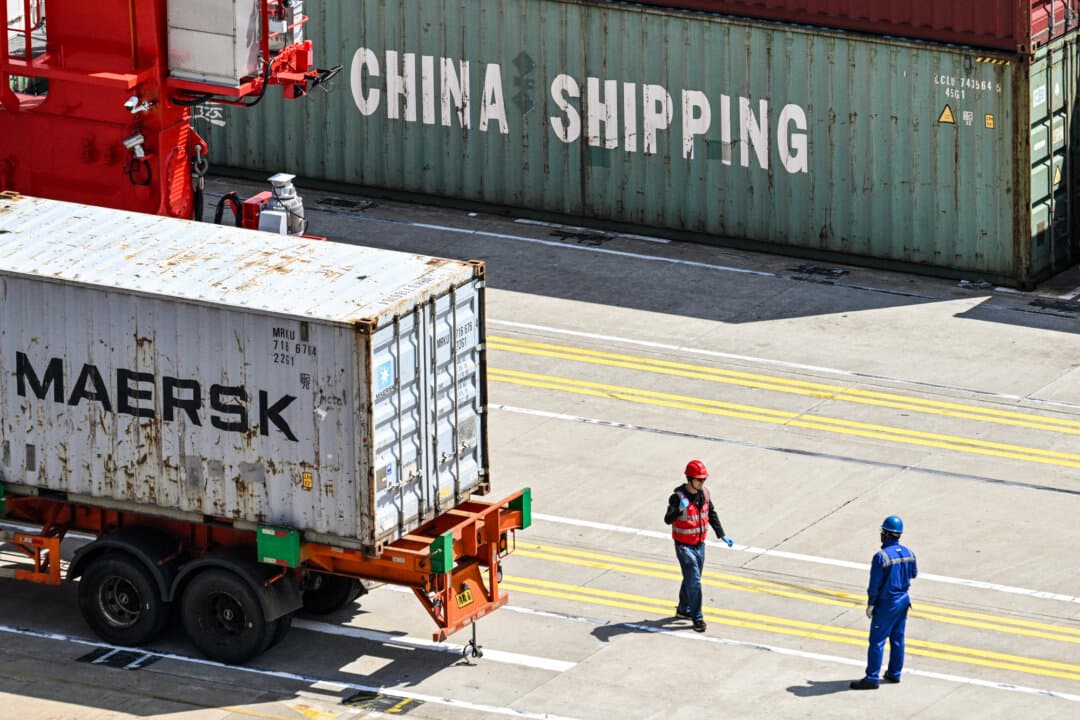
Workers stand next to a truck transporting a container at the Yangshan Deep-Water Port near Shanghai on June 3, 2025. (Hector Retamal/AFP via Getty Images)
Looming Chinese Military Support
In addition to buying oil from Iran, China may be providing weapons to Iran. Trump threatened on April 12 to impose a 50 percent tariff on Chinese goods if reports of such support are confirmed.
Two days later, the Chinese Ministry of Foreign Affairs vowed to retaliate against any new U.S. tariffs.
A week later, U.S. CENTCOM intercepted M/V Touska, an Iranian-flagged container ship. Without identifying the vessel, Trump said in an interview with CNBC on April 21 that the United States had caught a ship that contained a “gift from China” that “wasn’t very nice.”
“I was a little surprised because I have a very good relationship, and I thought I had an understanding with ... Xi,” he said. “But that’s all right. That’s the way the war goes, right?”
Touska was carrying chemical precursors for missiles, according to Nikki Haley, former U.S. ambassador to the United Nations.

Former U.N. Ambassador Nikki Haley speaks during the Republican National Convention in Milwaukee, Wis., on July 16, 2024. Haley recently said an Iranian-flagged container ship intercepted recently was carrying missile chemical precursors from China. (Madalina Vasiliu/The Epoch Times)
Galia Lavi, deputy director of the Israel–China Policy Center at the Institute for National Security Studies in Israel, told The Epoch Times that China’s military involvement with Iran will remain limited to providing dual-use materials.
That’s because China doesn’t want Iran to use the weapons against other strategic partners of China in the region, such as Saudi Arabia and the United Arab Emirates, Lavi said. China also does not want to lose face, knowing that its weapons might prove inferior to those of Israel and the United States in actual battles, she said.
While Beijing may seek to limit direct military exposure, Washington is signaling that even indirect support for Iran will carry consequences.
On May 8, the U.S. State Department announced sanctions against three Chinese companies for providing satellite imagery that enabled Iranian military attacks against U.S. forces during the Iran war.
“The United States will continue to take action to hold China-based entities accountable for their support to Iran and ensure Iran cannot reconstitute its proliferation-sensitive programs following Operation Epic Fury,” the State Department said. “The targeting of U.S. service members and partners will not go unanswered.”
Gaining Leverage Ahead of Summit
Meizlish, who previously worked on sanctions at the U.S. Treasury, pointed out that recent U.S. actions coincide with the Trump–Xi summit in Beijing.
He said the measure included an unusual one-month grace period for other entities to unwind their dealings with Hengli. That means that the sanction was announced before the summit and will be effective in late May.
According to Meizlish, the Treasury’s designation of Hengli as a sanctioned entity is “significant but not sufficient.”
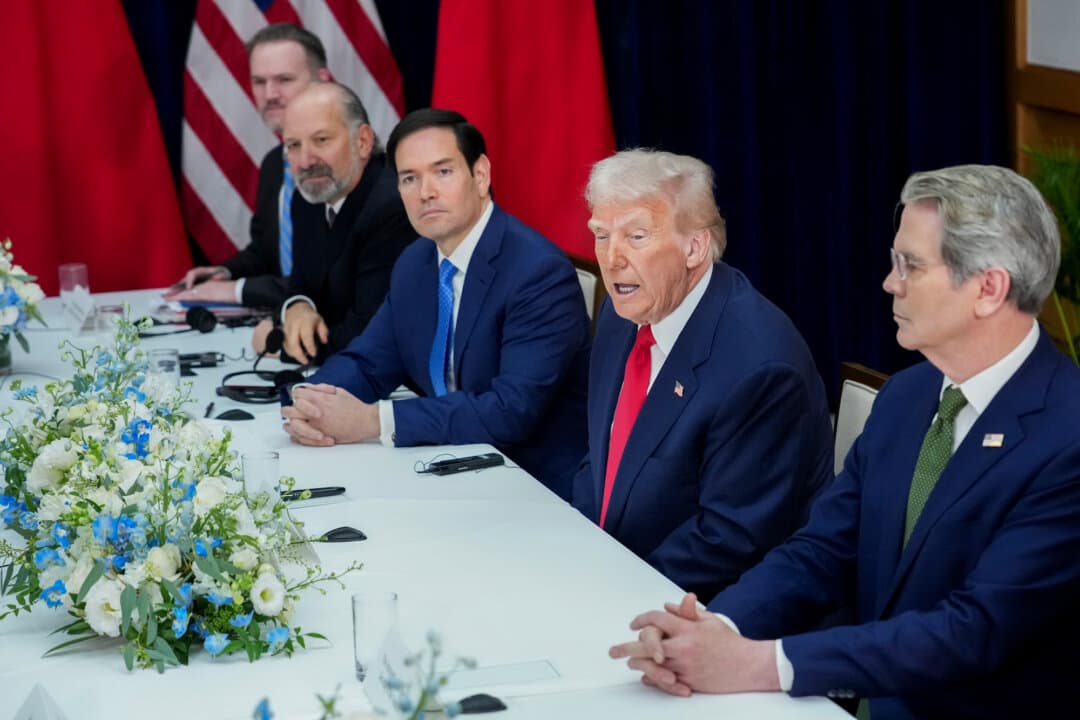
President Donald Trump (2nd R) speaks during a bilateral meeting with Chinese leader Xi Jinping at Gimhae Air Base in Busan, South Korea, on Oct. 30, 2025. Beijing agreed to pause for a year its control that would ban exports of any rare earths sourced from China or using Chinese processing technology. (Andrew Harnik/Getty Images)
“Treasury is going after another Chinese teapot, but the real leverage sits with the banks that move the money and are more intertwined with the Chinese economy and Chinese state-owned enterprises,” he told The Epoch Times.
Financial sanctions are powerful, but different analysts have different views on the timing.
It is not the time for the United States to take serious actions yet, according to Yeh Yao-yuan, a professor of international studies at the University of St. Thomas in Houston.
Trump might need a few more months to settle the Iran war, he said, but a peace agreement reached between the United States and Iran will likely be a significant blow to China.
By losing access to cheap Iranian oil, China’s artificial intelligence development and overall economic outlook will be weakened by higher energy costs, he said. In the meantime, greater U.S. control over oil prices will give Trump additional leverage to extend the rare-earth truce with China.
According to the Global Change Data Lab, a nonprofit organization based in the UK, about 20 percent of China’s total energy consumption comes from oil.
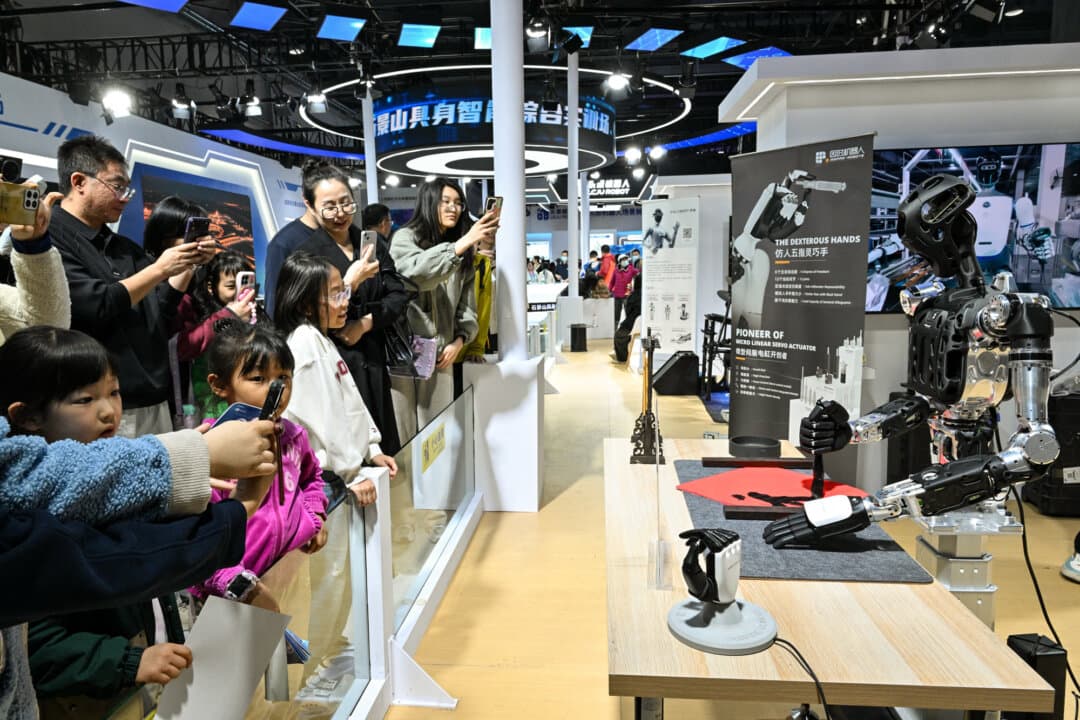
Visitors take pictures of a robot from Yinshi company during the Beijing Sci-Fi Carnival in Beijing on March 28, 2026. By losing access to cheap Iranian oil, China’s artificial intelligence development and overall economic outlook will be weakened by higher energy costs, Yeh Yao-yuan said. (Adek Berry/AFP via Getty Images)
As a result of the Trump–Xi meeting in South Korea in October 2025, Beijing agreed to pause for a year its control that would ban exports of any rare earths sourced from China or using Chinese processing technology. That condition applies to most rare-earth elements worldwide.
Reuters reported that Chinese refineries receive a discount of about $10 per barrel on Iranian oil. At 1.5 million barrels per day and a $10 per barrel discount, The Epoch Times estimates China’s annual savings from Iranian oil at about $5 billion.
Teapots account for about a quarter of China’s refinery capacity. Such teapots are facing pressure to shut down if Beijing doesn’t provide meaningful subsidies, as the rising cost of Iranian oil puts them at a disadvantage, according to senior crude analyst Xu Muyu of Kpler.
Yeh thinks Washington uses financial sanctions as leverage in negotiations but will not take serious action until it has significantly more independence in its rare-earth supply chain. He projects that time frame to be about five to seven years.
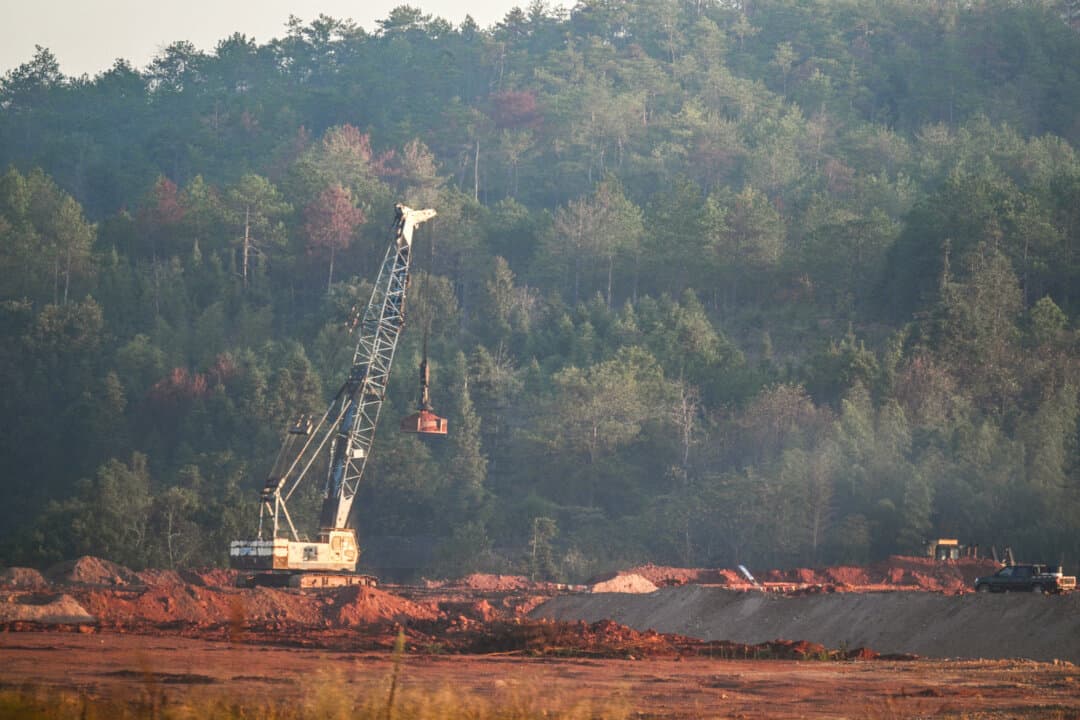
A view of the under-construction Rare Earth Industrial Park is seen in Anyuan county, Jiangxi Province, China, on Nov. 21, 2025. (Hector Retamal/AFP via Getty Images)
In his view, the core value of a Trump–Xi summit is to alleviate global market anxiety that the world’s most powerful countries will not become completely hostile to each other. Currently, the two countries do not really have any more negotiation room to deviate from the “chips for rare earths” playbook, he added.
However, intensifying financial sanctions opens a new window for negotiations for Washington, according to Liao.
In her view, the United States is just getting ready. Beijing knows, too, that Chinese banks, instead of teapots, are the real vulnerabilities, she said.
“The United States sanctions Hengli as a way of confronting Xi Jinping about the role the Chinese regime plays in the Iran issue,“ she told The Epoch Times. ”Will Beijing continue to enable Iran, and what price is it willing to pay for that role? Can Beijing afford to pay that price?”