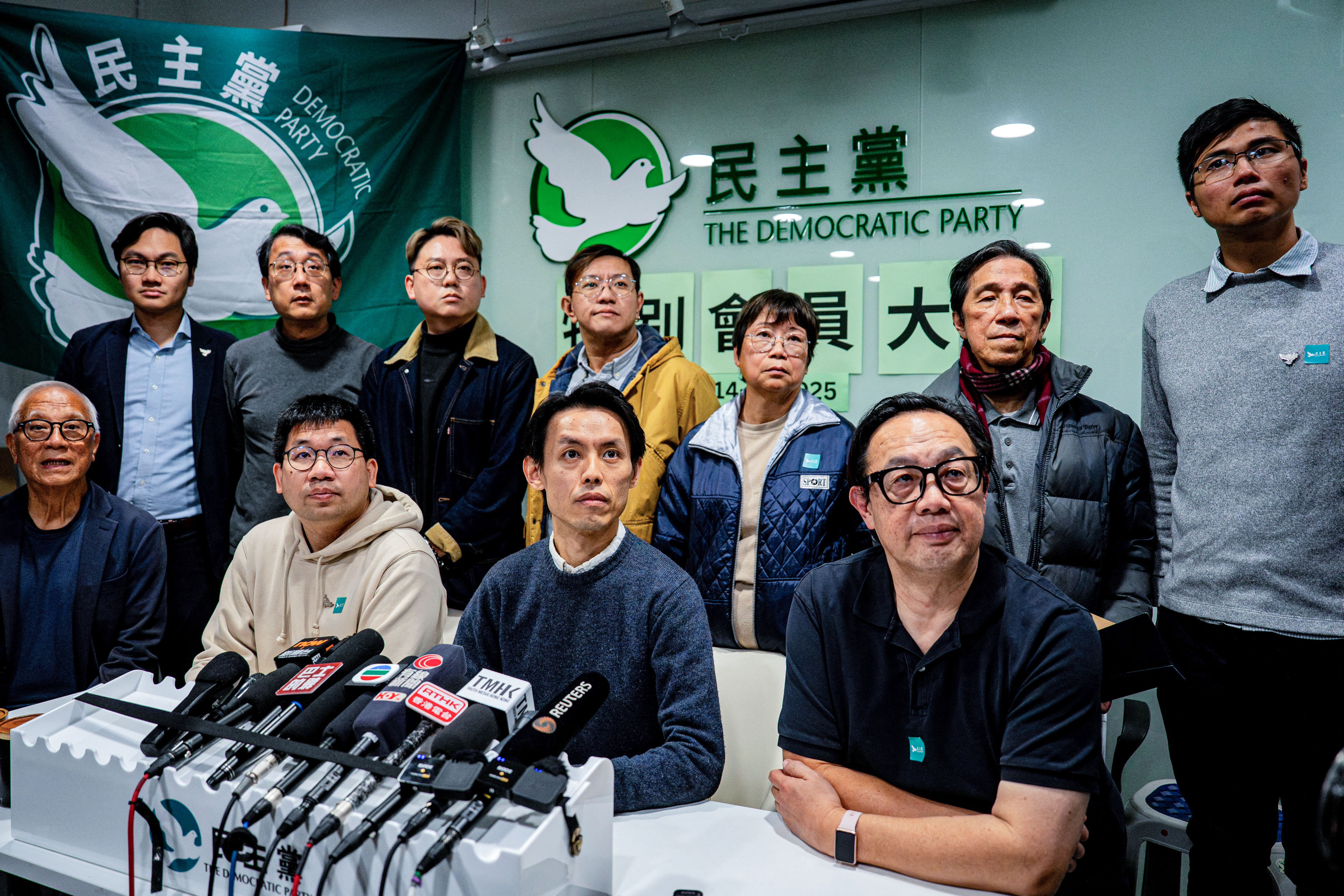
Hong Kong’s Democratic Party, the city’s longest-standing pro-democracy political party, voted on Sunday to dissolve, marking the latest retreat of the political opposition under Beijing’s sweeping suppression campaign and signaling the effective end of nearly three decades of moderate democratic participation in the city’s politics.
The decision was approved at a special members’ meeting on Sunday, where 117 of 121 ballots cast supported disbanding the party, with four abstentions, said party chairman Lo Kin-hei at a press conference.
“To have journeyed through these three decades, shoulder to shoulder with the people of Hong Kong, has been our greatest honour,” Lo said. “Throughout these years, we have always treated the well-being of Hong Kong and its people as our guiding purpose.”
Founded in 1994 by veteran pro-democracy advocates including Martin Lee—widely known as the “father of democracy” in Hong Kong—the Democratic Party was once the city’s most influential opposition force before and after its 1997 handover from Britain to China. For years, it led the pro-democracy camp in the city’s legislature and pushed for democratic reform and civil liberties.
Pressure Behind the Scenes
Senior party figures previously said that Chinese officials or middlemen had threatened them with serious consequences, including possible arrests, if they don’t disband voluntarily. The Hong Kong’s Liaison Office, Beijing’s top representative body in the city, did not respond to requests for comment.
The party’s dissolution comes amid a prolonged attack on civil and political rights and freedoms in Hong Kong, as Beijing has tightened control over the city under the banner of national security.
Opposition Marginalized After National Security Law
Following the 2019–2020 Hong Kong protests, Beijing imposed the Hong Kong National Security Law in 2020, bypassing the city’s own legislature. Since then, dozens of pro-democracy politicians and activists have been arrested, civil society groups have disbanded, and independent media outlets have been shut down.
The Democratic Party was hit particularly hard. Prominent party figures including Wu Chi-wai, Albert Ho, Helena Wong, and Lam Cheuk-ting were charged or sentenced under the opaque law.
In 2021, Beijing overhauled Hong Kong’s electoral system, introducing a pro-Beijing vetting panel that effectively barred candidates that oppose the Chinese Communist Party’s positions. The Democratic Party as well as other parties in the pro-democracy camp have been unable to field candidates in Legislative Council elections since then.
In the most recent legislative election, which concluded last week, the party was again excluded, cementing its removal from Hong Kong’s political institutions.
‘A Very Troubling End’
Former party chairwoman Emily Lau said she was deeply saddened by the news.
“Why does an organization that has done so much for Hong Kong need to end like this? I find it very problematic,” she said.
“We were never able to achieve real democracy. We never had the chance to elect our government,” Lau added, saying she feared the space promised under China’s “one country, two systems” framework would continue to shrink and lead to more arrests.
No Major Opposition Parties Left
With the Democratic Party’s exit, Hong Kong is now left without any major opposition political party to the pro-Chinese Communist Party bloc. The Civic Party disbanded in 2023, while the League of Social Democrats announced in June that it would cease operations.
The Democratic Party’s dissolution underscores how Hong Kong’s political landscape has been reshaped under Beijing’s direction into one with little room for political dissent.
The announcement came a day before media tycoon Jimmy Lai, founder of Apple Daily and a prominent pro-democracy advocate, is expected to face a verdict on charges made under the same National Security law—further heightening international attention on Hong Kong’s political future.
Reuters and Wang Junyi contributed to this report.