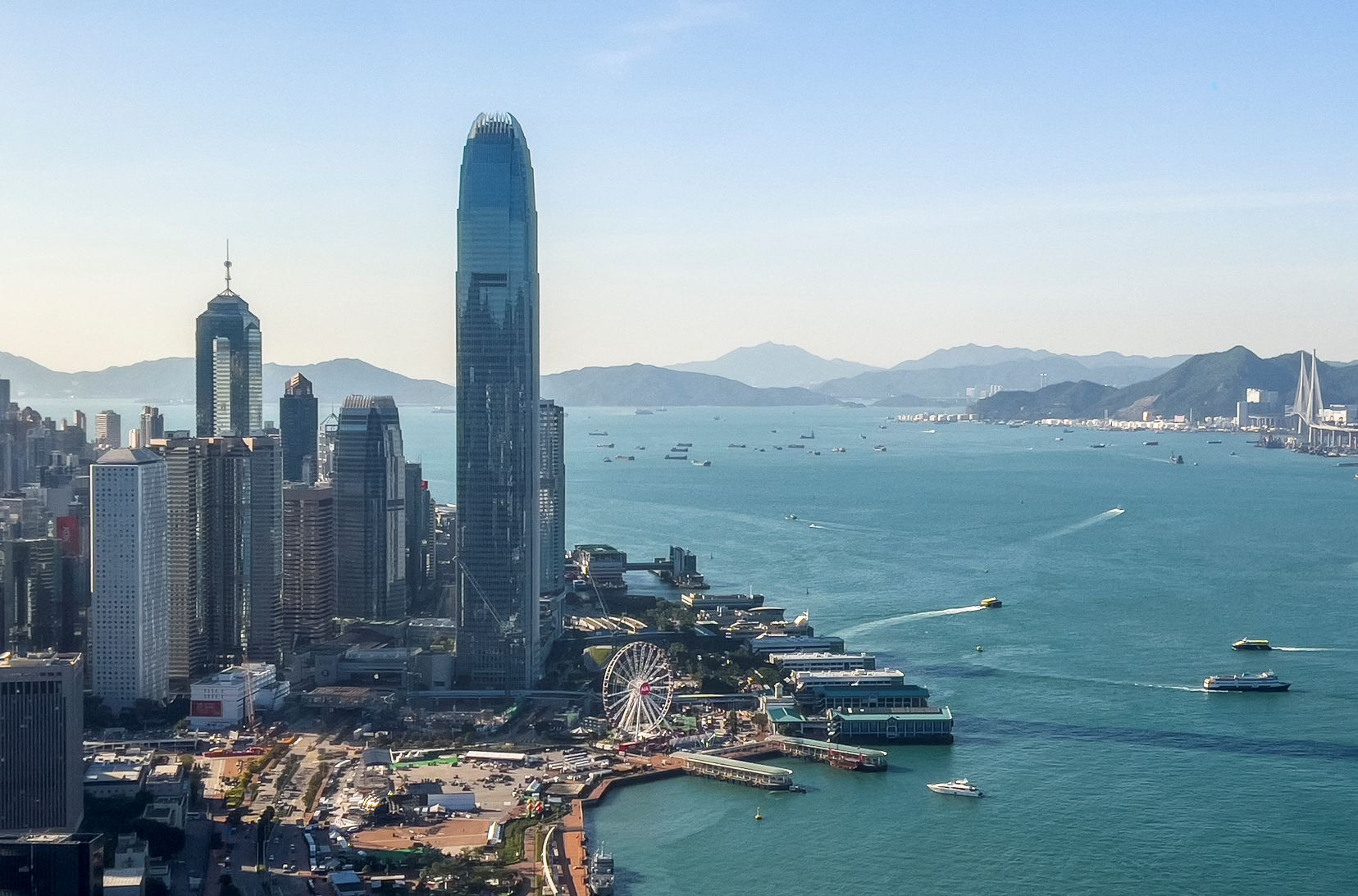

Hong Kong has seen a prolonged wave of business closures across its restaurant, retail, and service sectors, alongside rising unemployment and personal bankruptcies, even as official figures show economic growth.
The downturn comes as the city introduces its first five-year development plan, modeled on Beijing’s five-year planning system.
In July 2026, Hong Kong recorded 104 compulsory winding-up petitions against companies, up 35.1 percent from July 2025, according to the Official Receiver’s Office. It was the highest monthly total in 22 years, since September 2004, and the first time the figure had exceeded 100 in a single month during that period.
The number of winding-up petitions has risen steadily in recent years. Hong Kong recorded 566 cases in 2023, 740 in 2024, and 831 in 2025. A further 595 cases were filed in the first seven months of 2026.
Restaurants have been among the hardest-hit businesses. Long-established local eateries and restaurant chains have shut down, including Yuen Long’s Kwok Kee Congee Shop and the Pizza-BOX chain, which operated for 23 years.
The retail sector has faced similar pressures. Supermarket chain ParknShop has closed multiple neighborhood outlets, while British luxury food retailer Fortnum & Mason shut its Tsim Sha Tsui store. H&M closed its flagship store in Causeway Bay, and century-old department store Sincere announced the closure of its Central branch after shutting another outlet earlier in the year. DFS also closed its Tsim Sha Tsui duty-free store.
According to a June report by the Hong Kong Legislative Council Secretariat’s Research Office, total restaurant-sector receipts in the first quarter of 2026 were 7.2 percent lower than in the same period of 2018. Bars and Chinese restaurants experienced particularly steep declines, of 28.3 percent and 27.9 percent, respectively.
Unemployment and Bankruptcies
Hong Kong’s unemployment rate rose from 3.7 percent in the first quarter of 2026 to 3.8 percent in the second quarter, with approximately 153,900 people unemployed, according to the city’s Census and Statistics Department.
Three Hong Kong residents spoke to The Epoch Times on condition of anonymity out of fear of reprisal.
A 36-year-old single mother surnamed Chun, who has two children, told the publication that she lost her job at a locally owned clothing company in September and had not yet found another position.
“The economy in Hong Kong is not doing well now,” she said. “I can find a job, but I still have to look after my kids. So I cannot take on jobs that are unsuitable for me.”
The pressure on businesses and households has coincided with changes in consumer behavior. A Hong Kong resident told The Epoch Times that evening spending had declined compared with the city’s past nightlife culture.
“People spend less at night. Hong Kong doesn’t have as much nightlife as before,” he said, adding that residents had traditionally eaten out frequently, helping restaurants stay in business.
The resident attributed part of the change to the pro-democracy protests that began in 2019, subsequent government restrictions, and the COVID-19 pandemic. Beijing imposed the National Security Law on Hong Kong on June 30, 2020, following months of large-scale protests.
Another resident told The Epoch Times that some businesses had closed only to be replaced by mainland Chinese operators. As a result, she said, commercial districts could still appear busy even as ownership and management changed.
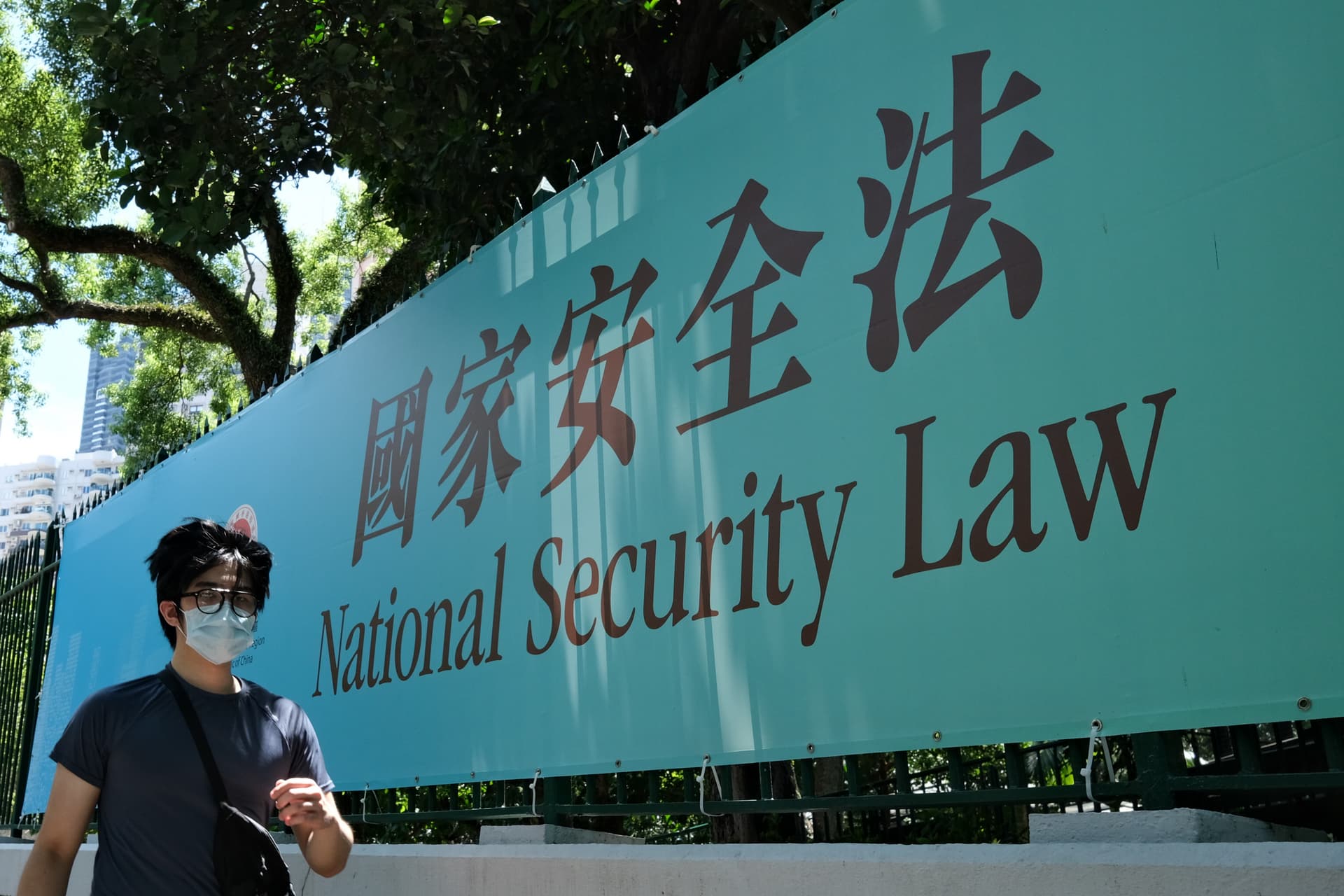
A man walks past a public notice banner for the National Security Law in Hong Kong on July 15, 2020. (Anthony Wallace/AFP via Getty Images)
Growth Figures Versus Business Conditions
Despite the closures and rising unemployment, Hong Kong’s economy expanded by 5.9 percent year over year in the first quarter of 2026 and 4.3 percent in the second quarter, producing growth of 5.1 percent for the first half of the year.
The divergence between headline economic growth and conditions facing small businesses has raised questions about how broadly the recovery is benefiting residents.
Davy Jun Huang, a U.S.-based political economist and former columnist for Chinese state media outlet CNTV, told The Epoch Times that growth in financial transactions, trade, and large company activity could lift gross domestic product without translating into comparable gains for ordinary households.
“Growth appears in the reports, but ordinary people cannot see corresponding opportunities,” Huang said.
The economic pressures come as Hong Kong adopts its first five-year development plan for 2026–2030. The framework is associated with Beijing’s state-directed development model for mainland China.
Hong Kong’s Chief Executive John Lee said in an Oct. 9 statement that the plan “proactively aligns with” Beijing’s 15th five-year plan for mainland China, “leading Hong Kong in better seizing development opportunities and better integrating into and serving the overall national development.”
However, Lee said last month that the plan’s adoption will neither change Hong Kong’s existing capitalist system nor mean the city is adopting a planned economy.
The policy has raised questions about how Hong Kong will balance Beijing-led development with the market autonomy and institutional confidence on which its role as an international financial center depends.
Tang Bing and Gu Xiaohua contributed to this report.