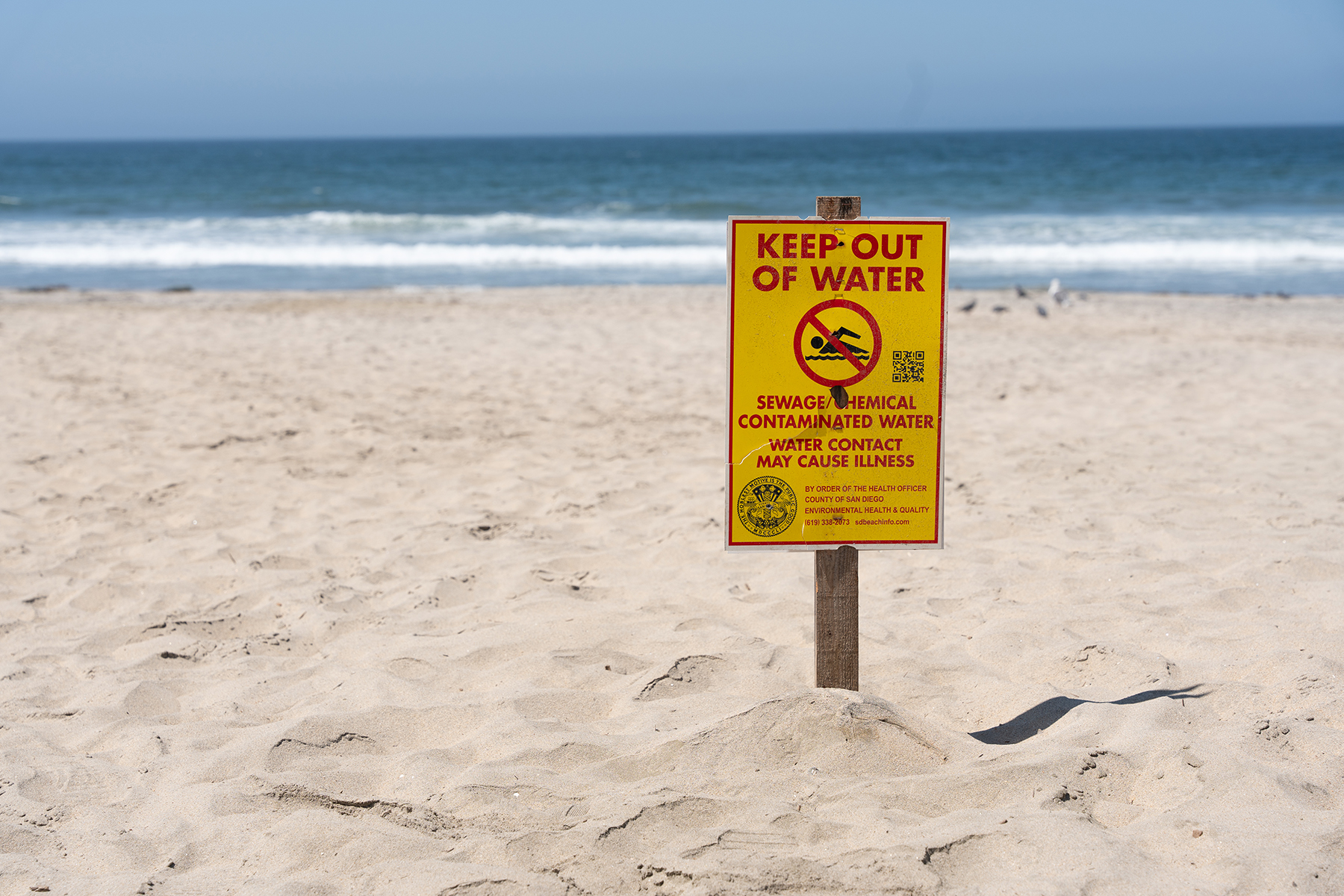

Authorities in areas in California, Illinois, Massachusetts, New York, and Washington state have shut down some beaches ahead of the July 4 weekend due to high levels of bacteria.
Officials in San Diego, California, have shut down at least a half-dozen beaches because bacteria levels may exceed health standards and advised swimmers to avoid water contact in the closure areas.
A notice published by health authorities in San Diego County on July 1 said that significant rain can cause runoff from urban areas to enter oceans and bays, causing bacteria levels to increase.
“This contamination causes bacteria to increase significantly in ocean and bay waters, especially near storm drains, rivers, and lagoon outlets,” the notice said.
In Illinois, the state’s Department of Public Health indicates that, at the time of writing, three beaches in suburban Chicago’s McHenry County are closed due to high levels of bacteria. Around six beaches in Lake County, which encompasses the city of Chicago, were also closed over bacteria, according to the county’s website.
Washington state’s King County, in a June 30 update of its beach map, has indicated that four beaches in the area are closed and swimmers were told to “stay out of the water” due to excess “beach bacteria,” including in beaches along the Puget Sound waterway.
“Stay out of the water at these swim beaches: Pritchard Island Beach, and West Green Lake Beach,” said King County, which encompasses Seattle, in an update on its website.
In New York state’s Long Island, officials in Suffolk County said that Benjamin Beach in Bay Shore, Ronkonkoma Beach in the Town of Islip, and Sayville Marina Park Beach in Sayville were shut down for swimming after they found “bacteria at levels in excess of acceptable criteria.”
“Bathing in bacteria-contaminated water can result in gastrointestinal illness, as well as infections of the eyes, ears, nose, and throat,” the county said in the update, citing local health officials. The shutdown order lasts until July 2.
Another Long Island county, Nassau, closed down Morgan Beach in Glen Cove because of elevated bacteria, effective as of June 25. The country has not indicated when it will reopen, only saying that it will remain closed until testing shows bacterial levels within the acceptable limits.
Biltmore Beach Club in Massapequa “remains closed until further notice due to elevated bacterial levels,” the county said in its update.
Meanwhile, a small number of beaches have been closed in Massachusetts, to high levels of bacteria, said officials with the Massachusetts Department of Public Health in a July 2 update posted to the agency’s website.
The vast majority of beaches in the state were open, however, according to a map and data released by the agency.
The Centers for Disease Control and Prevention has warned on its website that bacteria known as vibrio can be found in coastal waters, causing a range of symptoms including diarrhea, stomach cramps, vomiting and fever, skin infections, and low blood pressure.
According to the federal health agency, certain types of vibrio bacteria can cause necrotizing fasciitis, or a “severe infection in which the flesh around an open wound dies.” Some media outlets have said the bacteria, namely Vibrio vulnificus, is a “flesh-eating” variety, it has also noted.
But beaches can be closed due to high levels of other species of bacteria, such as E. Coli, salmonella, shigella, and others, as well as intestinal parasites such as giardia and cryptosporidium.