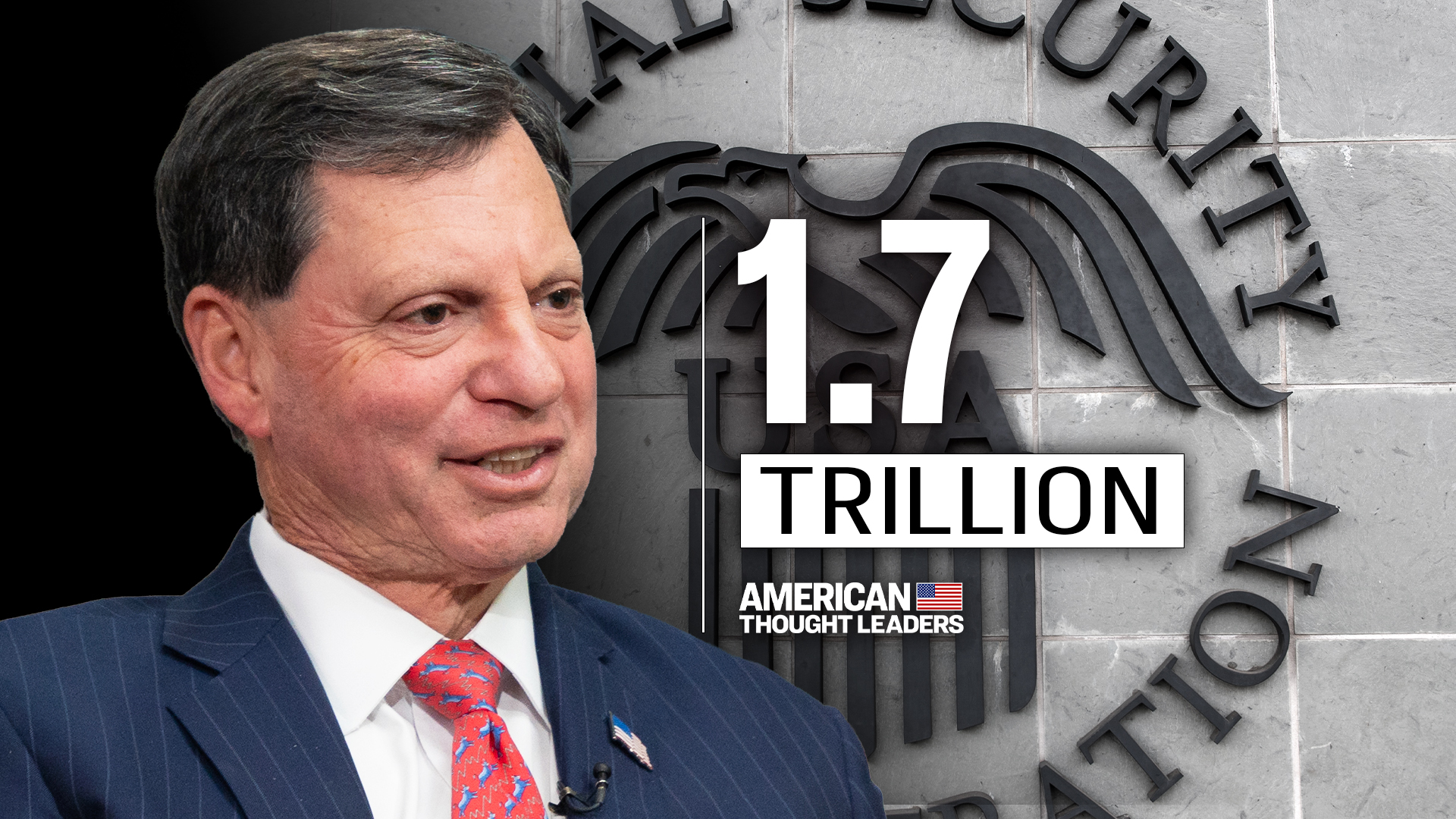

[RUSH TRANSCRIPT BELOW] In this episode, I’m sitting down with Frank Bisignano, who oversees not one, but two of America’s most consequential institutions: the Social Security Administration (SSA) and the Internal Revenue Service (IRS).
Before stepping into government, he built a career at the very top of finance as the youngest senior vice president in American Express history at just 25, co-COO of JPMorgan Chase, and CEO of the fintech company Fiserv.
Now, he’s taking on a different kind of challenge: bringing, in his words, “accuracy” to massive federal agencies that impact every American.
He’s cleaning up records—including moving records of 12.4 million people aged 120 and over into the Social Security Administration’s Death Master File—and digitizing records to streamline systems.
“There wasn’t really a routine to reconcile data. ... It wasn’t that people who weren’t alive any longer were getting paid social security. It was that there was a live social security number which could be used throughout the whole system,” Bisignano said.
How is he transforming these agencies? What new benefits are there in this year’s tax season?
How are the newly rolled out “Trump accounts” doing? And will Social Security be able to resolve insolvency challenges in the decades ahead?
Views expressed in this video are opinions of the host and the guest, and do not necessarily reflect the views of The Epoch Times.
RUSH TRANSCRIPT
Jan Jekielek:
Commissioner Frank Bisignano, such a pleasure to have you on American Thought Leaders.
Commissioner Frank Bisignano:
Thanks for having me. I’m honored to be here.
Mr. Jekielek:
So you take care of two agencies which deal with an astonishing amount of cash. I see here the Social Security Administration [SSA] outlays are about $1.7 trillion and the Internal Revenue Service [IRS], inflows of $5.6 trillion. That is an unfathomable amount of money that you are responsible for. A big question that people have is we keep hearing about waste, fraud, and abuse. This has been a key issue for this administration. Across these two agencies, what were the things that you found that perhaps were the most shocking or unbelievable? And what corrections have you been implementing?
Commissioner Bisignano:
Fraud, waste, and abuse happen in all shapes and sizes and all dimensions. Those are some staggering numbers. But as I had said in my confirmation hearing, I was running a company doing, you know, $2.5 trillion of payments a day. So I’ve been fortunate and blessed with the opportunities I’ve had and the people I’ve worked for, and now, especially, the great honor to work for President Trump.
But there was one very simple thing at Social Security. We had a website that you could have a digital account on, but it was down almost 20 percent of the time—by design, 29 hours a week. You might not think of that as fraud, waste, and abuse, but we now have more than a hundred million digital users, because in a couple of weeks, with testing and everything, we changed that. It was up every hour of the day. We also ran a concept that said we were going to have a pristine control environment. It’s always important, and we saved tens of billions of dollars on what we saw as control-related issues.
We treat everything in a manner that we want to get the best possible outcome. So I think when you think about fraud, waste, and abuse, getting payments right is the most important thing. Being able to, given the amount of money that we’re flowing, that’s what we’ve had a maniacal focus on while delivering customer service at a level that they’ve never seen before.
Mr. Jekielek:
Just very briefly, what do you mean by design it was down?
Commissioner Bisignano:
They were running batch cycles on weekends and at night. When it was first built, the conclusion was, okay, well, we'll have the data up. We can have the data up when we’re running the batch cycle. But, you know, modern-day technology allows you to mirror data and then keep it up there and do something called store and forward.
So if people were transacting with us, we‘d store it. And when the batch cycle ended running, we’d pass it on. It didn’t sound really bad unless you were in Hawaii or California. Lots of people wanted to use the system on weekends, and it wasn’t always up. So it was by design, but that doesn’t mean it was a good idea. It might have been a convenient idea. And we had some great engineers that changed it all in less than two weeks.
Mr. Jekielek:
So, you know, one of the things I have here is that there were 12.4 million individuals on Social Security aged 120 or over. So what was happening? I’ve read about this. What was happening with these people? Were they getting paid somehow?
Commissioner Bisignano:
No, you know, we embarked on a project that we’re at the kind of completion of what I called reconciling the data. So, you know, there wasn’t really a routine to reconcile data. And over time, it evolved. And I thought, something, call it the Social Security database; we now have built routines that cause us to regularly ensure that those on it or should be on it. And what I said, which I a hundred percent believe, is that it wasn’t that people who weren’t alive any longer were getting paid Social Security. It was that there was a live Social Security number that could be used throughout the whole system.
So, you know, that’s where you’re going to have fraud, waste, and abuse. You know, I said this too early on when asked about it. You know, of course, what was being said was we have inaccurate information on a mission-critical file. And we’ve cleaned that up, and we’ve cleaned it up way beyond that, way beyond that. And I’m pretty proud of the effort. I created two positions, a head of risk management and a head of cyber and security and resiliency that did not exist reporting to me because the control environment is so darn important to deliver a great client experience.
Mr. Jekielek:
So there’s something called SSI [Supplemental Security Income], and I think there’s just a lot of confusion about even what this is exactly and why it’s important. Can you lay that out?
Commissioner Bisignano:
Social Security is in 100 percent of every American’s retirement plan. So if you think about it that way. And so also, it protects the most vulnerable. We have a disability system. We have fundamentally 1,000 judges that adjudicate hundreds of thousands of cases to ensure people who should get disability do. And then we have supplemental insurance for those who can’t really manage through the environment. that they operate in, the most vulnerable people.
And what was interesting is when I came into the job, it wasn’t really on my mind. And what I heard from field offices is how much labor goes into SSI because you’re validating monthly that these people qualify for this supplemental payment. And what I decided to do was put somebody in charge of it, right? Have an executive who reports to me have responsibility for SSI, as opposed to having it completely diffused and subordinated to no responsibility but a process throughout the whole organization.
And so we’re streamlining it. We’re using data feeds to help the decision-making criteria. And it’s not serving the largest swath of Americans, but it’s serving almost the most vulnerable and in a manner that actually gives them the full attention of leadership and technology and all the other processes. It’s the smallest part of the Social Security Administration’s payments, but it’s equally as important.
Mr. Jekielek:
You’ve just elevated these benefits, basically. That’s why the focus on this. And before they were at the bottom of the barrel.
Commissioner Bisignano:
Yes, no longer subordinated to a process, but think of it like, I view it like we have business lines. We have a disability business line, we have a retirement business line, and we have a supplemental income business line, and you know that deserves as much attention and requires more work at the end of it. Because once people are in retirement, those are not the people calling us and asking us for help. They get their direct deposits, 99 percent of them. Those who get checks get them in the mail. That’s obviously dissipated over time.
But people on supplemental insurance are continually validating their responsibility to let us know why they need to stay on it. So building a separate leadership and structure will actually save us a lot of money. It’s going to save us a lot of money. But the whole program is about how we do a better job for the American public, but do it in an efficient, modern-day methodology.
Mr. Jekielek:
And when it comes to Social Security, how big an issue is it that people who are illegally in the United States have access to that system and are collecting money they shouldn’t be?
Commissioner Bisignano:
Let’s go back to that story about reconciling the file, that’s one of the main components of it. Ensuring that people are on file and are valid citizens that we have proof of, and you know that’s been the journey we’ve been on since we came here to have accurate books and records so we like to believe that we’ve made a large dent in it. I think you'll hear shortly from us the culmination of that effort, any hints now, tremendous progress, and you know the reason why you know we’re able to drive payment accuracy over time is because we’re only paying those who should get paid.
There was a lot of dialogue about the fact that we took people off the system who we figured out weren’t still alive. We want to be exactly accurate in everything we do because it has a financial implication and an identity implication. I'd give the risk team tremendous grades for what they’ve gotten done, calling through all this data and making it a priority—something that’s never been done before.
Mr. Jekielek:
I want to talk a little bit about your background because you have a pretty unique background to step into this kind of role. Of course, you manage, as you mentioned, a massive payment processor and deal with, you know, again, these sorts of unfathomable amounts of money on a daily basis.
Commissioner Bisignano:
So I was a technologist, an operator, at the pinnacle of my life, having the opportunity to work for President Trump. I worked with Henry Kravitz, who ran KKR [Kohlberg, Kravis, Roberts] and turned around their largest investment. I worked with one of the greatest CEOs in financial services and maybe in the country for over 20 years, Jamie Dimon. Before that, I worked for Jamie and Sandy Weill, who was one of the pioneers of buying companies and integrating them. So I straddled all the technology, operations, and infrastructure. I had the responsibility as the chief administrative officer on 9/11 for Citigroup and had 16,000 people in Lower Manhattan, with 7 World Trade Center being one of our buildings.
I saw everything imaginable and never left, but we had a plan. I spent a lot of time on large-scale operations and then running technical businesses like Global Transaction Services at Citigroup. I ran mortgage businesses multiple times, including post-crisis, and had the opportunity to turn around the housing market with the housing secretary and another chief negotiator for the banks. I really focused on how to make things more efficient, ensure books and records are straight, and deliver for the American consumer. In the last company where I was CEO, I love saying we served every American household. I have that opportunity again here.
Mr. Jekielek:
So you’re bringing a very corporate vision, right? Would you say that’s accurate?
Commissioner Bisignano:
Yes, I would say I’m bringing an operational focus to it that I might have honed in all my years at the top of the largest financial institutions in the world.
Mr. Jekielek:
It’s absolutely fascinating to see, for example, one of the big focuses you seem to have is digitization, and that’s going to streamline a lot of the work that’s happening. So I want to talk about that. But I also want to talk about it in the context where there are a lot of people who are very skeptical of digitization because it makes some of this PII [personally identifiable information], maybe more easily accessible, more easily abused by, there’s a lot less trust in these big institutions, some of these corporate institutions. So how do you square that? On the one side, of course, you can see the value of digitization, right? On the other hand, there’s this potential, I don’t know, increase in the ability to use personal information if that were to be abused. How do you deal with that, first of all?
Commissioner Bisignano:
I’ve always run on a platform of we’re going to serve clients where they want to be served, right? In this case, we have 1,200-plus field offices that are pillars of many communities. And if people want to come in and do face-to-face business, we’re available. I love saying we haven’t shut a field office, right? That doesn’t mean we haven’t done way more transactions online or on the phone. But I think an omni-channel presence matters a lot. In this case, omni-channel means you have the ability to call, you have the ability to walk in, and you have the ability, you know, seven days a week, 24 hours a day, to go online and look for the information you need or do 38 different transaction types. So I think that’s the best you can do for people, right?
We’re going to meet you where you want to go, where you’re most comfortable. We all know that everybody is transacting digitally at all different ages. And we’re in the midst of rolling out a mobile app, taking all that information and allowing you to do it on your phone. And to be able to look up your Social Security account and understand exactly where you are in your life cycle if you’re sitting on a plane and want to look at your mobile app. There’s a reason we have more than 100 million digital users. They’re all voluntary. We didn’t ask one of them to; we might have asked them, but we believe that people should be served and they want to be served.
Obviously, we’re maniacally focused on cyber. I’ve elevated two positions that report to me. One is the head of risk management, and that’s really been the group that’s overseen the cleanup of the database and driven down the fraud numbers by billions. And then a head of security and resiliency, which includes cyber. These are not functions that historically would have ever been even known. reporting close to the commissioner. But I think they’re mandatory functions that deserve a seat at the table to have a voice every week in our governance structures on how to run the place right.
Mr. Jekielek:
I think this applies, this is just the kind of maybe like a bit of a philosophical question, but it has a very profound operational answer. Like, you know, in a role such as yours, both on the side of the IRS and the Social Security SSA, on the one hand, you know, you’re responsible to the people, obviously. This is the form of government we have. On the other hand, you’re responsible to the institutions. And the institutions, the goals are not necessarily always the same.
And we’ve seen increased, for example, increased interest in government institutions and getting a lot of personal information. And so these systems can be abused. I’m just very curious how you think about that. Like, how do we deal with that tension, if you will? Because we’re heading right into a world, right, aggressively, where all information is there, you know, kind of in the cloud, so to speak, right?
Commissioner Bisignano:
Yes. First of all, I think of it in a really pragmatic way. I am here to serve the American people. That means protecting their information also. And I am here to serve the federal government led by President Trump to do the best imaginable job to drive out fraud, waste, and abuse, which really, in my case, means serving the client better and more accurately. I’ve always believed that you can drive efficiency and get higher client service together. You know, fundamentally when, you know, two years ago, it took 40 minutes to answer the phone and now it takes eight. Well, that’s going to be way more productive and way more client service oriented.
And by the way, that’s because we’re using more technology. I love saying technology is the great enabler, right? I’ve done it my whole career. How do we make it easy for the American public to deal with us, the federal government? And how do we make it better, actually, for our employees? For our employees, the more technology we bring, the more their job is enriched. And then lastly, it’s job one for everybody to protect the information. That’s job one, right?
Mr. Jekielek:
That’s, and you know, you sound like you’re doing better than my telecom company to be perfectly honest here.
Commissioner Bisignano:
I say this all the time, and I won’t bring up names, but my wife and I and my family get served by companies whose performance is better than public institutions. But I’m really darn proud of people. And I think at this point I'll tell you something about the people you know in the organization. On the 24th and the 26th of December, there was an executive order that they were holidays and that the workforce could stay home. In these organizations, historically, that’s what they did.
I thought about the people, and they had gone through this horrible, horrible induced shutdown. We were navigating hardships all the time for the people. I mean, we have a horrible shutdown at DHS [U.S. Dept. of Homeland Security] right now. I recognized that I’m the son of a 44-year federal employee.
When I came on the job, I told everybody I had a bias towards them. Of course, they thought, oh my god, what does he mean? I said, I have a bias. The hardest working person I ever knew, my dad, my role model, who was an orphan himself, worked 44 years for the Treasury Department in customs enforcement. Anyhow, I knew Dad liked overtime.
I said, I‘d like to open up all the field offices. I’d like to open up the phone center. I want to serve the American public. Sixty-six percent of our people volunteered to come in. So this went, in SSA, from the largest agencies, the lowest morale to people who want to come in and serve the American public on days they could have stayed home.
That also means they had no tax on that overtime, which is part of the One Big Beautiful Bill Act [OBBA]. That is affecting employers positively and people positively. I hear from employers that now my people want to work overtime more than they ever did because, at some point, they were saying, well, overtime, you know, I get taxed on it. I’m making a trade. I think that was effective also for those who understood when they all volunteered to come in.
Mr. Jekielek:
Let’s talk about Trump accounts. I know this is something we were talking about offline, and I know this is something very important to you. So just explain to me what they are and where we’re at.
Commissioner Bisignano:
Oh, well, we’re about to pierce a million babies born that are going to get the thousand dollars. Start there. In the next four years, you know, for each child born, you fill out my favorite form, 4547, and you can register your child to get a thousand dollars put in a Trump account for them, but you can register anyone up until 18. You know, you begin, whether it’s Michael Dell doing it or there are lots of people who are putting money into the system, parents using it as a savings vehicle for their child until they turn 18. It’s a powerful, powerful instrument.
We have over 3 million Trump accounts opened. Obviously, I said a million babies, but we have over 3 million because people are opening up accounts for their children. I think it’s fabulous. I think it’s another form of an IRA [individual retirement account], just a different concept, right?
Mr. Jekielek:
And I mean, basically, for any child under age 18, this can be opened up. So it sounds like there’s a lot more opportunity here to be taken advantage of.
Commissioner Bisignano:
Yes, I think people are becoming educated on the topic. We probably will continue to educate them. I think you'll see financial planners educating them. I think you’re going to see tax preparers educating them. And I think it’s going to be explosive.
Mr. Jekielek:
Now, on the IRS side, I was looking at some of the numbers; you know, I saw that the refund numbers are up, which is something you’re going to want to talk about, right?
Commissioner Bisignano:
Yes, the refund numbers are up, and they’re up in a double-digit percentage. Recognizing that is one part of the tail of the tape. That’s happening because of the greater benefits of the OBBBA. Now remember, with those greater benefits, people are going to have less withholding in 26. So not only is their refund higher, but they’re also getting more cash in their pocket in 26 through the tax changes that were implemented. And then there were a whole bunch of things that were going to expire, small business benefits that, in the president’s great legislation, he implemented permanency with, obviously, Congress and the Senate.
So when you take all that and then you say the last item is, well, there are some people who aren’t getting refunds because they had other items: capital gains and other items, and are not getting a full tax benefit. So the refund is one part of the story. Then there’s the permanency for things that people had that they were going to lose. There’s the Trump account, and then there’s withholding, so that’s why it’s so darn powerful.
Mr. Jekielek:
They say, I think you said the average tax benefit is up over 780; that’s the number that I see.
Commissioner Bisignano:
Yes, it’s probably up a hair more right now. But yes, if you think about that for a household, that’s real money. That’s a real benefit. Here’s a good way to think about it, too. 45 percent of Americans who have filed, and we’re way past the 50 percent mark right now, right? As I said to the staff this morning, we’re deep into the season. We’re in the fourth quarter of this game, right? And if you think about it in sports terms. And, you know, I don’t think any of us thought the number would be 45 percent of those who’ve already sent their returns and have a Schedule 1-A. And that means that’s the percent of Americans that are getting some benefit other than the fact that we kept permanent what was going to go away.
But on Schedule 1-A, that’s a stunning number. How is that different from before? That would be zero. There was zero tax on tip, zero tax on overtime, and zero deduction for seniors. I think overtime is the largest subscribed. Seniors will probably get the largest benefit. And then, obviously, no tax on car loans. So none of that existed before.
Mr. Jekielek:
So would you say that is your kind of, would you tout that as your biggest success thus far?
Commissioner Bisignano:
I’m just here to get the work done. This is really the president leading this, and my job was to execute, but I will give the team tremendous success in that we did all the technology changes, put everything in, and are serving the American public better than before. And by the way, guess what they are doing? Using our online capabilities, digital first, right? The ability to not—we’re getting less phone calls this year than last year, because people have online capabilities that we built.
Mr. Jekielek:
In the past, there have been examples of the IRS being kind of weaponized as a kind of a tool. And I’m wondering, you know, this is something that, you know, I think existed at some level, at least when you came into your role. How are we dealing with that?
Commissioner Bisignano:
It goes back to this. At the end of the day, our job is to uphold the law, right? You know, we’re a multidimensional organization. We serve the American public. We’re financial services. But we have to make sure everybody is doing what they’re supposed to be doing. And, you know, I think so, right? So when you find out, and many times, you know, we can help people do their taxes better. And I also believe that, you know, the tax preparers have a responsibility here.
And I’ve had very good reception from them in terms of us getting together and talking about how they could do a better job so that taxpayers have all the right information and can be 100 percent compliant. Remember, we have a usually compliant system. We have a usually compliant system. And some people don’t always just get it right, and that’s a simple error. And then sometimes it’s a more complicated situation. That’s a very, very small, small minority. It’s not the majority.
Mr. Jekielek:
Okay, so what I was thinking about specifically, like there were examples, and I think this happened at some scale, where there was kind of favoritism for certain types of nonprofit entities and a lack of favoritism for others. And so it was kind of, there’s a human element in it, right?
Commissioner Bisignano:
That’s where I really believe technology can cover a lot of ground and present the cases appropriately. And then you’re going to get solid decision-making, and you'll be able to actually have much better information.
Mr. Jekielek:
I guess it’s a paper trail, there’s, I guess technically it’s not a paper trail, but you could track it better, is this the idea?
Commissioner Bisignano:
Yes, look at the amount of things we could do. You know, everybody gets concerned when you use the word AI, except I don’t. It’s technology. The cloud’s technology. AI is technology. Years ago, local area networks were technology. Before that, mainframes. Let’s just talk about technology as a great enabler, and it‘ll make our workforce better. It’ll help people be more compliant. It'll help tax preparers be more compliant for their people, which they really want to be, and to get a better outcome and a higher compliance rate.
Mr. Jekielek:
So back to the SSA for a moment. One of the things that I see keeps coming up, and I just like to understand for the record the reality of it, is that Social Security is going to become insolvent in the not too distant future. At least that’s the narrative, right? And I’ve seen all sorts of different explanations as to, yes, it’s true. No, it’s not true. It’s partially true. Can you kind of set the record straight for me? What is the situation?
Commissioner Bisignano:
The last report by the actuary said seven years if nothing is done. People will get paid out at 83 percent, not 100 percent. So that’s the first thing because some people think it’s zero when you say solvency. Now, the practical issue is the president has been very, very clear. He’s going to protect and preserve, and he’s going to protect, preserve, and strengthen, right? And so there is no vision of zero occurring here.
But the first thing that had to occur, in my opinion, as the commissioner of Social Security, is to get the books and records right, eliminate fraud, waste, and abuse, and serve the American public in a manner they’re being served, which gets them to feel we have a modern-day system. And then obviously, this all gets solved by Congress, right?
And so I have high confidence. I had high confidence coming into the job. I always believed the job was to root out fraud, waste, and abuse. We found billions of dollars from that. Deliver a great product for the American public. It’s going on right now. It will continue to go on. And give our lawmakers what they need to make a good, solid decision.
Mr. Jekielek:
And just so I get it, like, in a kind of, in a nutshell here, you mentioned that you were able to find billions of dollars in that waste fraud. Can you just kind of summarize for me where that came from?
Commissioner Bisignano:
Fundamentally, it’s about proper payments. You know, we‘ll sit around a table on Monday and go through a series of risk factors, and we’ll always be on how we drive improper payments higher. I made the point when people would say it’s 99 percent accurate.I said, it’s supposed to be ninety-nine point nine, nine, nine, nine, nine. That’s the place I came from.
Mr. Jekielek:
And that’s in billions come out of that.
Commissioner Bisignano:
Yes.
Mr. Jekielek:
That’s astonishing. Well, it’s hard to, I mean, you would understand that given your background, right?
Commissioner Bisignano:
I’m just fortunate to be here, and I just want to serve the president’s administration and do the best job I can. I guess I would—but the bottom line is you’re saying through efficiency you found this. Well, that’s accuracy. When you have a file that has all types of people on it that maybe shouldn’t be on it, as the president had identified, that’s the tip of the iceberg. So we don’t go around publicizing the cleanup of the databases, right? We don’t go pointing fingers and blaming people. I’ve always believed, let’s go get the job done, and no one will tell people the outcome.
Mr. Jekielek:
As we finish up soon, what is it that people should be watching out for, both in terms of, you know, social security, if that’s where their minds are, or tax season and IRS-related work?
Commissioner Bisignano:
I would say it’s watching out, as opposed to capability. What capabilities should people be looking for from both of these organizations? Because I talk about digital first. If you go to the social security website, you open my social security account, you’ve just opened a whole digital channel to operate through that if you didn’t have—if you weren’t one of the hundred million who have one—and I’m pretty darn proud of that number, by the way, because it wasn’t that number when we started at all. If you’re not, you should have it. It’s a capability that you can access 24/7.
I think the same for the online capabilities we offer at the IRS, everything from where’s my refund to, you know, your people’s tax accounts. It’s all available. And of course, we’re always thinking about how to make our websites better, our presence better, and how to digitize it better. But the capabilities that are being used right now on both are used by, you know, hundreds of millions of times a year. And so I'd say think digital first, but know that we’re a phone call away or a personal visit away in either one of those anytime you want it.
Mr. Jekielek:
Well, Frank Bisignano, it’s such a pleasure to have had you on.
Commissioner Bisignano:
All my pleasure. Thanks for having me.
This interview was partially edited for clarity and brevity.