

Alphabet’s Google is in discussions with Elon Musk’s SpaceX and others about future rocket launches for the company’s planned data centers in space.
Google announced its Project Suncatcher in November, outlining its plan to develop solar-powered, space-based data centers for artificial intelligence computing.
“We have been in discussions with SpaceX and others regarding future Suncatcher launches,” a Google spokesperson told The Epoch Times in an email on May 12.
The company said in its announcement last year that it was exploring how an interconnected network of solar-powered satellites, equipped with Google’s Tensor Processing Unit AI chips, could harness the full power of the sun.
“Inspired by other Google moonshots like autonomous vehicles and quantum computing, we’ve begun work on the foundational work needed to one day make this future possible,” Google said.
The company did not share details about recent discussions with Musk’s rocket company, and SpaceX did not return a request for information about the launches.
Last year, Google said it had partnered with Planet Labs, a U.S. company that operates fleets of satellites, to launch two prototype satellites by early 2027 that are expected to test the project’s hardware in orbit.
Building data centers in space has piqued the interest of AI developers, as they have run into obstacles building centers on the ground. The growing demand to power the new technology is putting pressure on state power grids and the national grid. The U.S. Department of Energy expects current electrical demand to double by 2050 as AI expands and domestic manufacturing returns.
Google’s research shows that a solar panel can be up to eight times more productive in orbit than on Earth, producing power nearly continuously and reducing the need for batteries. The satellites planned for Project Suncatcher would require a constellation of networked satellites operating in a dawn-dusk synchronized low-earth orbit.
High launch costs have been a barrier to large-scale space-based systems, Google said. The company did not release information about launch costs discussed with SpaceX.
Musk outlined a new business model on May 6. Under this model, SpaceX would provide infrastructure in space and on Earth for the AI industry.
Using supercomputers and space-based data centers, SpaceX would allow companies to lease processing power for AI to other companies, but Musk said he would hold them accountable for their content.
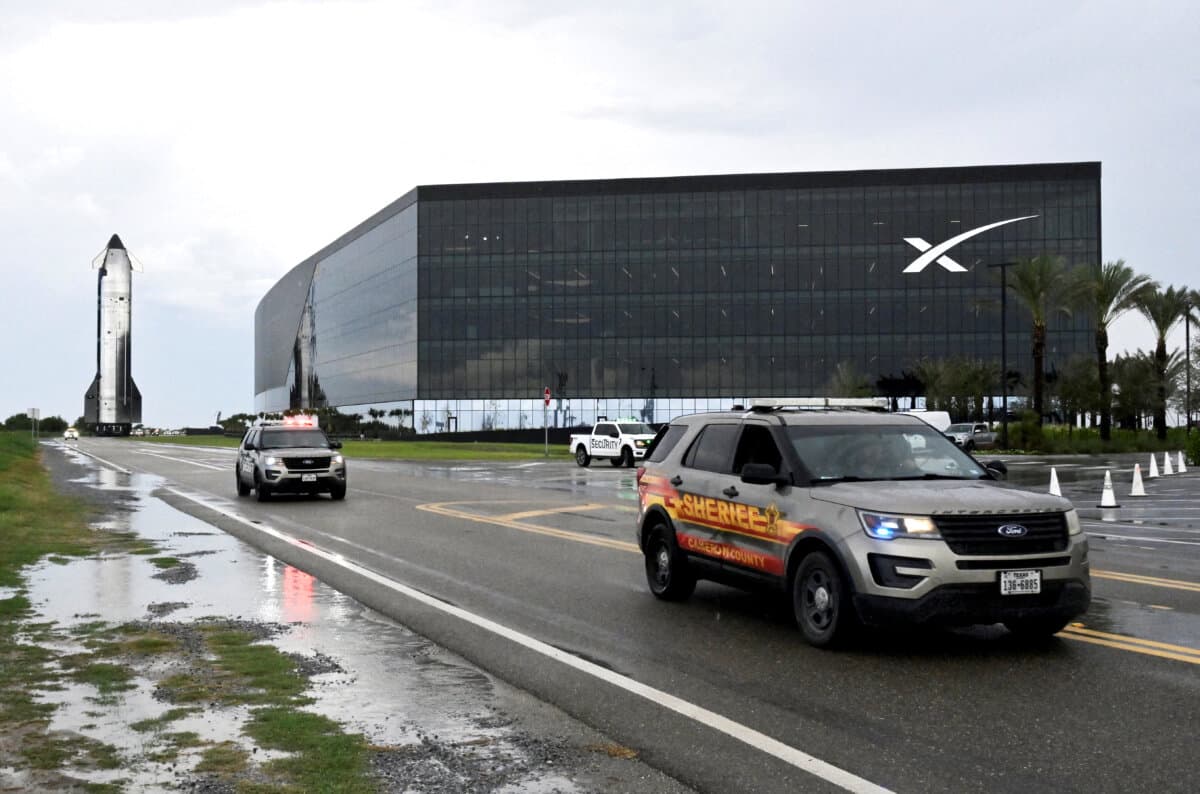
A SpaceX Starship spacecraft rolls out toward its launch pad past the Starbase Manufacturing Facility before its 10th test flight from the company's complex in Starbase, Texas, on Aug. 23, 2025. (Steve Nesius/Reuters)
“Just as SpaceX launches hundreds of satellites for competitors with fair terms and pricing, we will provide compute to AI companies that are taking the right steps to ensure it is good for humanity,” Musk posted on X. “We reserve the right to reclaim the compute if their AI engages in actions that harm humanity.
“Doing our best to achieve a great future with amazing abundance for all. We will make mistakes as to err is human, but always take rapid action to address them.”
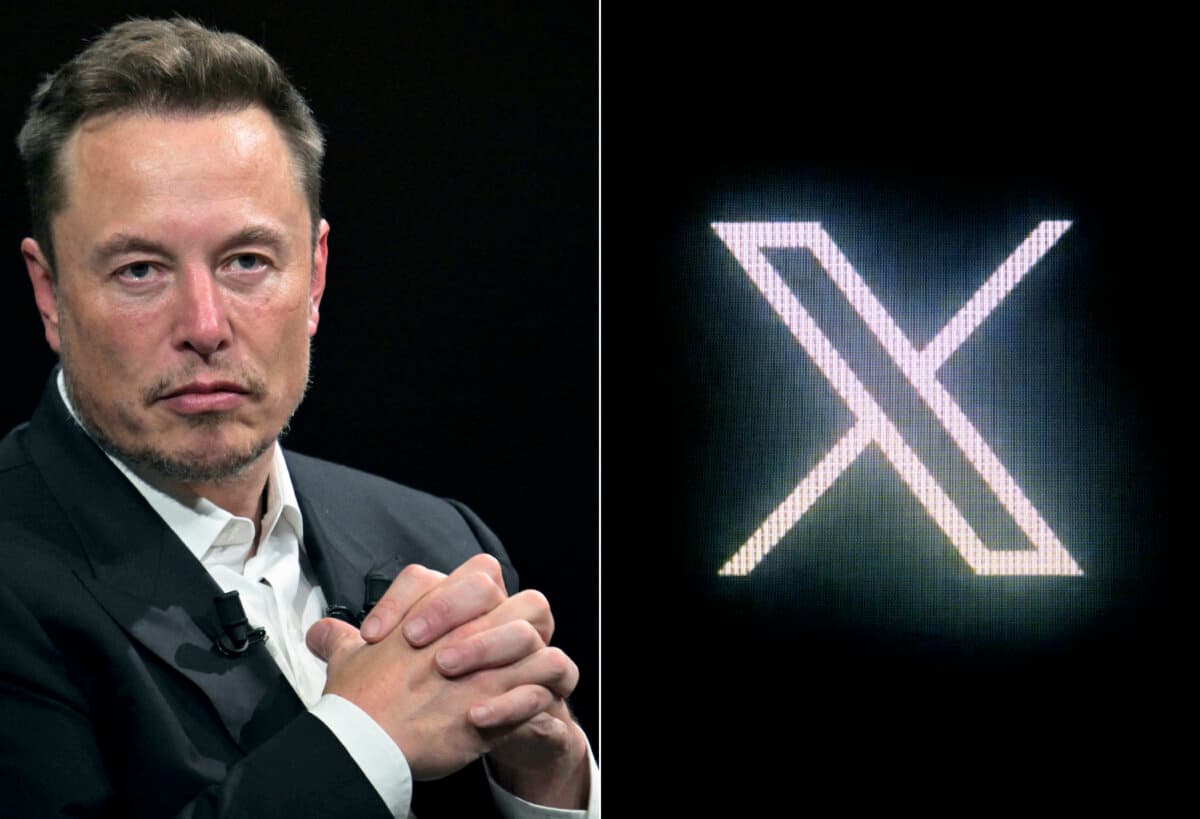
(Left) SpaceX and Tesla CEO Elon Musk at the VivaTech technology startups and innovation fair at the Porte de Versailles exhibition center in Paris on June 16, 2023. (Right) The X logo, pictured on a screen in Paris on July 24, 2023. (Alain Jocard/AFP via Getty Images)
Musk and SpaceX on May 12 reposted a statement on X saying that according to an unverified realtor source, the rocket company may have acquired 136,000 acres of marshland near the Gulf of America in Louisiana’s Pecan Island and Freshwater City.
Pecan Island is halfway between Boca Chica, Texas, and Cape Canaveral, Florida, where SpaceX launches currently. The small community also has easy access to liquefied natural gas.
However, in response to that statement, Musk and the company said several locations are being considered for U.S. and international spaceports, without explicitly confirming whether the land was actually purchased.
His rocket company plans to launch its Starship vehicle thousands of times per year.
“That cadence will require the ability to launch from many different locations, so we are constantly exploring to find viable sites to expand Starship operations in the future, both domestically and internationally,” the company stated in its response to the unverified statement on X.