In his Florence studio, the American sculptor stood in front of a large piece of Carrara marble. The year was 1841, and with his home country still divided on the issue of slavery, Hiram Powers began chipping away at the block of stone. The result of the two-year project would not only establish him as arguably the century’s finest American Neoclassical sculptor, but would also place before America and the world an intimate and moving image of slavery.
Hiram Powers (1805–1873) was born to family farmers in Woodstock, Vermont. At 14, he and his family moved to Cincinnati. The pioneer trail came with many dangers. Arriving in Ohio brought its own risks, especially the 17th state’s infamous “swamp fever.” The family had not settled on its new land for very long before Stephen Powers, Hiram’s father and eight other children, died of malaria. Hiram, the second youngest of the children, also suffered from the fever, but survived and moved in with an elder brother.
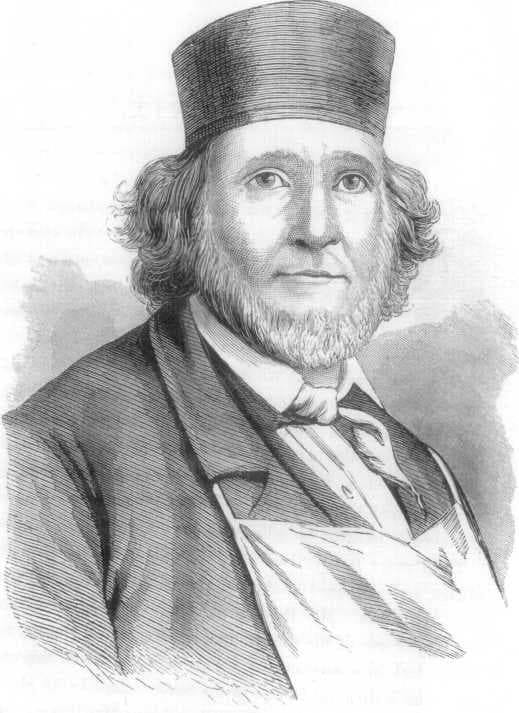
Hiram Powers as an adult. (Public Domain)
Art and Mechanics
While in Cincinnati, Powers continued his education. Too weak to farm due to the lingering effects of malaria, Powers took on various jobs to help support the family. In 1823, he began working for Luman Watson’s clock and organ factory. There, he displayed a thorough understanding of mechanics, often fixing mechanical problems in Watson’s home.
By 1825, Powers began dabbling in plaster casting and clay molding, even assisting the Prussian sculptor Frederick Eckstein, who ran the city’s Academy of Fine Arts.
Several years later, he accepted a position as mechanical supervisor for the Western Museum. The museum had opened in 1820, but by 1823, it was running into financial difficulties. The founders transferred ownership to Joseph Dorfeuille, the museum’s curator.
Dorfeuille retained the museum’s lectures and specimen displays as part of its offerings, but added little oddities (often fictionalized) to draw more attention. Among these oddities were a mermaid and the supposed preserved head of a local murderer.
A Ghoulish Opportunity
Powers had a chance to add to the museum’s draw when a shipment of wax figures arrived. The figures had broken during transport, giving Dorfeuille and Powers an idea. Powers, through his plastering and molding talent, turned the figures into larger-than-life objects, including one that became known as “The King of the Cannibal Islands.”
In 1828, he created his own display based on the settings of Dante’s “Inferno” and Milton’s “Paradise Lost.” The display, which grew over time, was touted as the Infernal Regions, or Dorfeuille’s Hell. At first, the wax figures created by Powers were made to move by pulleys, but as the exhibit grew and his talents expanded, he fully automated their movement.
The ghoulish exhibit helped put the Western Museum on the map. Powers remained at the museum for seven years before moving on. During this time, he married Elizabeth Gleason, who not only supported his genius, but also helped protect the family’s estate when he planned to part ways with Dorfeuille.
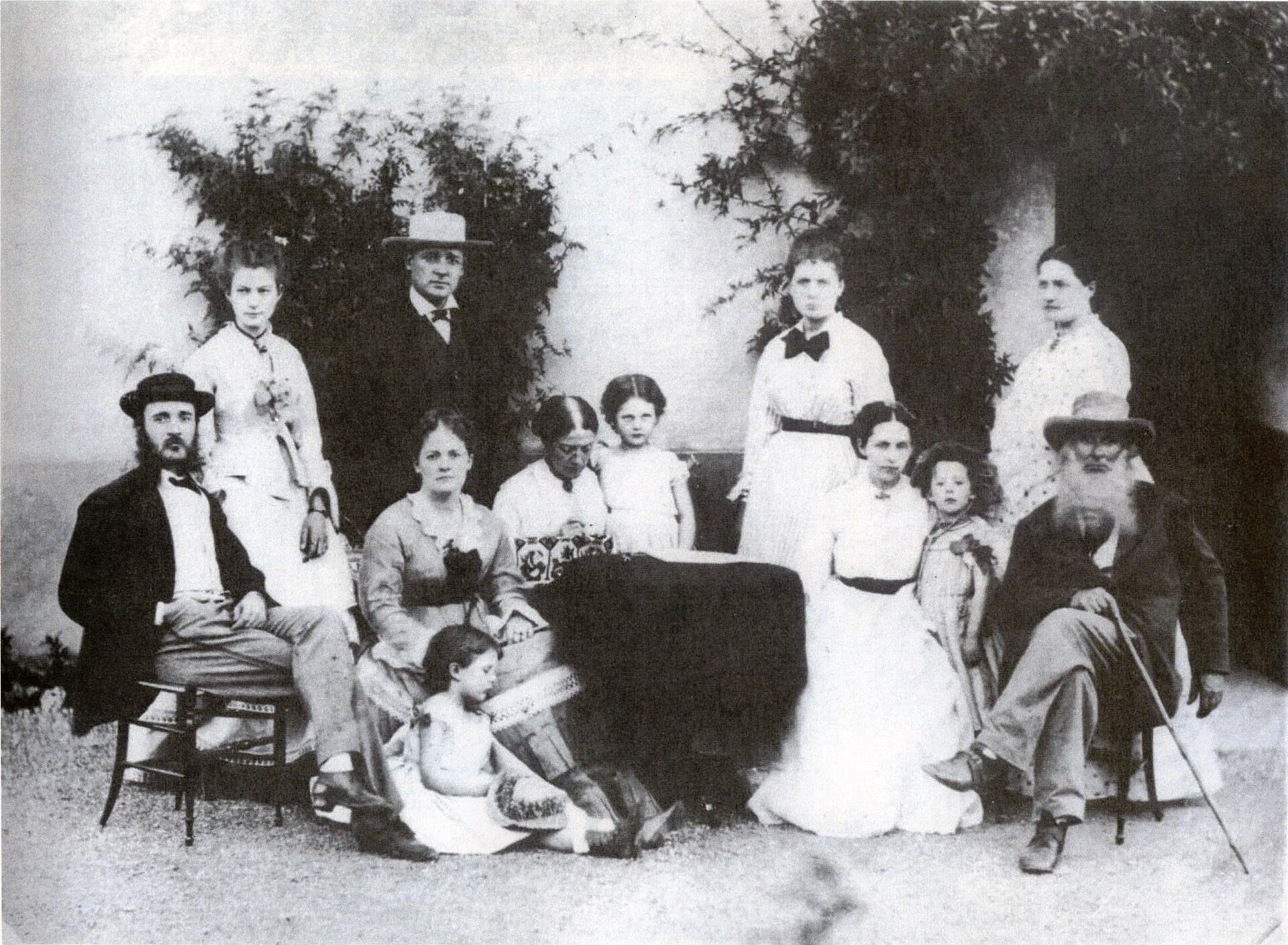
Hiram Powers (at right, with cane) and his family. (Public Domain)
“[Dorfeuille] knew I kept no accounts,” Powers recalled, “but he did not know that I reported all the money he gave me to my wife, who did keep our accounts. He tried to cheat me; but I was able to baffle him through her prudence and method.”
The First Patrons
Nonetheless, the Western Museum had provided Powers with great opportunity. It was also during this time that he met his first future patron, Nicholas Longworth, one of Cincinnati’s wealthiest citizens. Having seen some of Powers’s work, like the bust he had completed of Rev. Robert Hamilton Bishop, Longworth encouraged the artist to move to Washington and create commissioned work. Longworth provided Powers with funds and letters of introduction.
In 1834, Powers moved to the nation’s capital and subsequently sculpted the bust of President Andrew Jackson. The bust led to commissions to sculpt busts of Martin Van Buren, Daniel Webster, John C. Calhoun, and John Quincy Adams. In 1837, he received another patron, Col. John S. Preston, who helped pay for Powers and his family to move to Florence, Italy.
Powers planned to live in Florence for a few years to perfect his craft, but he never returned to America. Instead, he established his own studio, where he steadily made a name for himself. In 1838, Powers expanded his sculpting from plaster and clay into marble. With the Carrara and Seravezza quarries relatively close by, marble was readily available. Additionally, Florence had become a town of American and British expatriates, thus providing a steady stream of clients.
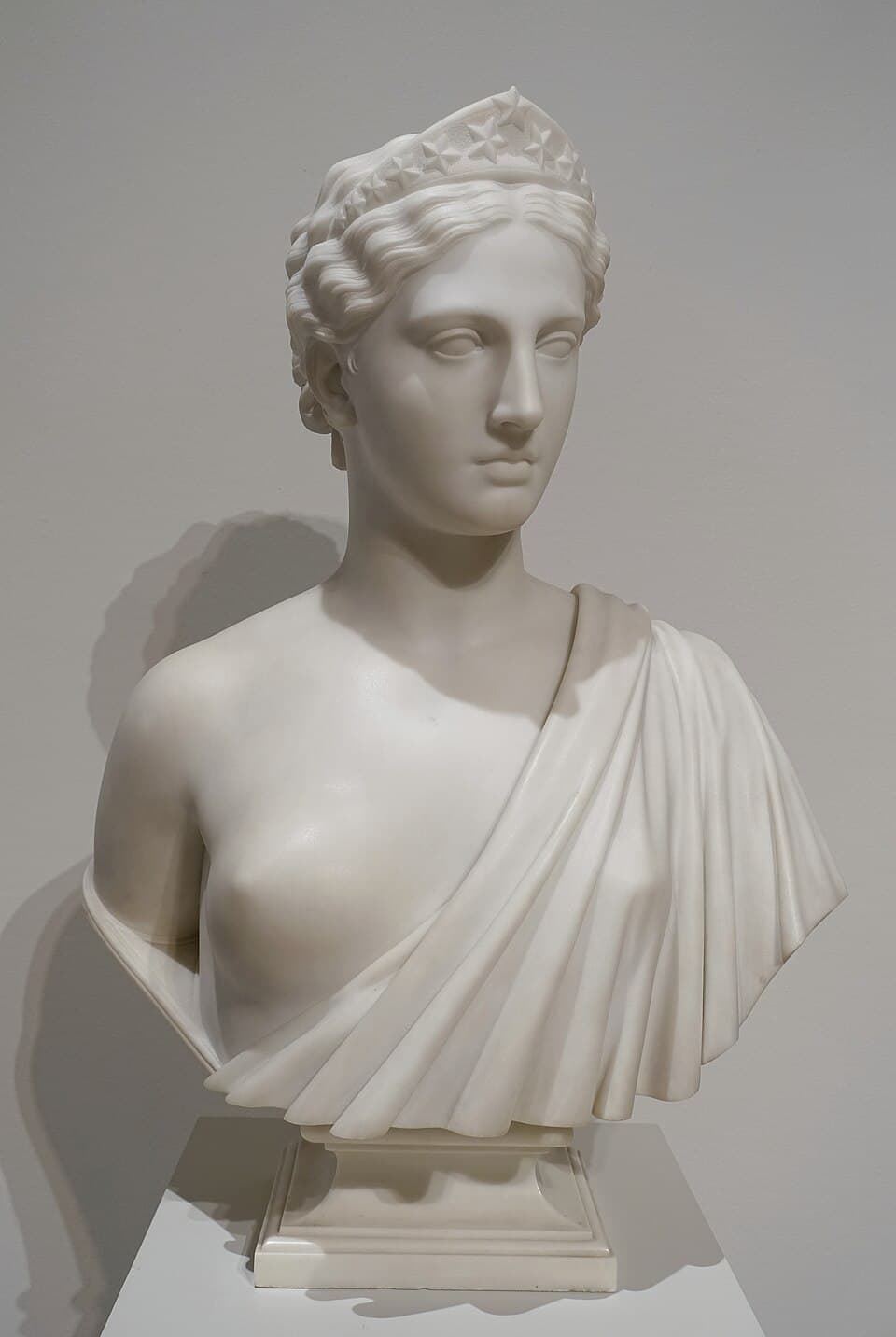
"America," 1860, by Hiram Powers. (Public Domain)
The American Neoclassicist
Over the course of his career in Italy, he created approximately 150 busts, including his most famous of George Washington, which he produced in marble at least 36 times. Along with busts of modern and contemporary figures, Powers began exploring sculpting works of history, mythology, philosophy, and religion. His first was a bust of Ginevra, the beautiful, yet tragic subject of Samuel Roger’s poem “Italy.” He followed with the Roman goddess Proserpine, which was marbleized 150 times in three different variations. He also created busts of the goddesses Psyche and Diana, as well as a Neoclassical goddess personification of his home country, which he fittingly called “America.”
Shortly after arriving in Florence, Powers attempted his first full body sculpture, which he entitled “Eve Tempted.” He completed it in 1842. Though not fully satisfied with it, he attempted another version to better capture the “bewilderment, distress, and remorse” Eve must have felt. He accomplished this feat in 1861 with “Eve Disconsolate.”
‘The Greek Slave’
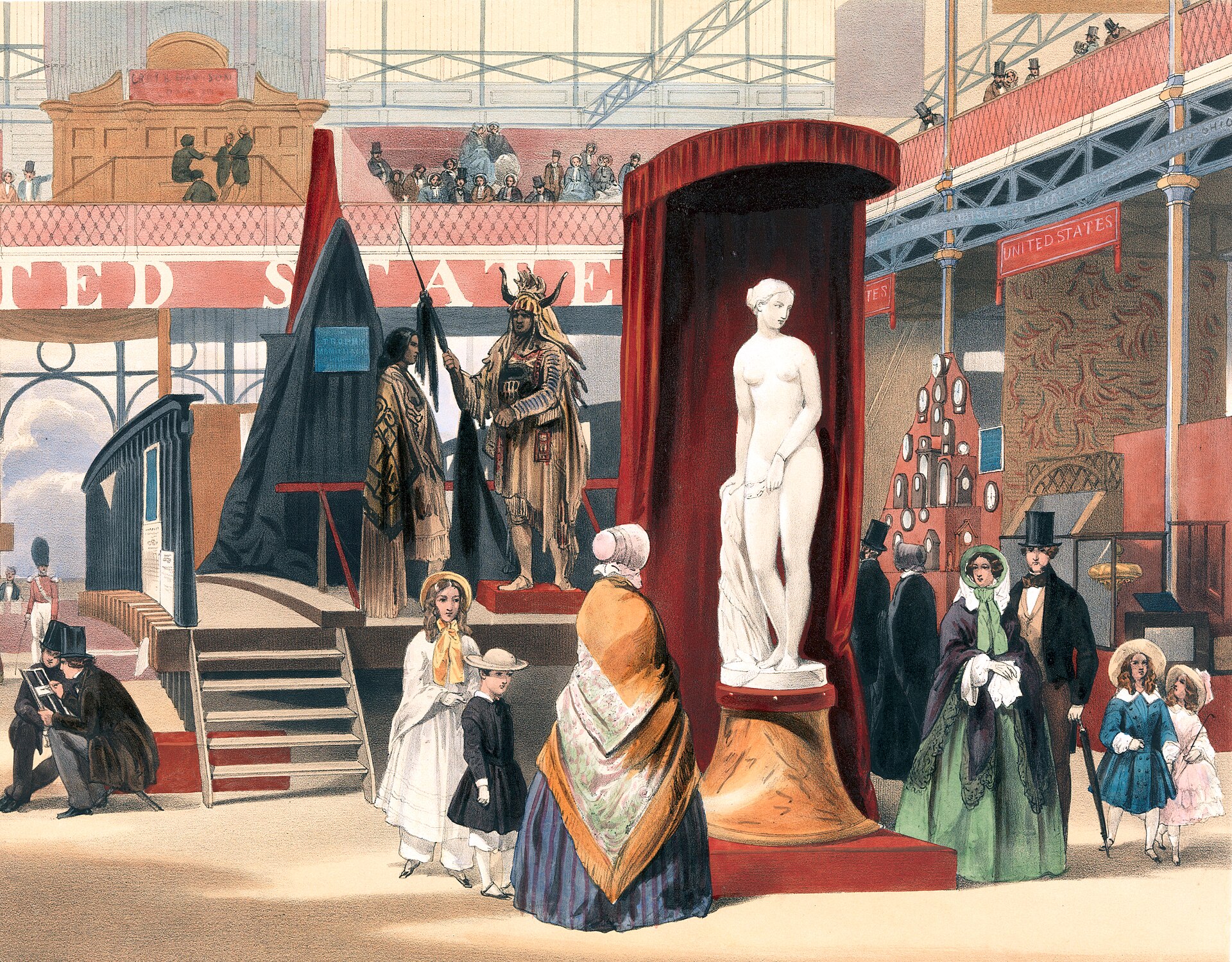
After creating “Eve Tempted,” Powers completed his first and only full-length male nude called “Fisher Boy.” This was followed by his most famous piece called “The Greek Slave,” completed in 1843. This full-length female nude alluded to the treatment of some Greeks during the then-recent Greek War for Independence against the Ottoman Empire. The woman’s wrists are chained together. One hand rests on a post, while the other attempts to cover herself. On the post is tapestry and a cross, indicating her Christianity. Just as the “Fisher Boy” appeared inspired by Carl Steinhauser’s “Girl Holding a Shell to Her Ear,” this work appeared to be inspired by the classic work “Medici Venus.”
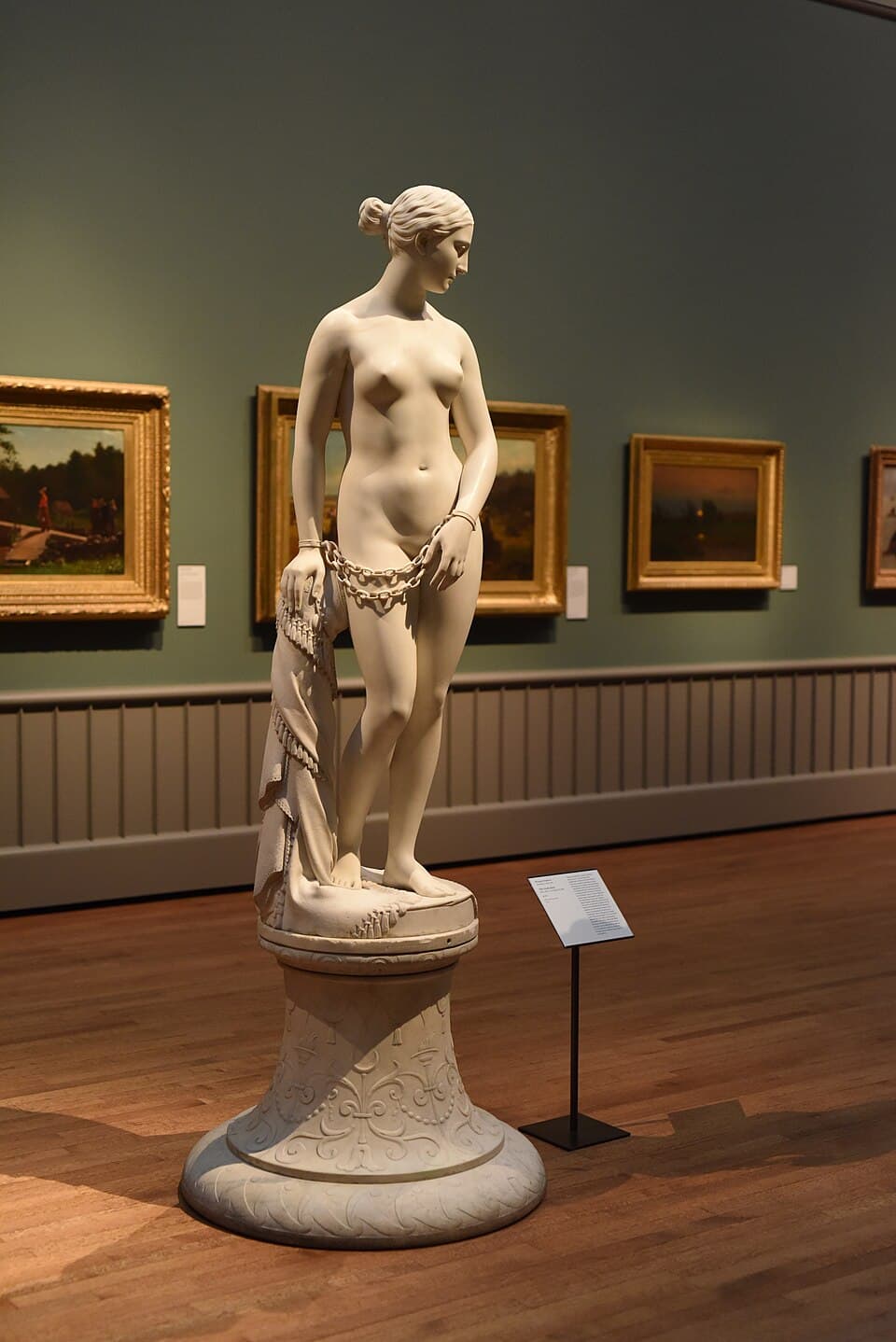
"The Greek Slave" by Hiram Powers is on display at Yale. (Public Domain)
“The Greek Slave” was displayed in many areas across the globe. It also traveled through the United States from 1847 to 1849, where it became the first nude sculpture by an American artist to be placed on display. In the pamphlet that explained and described the statue, Miner Kellogg, who organized the exhibit, called the piece one of “high moral and intellectual beauty.” The work of art also forced viewers to confront America’s ongoing debate about slavery.
“The Greek Slave” was showcased at London’s 1851 Great Exhibition and at the New York Crystal Palace in 1853, and established Powers as the first American sculptor to receive international fame. The statue has been reproduced many times, of which Powers created six full-length carvings.
According to the National Gallery of Art, “The Greek Slave” was the most famous sculpture of the 19th century.
Full Circle
Powers created other major marble sculptures, including “California,” which demonstrated the Gold Rush, and “Last of the Tribes,” which expressed the plight of the Native American tribes during America’s westward expansion. In 1860, President James Buchanan commissioned him to sculpt full-size statues of Thomas Jefferson and Benjamin Franklin to be placed in the Capitol.
The bust of the water nymph, Clytie, was his final sculpture, completed shortly before his death in 1873. When one visitor saw the completed Clytie, he described its beauty by quoting the poet Lord Byron, “‘And yet so lovely, that if Mirth could flush/ Its rose of whiteness with the brightest blush/ [Your] heart would wish away that ruder glow.’” The line was from the poem “Sonnet, To Genevra,” an interesting reference that, in a sense, completed a full-circle moment for Powers.
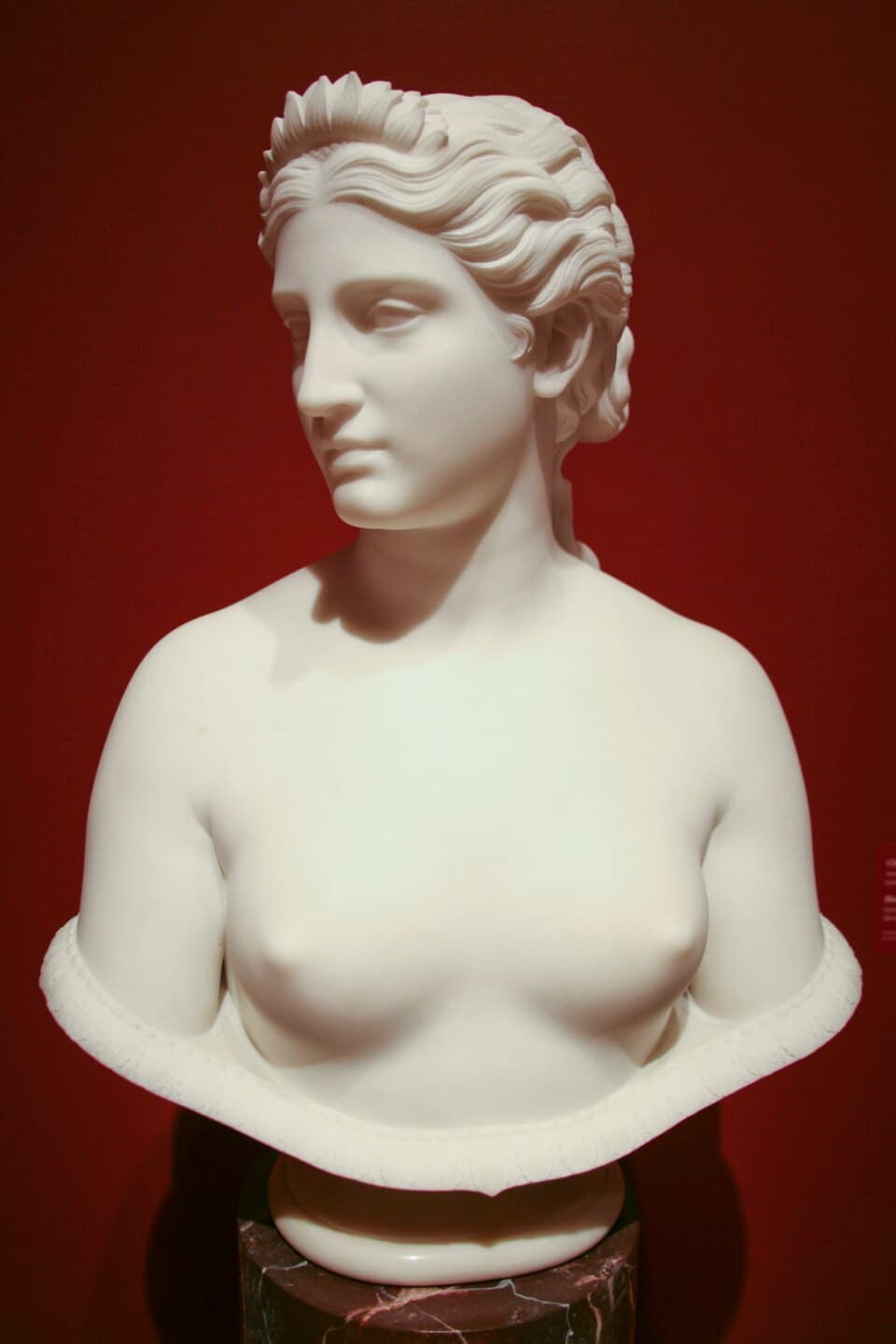
"Clytie," by Hiram Powers. (Nostri imago/CC BY 2.0)
After his death, his two sons, Longworth and Preston (named after his two patrons), who also became sculptors, managed and protected their father’s works. Many of Powers’s works can be seen in the Smithsonian American Art Museum and the National Gallery of Art, where the sculpture “The Greek Slave” resides.
What arts and culture topics would you like us to cover? Please email ideas or feedback to features@epochtimes.nyc.