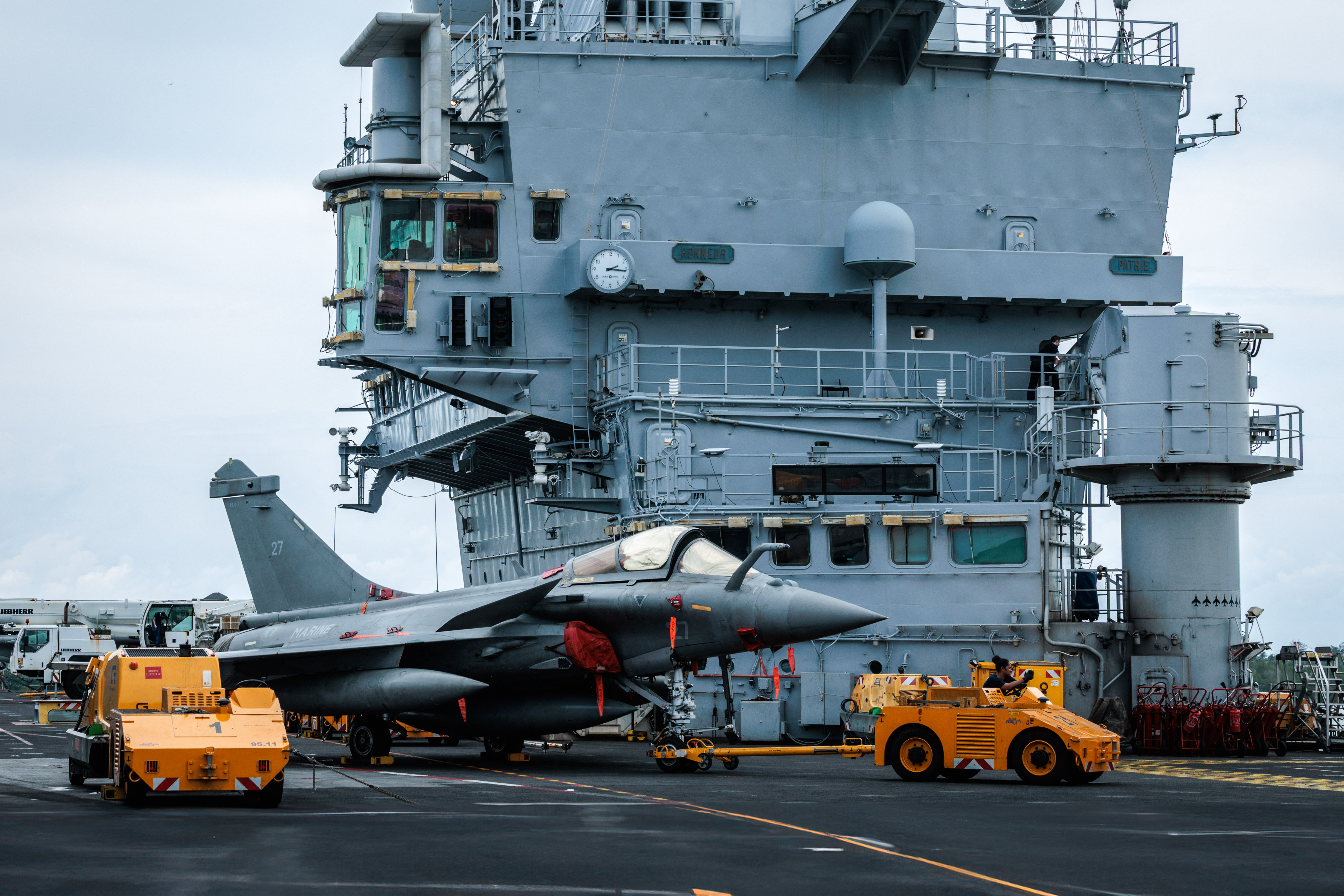

France’s nuclear-powered aircraft carrier Charles de Gaulle has set sail for the Eastern Mediterranean under the orders of French President Emmanuel Macron.
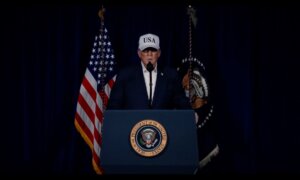
Macron announced his decision in a pre-recorded speech aired on French TV on March 3.
Accompanied by its air assets and frigate escort, the Charles de Gaulle’s main objective was to act in defense of French assets in the Middle East as the entire region faces nondiscriminatory missile and drone attacks from Iran’s Islamic Revolutionary Guard Corps.
Macron said the carrier will join defensive forces already put to work in the region. That includes Rafale fighter jets, which are stationed at Al-Dhafra base near Abu Dhabi, as well as airborne radar and air defense systems.
He said that two of France’s military bases in the region had been struck in a limited manner, and that efforts to strengthen the security of the nation’s military bases and embassies in the region were underway.
The French Frigate Languedoc will also arrive off the coast of Cyprus on the evening of March 3. Macron noted that the island nation faced attacks from Iran and is a member of the European Union and a strategic partner of France. He also reminded his citizens of the defensive agreements and commitments their country made to affected countries in the region, such as the United Arab Emirates, Kuwait, Qatar, Jordan, Iraq, and Kurdish allies.
He also expressed his openness to deploying military assets to secure maritime trade routes from the Persian Gulf, through the Strait of Hormuz, which the remaining Islamic regime has deemed closed, the Red Sea, and the Suez Canal.
“We are now building a coalition to bring together means, including military means, to make these maritime trade routes secure,” Macron said in his speech, translated to English.
In the meantime, Macron said 400,000 French nationals were accounted for in the Middle East, either living there or traveling, and efforts were underway to repatriate all who wanted to return home. The first repatriation flights were expected to arrive that night.
The French president reaffirmed his disapproval of the United States’ and Israel’s decision to attack Iran, which he argued was outside of international law. He also expressed his disapproval of Israel’s consideration of a ground campaign against Hezbollah in Lebanon. But he expressed no sympathy for a regime he noted gave the order to shoot its own people in January.
“History never will shed tears over those who massacre their own people,” Macron said of Iran’s eliminated leadership. “They will not be missed.”