
The Federal Reserve might hold off on a December interest rate cut, but consecutive reductions could still affect your money.
Officials voted 10–2 on Oct. 29 to lower the benchmark federal funds rate—a policy rate that influences borrowing costs for businesses and consumers—by a quarter point.
The decision brought the new target range to 3.75 percent to 4 percent.
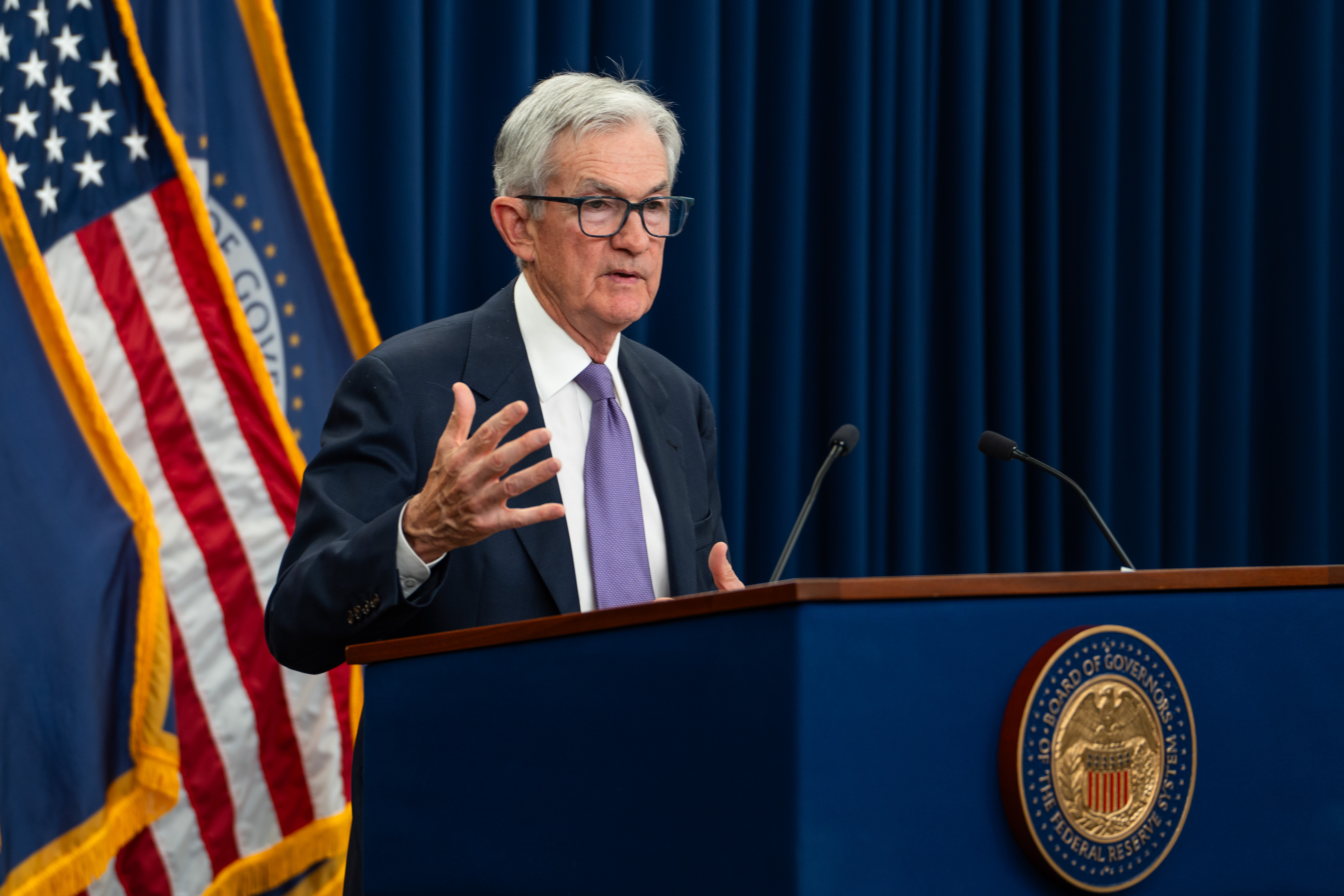
Although the futures market has been widely penciling in a third straight cut in December, Fed Chair Jerome Powell said it might not be guaranteed.
“There were strongly different views about how to proceed in December,” Powell told reporters at the post-meeting press conference.
“A further reduction in the policy rate at the December meeting is not a foregone conclusion. Far from it.”
Still, with markets pricing lower rates moving forward, U.S. households could start to notice gradual changes across the marketplace.
Mortgage Rates
For the week ending Oct. 30, the average 30-year fixed-rate mortgage was 6.17 percent, according to Freddie Mac’s Primary Mortgage Market Survey.
This is down from 6.72 percent a year ago and firmly below the 52-week average of 6.69 percent.
Despite Powell’s hawkish tone following the October Federal Open Market Committee meeting, the prospect of lower mortgage rates remains high, says Jeff DerGurahian, head economist and chief investment officer at loanDepot.
“Mortgage rates still hover near annual lows, and with inflation easing and the labor market likely softening, conditions continue to support the potential for lower rates ahead,” DerGurahian said in a note emailed to The Epoch Times.
“Wednesday’s cut will immediately lower [home equity line of credit] rates, while mortgage rates remain close to this year’s lows.”
Thirty-year mortgage rates typically track the benchmark 10-year Treasury yield, which recently fell below 4 percent from 2025’s high of 4.8 percent. However, the 10-year yield rose to about 4.1 percent on Oct. 30 as investors began speculating about an even more conservative outlook among Fed policymakers.
Investors are betting on a 73 percent chance of a 25-basis-point rate cut in December, according to the CME FedWatch Tool.
“For December 2026, implied probabilities are now at 38 percent for four more 0.25 percent rate cuts by the end of next year, down from expectations of around 50 percent for five cuts before the FOMC announcement,” Adam Turnquist, chief technical strategist for LPL Financial, said in a note emailed to The Epoch Times.
Borrowing Costs
A broad array of lending instruments could see lower borrowing costs in the months ahead.
Credit card interest rates fluctuate in line with changes to the federal funds rate. As monetary policy shifts, average APRs for cardholders are expected to decrease by 0.25 to 0.5 percentage points over the next few billing cycles.
The average credit card interest rate in the United States is 24.19 percent, down from 24.36 percent in September, the latest LendingTree data show.
Auto loan interest rates, meanwhile, depend on borrower profiles and vehicle characteristics.
Additionally, they are influenced by broader market indicators. Lenders typically align rates with the Fed’s policy rate, while the five-year Treasury yield acts as a mid-term cost benchmark.
The five-year Treasury yield ticked up to above 3.7 percent for the first time in three weeks.

People shop at a grocery store in Elkridge, Md., on Oct. 24, 2025. (Madalina Kilroy/The Epoch Times)
As of Oct. 29, the average 60-month new car loan rate stood at 7.11 percent, according to Bankrate’s weekly survey. This is down from about 7.2 percent before the Fed restarted its easing cycle.
Savers to Take a Hit
Savers will likely receive less on their deposits.
Returns on savings accounts are likely to decline as interest rates fall.
When the Federal Reserve lowers the federal funds rate, banks earn less from lending activities such as mortgages and business loans.
To preserve margins, they typically reduce the interest paid on customer deposits.
Although online banks and credit unions may offer more competitive rates than traditional institutions, those yields are also expected to trend downward.
For the week ending Oct. 30, the national average savings account yield is 0.63 percent, according to numbers from Bankrate’s survey of institutions.
Bears and Bulls on Wall Street
U.S. stocks experienced a reversal during Powell’s news conference after touching fresh record levels, fueled by his comments that a December policy action was not certain.
But the knee-jerk reaction to sell stocks and bonds presented an opportunity for investors, according to Chris Zaccarelli, chief investment officer for Northlight Asset Management.
“We think this will prove to be a buying opportunity because the Fed is likely to continue to support both stock and bond markets by cutting interest rates significantly over the next 12 months (even if they do keep rates unchanged in December),” Zaccarelli said in a note emailed to The Epoch Times.
Wall Street was mixed one day after the October rate decision.
The blue-chip Dow Jones Industrial Average rose by about 0.2 percent. The tech-heavy Nasdaq Composite Index and the broader S&P 500 fell by about 1.1 percent and 0.6 percent, respectively.
Historically, U.S. stocks have performed well when the Federal Reserve is firmly committed to an easing direction.
But although the central bank is likely to keep lowering rates in the year ahead, the path toward a neutral rate—interest rates are neither stimulative nor restrictive—will be tough, according to Jay Woods, chief market strategist at Freedom Capital Markets.
“Powell gave investors a peek behind the curtain, showing markets that there is no foregone agreeable path when it comes to the committee voters. Their goal to satisfy their dual mandate remains tricky and could prove quite delicate going forward,” Woods said in a note emailed to The Epoch Times.
The Fed will hold its next policy meeting on Dec. 9 and Dec. 10.