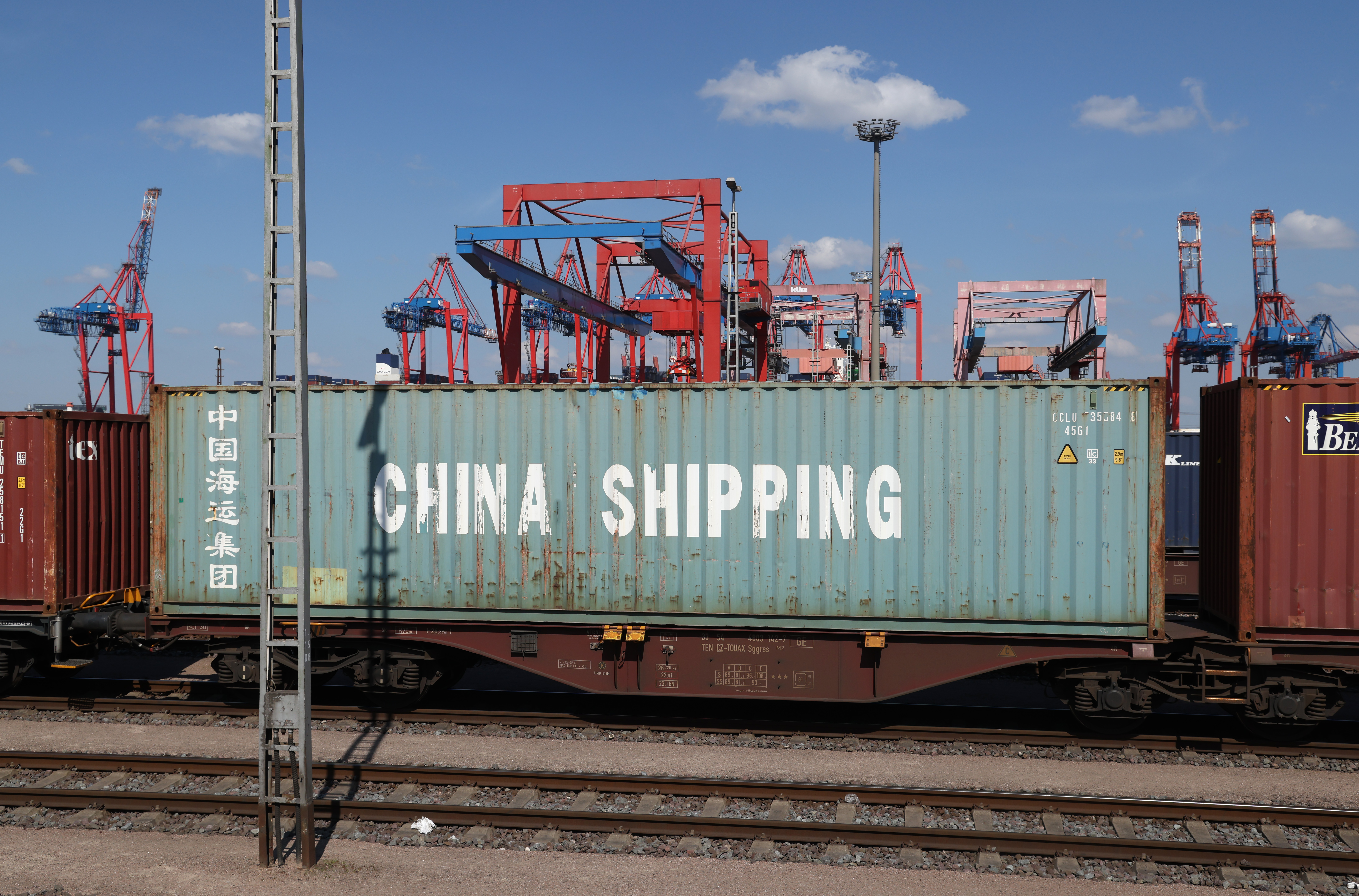

European Union trade ministers discussed extending negotiations with Beijing beyond automobiles to other industries on Oct. 23, as the bloc considers further measures to counter a widening trade imbalance with China.
Chemicals and machinery are among the sectors receiving attention after Brussels and Beijing reached an understanding earlier this month aimed at limiting projected Chinese hybrid-vehicle exports to Europe.
The EU’s goods trade deficit with China reached 359.8 billion euros ($402.7 billion) in 2025, according to Eurostat, as imports from China rose 6.4 percent and European exports to China fell 6.5 percent.
Polish Deputy Minister of Economic Development and Technology Michał Baranowski described the hybrid-vehicle arrangement as a starting point but said it would not resolve the bloc’s roughly 1 billion euro ($1.12 billion) daily trade deficit with China.
“A number of countries will identify their sectors,” Baranowski told reporters ahead of the meeting in Dublin. “Poland will as well.”
He said negotiations with China should proceed alongside efforts to develop faster and more effective tools to respond to import pressures.
Hybrid Deal Offers a Starting Point
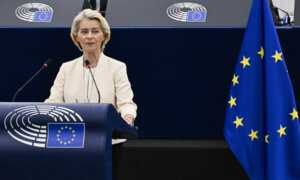
European Commission President Ursula von der Leyen told the European Parliament on Oct. 21 that the understanding with Beijing would establish an annual quota of 350,000 Chinese hybrid vehicles, to be implemented through an EU safeguard measure.
The arrangement emerged after two days of negotiations in Beijing between EU Trade Commissioner Maroš Šefčovič and Chinese Commerce Minister Wang Wentao on Oct. 8–9.
Von der Leyen said the arrangement would reduce Chinese hybrid exports by approximately 45 percent.
However, China’s Commerce Ministry said the EU imported 302,000 Chinese hybrids in 2025 and described the arrangement as allowing exports to rise above that level, meaning the quota would still permit shipments to exceed last year’s total.
The broader understanding also covered lower Chinese tariffs on European goods valued at nearly 4 billion euros ($4.5 billion), including auto parts and agricultural products, and measures to facilitate Chinese export licensing for rare earths and permanent magnets.
Von der Leyen subsequently identified chemicals and machinery as industries where the commission was already working with European businesses over import concerns.
The concerns predate the Beijing negotiations. In July, European Commission Chief Trade Enforcement Officer Denis Redonnet told EU lawmakers that machinery and electrical and electronic equipment were experiencing import surges and price pressure, and that safeguards could become necessary.
No additional sector-specific restrictions have been announced.
EU Considers Stronger Trade Defenses
The discussions followed an Oct. 16 European Council decision calling for continued negotiations, greater use of existing trade-defense instruments, and the development of additional measures to address global economic imbalances.
France and Germany have advocated stronger mechanisms to respond to economic threats. Von der Leyen said the European Commission would propose a new instrument allowing the EU to act more quickly to restrict access to its single market when its economic interests are threatened.
Baranowski said Poland supported the Franco-German initiative, saying that any new instrument must be fast and credible without allowing a small number of member states to prevent its use.
The industries under consideration account for substantial trade flows. According to Eurostat, the EU imported 106.5 billion euros ($119.2 billion) in machinery and mechanical equipment from China in 2025, along with 34.1 billion euros ($38.2 billion) in organic chemicals.
Von der Leyen has described the pressure on European manufacturers as a “second China shock,” referring to concerns that rising Chinese exports could displace European production.
Greek Deputy Foreign Minister Haris Theoharis welcomed progress in the recent negotiations but questioned whether negotiating restrictions on individual industries could meaningfully reduce the trade imbalance.
“Dialogue for the sake of dialogue is meaningless,” he told reporters in Dublin, saying that the EU must keep other trade measures available if negotiations fail.
He said Europe also needed to strengthen its own manufacturing, investment, and innovation rather than rely solely on defensive measures.
Theoharis warned that negotiating over one or a few sectors at a time would be too slow to substantially reduce the EU’s trade imbalance with China.
“I mean it will take us decades,” he said.