
America’s Pledge of Allegiance describes “liberty and justice for all” in theory. The award-winning biopic “Erin Brokovich” (2000) demonstrates what that means in practice. It’s not just in the hallowed halls of the White House or the Senate but in homes, streets, schools, churches, and playgrounds. It’s also in offices and factories.
In downtown Los Angeles, unemployed single mother of three children Erin Brockovich (Julia Roberts) struggles to make ends meet. On compassionate grounds, lawyer Ed Masry (Albert Finney) hires her. Erin suspects industrial-scale deceit—in one case committed by the multibillion-dollar Pacific Gas and Electric Company (PG&E) against residents near its factories in Hinkley, California. Against staggering odds, her dogged research, people skills, and probing mind uncover one of the 20th century’s biggest industrial scams.

Erin Brockovich (Julia Roberts), in “Erin Brockovich.” (Universal Pictures/MovieStillsDB)
PG&E’s lies about its deadly chromium discharge contaminating groundwater have harmed Hinkley’s residents for decades. Erin educates Ed and snooty law-degree colleagues on the truth. She and Ed then empower over 600 residents, diseased or dying from such contamination, to seek damages. Their meticulously compiled evidence wins the beleaguered litigants a landmark settlement of $333 million.
Erin is neither a feminist activist nor a fiery lawyer. Nevertheless, she shows how embracing a simple moral code can transform fates, right wrongs, correct injustices, and defeat obstacles, no matter how insurmountable they seem. She’s simply an individual standing up, above and often against the crowd, for what’s right, speaking truth to power in ways that many journalists don’t.
Real Journalism
If all journalists practiced real journalism, there’d be fewer activists and little need of them. Erin asks tough questions, challenges sources, and gleans clinching evidence; she then presents her case like she’s telling a story.
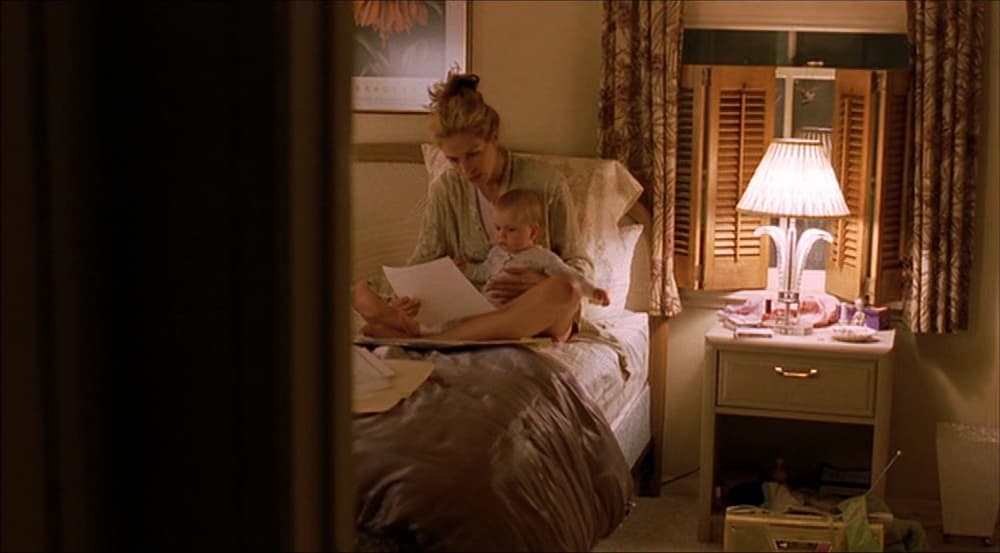
Erin Brockovich (Julia Roberts), in “Erin Brockovich.” (Universal Pictures)
She holds those vested with public trust accountable. Watch her pore over records at the local water board, piecing together the truth herself instead of lazily taking someone else’s word for it.
The real-life Erin cameos as a waitress in the film. In her prime, she was pretty enough to be an actress, yet she chose the longer, harder, less glamorous path to providing for herself and her family. Through sheer grit, she made a vocation out of helping those who couldn’t help themselves. Erin’s favorite film isn’t this one; it’s “Pay It Forward.”
Woman Power
Some people casually toss around the phrase “woman power.” Erin’s a living example of it. She isn’t ashamed of her uniquely feminine context of being a mother and bringing up babies. She uses her emotional intelligence where it matters.
She mingles razor-sharp wit, raw humor, and biting repartee with a knack for seeing and hearing what others miss. The “aw-shucks” Erin strikes a contrast with hotshot lawyer Theresa Dallavale (Veanne Cox), who’s more concerned about her spotless suits than her convalescing clients.

(L–R) Erin Brockovich (Julia Roberts), Ed Masry (Albert Finney), Theresa Dallavale (Veanne Cox), and Kurt Potter (Peter Coyote), in “Erin Brockovich.” (Universal Pictures)
To the aloof Theresa, it’s all about the facts. To the endearing Erin, it’s all about the truth. Her “human touch” isn’t a gimmick or an act. It explains how she can rattle off the backstories, not just the phone numbers, of hundreds of clients. They’re more than case files to her.
In one scene, Ms. Sanchez (Gina Gallego), part of a battery of haughty PG&E attorneys, is about to take a sip from a glass of water amid a heated argument with Ed and his team. Erin taunts her , “We had that water brought in special for you folks. Came from Hinkley.” Sanchez freezes.

Ms. Sanchez (Gina Gallego), in "Erin Brockovich." (Universal Pictures)
Everything’s Personal
That’s Erin’s way of clarifying that nothing’s personal until it becomes so; then, suddenly, everything’s personal.
Unlike climate change alarmists, who paint everything with the same apocalyptic brush, the real-life Erin (now a grandmother) handpicks only genuine concerns surrounding corporate callousness. Wary of the label “activist,” she’s fond of quoting Thomas Jefferson: “An informed citizen is the only true repository of the public will.”
Awareness of what’s (really) happening and how it affects them gives citizens freedom to make informed choices, giving them a better shot at justice—no freedom, no justice.
Erin busts myths about doing it alone. Success is almost always a team effort. Although she laments having been let down by some men, she draws support from dozens of other men.
Alongside Ed, she convinces fussier Hinkley residents that they must stay united in challenging PG&E. That means allowing fellow-sufferers their fair share of the settlement. If the few are too selfish to share with the many, everyone stands to lose. That may seem like liberty to some and justice to others, but if it isn’t “for all,” it’s neither liberty nor justice.
Check the Internet Movie Database website for plot summary, cast, reviews, and ratings. You can watch “Erin Brockovich” on Apple TV, Prime Video and Flix Fling.
These reflective articles may interest parents, caretakers, or educators of young adults, seeking great movies to watch together or recommend. They’re about films that, when viewed thoughtfully, nudge young people to be better versions of themselves.
What arts and culture topics would you like us to cover? Please email ideas or feedback to features@epochtimes.nyc.