The Boston Six sounds like the name of a jazz combo, but it’s the common nickname for the half-dozen composers who comprise what’s called the Second New England School of Music.
The Boston Six includes Arthur Foote, George Whitefield Chadwick, Edward MacDowell, Horatio Parker, and Amy Beach, in order of birth. While this group didn’t work together, they inspired each other, sometimes teaching each other, occasionally collaborating, and above all working simultaneously to develop America’s budding musical scene.
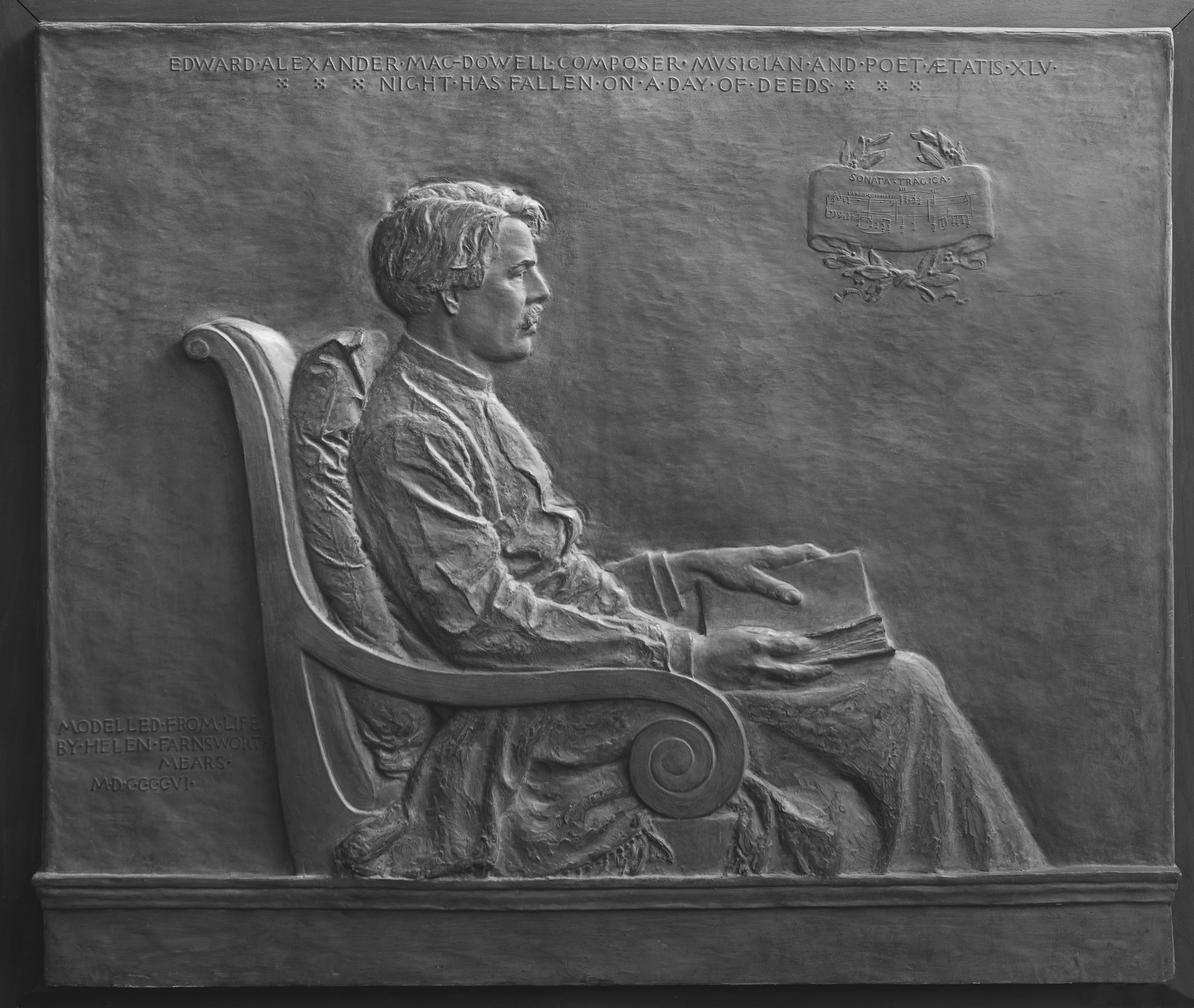
Edward MacDowell (1860–1908) is remembered for just one piece of music, a beautiful vocal song which describes the natural loveliness of a flower. However, MacDowell produced a vibrant body of work in his short life that deserves to be rediscovered.
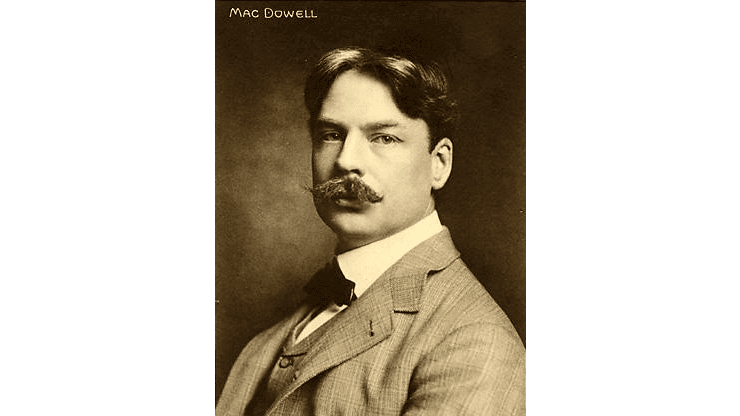
Photograph of Edward MacDowell in 1921. (Public Domain)
A Prodigy
Edward MacDowell was born in New York City on Dec. 18, 1860, although some sources incorrectly list his birth year as 1861. His father, a milk dealer, was a Quaker who married outside the Society of Friends by wedding Frances Knapp, a woman who had no interest in Quaker customs.
The MacDowell home was full of music, contrary to the Society’s rules. Young Edward had a sensitive nature and was influenced by his father’s Quaker background.
Edward’s mother recognized his musical talent as a child. He began studying piano at age 8 with Columbian musician Juan Buitrago; he later took piano lessons with family friend Venezuelan Teresa Carreño. When he was 15, he and his mother traveled to Paris so he could continue his musical studies.
He enrolled at the Paris Conservatoire in 1877, where he studied music theory and composition as well as piano performance. It was unusual for a foreign student to be admitted, and many stories have long circulated about why he abruptly left after just one year.
Recent research indicates that his leaving was in support of his best friend, a fellow student who was unjustly expelled after failing to win a prize at the school’s competition three years in a row. During his time in Paris, MacDowell discovered he had a natural talent for drawing, but he turned down the opportunity to study painting in favor of music.
Studies in Germany
He and his mother traveled to Germany to continue his musical studies, a decision profoundly shaped his musical trajectory. After a brief period at the Conservatorium in Stuttgart proved unsatisfactory, he entered the Frankfort Conservatorium.
There, he studied piano with Carl Heymann and composition with the school’s principal, Joachim Raff. Both men encouraged his composition and tried to secure him teaching positions. MacDowell wasn’t approved to replace Heymann at the Conservatorium after the latter’s retirement in 1881, but he became the head piano teacher at the nearby Darmstadt Conservatorium.
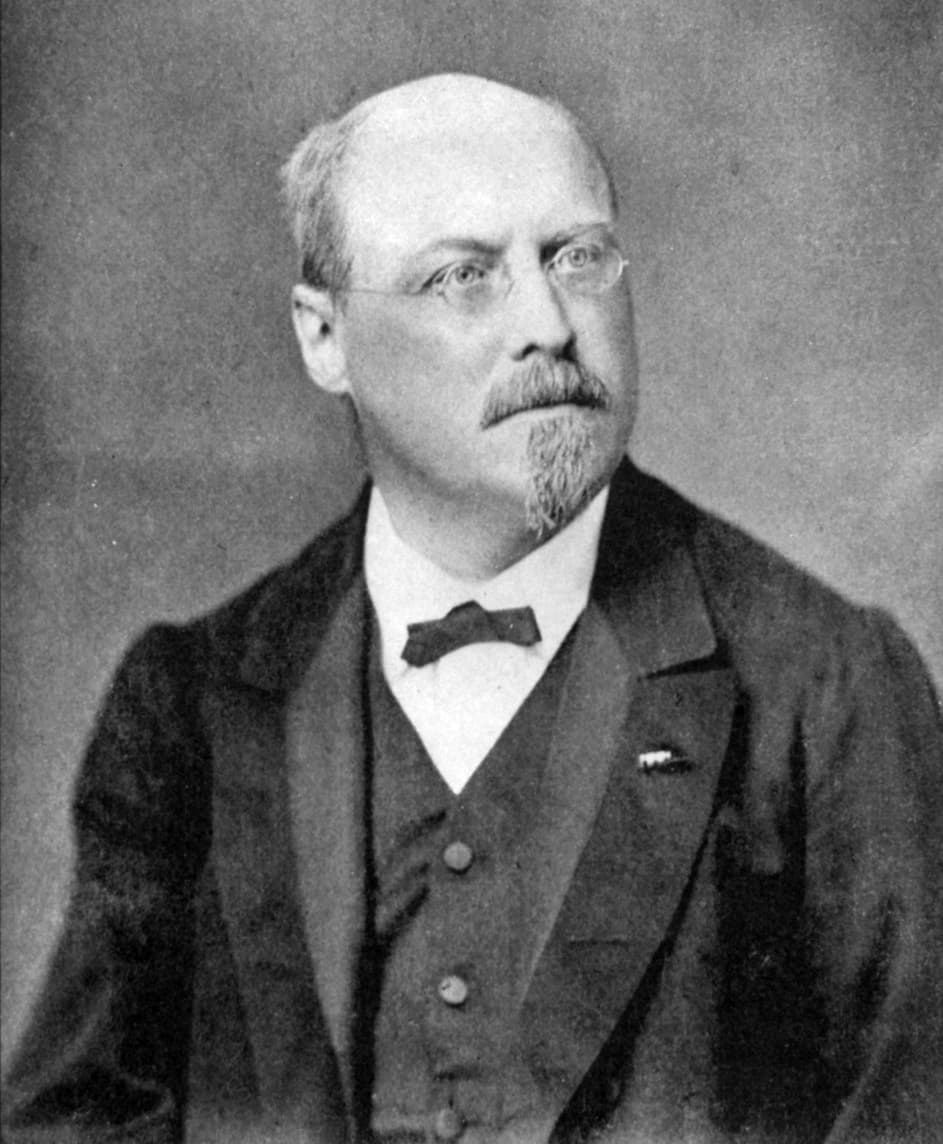
Photograph of Joachim Raff, 1878. (Public Domain)
He found this position unendurably monotonous and didn’t last there long, so he began taking private piano students.
Raff introduced him to Franz Liszt, who enthusiastically encouraged the young man’s composition and playing. Liszt also helped facilitate the performance and publication of some of MacDowell’s work. The young composer was also able to persuade some conductors to debut his works, which were well-received. His international reputation was on its way.
In 1884, MacDowell began the most influential partnership in his life when he married an American woman who’d been his piano student in Germany for three years, Marian Griswold Nevins. They were married in Waterford, Connecticut, in July 1884 before returning to Europe for the first few years of their married life.
Although he was reticent, he allowed Marian to support them with her inheritance so he could focus on composition.
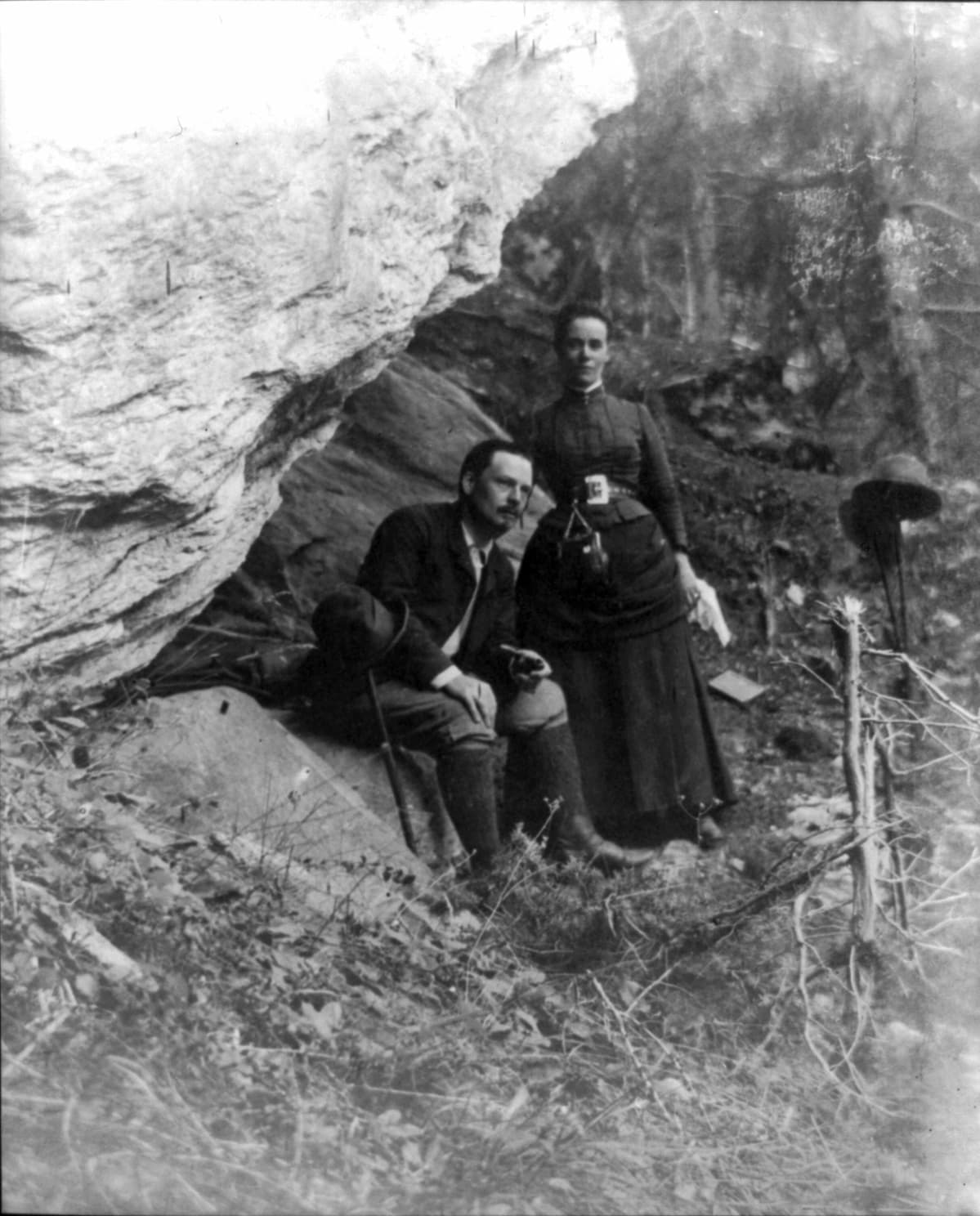
Edward and Marian MacDowell in 1886. (Public Domain)
An American Composer
The MacDowells spent a happy few years in Germany, where they purchased a forest cottage. Although unable to secure a sought-after professorship in England, MacDowell knew great happiness and creativity during these early years of his marriage, with his wife as a devoted supporter and inspiration.
In 1888, they returned to America and settled in Boston, where he found that his international reputation made him a respected figure. In fact, MacDowell is considered the first American composer to be internationally respected.
In the next few years, his compositions were performed and enthusiastically received in America’s major cities, often with MacDowell himself at the piano.
As a piano virtuoso, MacDowell wrote the majority of his music for that instrument. He wrote dozens of piano solos, duets, suites, and two exercise books. His larger works were four piano sonatas and two piano concertos.
He also wrote several suites for orchestra. For the voice, he wrote songs for male, female, or mixed chorus, as well as dozens of art songs for solo voice and piano. He wrote many of these more whimsical pieces from 1896 to 1898 under the pseudonym Edgar Thorn.
Columbia and the Colony
In 1896, MacDowell finally received the long-sought professorship of music at Columbia University. As chair of music, MacDowell created a course “outlining the purely technical side of music” which also conveyed a “general idea of music from its historical and aesthetic side.”
He used his creative talents of drawing, his bent for writing poetry, and his appreciation of literature to artistically illustrate his instruction. Some of his lectures from this time have been preserved in collections which are available online at Project Gutenberg.
Sadly, the political atmosphere of Columbia put him constantly at odds with educators who didn’t share his view that music should be more than an extracurricular activity. After bitter disagreements with Columbia’s new president, MacDowell resigned in 1904, a disappointment which may have contributed to his ensuing mental decline.
The same year he joined Columbia, Marian purchased a dilapidated farm in New Hampshire as a summer retreat for them to help Edward escape the strain of his teaching. Although initially indifferent, Edward grew to love Hillcrest.
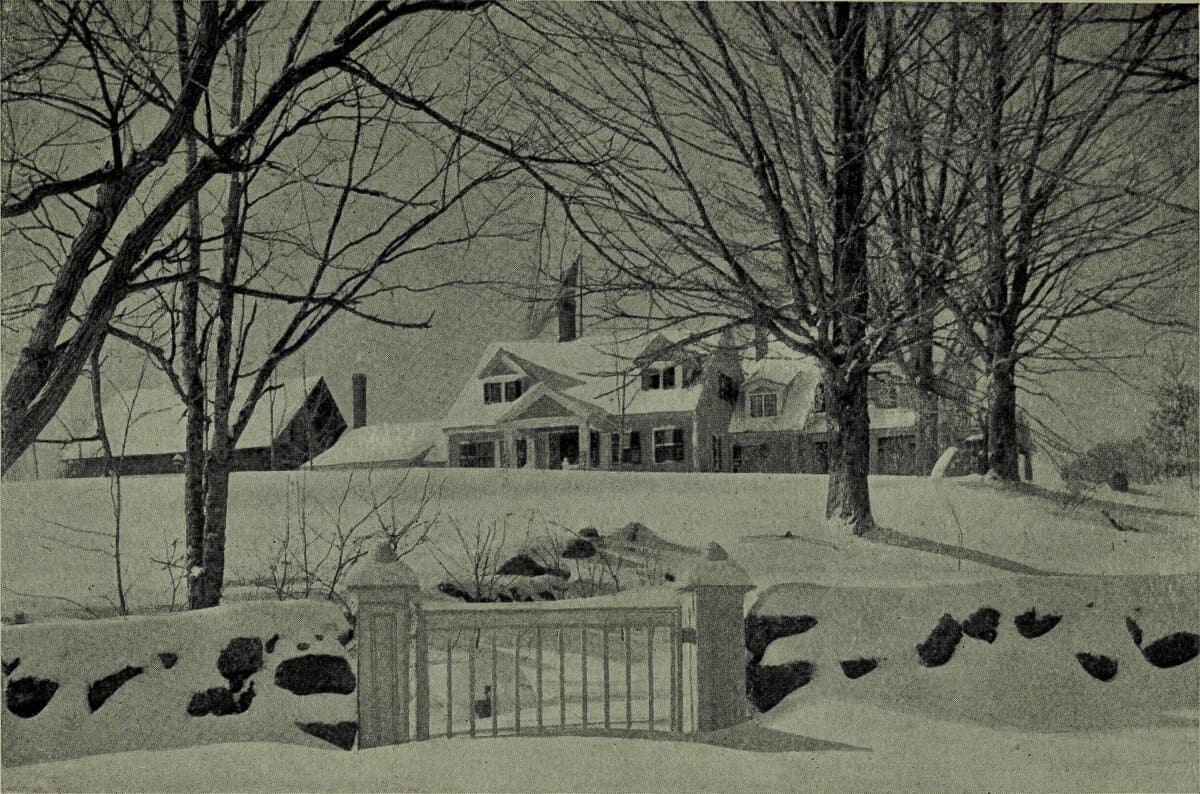
Edward MacDowell's home at Peterboro, New Hampshire, in winter 1906. (Public Domain)
He did wrote some of his best compositions in the log cabin, which Marian had built as a studio for him. It was there that he wrote “Woodland Sketches,” a collection of 10 pastoral piano pieces which includes his best-known work, “To a Wild Rose.”
MacDowell enjoyed the peaceful inspiration of Hillcrest so much that he wanted other artists to enjoy that solitude. It was his dream to turn the property into an artists’ colony through the Edward MacDowell Foundation, which he and his wife founded in 1907. Marian spent the remaining 48 years of her life, raising funds and support for the MacDowell Colony.
MacDowell’s career was tragically short, as he died in 1908 at the age of just 47. Thanks to the tireless work of his wife, who performed his music in hundreds of concerts around the country for decades after his death, his legacy didn’t end with his death.
Edward MacDowell was a true Romantic, both in the musical and poetic sense. His distinctly American music was dedicated to the classical music tradition of the Romantic school. He remains a great example of a man who spent his whole live dedicated to music, beauty, and love.
What arts and culture topics would you like us to cover? Please email ideas or feedback to features@epochtimes.nyc