

Dear 2026 graduates,
You can’t see me, of course, but you should know that I’m an old guy. Now and again, two lines from T.S. Eliot’s “The Love Song of J. Alfred Prufrock” bring a smile, the ones in which he says, “I grow old ... I grow old .../ I shall wear the bottoms of my trousers rolled.” So far, I’ve felt no inclination to roll up my trousers, but I have grown old. We’ll come back to Prufrock directly.
In 1913, Eleanor H. Porter’s “Pollyanna” was published. In this novel, the orphaned Pollyanna plays the glad game, which means that she’s always looking for something to be thankful for when things go south. These acts of gratitude drew her away from her troubles and allowed her to see the good in the world.
The book and her glad game became a smash hit with adults and young people alike. Glad game clubs were founded across America, and Parker Brothers introduced a popular board game that sold for 50 years. Yet calling someone a Pollyanna today is generally an insult describing an excessively optimistic person who can’t face reality.
Two years after “Pollyanna” appeared, with World War I already taking its wrecking ball to traditional Western culture, Eliot’s “Prufrock” was published. Here we find no glad game, but only self-obsession and its companion, despair: “I have measured out my life with coffee spoons.”
A creature of doubts and conjectures—“I should have been a pair of ragged claws/ Scuttling across the floors of silent seas”—Prufrock is wrapped up in egoism, his energies directed inward, always focused on No. 1. He’s the dreary forerunner of our own sad age of anxiety, discontent, and self-absorption.
In many ways, we stand, you and I, on a spectrum of extremes between Pollyanna and Prufrock. If you’d like to step a little closer to the glad girl and avoid the Prufrock virus, here are four ways to help you make the move.
Make Gratitude an Intentional Choice
For some 40 years of my adult life, I neglected intentional gratitude and all the advantages it bestows. I was no narcissist, but I was always focused on school, then work, then marriage and a family and even more work. Like many millions of others, I was always so zeroed in on day-to-day living that gratitude found little room in my thinking. Only in the past 15 years or so have I started each morning with a cup of coffee and a simple prayer: “Lord, thank you for another day. Let me make the most of it.”
It’s a simple routine. It takes less than 10 seconds and sets the tone for the day. So, I urge you to make me your negative example. Don’t wait until you’re middle-aged or older to adopt an attitude of intentional gratitude. Start today and you’ll discover, as so many others have, that gratitude is not the child of happiness. Quite the opposite, in fact. If you’re looking for happiness, you’ll find that gratitude is its mother.
As singer-songwriter Willie Nelson once said, “When I started counting my blessings, my whole life turned around.”
Make Your Days Extraordinary
Shortly after I turned 40, I woke one morning to a thought that came out of nowhere: “Today is going to be an adventure.” That strange, uninvited thought reappeared the next morning, and the next, after which I made it my own.
It changed the way I looked at the world.
Making “Today is going to be an adventure” your second morning mantra and repeating it as needed throughout the day can transform how you view the ordinary. The faces of the people you love take on a special glow. Workplace hassles become challenges to be solved. Sunsets, rainy afternoons, books you read, and a friend’s conversation—all become more meaningful and, yes, more beautiful. You’ll walk with a bit more bounce in your step and hold your head a little higher, ready to meet whatever comes your way.
Try it for a week or so, and see whether “Today is going to be an adventure” adds some sparkle to your routine. After all, what have you got to lose?
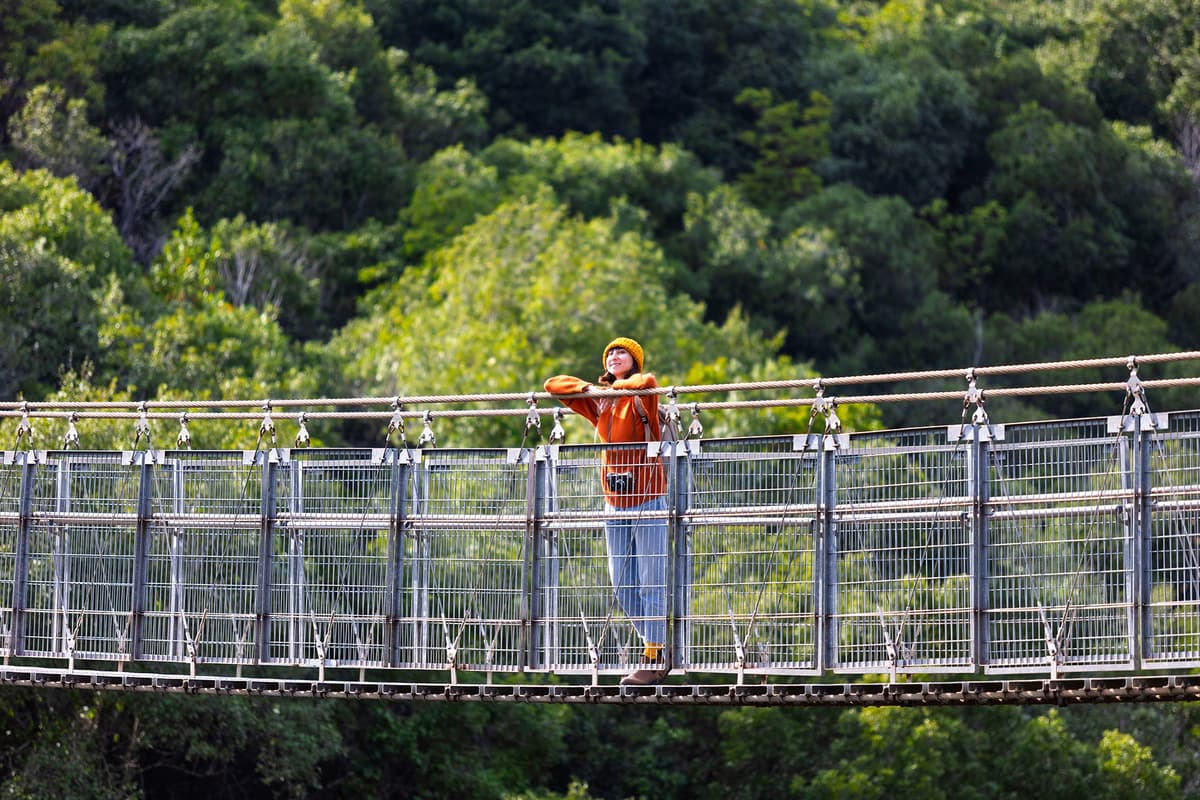
Adventure and risk-taking help shape identity and independence in young adults. (zhukovvvlad/Shutterstock)
Stay Awake
In 2025, actress and educational activist Sophie Winkleman spoke at the Alliance for Responsible Citizenship conference in London. Her topic was the damage done to young people in the classroom by screens and digital learning.
She began with this story: “It was early evening, and I was on a packed 19 bus in London standing over a young man and a young woman. They were sitting beside each other, both gazing at their smart phones. ... They were both attractive, smartly dressed, professional looking, around the same age. Willfully invading their privacy, I subtly angled myself to see what they were up to on their phones. They were each on dating apps, reading the profiles of men and women who presented as extremely similar to the two of them.”
There was laughter at this point.
“Completely true,” she said. “Our bus reached Piccadilly Circus, and both happened to alight at this stop. I watched the two of them as they walked away from each other. ... They were side by side, both seeking companionship or love, but they didn’t even register each other’s existence.”
The moral here: Don’t let your screen make you a sleepwalker. The real world is teeming with possibilities no phone can ever match.
Throw Caution to the Wind
Here’s a tale with a happier ending.
In 1976, I was living on a shoestring budget on the backside of Boston’s Beacon Hill. The neighborhood then was rough and rundown, a neighborhood of addicts, prostitutes, people of all sexual proclivities, thieves, and at least one witch. I’d never lived anywhere remotely like it. I paid $40 per week for a room with a tiny refrigerator and stove and a bath down the hall, which at one point I shared with two heroin addicts undergoing methadone treatment. A nice couple, by the way.
Sometimes late in the evening I’d walk to Harvard Gardens, a bar and grill nowhere near Harvard whose garden constituted wilted potted plants. On this particular evening in March, I sat with a friend, Jim, who was already a bit drunk when I arrived, nursing the single beer I’d allotted myself when three nurses from nearby Massachusetts General Hospital walked in. When I commented that one was cute, my friend sent drinks to their table, and they invited us to join them. For half an hour or so, the five of us talked, then they rose to leave. Later, the nurse who’d caught my eye told me that she’d heard my friend saying, “Don’t let her get away! Don’t let her get away!” as they walked to the door.
And so, throwing away my usual inhibitions, out I tumbled onto Cambridge Street and caught up with her. Her two friends stepped away to give us some space. I said, “I don’t usually do this”—in truth, I had never done it—“but could I have your phone number and call you?” She gave me a look, then dug out a pen and piece of paper from her purse.
“I don’t usually do this,” she said, “but yes, you can call me.”
As she was writing, an old man appeared out of nowhere behind us and wrapped his arms around our shoulders.
“Give the guy a chance,” he said. “Give the guy a chance.”
He then disappeared down the sidewalk and into the night.

(pixdeluxe/Getty Images)
Long story short: Kris gave me a chance. We fell in love, we married, we went through good times and bad, and yet we kept loving each other. All because I took a chance and she took a chance, and we were fortunate enough to have a pushy drunk and a guardian angel help us get together.
Risk always comes with the possibility of failure, and we should, when possible, weigh consequences before leaping into the unknown. After all, prudence is one of the classic virtues.
But it’s also true, as Clint Eastwood said in “The Rookie,” “if you want a guarantee, buy a toaster.” Making risk aversion a life philosophy, as some do today, has its own risks, such as not marrying a woman you were meant to be with and having four children and 24 grandchildren, with another making an entrance this July.
Practice gratitude. Infuse your days with a spirit of adventure. Stay awake to possibility. Roll the dice every once in a while. Do these things, and you’ll lead a life richer than you ever imagined.