

WASHINGTON—The attempted assassination of President Donald Trump at the White House Correspondents’ Dinner on April 25 has raised fresh questions about the adequacy of presidential protection and exposed significant security flaws at the event, held at the Washington Hilton hotel.
Surveillance footage shows the suspect, identified as Cole Allen, 31, sprinting through a security checkpoint in an attempt to reach the hotel ballroom, while security officers appear to be disassembling metal detectors.
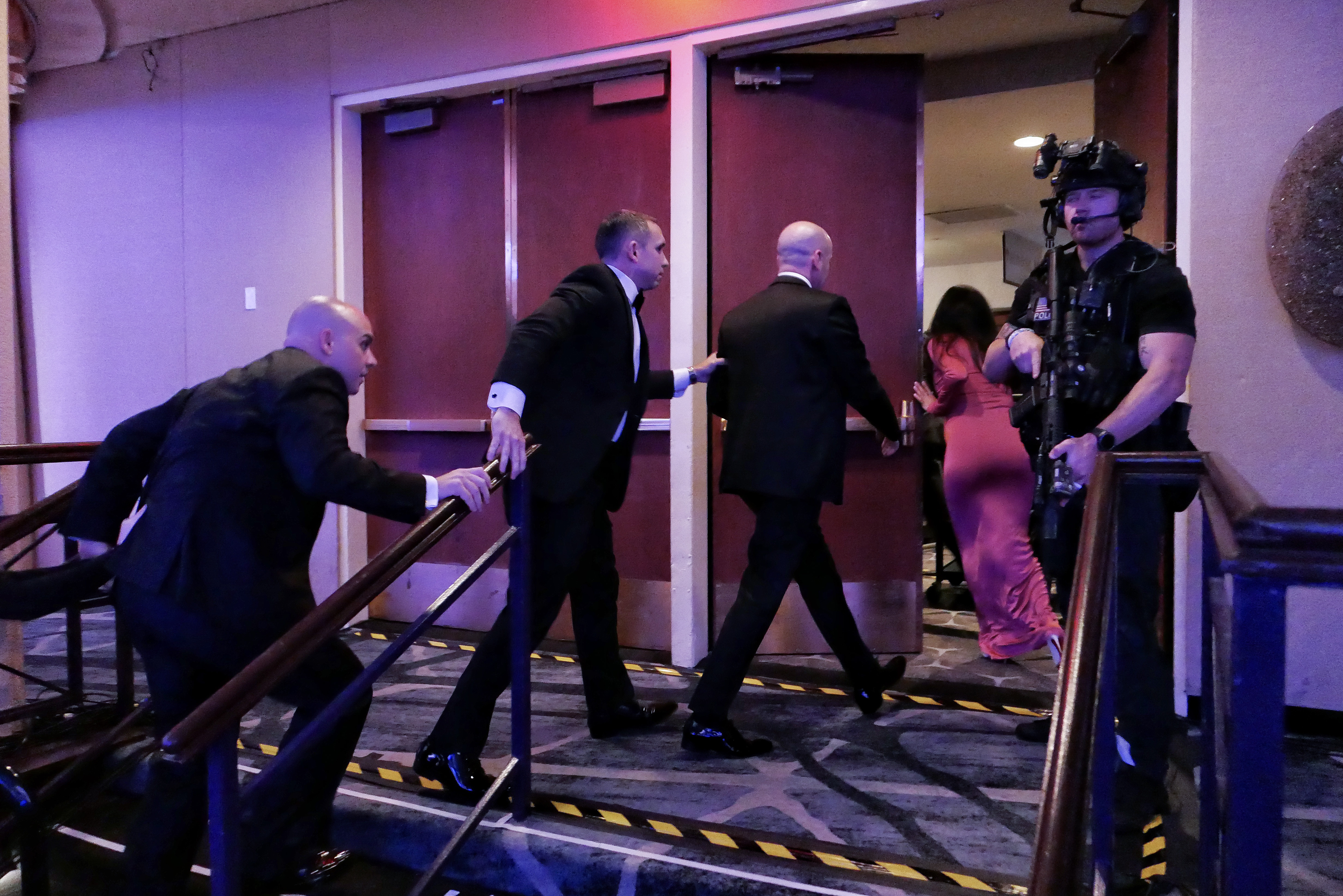
At about 8:40 p.m., multiple shots rang out as Secret Service agents rushed to intercept and detain Allen before he reached the ballroom. About 2,500 guests, including the president, first lady, and senior administration officials, were present at the venue. The suspect was allegedly armed with a shotgun, a handgun, and multiple knives.
A Secret Service agent fired multiple times at Allen but missed, according to an affidavit by an FBI agent. The officer was shot once in the chest but was saved by his ballistic vest; he was released from the hospital later that evening.
After the incident, Secret Service Director Sean Curran said there had been no security failures.
“It shows that our multi-layered protection works,” Curran said.
Despite the Secret Service’s safety protocols, experts flagged potential security loopholes at the Washington Hilton that night.
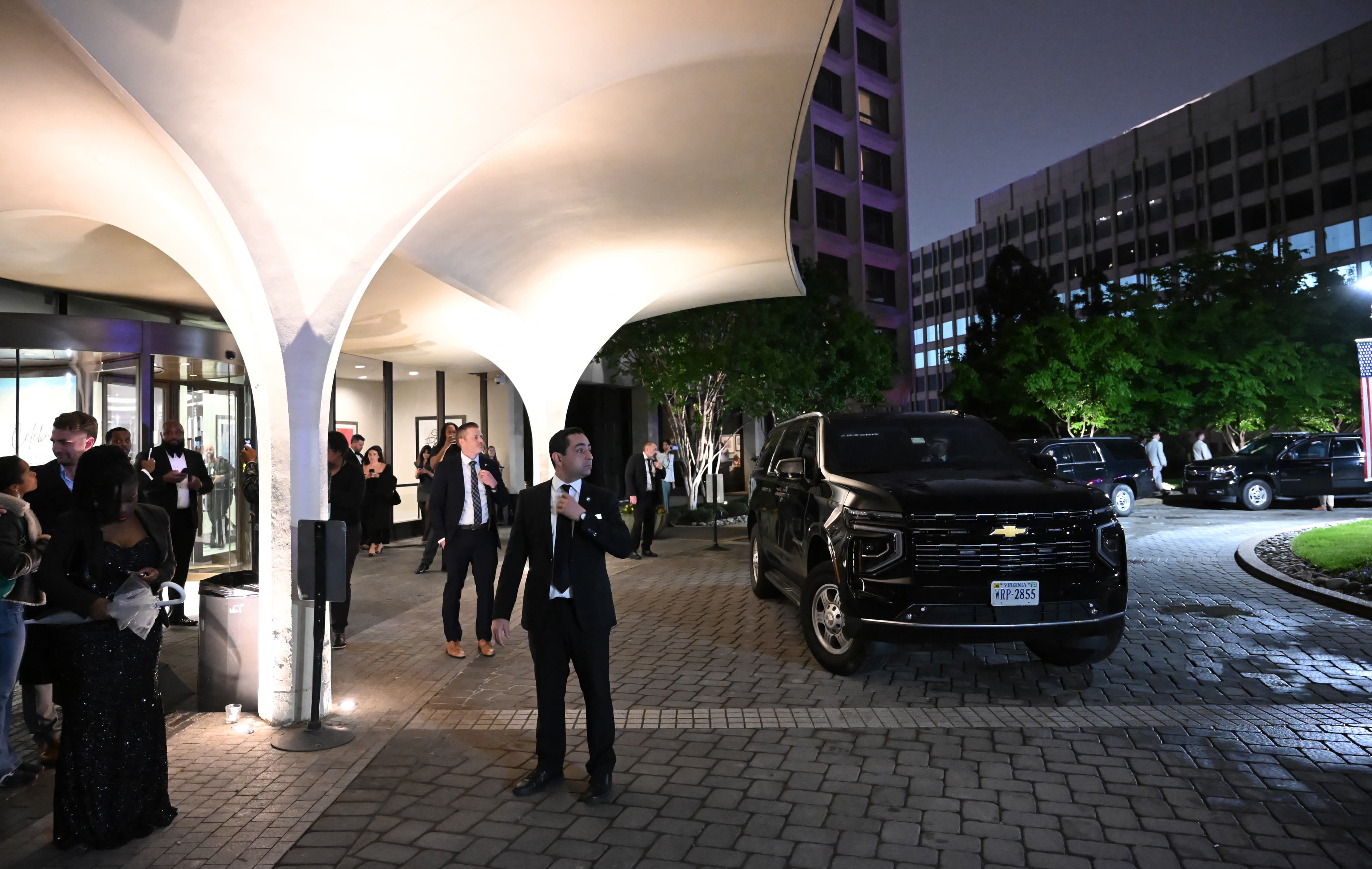
"Secret Service officers and guests wait outside the Washington Hilton after a security breach. (Alex WROBLEWSKI / AFP via Getty Images)
Hotel Guests Pose Security Risk
Law enforcement officials said that Allen, a resident of Torrance, California, was a registered guest at the hotel. Like potentially hundreds of other hotel guests, Allen did not go through security screening upon arrival at the hotel a day before the event.
This lack of screening the day before also allowed him to bring weapons into the building, a former police officer told The Epoch Times.
Allen’s guest status helped him move freely within the premises and carry out his plan to rush through the security checkpoint on the night of the event, according to security experts.
“Knowing the president’s coming to that hotel and not knowing who the guests are” could have created a security loophole, said Billy Ray Hunter, who previously worked on the SWAT team at the Alachua County, Florida, sheriff’s office.
He said all hotel guests should have received background checks if they were going to be staying at the hotel at the same time as a Trump-attended event.
“It literally could have been a bomb that someone took in. ... They could have brought the whole thing down on everyone,” Hunter said.
Dean Golemis, a former New York City Police Department detective and certified police instructor, agreed that the biggest loophole was what he called a lack of “security posture in the days leading up to the event at the hotel.”
“They were just very fortunate the other night that there weren’t multiple gunmen running into the building,” Golemis told The Epoch Times. “I don’t think they had the resources in place to handle an attack on multiple fronts.”
Allen traveled by train from Los Angeles to Chicago and then to Washington, acting Attorney General Todd Blanche said on April 26. Golemis said he believes that Allen took the train rather than flying to avoid airport security.
On April 6, Allen made a reservation at the Washington Hilton for three nights, Friday through Sunday, according to the Justice Department. He arrived in Washington at roughly 1 p.m. on April 24 and checked into the hotel later that day.
“A registered guest with a room key bypassed the outer and middle perimeters entirely, leaving only a single metal detector checkpoint,” Gerard Filitti, senior counsel at The Lawfare Project, a New York City-based think tank, told The Epoch Times.
“This created an unacceptable single point of failure in an era of elevated threats of political violence, and shows why high-value events like this require hardened federal venues or full-facility lockdowns.”
On April 27, Allen was federally charged with attempting to assassinate the U.S. president, transporting a firearm and ammunition across state lines to commit a felony, and discharging a firearm during a crime of violence.
On the same day, the Justice Department released photos of the weapons Allen allegedly brought to the hotel, including a shotgun, handgun, and four different knives.
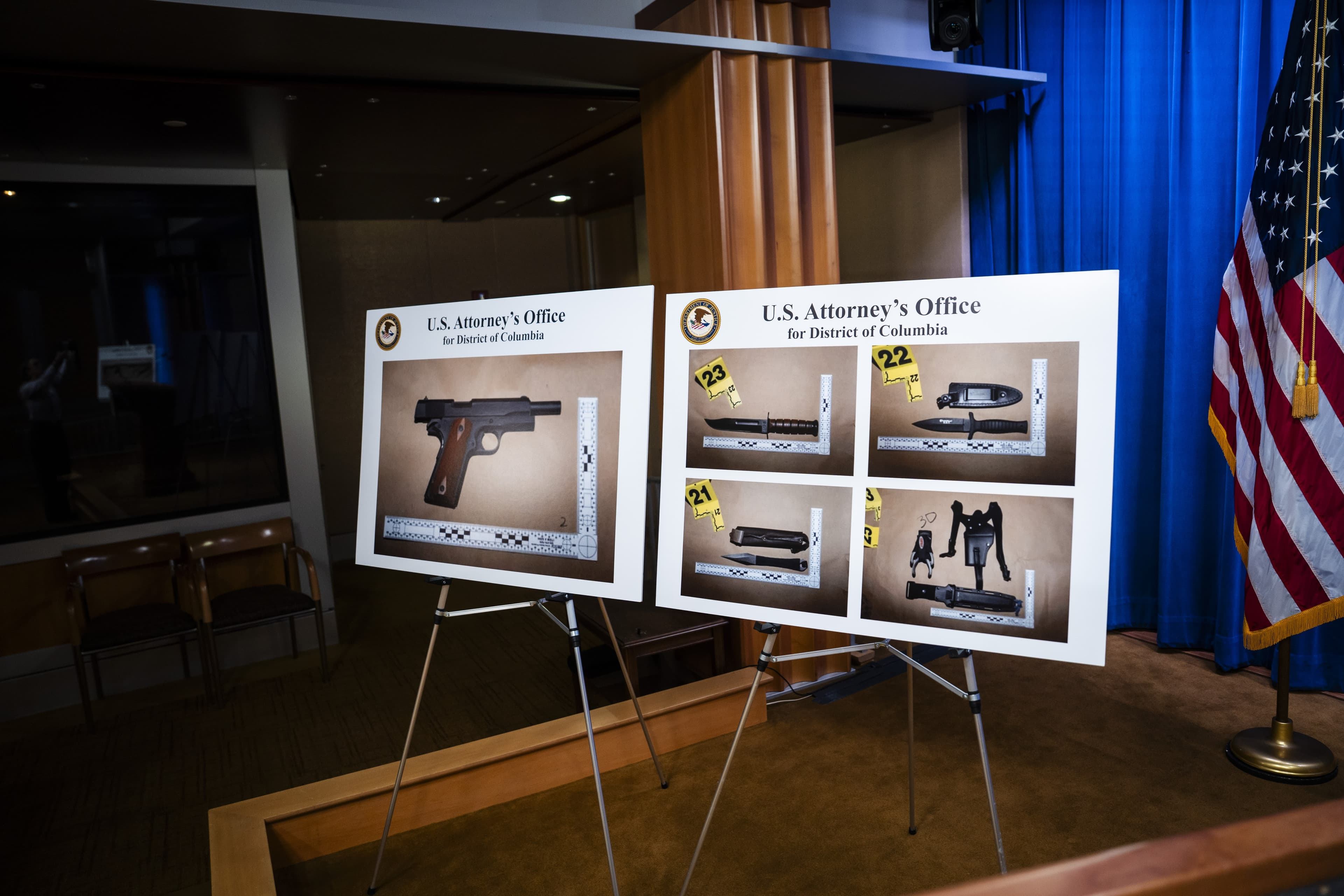
A lack of screening the day prior allowed the suspect to allegedly bring two guns and multiple knives into the hotel. (Madalina Kilroy/The Epoch Times)
Lax Measures at Hotel Entrance, Hallways
Dinner guests said security at the hotel entrance was more relaxed than they expected, even for people who were not staying at the Hilton. Many mentioned walking past a group of chanting protesters before reaching the hotel’s entrance.
Event staff checked invitations at the metal detector entrance. The invitations, which did not include guests’ names, were printed tickets or JPEG email attachments marked as “strictly nontransferable.”
Guests reported that they did not have to show identification at any of the multiple security checkpoints, both outside and inside the hotel. Many guests later said they found the lax measures very concerning.
According to Golemis, an eyewitness saw Allen with a long gun in a hallway not far from where he breached the security, revealing another security loophole.
“Instead of having everyone standing [in] one spot in the lobby, each hallway should have been covered with an agent,” he said. “Apparently it wasn’t—because this young man was in a hallway not far from where that famous video is, and he assembled the shotgun there and then made his attack.”
Trump released the hotel surveillance footage on Truth Social late on the evening of April 25 that purportedly shows security officers dismantling metal detectors while Allen runs through a security checkpoint.
Curran said that after Trump was seated, Secret Service agents no longer permitted additional attendees to enter the ballroom, so the outer checkpoints were being closed and phased out.
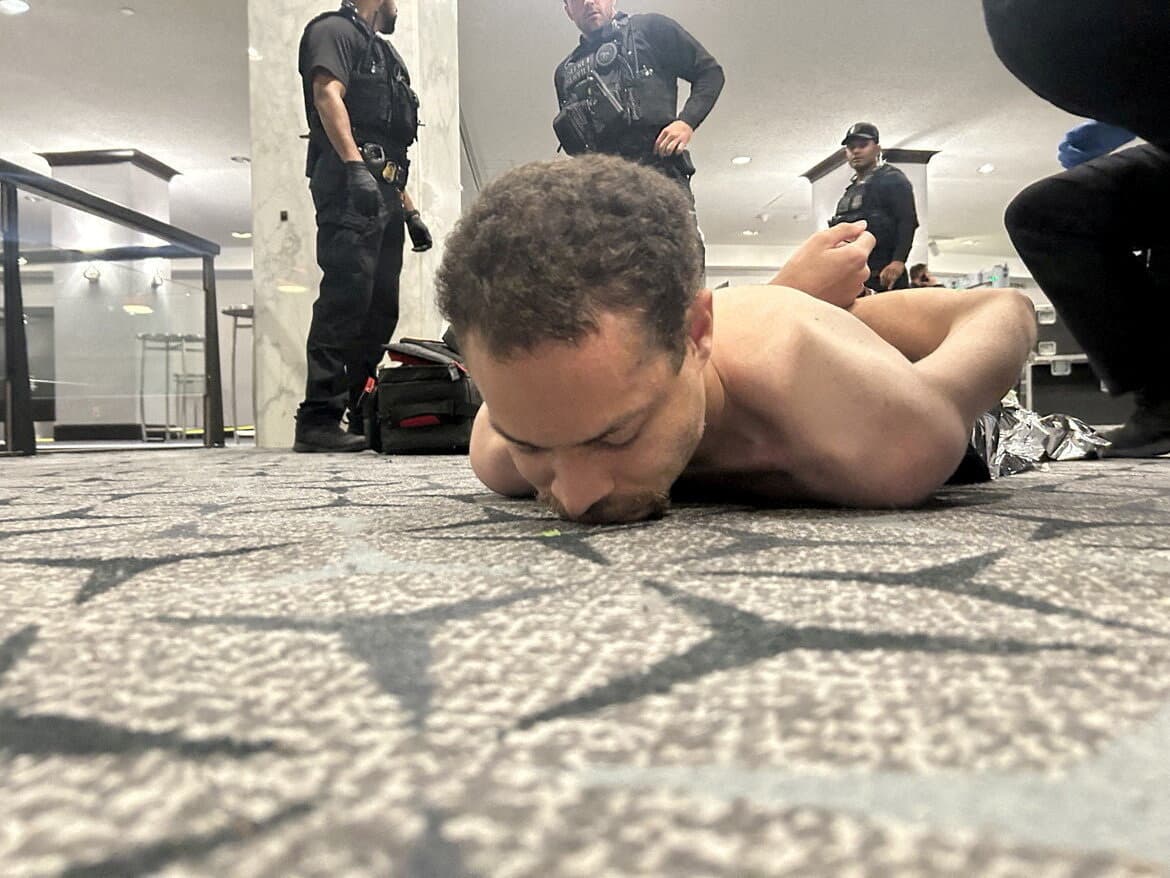
Cole Allen allegedly assembled a shotgun in a hallway close to where he breached security. (DONALD J TRUMP via Truth Social/Handout via REUTERS)
Security experts suggest that this may have opened a window of opportunity for Allen to rush into the area.
Golemis noted that a temporary turnstile system in the hallway could have helped by slowing down the attacker.
Other high-profile U.S. officials at the dinner on the night of April 25 included Vice President JD Vance, FBI Director Kash Patel, House Speaker Mike Johnson (R-La.), Secretary of State Marco Rubio, and Secretary of War Pete Hegseth.
Within the presidential line of succession, Sen. Chuck Grassley (R-Iowa), who serves as Senate president pro tempore, was the highest-ranking successor (third in line) who did not attend the dinner.
Secret Service Reform
Luke Nichter, professor of presidential studies at Chapman University in Orange, California, said he believes that the way presidents are protected at such events could change for good after the recent incident.
Nichter told The Epoch Times that every time a major event like that at the Washington Hilton happens, security measures move to a new level.
“It was the [President John F.] Kennedy assassination that led to the protection of candidates,“ he said. ”It was the [Sen. Robert F. Kennedy] assassination in 1968 that led to the protection of anyone who might be a serious candidate.
“I think the security regime that we are now beginning to cope with is the fact that presidents in the future are likely to leave the White House less and less and need to be able to do more of their job without leaving the White House.”
Hunter said additional firearms training may be required for the security officers working at presidential events.
“[The suspect] was moving like a lightning bolt, and it’s tough to shoot at a moving target, especially in a stressful situation, but that’s what training is all about,” Hunter said.
Some of the most striking footage from inside the ballroom shows how quickly Secret Service agents moved to protect the president and other senior officials. Among them, one agent stood out. He jumped onto the stage and positioned himself with his body turned toward the guests in the ballroom, shielding the president.
Reflecting on that moment, Golemis commended the agents for their heroic service during the chaos.
“That man was willing to give his life for the president of the United States,“ he said. ”I’m sure that man has a wife, he has children.”
However, Golemis suggested that the entire Secret Service program needs an overhaul.
“They need a visionary to come in and take over the agency, and they have to revamp how they operate,“ he said. ”The way they used to do things does not work anymore.”
In March, The Epoch Times observed a similar security loophole at Trump National Doral in Miami while covering Trump’s summit with Latin American leaders. An Epoch Times staff member arrived a day early and checked in as a hotel guest. There were no visible security screenings at the entrance or inside the hotel, such as metal detectors or bag checks, the staff member said. Although the golf resort covers a large area, the hotel buildings are situated relatively close to one another.
In the hours before Trump’s arrival at the hotel, security increased significantly. Barriers and checkpoints were set up, and access to certain areas was restricted. Despite this, guests who had already checked in were not subject to further screening unless they entered the main building, which housed the lobby and restaurants.
By the following morning, security at the golf club, particularly around the summit venue, was significantly tighter. However, the earlier gap in screening of hotel guests stood out as a potential security risk.
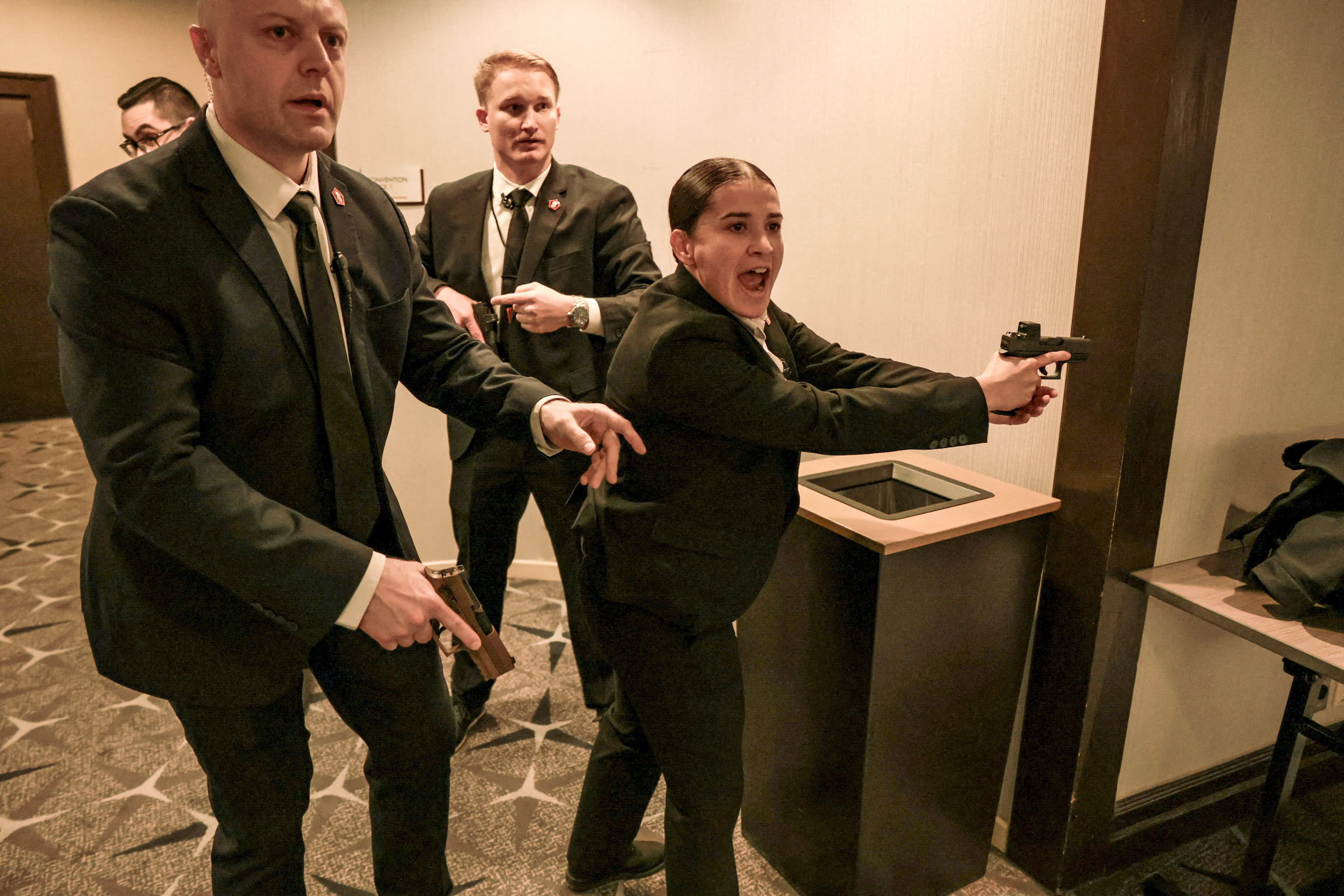
Secret Service agents respond to a shooting after a gunman rushed past security. (REUTERS/Jonathan Ernst)
White House Ballroom
Trump has also questioned security at the Washington Hilton and reiterated his proposal to continue construction on a high-security ballroom at the White House to prevent a similar incident in the future.
Nichter, a presidential historian, said that “the ballroom is a distraction” amid the ongoing political debate about its necessity.
“Everything today is political on both sides,” Nichter said. “The real story is, what’s being built under the ballroom?
“We are entering a new era of increased threats on the president. To cope with those increased threats, the White House campus has to be enlarged in a way where the president leaves campus less often, where more of the duties of the president can be conducted in a safe area like that.
“While this may be very politicized today, during the Trump era, I suspect that with future presidents, we will accept this as normal.”