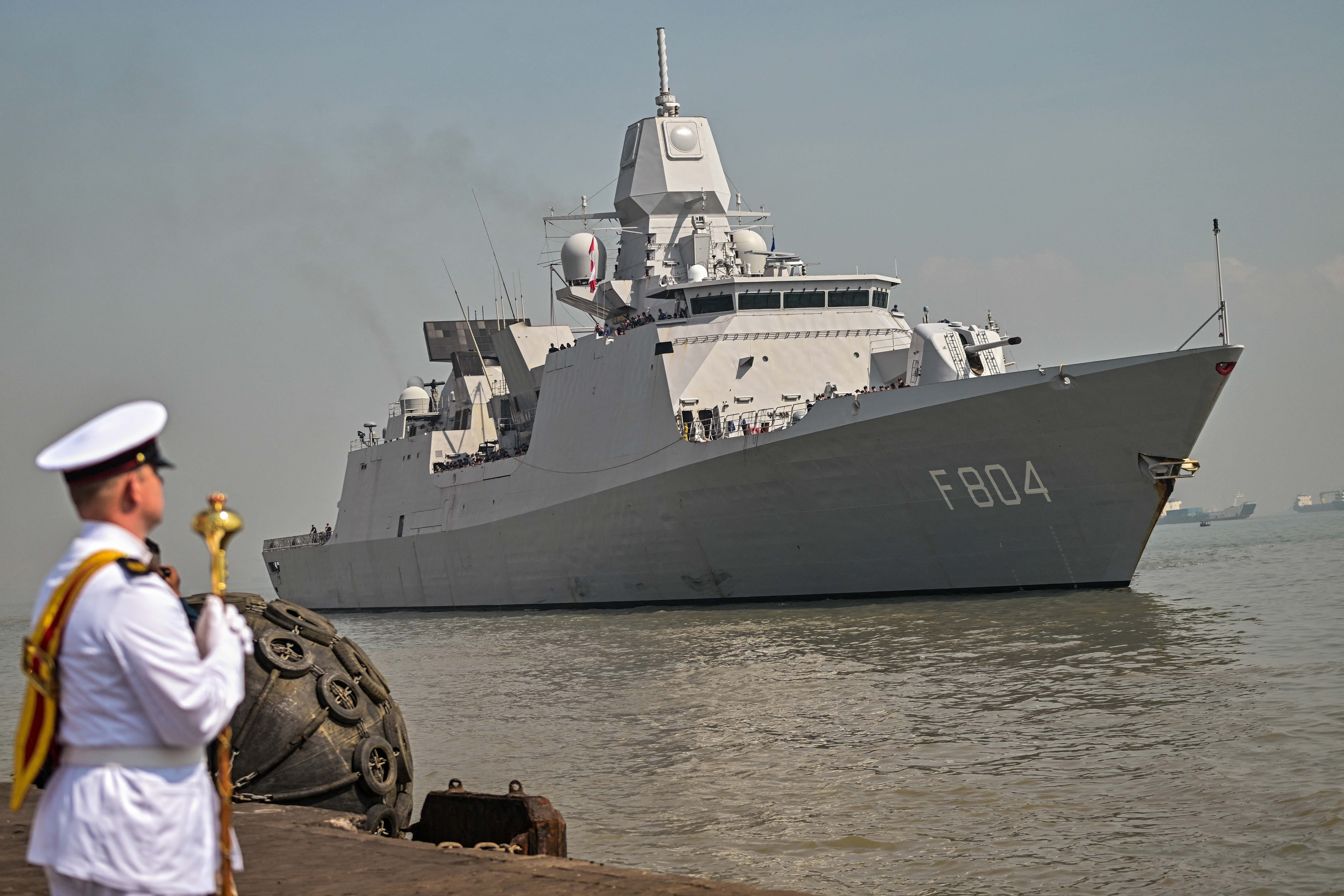

China on May 27 said it deployed naval and air forces to deter a Dutch frigate, in a rare encounter between Beijing and Amsterdam in the hotly contested South China Sea.
Chinese forces used “necessary measures, including verbal warnings and electronic jamming,” to force the Dutch frigate away on May 27, China’s military said in an online statement.
The move came after the Dutch frigate, HNLMS De Ruyter, allegedly trespassed into waters near the Paracel Islands and “repeatedly” flew its helicopter over the islands that China claims as its territory, according to Beijing’s accounts of the episode.
Zhai Shichen, a spokesperson for the People’s Liberation Army Southern Theater Command, called the Dutch navy’s actions “provocative.”
China “firmly opposes” the Dutch operation, Zhai said, noting that China will resolutely defend its sovereignty and security.
The Dutch Defense Ministry did not respond to a request for comment by publication time.
The Dutch naval vessel is on a global mission that its defense ministry said aims to promote free passage and maintain the safety of strategic waterways.
As part of the 5 1/2-month deployment, the warship visited Manila, Philippines, last week and participated in various exercises with Philippine naval forces.
The Paracel Islands, where the latest encounter took place, is a small archipelago roughly equidistant from the coasts of Vietnam and China’s southernmost island, Hainan. Both countries claim the Paracel Islands, but the Chinese Communist Party has occupied them since 1974, according to the CIA’s World Factbook.
The Chinese regime claims almost the entire South China Sea, a strategic and resource-rich waterway, despite a 2016 arbitration ruling that invalidated its assertion under the U.N. Convention on the Law of the Sea. The regime rejects the ruling and has repeatedly pledged to defend its sovereignty.
Speaking to reporters in Manila, Rodger de Wit, commander of the HNLMS De Ruyter, said the Dutch navy’s presence in the Indo-Pacific region demonstrated the Netherlands’ commitment to international law, particularly the U.N. Convention on the Law of the Sea.
“We’re strong supporters of that, and it doesn’t matter if that’s the North Sea or the South China Sea,” he said on May 22, according to the official Philippine News Agency.
“That’s the reason why we are here as well—to promote freedom of navigation, keep the seas open, keep the trade going.”
While en route to the Philippines, the Dutch frigate was approached by a Chinese military helicopter, De Wit said, describing the encounter as “really professional on both sides.”
“They asked who we were, and we replied, and that was enough,” he said.
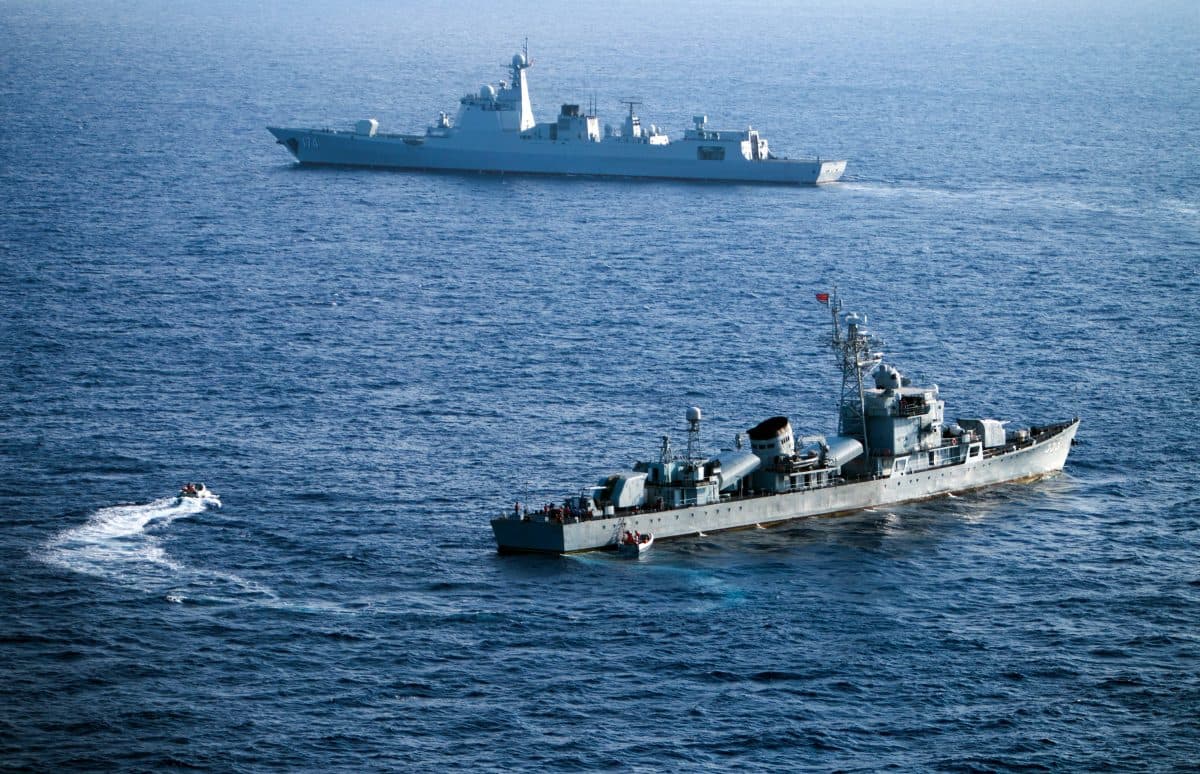
Crew members of China's South Sea Fleet take part in a drill in the Paracel Islands in the South China Sea on May 5, 2016. (STR/AFP/Getty Images)
Chinese coast guard and military vessels frequently clash with foreign ships in the South China Sea, mostly with neighboring countries that have overlapping claims, particularly the Philippines.
Data compiled by the Center for Strategic and International Studies showed that the Chinese military’s activities in the South China Sea reached a record high last year, with 163 operations reported, including live-fire drills.
Earlier this week, foreign ministers from Australia, India, Japan, and the United States expressed concerns about the situation in the East and South China Seas.
“We express our serious concerns regarding dangerous and coercive actions, including interference with offshore resource development, the repeated obstruction of freedom of navigation and overflight, and the dangerous maneuvers by military aircraft and coast guard and maritime militia vessels, especially the unsafe use of water cannons and flares, and ramming or blocking actions in the South China Sea,” the ministers said in a joint statement on May 26.