
Chinese investments in Europe have hit a seven-year high, but momentum is likely to slow down as Chinese manufacturers find exports more attractive, according to a new analysis.
China’s investment in Europe—including the European Union and the UK—reached 16.8 billion euros ($19.5 billion) in 2025, a 67 percent increase from a year earlier and the highest level since 2018, according to a May 20 report by global consultancy firm Rhodium Group and Mercator Institute for China Studies, a Berlin-based think tank.
In comparison, Chinese investment in other high-income economies has stalled at about 10 billion to 11 billion euros ($11.6 to $12.7 billion) annually since 2022, with investment in the United States remaining at a decade-low of roughly 3 billion euros ($3.4 billion).
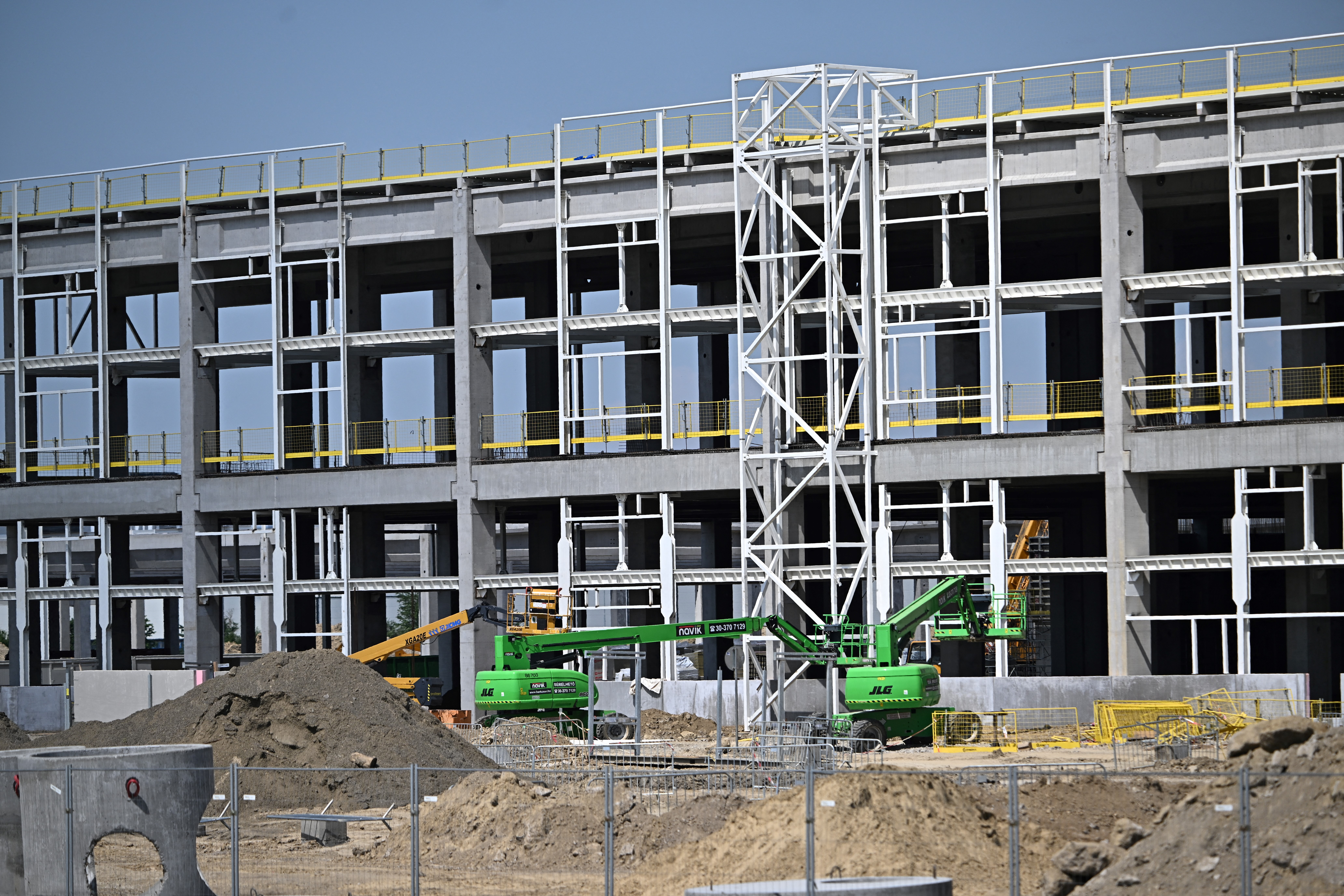
The analysis attributed the expansion in Europe to mergers and acquisitions activity—which recorded an 89 percent year-over-year increase—although completed investment in greenfield projects, such as battery manufacturing and electric vehicle (EV) related projects, also jumped by 51 percent from the previous year.
Despite the rebound, researchers noted that China’s total investment remains far below the levels seen a decade ago. In 2015, China invested 26.6 billion euros in Europe, according to data compiled by Rhodium Group China Cross-Border Monitor.
European policymakers have ramped up scrutiny of inbound investments, especially in sectors deemed sensitive to the bloc’s security. In Germany, for example, 33 Chinese investments were placed under review last year alone, according to the report, which cites data from the German Economic Ministry.
A new guideline adopted by the European Commission, European Parliament, and European Council in December 2025 is aimed at bolstering regulators’ power to review and block investment projects in sectors such as defense, semiconductors, artificial intelligence, and critical raw materials.
Chinese companies also face regulatory pressures from their home country. The report states that Beijing is likely to prioritize domestic industrial capacity over foreign expansion, keeping core technologies and know-how within the country.
Exceeding Global Demand
Despite growing hurdles, analysts projected that Chinese firms will continue to pursue opportunities abroad this year, largely driven by weak demand that has squeezed profit margins back home.
“There are few signs that the Chinese leadership’s promises to boost consumption-led growth ... will translate into the structural reforms needed to generate a durable recovery in domestic demand,” analysts wrote in the report. “Chinese growth, therefore, will remain heavily reliant on overseas markets.”
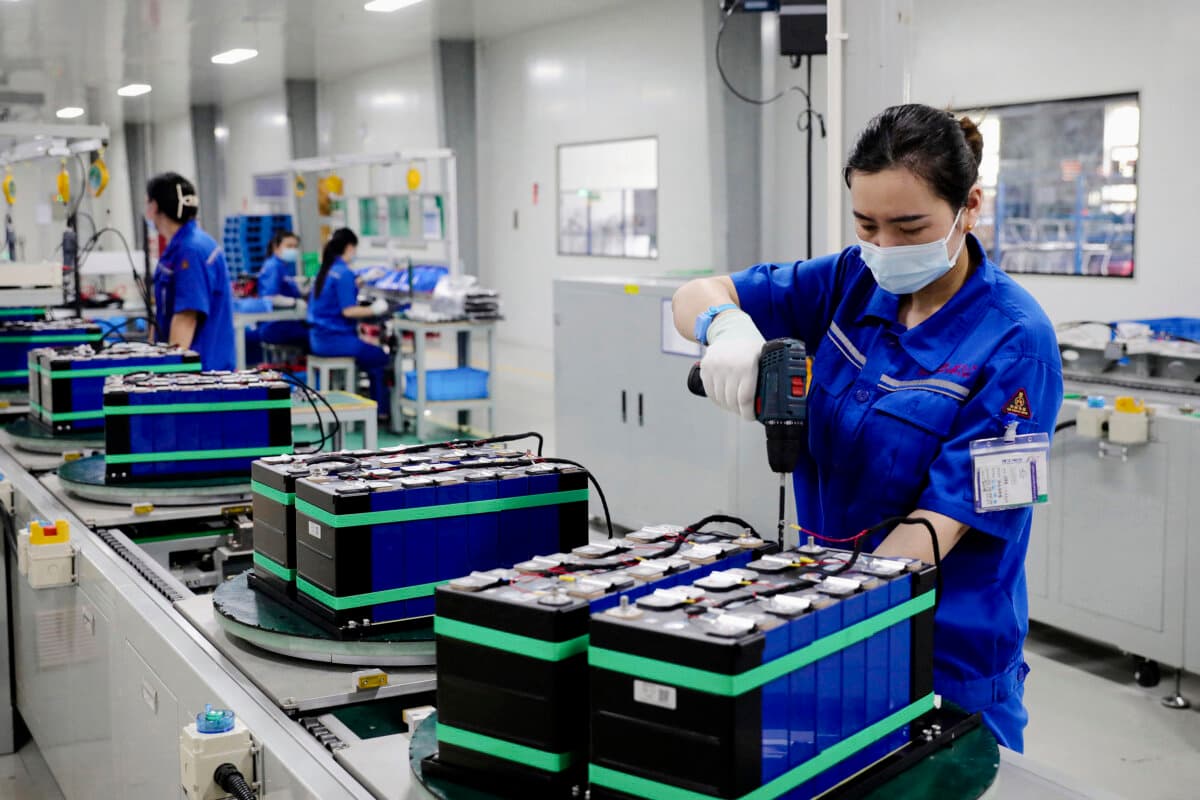
Employees working at a factory that produces lithium batteries for export in Huaibei, Anhui Province, China, on June 11, 2024. (STR/AFP via Getty Images)
A weaker Chinese currency and ample domestic production capacity will also encourage Chinese manufacturers to ship products directly to Europe, according to the report.
“In several sectors (batteries, EVs, solar), China-based output already meets or exceeds global demand, reducing the need for new overseas capacity,” the researchers wrote. “Meanwhile, intense competition among many Chinese exporters weakens incentives for any single firm to commit to costly investments in Europe.”
European leaders have voiced frustration over the growing imbalance in the bilateral trade. According to Brussels’ data, the bloc’s deficit with China ballooned to 360 billion euros ($418 billion) in 2025.
‘A Cancer’
The latest complaint about Chinese trade practices was from Kaja Kallas, the EU’s foreign policy chief.
“Everywhere you go around the world, everybody is worried about China’s corrosive economic practices,” Kallas said at the Lennart Meri Conference in Estonia on May 17.
She called the regime’s economic policies and practices “a cancer.”
“In Europe, we have a very clear understanding of the diagnosis of the disease,“ Kallas told the annual forum in Estonia’s capital, Tallinn. ”But we don’t have an agreement on the cure.
“If you have a very, very difficult disease, like you have a cancer, then you have two choices: either you increase the morphine, or you start chemotherapy.”
She compared the rise in member states’ subsidies to morphine—allowing companies to compete but failing to address the “underlying problem.”
Alternatively, Kallas said, they could stand together and use the bloc’s economic tools—akin to chemotherapy—to address the China challenge.
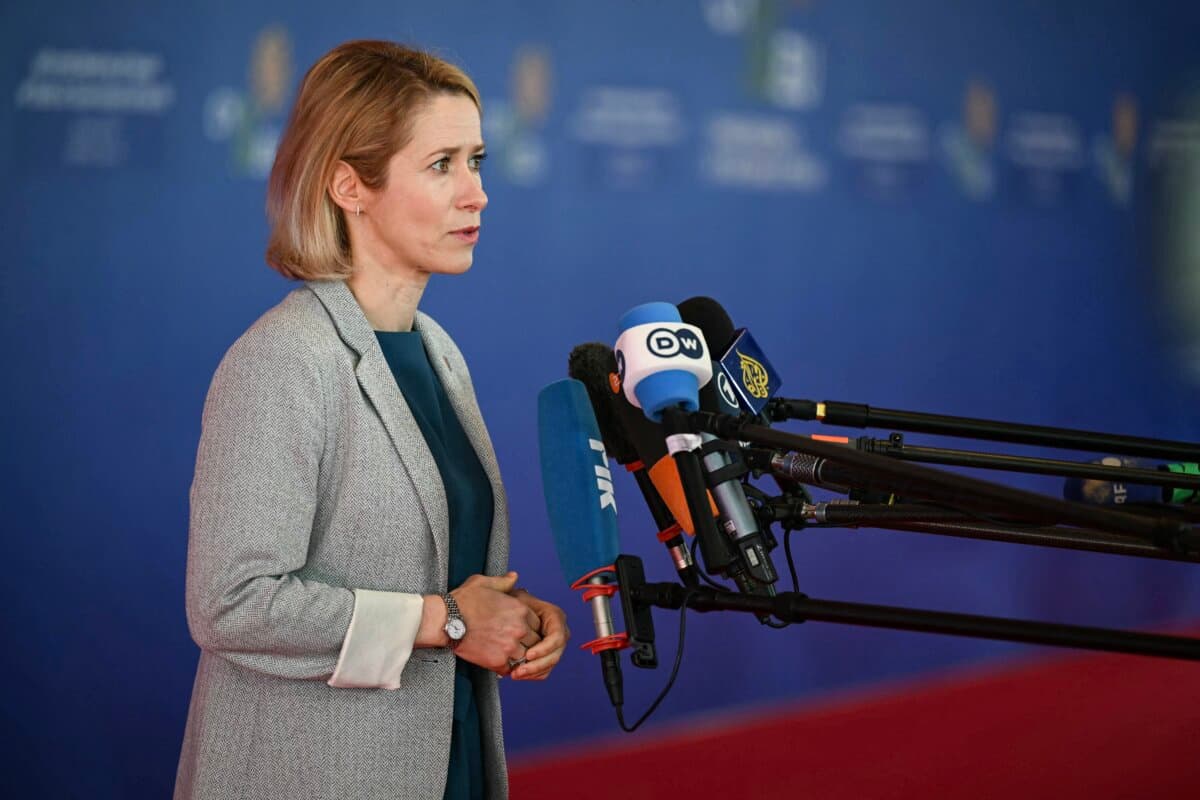
EU High Representative and Vice President for Foreign Affairs and Security Policy Kaja Kallas speaks to journalists as she arrives for an informal meeting of the European Council in Nicosia on April 24, 2026. (Nicolas Tucat/AFP via Getty Images)
“It will be painful to use the tools that we have, because there’s going to be retaliation,” she said. “So, we are not there yet.
“And I’m worried that eventually the rich countries will run out of taxpayers’ money to subsidize, and we haven’t dealt with the underlying problem.”