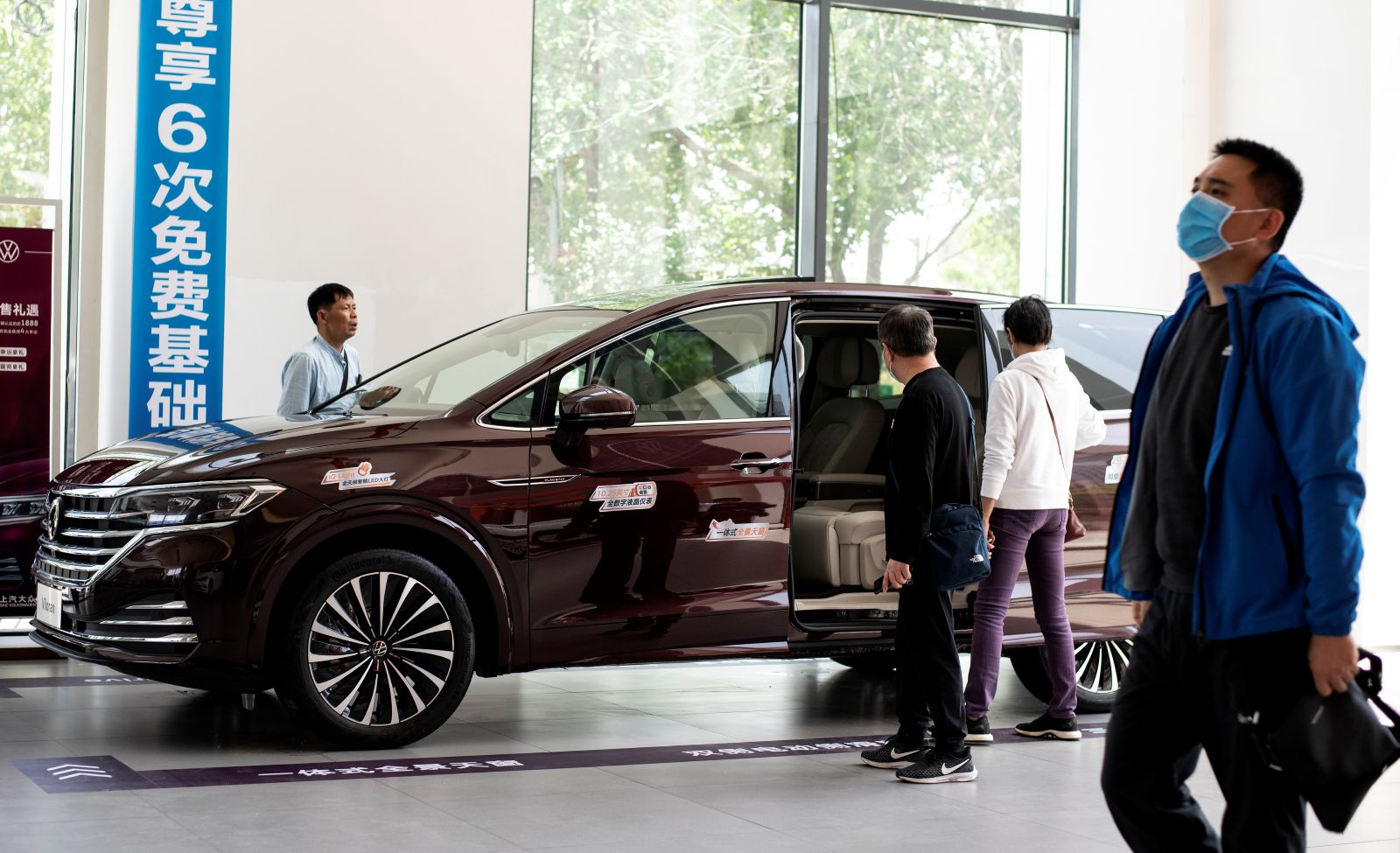

China’s once-booming auto retail sector is entering one of its most difficult periods in years, as a prolonged economic slowdown, shrinking consumer demand, and intense price competition push dealerships into widespread losses and trigger a wave of closures and job exits.
Among eight publicly listed auto dealership groups in China, only one managed to post a marginal profit in 2025, while the rest reported losses, according to Chinese online news platform Sina.
The downturn has persisted despite state subsidies aimed at boosting sales, with domestic auto sales falling sharply in the first quarter of 2026, highlighting weakening consumer demand across the market.
Employees Feel the Pain
For many in the industry, the strain has become unsustainable. Several industry insiders based in China spoke to The Epoch Times about the issue on condition of anonymity or revealing only their last names out of fear of reprisal.
Yang, a veteran auto salesman in Tianjin, China, who spent 15 years climbing from sales consultant to general manager, told the publication he recently quit his job.
“The competition is just too intense,” he said. “It’s exhausting, stressful, and you barely make any money.”
After three years of relentless price wars and overcompetition, Yang predicts that a major wave of resignations could hit the sector in late 2026.
“After pushing service and customer satisfaction to the extreme while operating at a loss, companies may not even be able to maintain basic service standards anymore,” he said.
Other workers describe similar pressures across the country.
A veteran salesman in Shaanxi Province told The Epoch Times that the number of potential customers has dropped by roughly 60 percent from previous years.
“There are too many people selling cars, but far fewer buyers,” he said. “A lot of dealerships are going to shut down this year.”
In Guilin, southern China, a car sales employee told The Epoch Times her dealership collapsed after its owner fled with funds, leaving staff unpaid and unemployed.
“The boss disappeared with the money. Management just stalled for time, and now everyone is out of work,” she said, adding that the company operated more than 20 dealerships across multiple brands.
In Zhengzhou, central China, another salesman said his company has stopped paying wages altogether.
“We’re competing on both price and service, but there’s no money left,” he said. “[Some of us are basically] taking out loans just to keep working.”
Industry-Wide Losses
Financial data highlight the scale of the crisis.
Major dealership groups reported steep losses in 2025. One leading firm recorded revenue of about 164.4 billion yuan (US$22.7 billion) but still posted a net loss of 1.67 billion yuan (US$240 million), according to China Times via Sina. On average, the gross profit margin on new car sales fell to negative 21.5 percent in 2025, with luxury brands posting a negative 26.2 percent—meaning dealers are effectively losing money on every car sold.
The downturn has continued into 2026. Official data released in April showed that China’s domestic auto sales fell 20.3 percent year over year in the first quarter, according to Chinese media People’s Posts and Telecommunications News via Sina. Sales of new energy vehicles dropped even more sharply, down 23.8 percent.
The weakness stands in stark contrast to overseas markets. For instance, German automaker Mercedes-Benz reported a 20 percent sales increase in the United States and a 7 percent growth in Europe over the same period, while its China sales plunged 27 percent.
At the heart of the slump is a simple problem: Consumers are no longer buying.
Industry insiders say years of price cuts have conditioned buyers to expect further discounts, creating a self-reinforcing cycle.
“Prices have already been cut to the limit—any further and they fall below cost,” said the Shaanxi-based salesman. “But consumers still think cars are too expensive. So they just wait. There’s nothing companies can do.”
One U.S.-based analyst sees China’s auto sector struggles as a reflection of deeper economic challenges.
“The downturn in the auto market is closely tied to China’s broader economic slowdown,” China affairs analyst Li Linyi told The Epoch Times. “Weak domestic demand, rising unemployment, and declining incomes are all affecting consumer behavior.”
As a high-value durable good, cars are especially sensitive to shifts in consumer confidence, he added, suggesting the sector may struggle to recover until broader economic sentiment improves.
Tang Bing and Gu Xiaohua contributed to this report.