
The Chinese Communist Party (CCP) has expelled two military chiefs—including the country’s highest-ranking uniformed officer—and handed them to prosecutors for accusations related to disloyalty and corruption.
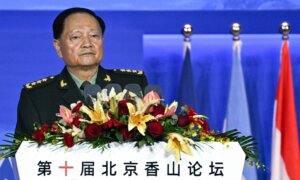
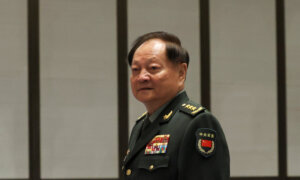
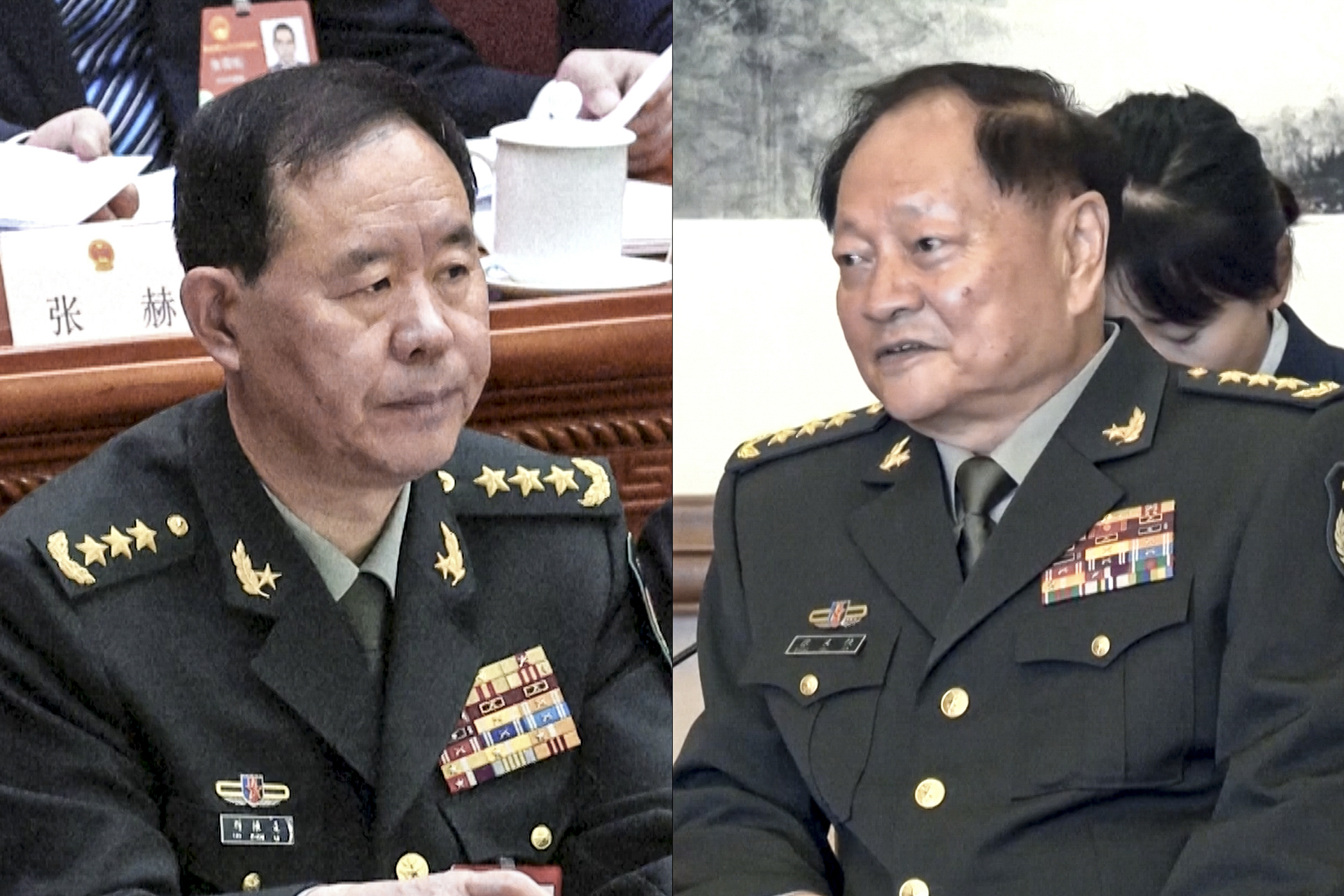
Zhang Youxia, former vice chairman of the Central Military Commission (CMC), was stripped of his CCP membership and removed from the army, according to state-run news agency Xinhua on Sept. 21.
Liu Zhenli, a member of the CMC and the military’s former chief of staff, was also expelled from the Party and the military, Xinhua said.
The CMC allows the Party to control the country’s armed forces, the People’s Liberation Army (PLA), and represents one of the highest echelons of power in China. When Chinese leader Xi Jinping unveiled the leadership lineup at the 20th Party Congress in late 2022, two vice chairs and four members sat on the elite body.
Now, only two men remain on the commission: Xi and a general who enforces the political cleansing in the military.
With the fall of the two senior commanders, the current waves of purges have reached a scale unseen since the era of CCP leader Mao Zedong. Over the past three years, more than 100 senior military commanders have been purged, according to a February estimate by the Center for Strategic and International Studies.
The expulsion of Zhang and Liu was approved by the Politburo, an elite council with 21 members, during a meeting on Sept. 21. This month’s gathering is about a week earlier than its usual schedule, and two days ahead of Xi’s state visit to the United States.
Zhang, also a member of the Politburo, was abruptly placed under investigation on Jan. 24 along with Liu. Both men were accused of serious violations of discipline and laws. Beijing said in a brief statement in August that they had been expelled from the CMC.
The Politburo revealed more details on the swift dismissal of two top generals in a statement released on Sept. 21.
Zhang and Liu “seriously violated political discipline and political rules, formed cliques and factions, and were disloyal and dishonest toward the Party,” it said.
CCP authorities also accused them of “exploiting their positions to seek gain for others through postings and promotions” and accepting “large sums of money.”
“An investigation has found that Zhang Youxia and Liu Zhenli betrayed their original aspiration and mission, became disloyal to the Party, lost their Party spirit and principles, and crossed red lines and bottom lines,” the Politburo said.
“The nature of the violations was extremely serious, and the effects have been extremely malign.”
It also said that the cases will be handed to military prosecutors.
Deepening Purges
For decades, Zhang was considered a close ally of Xi. They were known as “princelings,” descendants of high-ranking Party cadres in Mao’s era.
Zhang’s father, also a top general, and Xi’s father fought side by side during the Chinese Civil War nearly 80 years ago. Zhang and Xi have known each other since childhood. After Xi became the Party’s top leader in late 2012, he appointed Zhang to the CMC, where the general eventually rose to second only to Xi.
In 2023, when Zhang was widely expected to retire at 73, Xi kept Zhang for another five-year term at the CMC, a move the Pentagon assessed as reflecting “Xi’s desire to keep a close and experienced ally as his top military advisor.”
Zhang and Liu are among a handful of Chinese generals with battlefield experience. Zhang served in China’s brief war with Vietnam in 1979, and Liu took part in border skirmishes with Vietnam in the 1980s.
However, in recent years, Zhang and Xi have grown apart on some policy issues, including how the Party should handle Taiwan, military insiders previously told The Epoch Times.
Shortly after Beijing announced Zhang’s fall in late January, the military’s official newspaper published a sharply worded editorial, accusing him and Liu of having “trampled on” a system that ensures Xi’s authority over the PLA.
That accusation was notably absent from the Sept. 21 statement, noted Shen Ming-shih, a Chinese military expert at the Institute for National Defense and Security Research, a Taiwanese defense ministry-funded think tank.
Instead, Beijing accused Zhang and Liu of taking bribes in return for giving promotions and forming “cliques and factions.”
The wording indicated that the purges could extend to people around the two generals, likely ensnaring their allies, their subordinates, and the military officers they promoted.
“This could lead to significant shake-up within the PLA,” Shen told The Epoch Times.
“The key question going forward is what will happen when their cases are sent to the prosecutors—will the evidence actually hold up? But that may not matter either. In the end, they could face life imprisonment or a suspended death sentence,” Shen said.
“Either way, Xi Jinping appeared to have made up his mind: He will not allow them to walk out of the prison.”
On Sept. 21, the Politburo also decided to convene a major Party meeting from Oct. 26 to Oct. 29.
The closed-door meeting—officially known as the “fifth plenum”—will bring together about 200 senior officials at the Party’s Central Committee to discuss how to advance internal discipline, Beijing said in a June statement.
The conclave is likely to be one of the most important political gatherings before the next Party Congress in late 2027, during which the Party is set to reshuffle its leadership.
Luo Ya contributed to this report.