
TAIPEI, Taiwan—China’s communist regime carried out “comprehensive cognitive warfare” against Taiwan in 2025, enlisting its party, state, and military bodies, as well as information technology (IT) and marketing companies, according to Taiwan’s top intelligence agency.
Taiwan’s National Security Bureau (NSB) noted that Beijing was using cognitive warfare tactics to carry out its “strategic goals” of “exacerbating internal divisions with Taiwan,” “weakening Taiwanese people’s will to resist the enemy,” “influencing allies’ willingness to support Taiwan,” and “winning support for China’s stance,” according to its analysis published on Jan. 11.
“China adopted a government-civilian partnership model and integrated its collaborative organizations with technological measures, seeking to manipulate Taiwan’s public opinion and shape an atmosphere conducive to the objective of ‘unifying with Taiwan,’” the NSB stated in the report.
The Chinese Communist Party (CCP) views Taiwan as part of its territory and has never renounced the use of force to seize the self-governing island.
The NSB’s findings reflect the CCP’s persistent efforts to sway public opinion in Taiwan, seeking to push voters toward politicians who favor pro-Beijing policies.
Through Chinese IT and marketing companies, the Chinese regime established fake news sites and content farms, created fake social media accounts, carried out cyber intrusions to take over Taiwanese social media users’ accounts, and launched propaganda campaigns.
Beijing’s disinformation campaign intensified in 2025. NSB identified 45,590 fake social media accounts responsible for more than 2.3 million pieces of disinformation, up from 28,216 accounts and more than 2.1 million pieces in 2024.
The Chinese regime’s Publicity Department and Ministry of Public Security had directed at least three known Chinese marketing companies—Haixunshe, Haimai, and Huya—to establish fake news sites.
“Those sites masquerade as neutral international media outlets, such as ‘Aisa Korea’ and ‘Austria Weekly,’ and act in concert to spread narratives aligned with China’s official stances and mislead the public,” the NSB wrote.
Other CCP organs, including the Cyberspace Administration of China, the Ministry of State Security, and the Political Work Department under the People’s Liberation Army, directed at least two Chinese IT companies, GoLaxy and Meiya Pico, to collect online data on Taiwan’s political figures and opinion leaders to carry out “targeted propaganda campaigns” against certain individuals, according to the report.
In 2019, the first Trump administration placed 28 public security bureaus and companies, including Meiya Pico and iFLYTEK, on a blacklist for their alleged roles in Beijing’s human rights violations against Uyghurs in the Xinjiang region.
The firm iFLYTEK was among the IT companies involved in the CCP’s efforts to use artificial intelligence to create videos for cognitive warfare.
“China intends to establish a database of Taiwanese accents [in order to enhance the] authenticity of [artificial intelligence-generated] video content,” the NSB wrote.
The CCP’s United Front Work Department, the People’s Liberation Army Cyberspace Force, and the Cyberspace Administration of China directed Chinese technology companies to disseminate disinformation using automated systems that controlled more than 10,000 social media bot accounts, according to the NSB.
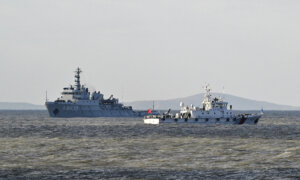
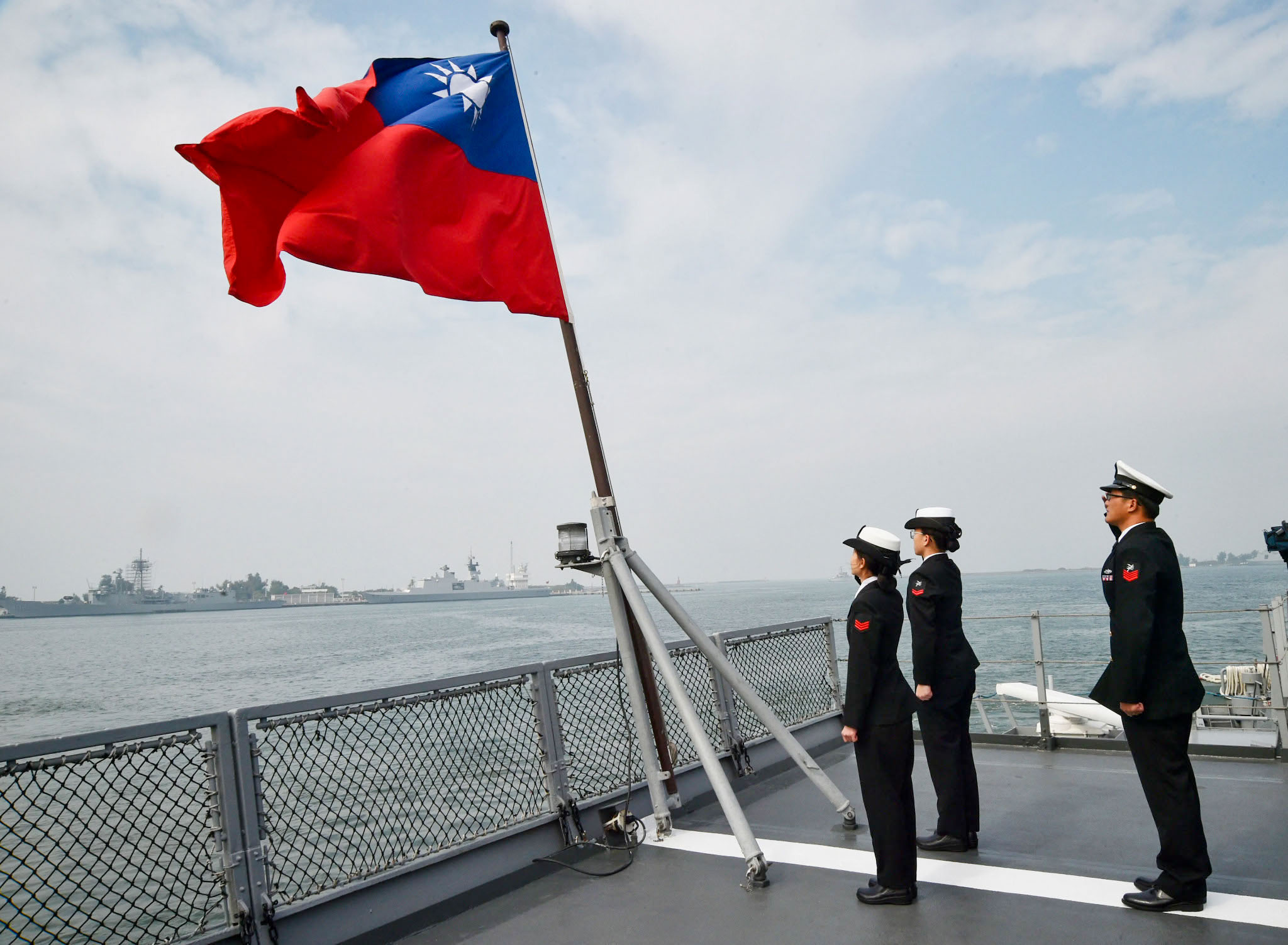
Beijing also sought to spread disinformation about its April 2025 military drills, which involved its navy, air, ground, and rocket forces. During that time, Chinese actors hijacked Taiwanese social media accounts to spread false information such as “China has blockaded Taiwan’s natural-gas shipments” and “Chinese warships have entered Taiwan’s 24-nautical-mile zone,” according to the report.
A pro-CCP propaganda campaign known as Dragonbridge, previously linked to interference in U.S. elections, has recently spread disinformation on Japanese and Taiwanese social media platforms, claiming that the Japanese prime minister “is inciting a conflict in the Taiwan Strait,” according to the report.
“[The campaign impersonated users of] differing political stances to flood those platforms with fake posts to inflame polarization and drive mutual recriminations,” the NSB stated.
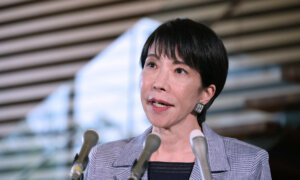
China has been ramping up trade pressure on Japan in retaliation against Japanese Prime Minister Sanae Takaichi’s remarks on Taiwan on Nov. 7, 2025. That day, Takaichi told parliamentarians that a Chinese attack on Taiwan would constitute a “survival-threatening situation” for Japan and could trigger a military response from Tokyo.
“Taiwan is at the forefront of international efforts to counter China’s cognitive warfare,” the NSB stated in the report.
“The NSB will step up efforts to cooperate with third-party fact-checking organizations and social media platform operators, urging them to duly disclose and take down false information.”