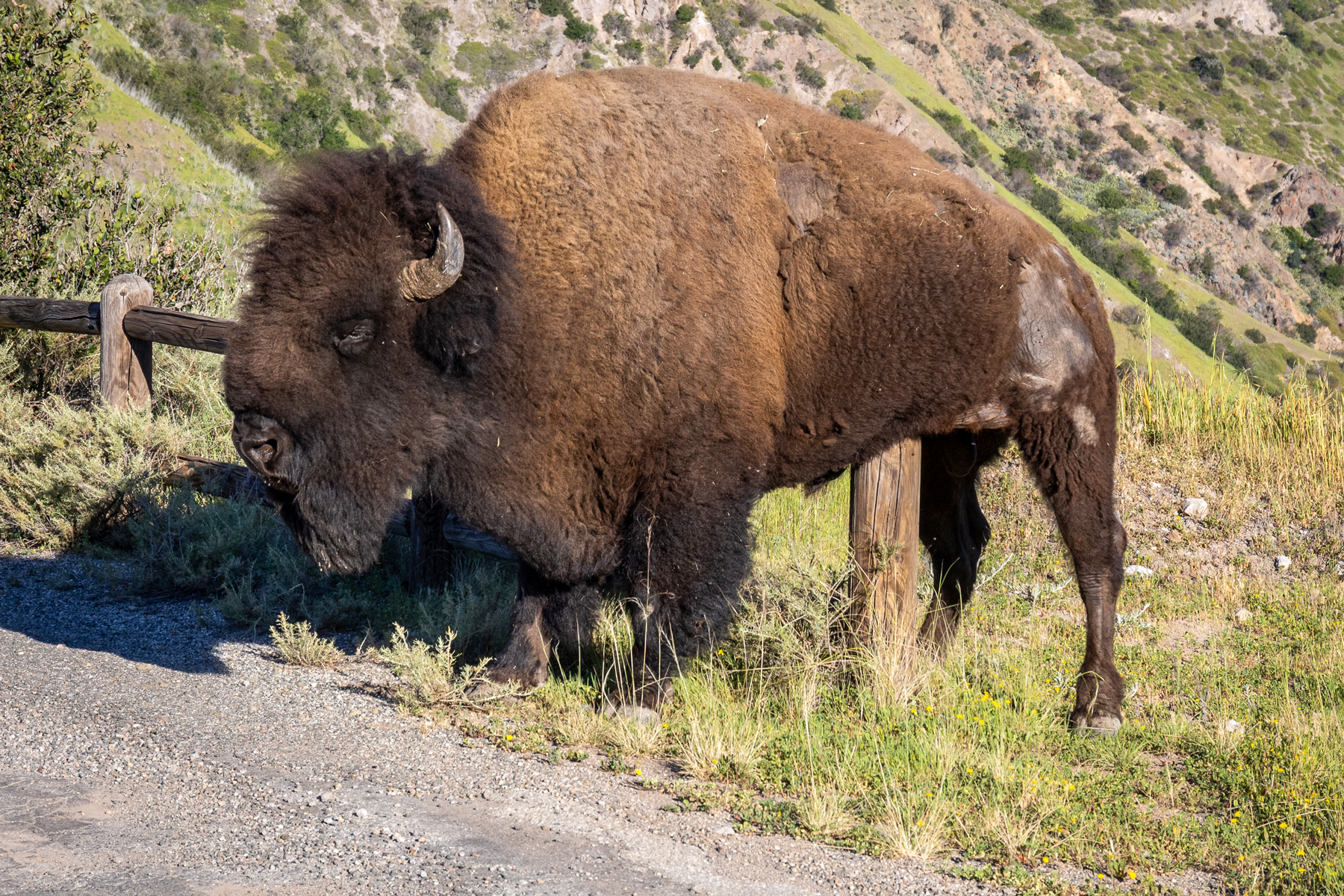

SANTA CATALINA ISLAND, Calif.—A small band of bison stands majestically near an American flag in the shade of some trees on Santa Catalina Island’s interior.
The iconic scenes of America’s national mammal on the island may soon be gone forever if nothing is done to repopulate the shrinking bison herd.
Evidence suggests the Catalina Island Conservancy accidentally sterilized the female bison when it administered birth control using darts in 2009. Just one new calf has been born since then.
“The bison contraception trial used PZP, porcine zona pellucida. It was expected to be reversible after treatment stopped, but it was later discovered that treated cows did not resume normal reproduction,” Pepe Barton, a conservancy spokesman, told The Epoch Times in an email.
The last calf, a male dubbed Uno by the conservancy, was born in 2013. The calf’s mother had apparently dodged a birth control dart because she was missing an ear tag and another female was hit twice, according to a 2023 video hosted by Hillary Holt, a conservation educator for the conservancy.
The bison have been off birth control since 2015 but still haven’t reproduced, she said.
The issue is “a difficult thing to talk about” because it raises questions about why the conservancy never had a control group of bison that weren’t subject to the birth control trial.
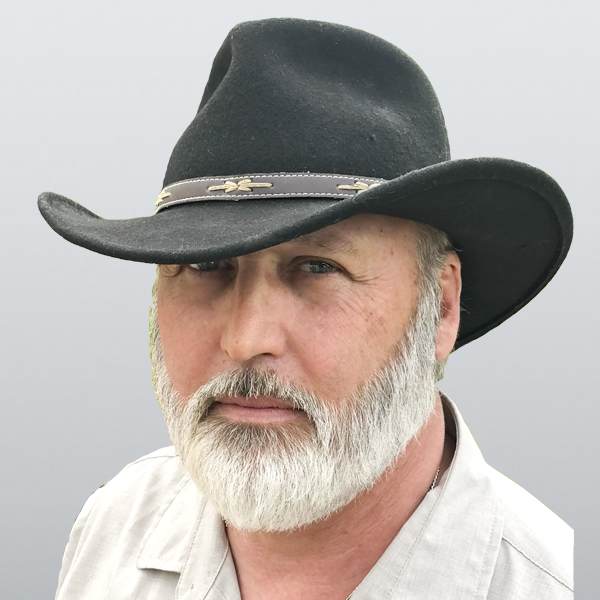
“The idea was certainly not to sterilize them, and there’s still conversations of what we’re going to do to manage the herd,” she said.
The iconic free-roaming bison are a major tourist attraction on the island. About an hour by boat or 22 nautical miles from Long Beach, the island draws about 1.2 million visitors a year.
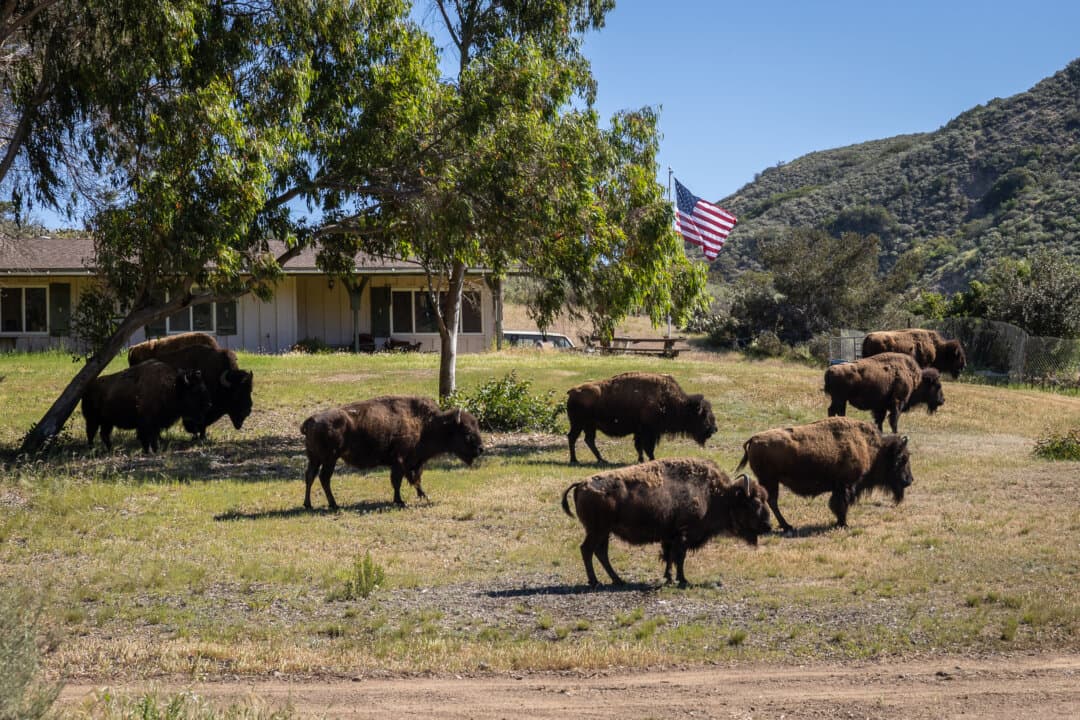
Bison roam the hills outside Avalon, Calif., on March 18, 2026. The iconic free-roaming animals are a major tourist attraction on the island, which lies about 22 nautical miles, or an hour by boat, from Long Beach and draws roughly 1.2 million visitors each year. (John Fredricks/The Epoch Times)
Concern about the bison has resurfaced amid controversy over the conservancy’s decision to eradicate all the mule deer that inhabit the island.
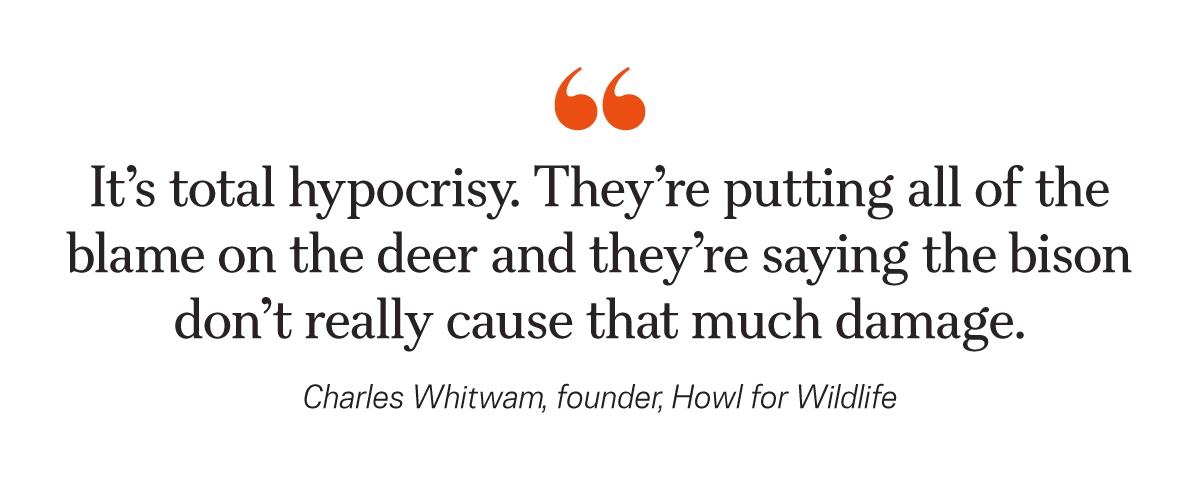
Charles Whitwam, founder of pro-hunting and conservation group Howl for Wildlife, questioned the conservancy about the bison in his recently released documentary, “Killing Catalina.”
Whitwam interviewed Lauren Dennhardt, a biologist and senior director of the conservancy who specializes in rare plant conservation, invasive species management, and restoration ecology. Whitney Latorre, then president and CEO of the conservancy, also stepped in during the interview.
Whitwam told The Epoch Times: “In the documentary, when I asked them about the bison, it was very awkward. They didn’t really answer the question.”
Future of the Herd
In October 2020, the conservancy—then under the leadership of Tony Budrovich—announced two pregnant bison would join the herd in early December.
Budrovich said the plan was in line with the conservancy’s goals of maintaining the health of the land and its mission of conservation, education, and recreation.
“The unique opportunity to see American bison on Catalina Island brings wildlife lovers from around the world to learn about a species they might otherwise not have a chance to see roam,” he said. “While here, they also learn about Catalina’s endemic species, special Mediterranean climate, and importance of conservation.”
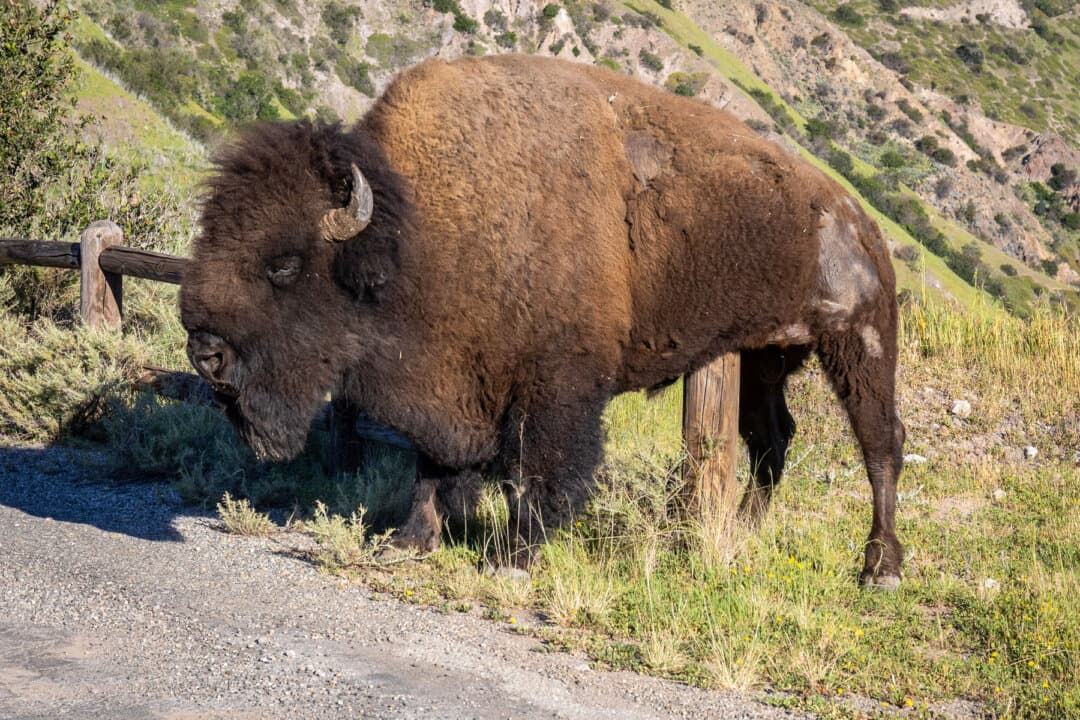
Bison roam the hills outside of Avalon, Calif., on March 18, 2026. Evidence suggests the Catalina Island Conservancy accidentally sterilized the female bison when it administered birth control using darts in 2009. Just one new calf has been born since then. (John Fredricks/The Epoch Times)
But the pregnant bison never arrived.
Holt suggested in the 2023 video that bison are likely to be on the island in perpetuity to support the ecotourism economy of the island, but said the question of whether more bison will be brought to the island is “for a future conversation.”
Bison Origin
The origin of the bison herd on Catalina Island goes back to the early days of western movies, and Zane Grey, a prolific American author, known mostly for his western novels. His pueblo-style summer home on the island was converted to the Zane Grey Pueblo Hotel around the time of his death in 1939.
An article published in The Catalina Islander on Oct. 16, 2020, says bison have freely roamed the island since they were brought there “for the filming of an adaptation of a Zane Grey novel, believed to be ‘The Vanishing American.’”
The 1925 silent film was produced by Famous Players-Lasky and released by Paramount Pictures, but according to a local tour guide, the bison escaped before the movie was filmed and were left to roam the island. Not a single bison appears in the movie.
Some theories suggest the bison were filmed but the footage ended up on the cutting room floor and the bison were left behind on the island due to budgetary restraints. Others claim the footage was used in “The Thundering Herd,” another Zane Grey movie.
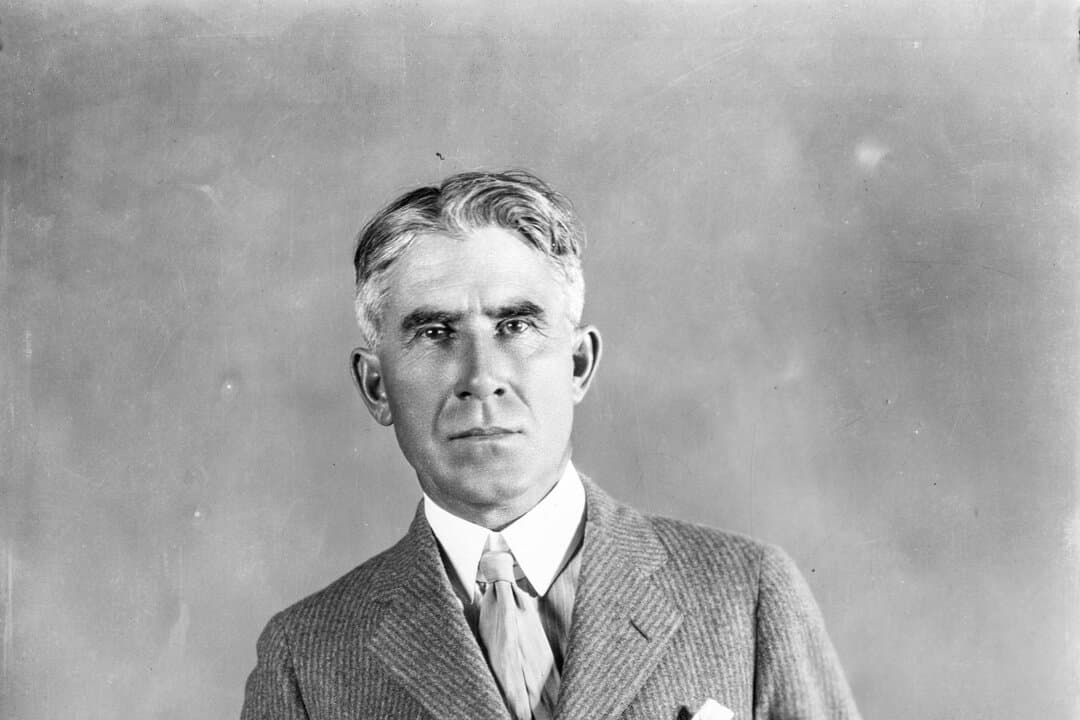
American author Zane Grey is shown in this portrait. In 1924, 14 bison were brought to Catalina Island for the filming of a movie based on one of his books. (J. Willis Sayre Collection of Theatrical Photographs/Public Domain/CC0)
On Dec. 24, 1924, according to Wildlife Detections, The Catalina Islander reported that a Tom White, who had connections with Lasky Film Company of Hollywood, brought 14 bison to the island in separate crates.
“They were later turned loose on the hillsides west of the Isthmus,” the article said.
The Catalina Islander article went on to say that the bison, weighing 1,500 pounds each, would likely be used in a film the following spring.
A followup article published about four weeks later, according to Wildlife Detections, said, “‘The Vanishing American’ is the title of the new film that will be made at the Isthmus in about three weeks. ... The buffalo now in pasture on the west end of the Island are to be used in the picture.”
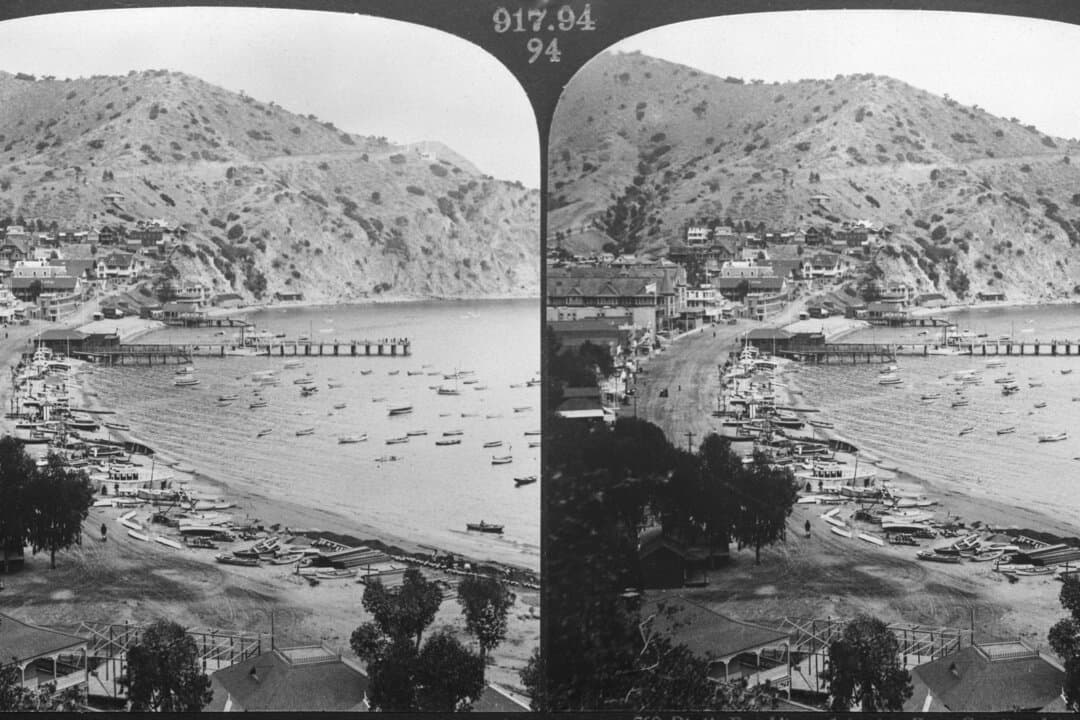
A stereoscopic image shows a high-angle view of Avalon Bay, with boats pulled ashore and a pier extending into the water near Catalina Island, Calif., in 1906. (H.C. White Co./Graphic House/Hulton Archive/Getty Images)
Thinning the Herd
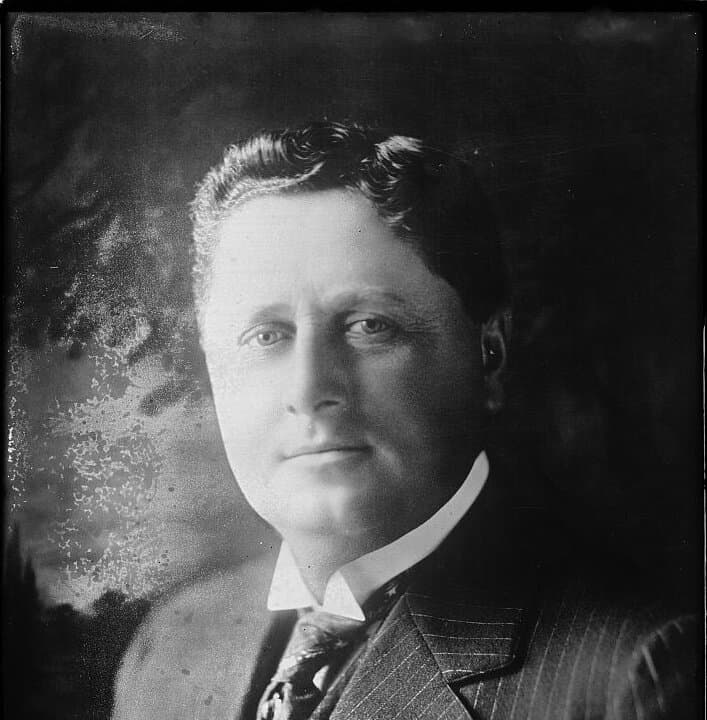
A portrait of William Wrigley Jr., millionaire and gum magnate. (Public Domain)
William Wrigley Jr., the famous chewing gum magnate and Chicago Cubs owner who bought the island for $3 million in 1919, allowed the bison herd to stay. In 1934, he brought 12 more bison, mostly females, to strengthen the herd, which grew to about 600 by the late 1960s.
To reduce the size of the bison herd, some of the animals were legally hunted for meat, while others were sent to the mainland for slaughter and meat processing. Between 2002 and 2004, a few hundred bison were relocated to Native American reservations, including Lakota Sioux lands in South Dakota.
Around that time, range scientists determined the ideal size of the herd to be 100 to 150 bison, Holt said.
But since the accidental sterilization, the herd has shrunk to between 80 and 90 aging animals.
Today, the Catalina Island Conservancy, a nonprofit organization set up by the Wrigley family heirs in 1972, manages the bison herd. William Wrigley Jr.’s great-granddaughter, Alison Wrigley Rusack, and other relatives still sit on the conservancy’s board of directors.
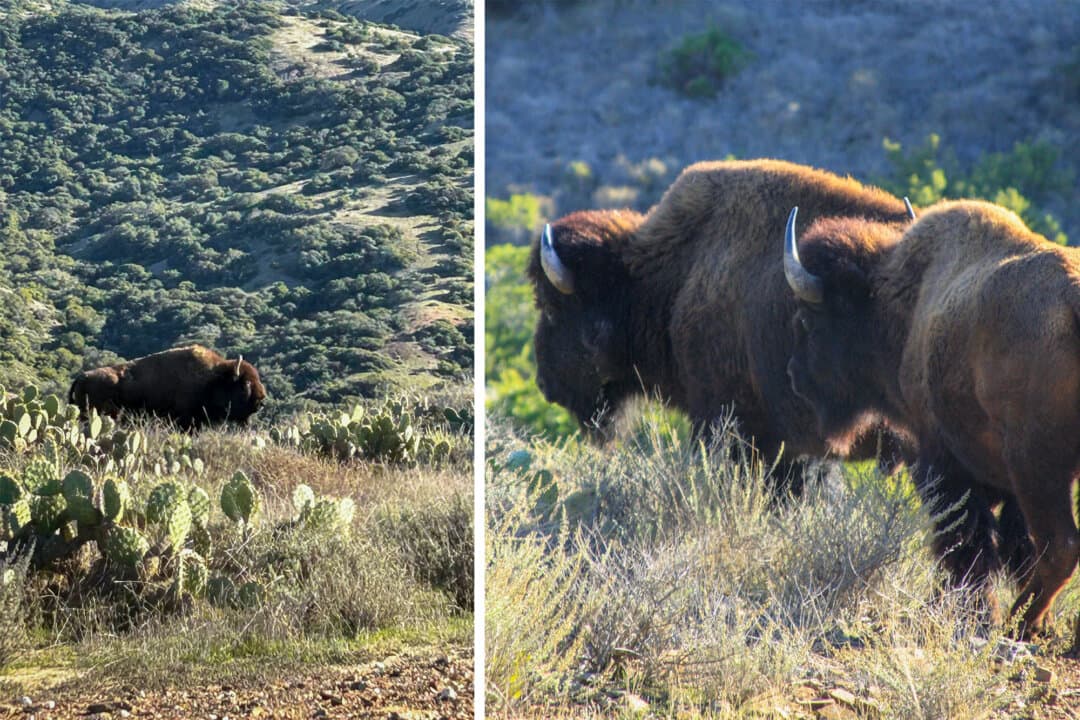
(Left) A bison roams the hills of Santa Catalina Island, Calif., on May 5, 2024. (Right) Bison roam the hills of Santa Catalina Island, Calif., on Dec. 26, 2008. (IntrepidReason/CC-BY-SA-4.0, tinyfroglet/Flickr/CC-BY-2.0)
The conservancy was established to protect and restore the ecological integrity of the island, which is home to more than 60 endemic plants and animals, including invertebrates, found nowhere else in the world.
The Santa Catalina Island Company and Los Angeles County entered into a 50-year open space easement agreement over the company’s property in 1974, and in in 1975, the Catalina Island Company deeded more than 42,000—88 percent of the island’s 48,000-acre landmass—to the conservancy. The conservancy now owns those acres free from the open space agreement, Barton said in his email.
Non-native Species
Although prehistoric bison are believed to have roamed the state more than 10,000 years ago—with fossils found in the La Brea Tar Pits and San Diego County—modern bison aren’t native to California.
Like the mule deer, bison are considered an “invasive” species on the island.
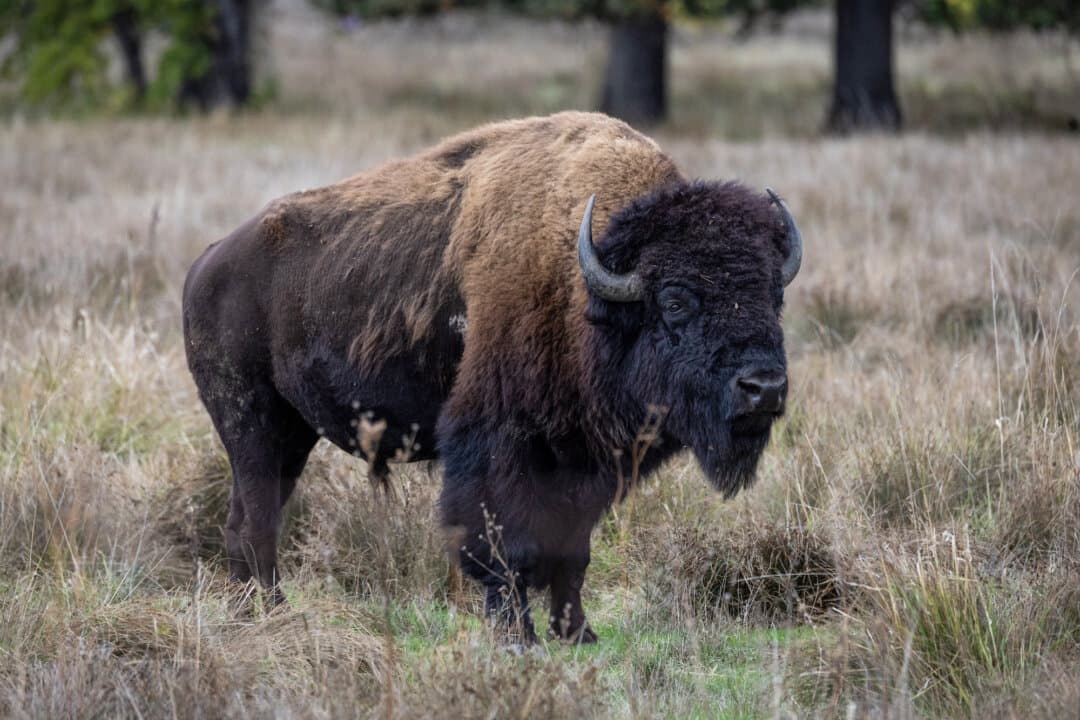
A bison roams outside Ukiah, Calif., on Oct. 9, 2025. Following an accidental sterilization, the Catalina Island herd has declined to about 80 to 90 aging animals. (John Fredricks/The Epoch Times)
Previously, the conservancy eradicated 12,000 feral pigs and 8,000 non-native goats from the island, and it is currently moving ahead with a plan to eradicate the mule deer population. The plan, approved by the California Department of Fish and Wildlife in January allows the conservancy to hire professional sharpshooters to shoot the deer on the ground—not from helicopters as initially proposed.
 Howl for Wildlife is one of several groups suing the California Department of Fish and Wildlife and the conservancy over its plan to kill off all the mule deer on the island within five years. The lawsuit was filed March 8 in Los Angeles County Superior Court.
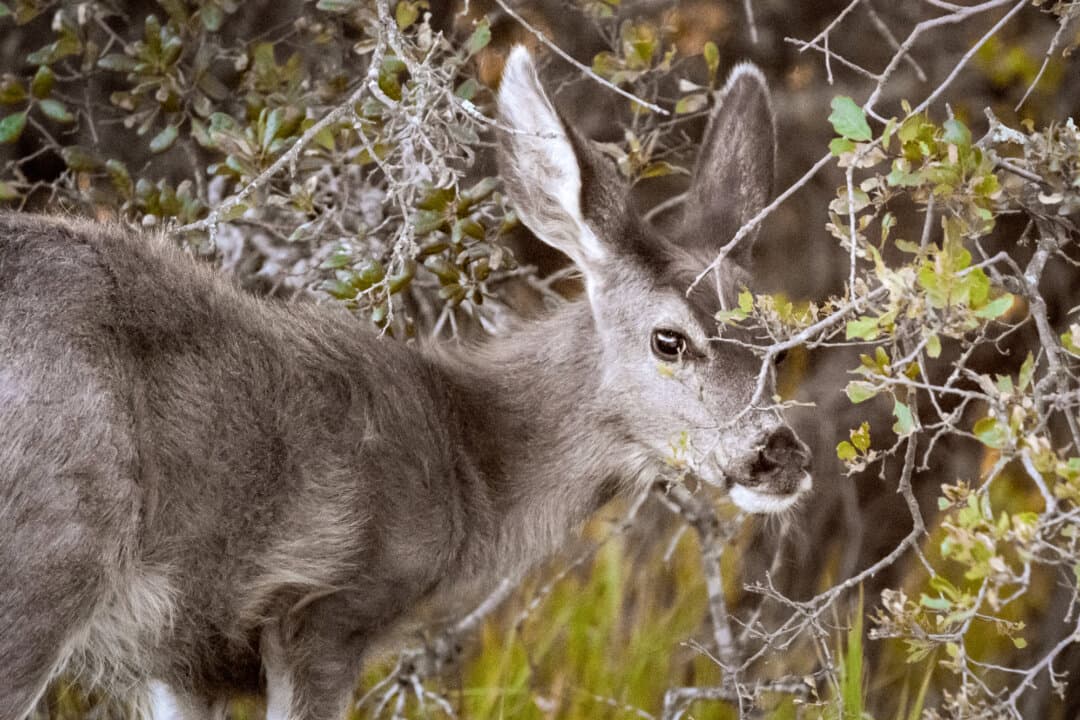
A mule deer wanders into brush outside Avalon, Calif., on March 17, 2026. The Catalina Island Conservancy eradicated 12,000 feral pigs and 8,000 non-native goats from the island in the past and is currently moving ahead with a plan to eradicate the mule deer population. (John Fredricks/The Epoch Times)