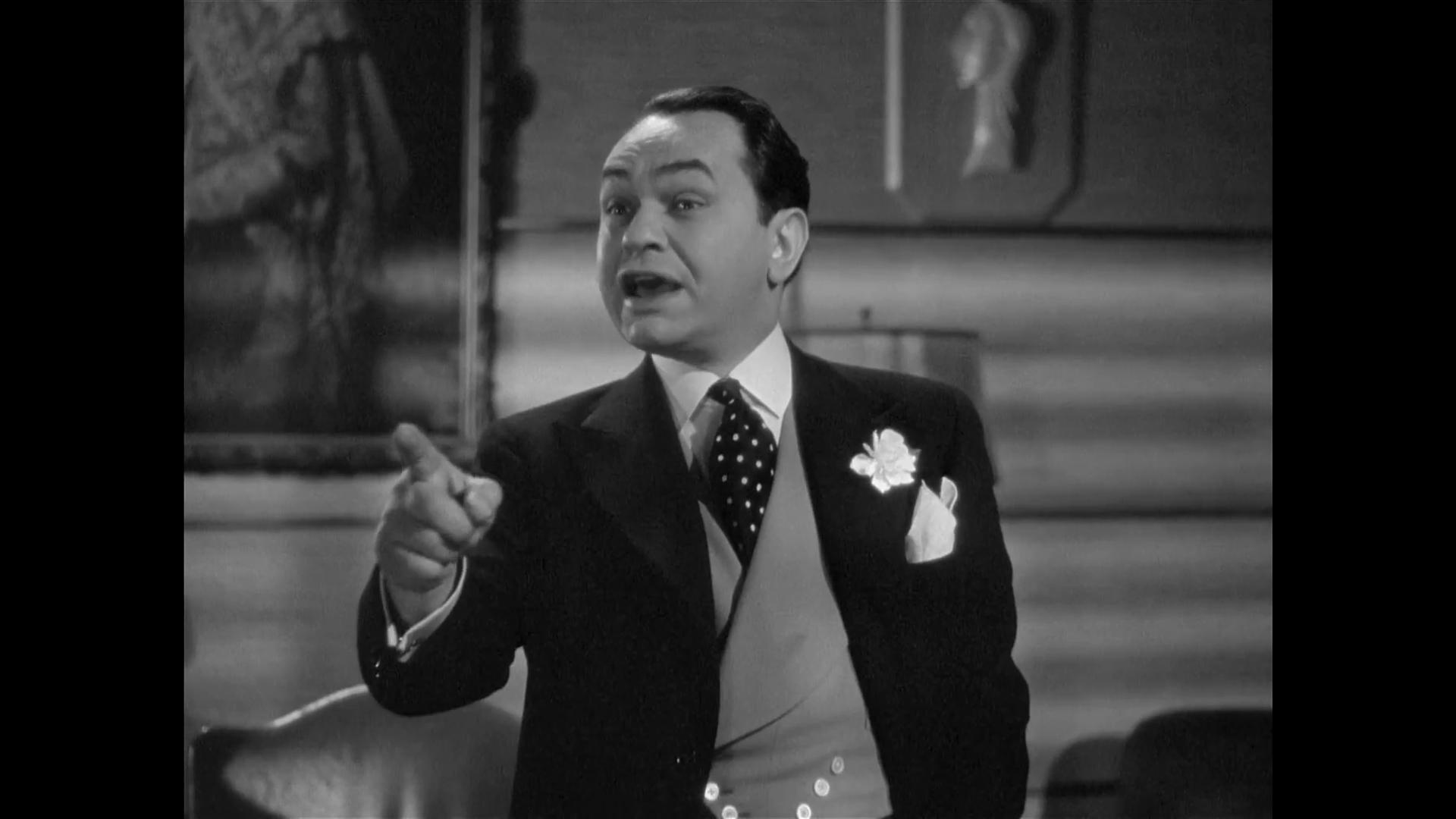

NR | 1 h 28 min | Comedy | 1940
The urban dictionary, known for capturing slang that’s missing or rare in mainstream dictionaries, defines “classin’ up a joint” rather neatly. It implies adding a touch of refinement or elegance to an otherwise seedy or unsavory location, grouping, or endeavor.
In “Brother Orchid,” a spoof on gangsters and their self-important gangsterism, a mobster out to class up his seedy outfit and his life learns a thing or two about what class really means.
Pint-sized American mob boss “Little” John/Johnny Sarto (Edward G. Robinson) has had enough of running a wildly successful extortion joint. Now, he’s going after his dreams: good taste, refinement, and class. Leaving his deputy, Jack Buck (Humphrey Bogart), in charge, he promises to return and marry sweetheart, Florence/Flo Adams (Ann Sothern).
But Johnny spends five years living it up in Europe, burning through his cash. Fed up, he returns to pick up where he left off.
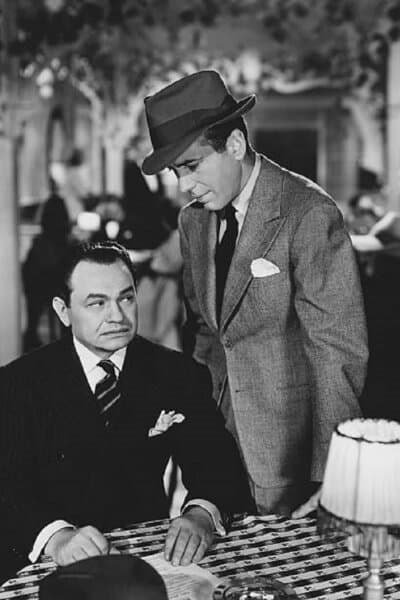
Johnny Sarto (Edward G. Robinson) and Jack Buck (Humphrey Bogart), in "Brother Orchid." (Warner Bros.)
Who’s in Charge?
But Jack’s now in charge, see. He and the gang have had enough of Johnny’s whims and evict him. Meanwhile, thanks to the break Johnny gave her in a nightclub, Flo has moved up in life; she still loves him, even if the feeling isn’t mutual.
As Johnny tries to rustle up a new gang to overthrow Jack, naive Flo arranges a hug-and-make-up meeting for Johnny with Jack. The gentlemanly rancher Clarence Fletcher (Ralph Bellamy) tries to help Flo, but only because he’s got a soft spot for her—except, it’s a trap. At the meeting, Jack aims to finish Johnny for good.
Wounded in the melee, “Little” Johnny barely escapes with his life, ending up, awkwardly enough, at a remote monastery of the Little Brothers of the Flowers. He kind of likes it there, what with Brother Superior (Donald Crisp) and other monks taking good care of him.
Johnny calls himself Brother Orchid to fit in with their flower-growing gig. He pulls off in days what they haven’t in years: extracting record-breaking quarts of milk from their cow, working up entire flower beds in their yard. That’s before they discover there’s no miracle. He’s pulling a fast one on them.
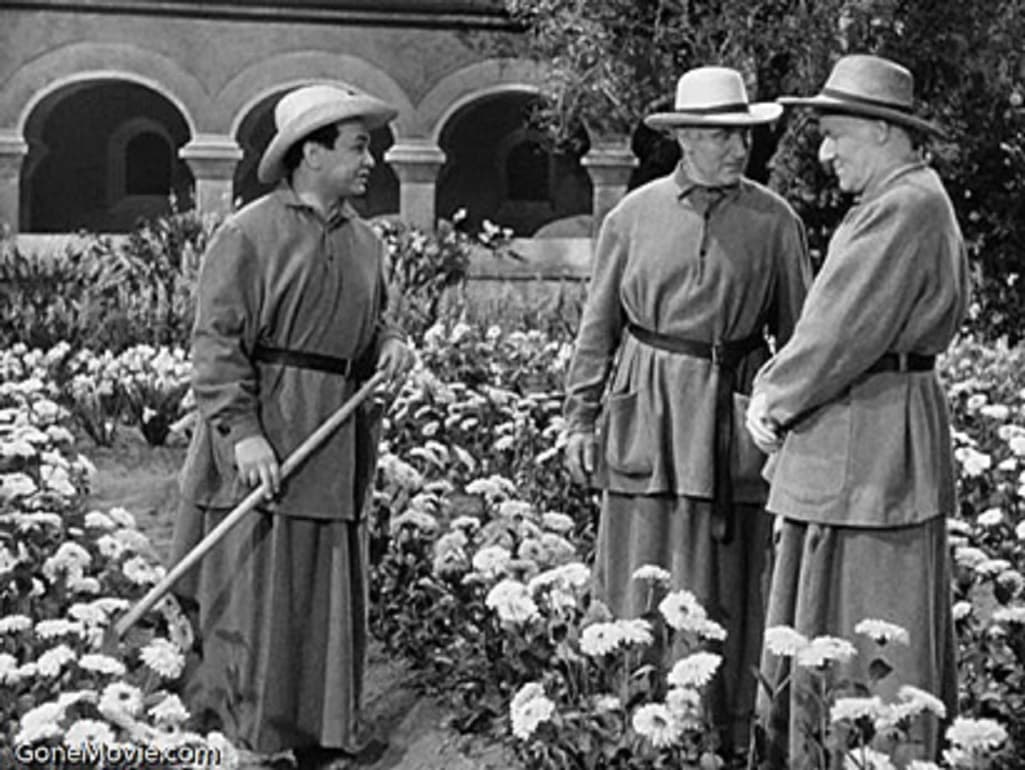
(L–R) Brother Orchid (Edward G. Robinson), Brother Superior (Donald Crisp), and Brother MacDonald (Wilfred Lucas), in "Brother Orchid." (Warner Bros.)
It’s a Miracle
Thing is, Johnny is so used to squeezing dollars out of dimes, he may well be about to learn selflessness the hard way; if he does, that’ll be a miracle in itself.
Bogart is barely on screen and doesn’t need to be on it much; Robinson is having a lot of fun hogging screentime. It’s because they are so typically dour-faced, their tongue-in-cheek lines work so well.
Robinson is nearly 50 years old here. By then, he had played dour faced mobsters so regularly he could probably improvise gangster talk in his sleep; in some scenes, it seems he’s doing just that.
Laughable plot and subplots aside, he’s a convincing mobster who thinks he’s had enough of the high life, only to find he may not have had quite enough of it. But then again, maybe he has.
Chumps
Johnny is stunned at the monks’ naivete. In his world, they are suckers like Flo, who believes he really loves her. He privately calls the monks “chumps.”
He’s so accustomed to being behind bars that Johnny catches himself calling the Brother Superior, “Warden.” Convalescing, and seeking to exploit the kind order of monks, Johnny asks how he might join what he likens to his own joint back home.
Brother Wren (Charles D. Brown) explains that novices must stay on probation first. Johnny interrupts, insisting he knows all about “probation.” Cheekily, director Lloyd Bacon has his camera looking in at a puzzled Wren from behind window bars.
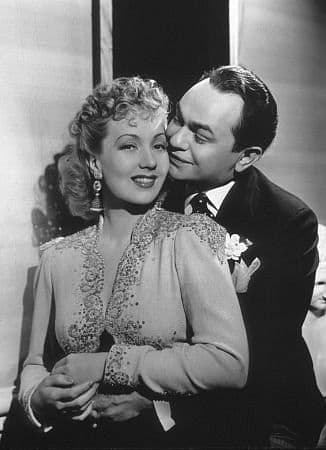
Flo Addams (Ann Sothern) and Johnny Sarto (Edward G. Robinson), in "Brother Orchid." (Warner Bros.)
It’s hilarious watching Johnny screw his face so tight, and listening to the monks talk of selflessness being its own reward. Still, in moments of sobriety, the grace and dignity with which they deal with his deception shames him. Thankfully, screenwriter Earl Baldwin doesn’t allow the sober mood to linger.
Watch for Flo’s throwaway line when she hands Johnny a fluffy rabbit’s foot for luck.
Stunned at seeing Johnny after giving him up for dead, Flo faints. When she comes to, she asks: “You ain’t dead?!” Johnny snaps, “If I am, I’m the livest corpse you ever seen.”
Stealing an extortion gig from his old gang, Johnny dismisses them as useless, “These mugs couldn’t protect a nurse in a baby parade.”
A tad jealous of Flo’s swell-looking apartment, Johnny probes her. Only half-apologetically, she explains; after all, he’d always wanted her to have class. Irritated at this enforced introspection, Johnny retorts, “Well, this joint’s so full of it, it leaks.”
You can watch “Brother Orchid” on Prime Video, Apple TV and DVD.
‘Brother Orchid’
Director: Lloyd Bacon
Starring: Edward G. Robinson, Humphrey Bogart, Ann Sothern
Not Rated
Running Time: 1 hour, 28 minutes
Release Date: June 8, 1940
Rated: 4 stars out of 5
What arts and culture topics would you like us to cover? Please email ideas or feedback to features@epochtimes.nyc