
China’s drone industry, once a symbol of the country’s fast-moving tech ambitions, is facing its most sweeping regulatory expansion yet, one that is already cooling sales, rattling businesses, and raising questions about the sector’s future.
A series of new rules rolled out at the start of 2026 impose stricter oversight on everything from drone manufacturing and sales to flight approvals. In Beijing, the Chinese communist regime has gone further. Beginning next month, the entire city will be designated as controlled airspace, requiring approval for all outdoor drone flights while banning the sale and rental of drones and key components.
Industry insiders say the impact has been immediate.
China is one of the world’s largest civilian drone markets, with more than 3.28 million registered units as of 2025, according to Chinese state media People’s Daily. The weeks around Lunar New Year in February are typically the peak sales season, but this year, demand has dropped sharply.
Chinese financial media outlet Caijing reported that drone sales fell by as much as 50 percent in two months for one dealer. The report noted that even some aerial photographers have stopped flying drones out of fear of accidentally crossing into restricted airspace and getting into trouble with the police.
Under updated rules, unauthorized drone flights are now classified as violations of public security, according to Chinese state media Xinhua News Agency. Penalties have escalated from fines to administrative detention and, in some cases, potential criminal charges.
New national standards set to take effect on May 1 will require all drones in China to undergo real-name registration. Drones will also be required to actively report their identity, position, speed, status, and other operational identification information when in flight and maintain continuous real-time transmission from takeoff to landing.
Operators must apply for flight permits for most controlled airspace. Even compliance may not guarantee smooth operations.
In widely circulated video footage on Chinese social media, a drone operator in Shanghai who had obtained prior approval said he received a call from police within 30 seconds of takeoff and was later asked to report to a local station for verification.
The Caijing report states that applicants for flight permits often face bureaucratic hurdles, including slow responses and high rejection rates, with approval rates as low as 10 percent.
Manufacturers face new requirements to retrofit drones with tracking and identification modules, which add costs.
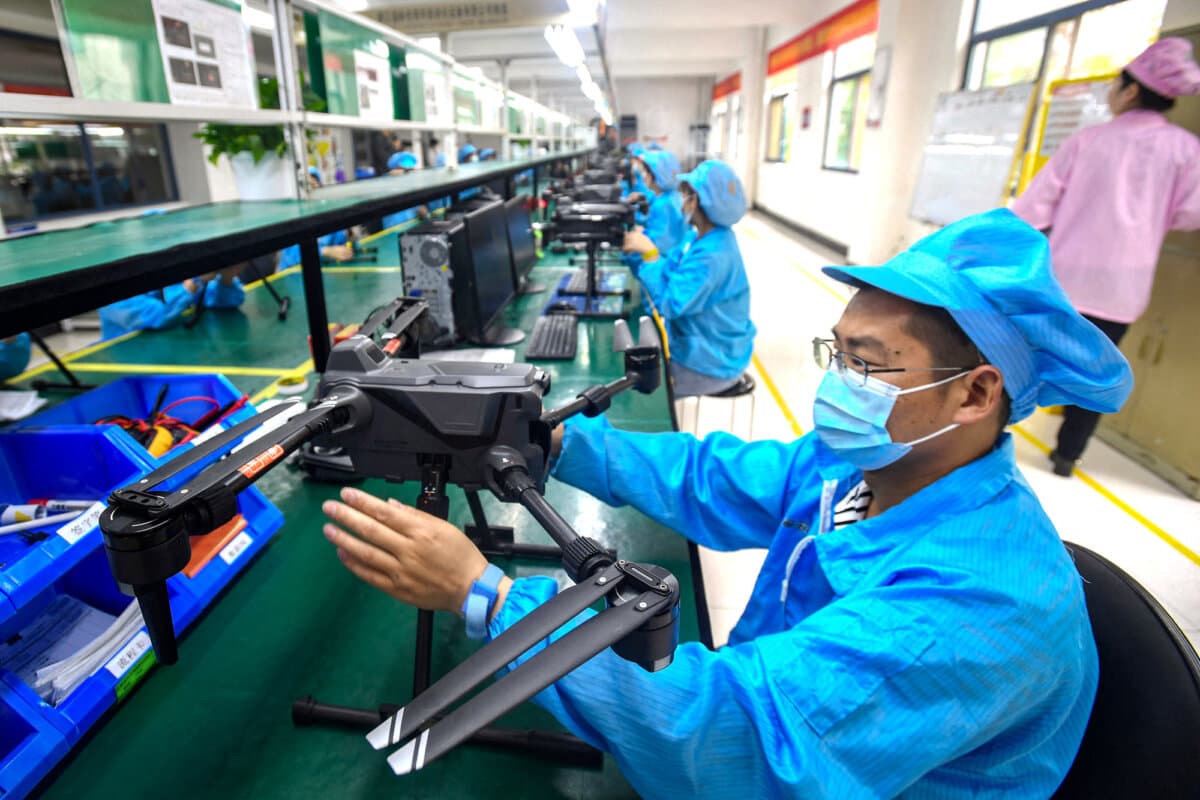
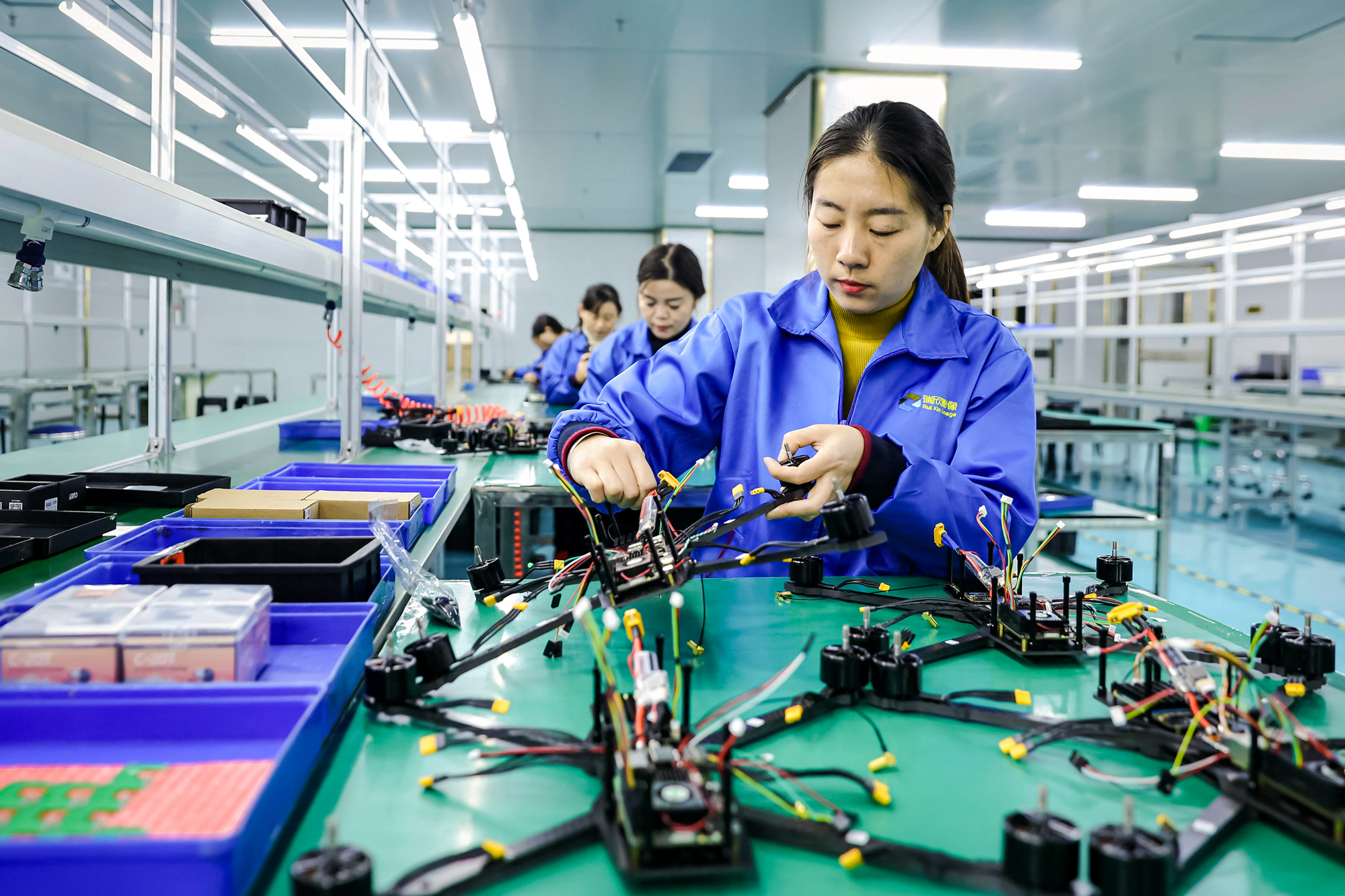
Workers produce drones at a factory in Wuhan, Hubei Province, China, on April 13, 2023. (STR/AFP via Getty Images)
The most stringent policies are being implemented in Beijing, where authorities have introduced comprehensive controls covering production, sales, transport, storage, and flight operations.
Analysts say the capital’s heightened restrictions reflect security concerns tied to its political significance as the seat of the leadership of the Chinese Communist Party (CCP).
Wang Shiow-Wen, an assistant research fellow at Taiwan’s Institute for National Defense and Security Research, told The Epoch Times that recent global developments, such as targeted strikes on Iranian leaders, have heightened Beijing’s sensitivity to aerial surveillance and low-altitude threats. Drones, with their ability to collect data and operate at low altitudes, are seen as a risk.
“If you can’t distinguish between a benign drone and a hostile one, the default response is to strictly control all of them,” he said.
Security Versus Growth
The restrictions highlight a deeper tension within Beijing’s policymaking, balancing national security with economic development.
Chinese officials have repeatedly promoted the “low-altitude economy,” which includes drones, air taxis, and related technologies, as a new growth engine. On April 17, a spokesperson from China’s National Development and Reform Commission said the regime aims to ensure that the sector is “well-managed, stable, and flexible” during the next five-year planning period.
U.S.-based China current affairs analyst Wang He said the current approach risks undermining that goal.
“The CCP wants this industry to grow, but it also prioritizes regime security above all else,” he told The Epoch Times. “That creates an inherent contradiction.”
He said that broad, one-size-fits-all restrictions could stifle innovation and leave policymakers caught in a cycle of tightening controls while trying to sustain growth.
China’s drone industry is also facing headwinds abroad.
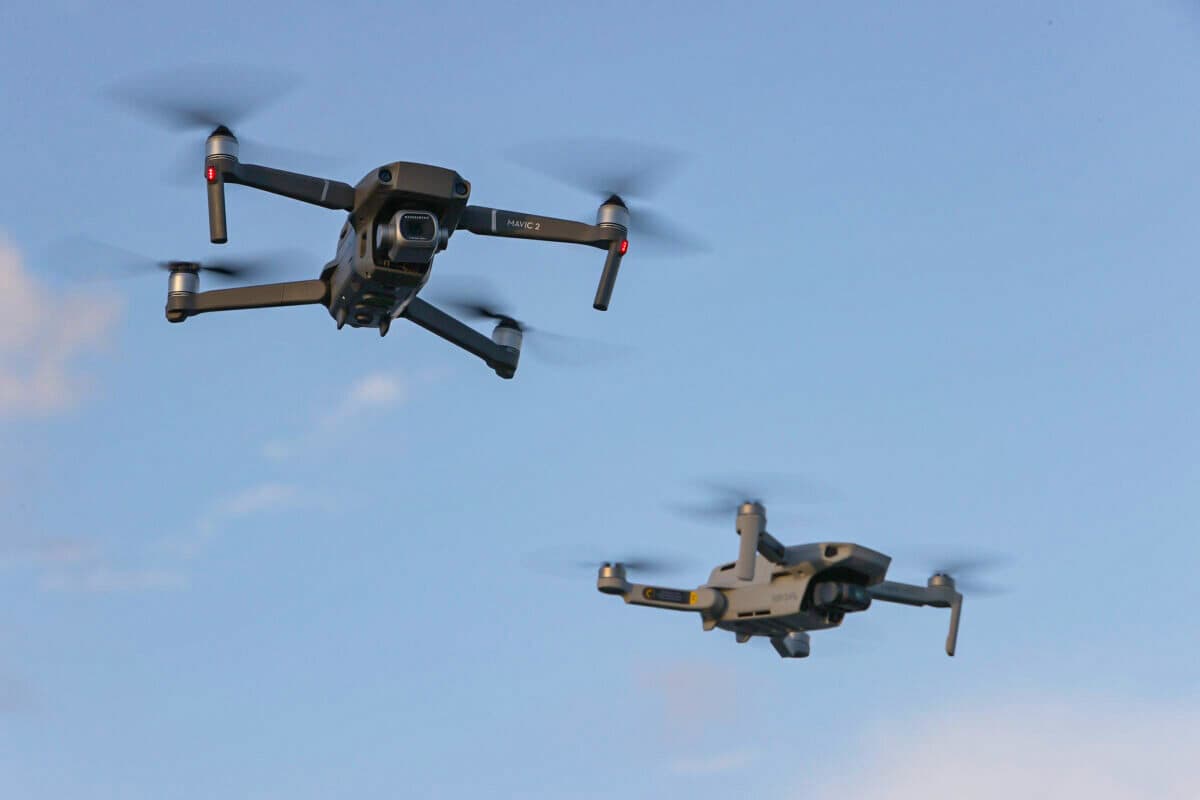
A DJI Mavic 2 Pro and a DJI Mavic Mini made by the Chinese drone maker fly near each other in Miami on Dec. 15, 2021. (Joe Raedle/Getty Images)
While Chinese manufacturers dominate global supply chains and maintain cost advantages, some Western governments are imposing tighter restrictions over security concerns. In the United States, certain new models from leading Chinese drone maker DJI have been unable to enter the market without approval from the Federal Communications Commission.
Taken together, the CCP’s domestic controls and international barriers are reshaping the landscape for China’s drone industry.
Ning Haizhong and Yi Ru contributed to this report.