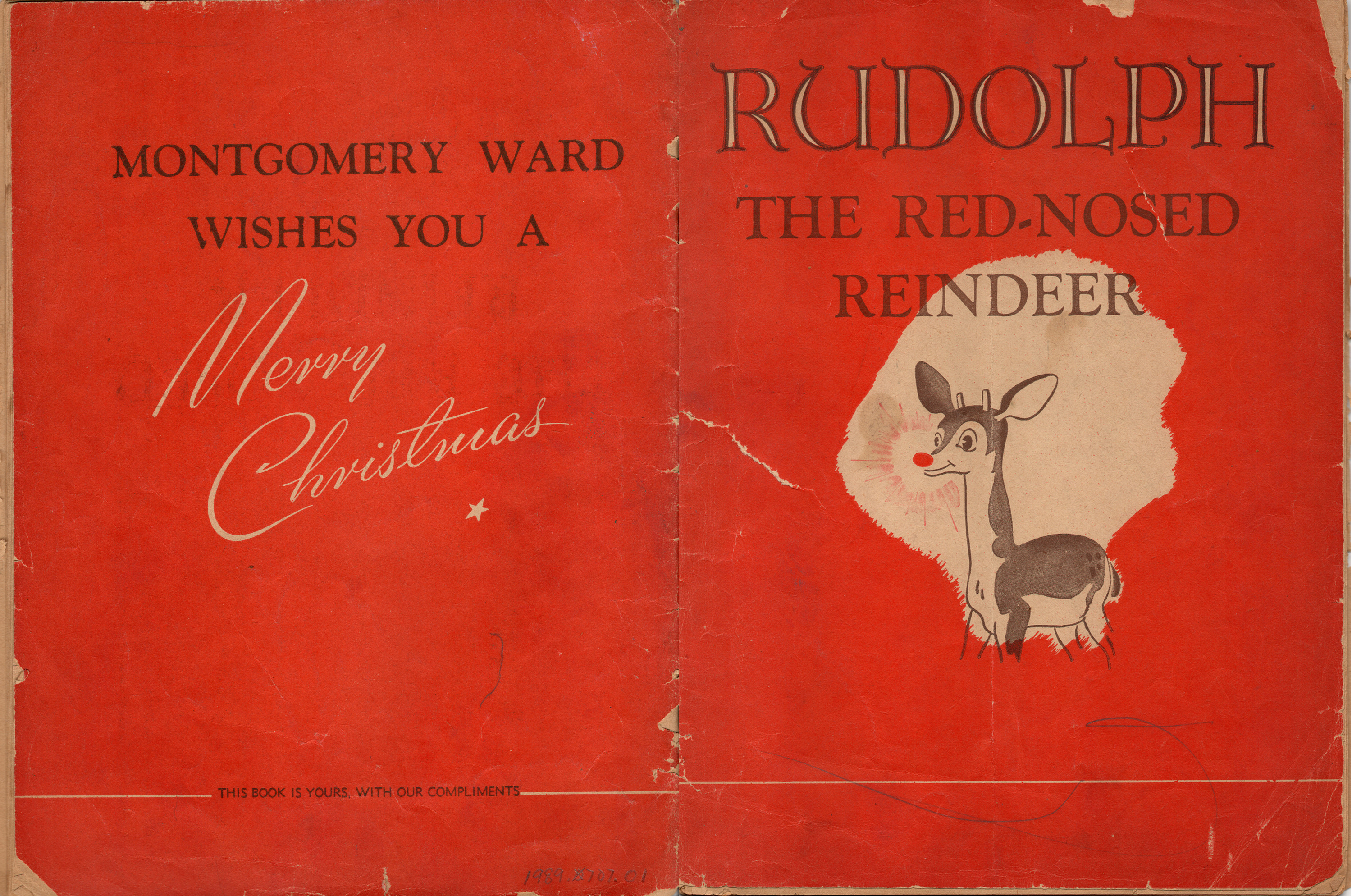
Let’s jump-start our musical sleigh ride with Santa with one of the sweetest and most incredible of holiday song backstories: “Rudolph the Red-Nosed Reindeer.”
It was 1938, and with the Christmas season approaching, 34-year-old Bob May, a copywriter for Montgomery Ward in Chicago, had dropped into a trough of rough times. Nearly broke, he was caring for his wife, Evelyn, who was dying of cancer, and for their 4-year-old, Barbara. When she asked, “Why isn’t my mommy like everyone else’s?” May looked for a way to explain that being different was nothing to fear and to reassure Barbara that no matter what happened, he would always love her.
And so, he began telling her a story of a reindeer with a bright red nose who became the butt of jokes and taunts by the other reindeer, until one dark and foggy night Santa asked him to guide his sleigh. Night after night, Barbara kept wanting to hear the story, May kept tinkering with it, and soon he created a handmade illustrated book about Rudolph.
Evelyn died in early December. Later that month, with just a few days left before Christmas, some of his fellow employees persuaded him to attend the organization’s office party and to read aloud from the story he’d mentioned. After his reading, his listeners gave him a standing ovation, and Montgomery Ward purchased the rights to “Rudolph the Red-Nosed Reindeer.” Over the next six years, the store gave away more than 6 million copies of May’s story as a promotional device.
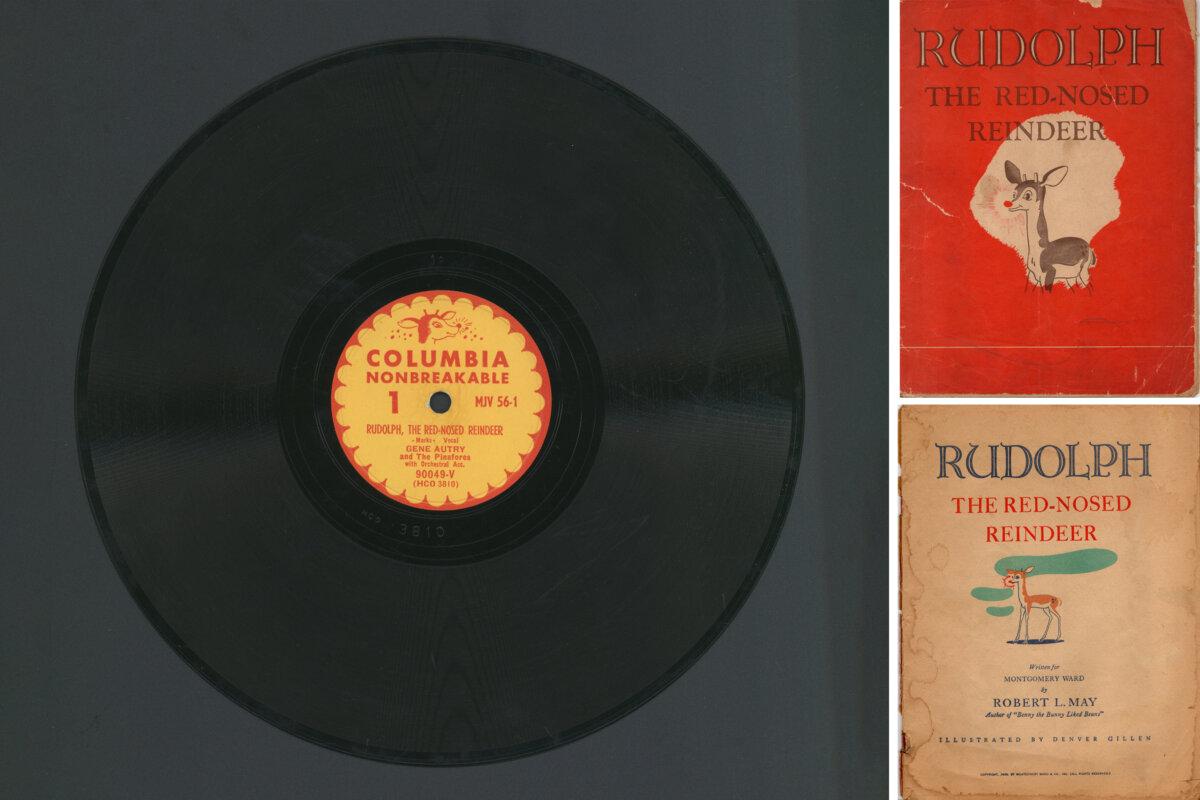
Compilation image of the original "Rudolph the Red-Nosed Reindeer" book and music. (L) Gene Autry's 1949 recording of "Rudolph the Red-Nosed Reindeer." (R) Cover and frontispiece of Robert May's 1939 book "Rudolph the Red-Nosed Reindeer," distributed by Montgomery Ward. (National Museum of American History, Smithsonian Institution)
Now comes a sweet part to this story. With publishers eager to make the picture book their own, Montgomery Ward gave the rights to “Rudolph” back to May. Four years later, he was a millionaire.
And here’s the other bit of sugar: May’s brother-in-law Johnny Marks, known as “Mr. Christmas” for Yuletide compositions like “Rockin’ Around the Christmas Tree” and “A Holly Jolly Christmas,” put the book to music. He pitched his song to several performers, but all turned down what they regarded as a saccharine song for children. Cowboy singer Gene Autry finally took it on, and it eventually became the second bestselling Christmas recording of its time, right next to “White Christmas.”
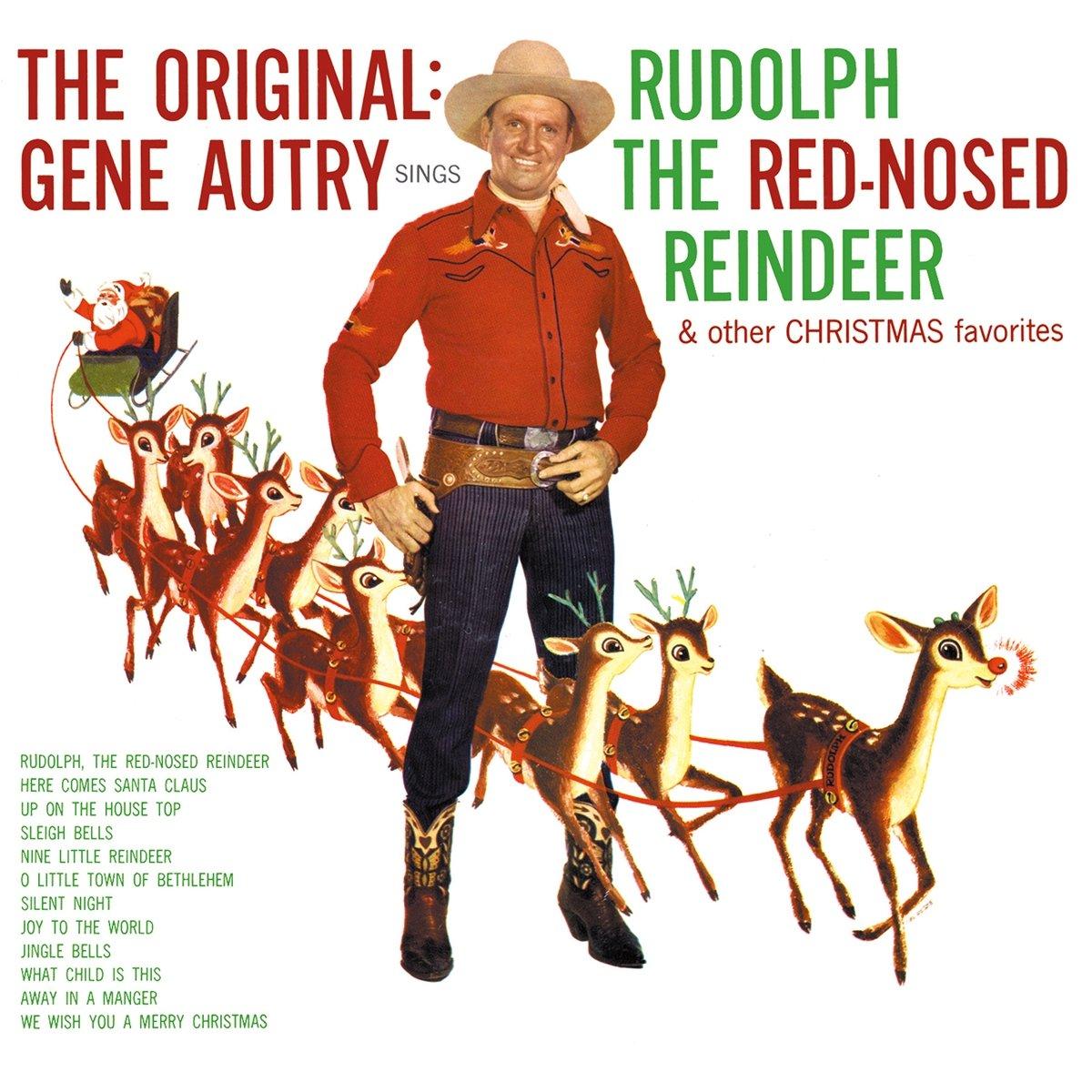
Cover of the limited edition LP of Gene Autry's "Rudolph the Red Nosed Reindeer." (Varèse Sarabande)
Even today, practically every kid and adult in America knows the lyrics to “Rudolph the Red-Nosed Reindeer.” May’s tender attempts to ease his daughter’s anxieties have since reached generations of listeners.
Peace on Earth
In October 1962, the world teetered on the brink of a nuclear war as Russia and the United States squared off over the missiles the Russians had placed in Cuba. Those still living who recollect that crisis remember the dark fears and gripping tension that haunted the airwaves and the mood of the American people.
At the same time, a record producer had asked composer Noel Regney if he'd write a Christmas song for the upcoming season. Regney had avoided writing holiday music—he considered Christmas overly commercialized—but now, like so many other Americans upset by the possibility of war, he felt even more disinclined to put together such a piece. He hated war, having seen it firsthand during World War II. Though born in France, he had studied music in Germany, and the Nazi regime drafted him into the army. Regney served, but was affiliated at the same time with the French Underground and saw killing up close.
On his way home from the producer’s studio, brooding on the possibility of a Yuletide song and the political crisis, Regney passed two mothers pushing baby carriages. The smiles of the children wooed him away from his dark mood, and “Do You Hear What I Hear?” came into his mind. Teaming up with his talented wife, pianist Gloria Shayne, the pair quickly composed the song, though the sweet words conflicted so strongly with the war clouds hanging over America that they wept together when they first tried to sing it.

When two children smiled at Noel Regney from their carriages, they wooed the composer out of his dark mood and influenced his Yuletide lyrics, "He will bring us goodness and light." Library of Congress. (Public Domain)
Said the king to the people everywhere:
“Listen to what I say
Pray for peace, people everywhere
Listen to what I say
The child, the child, sleeping in the night
He will bring us goodness and light
He will bring us goodness and light.”
Over 100 versions of this modern carol have since joined the holiday repertoire of music, performed by musicians as diverse as
Bing Crosby, Robert Goulet, and Gladys Knight and the Pips. “I am amazed that people can think they know the song and not know it is a prayer for peace,” Regney once said. Perhaps, however, he was too judgmental in this critique, for the music and lyrics bring an interior peace to those who know and love the song.
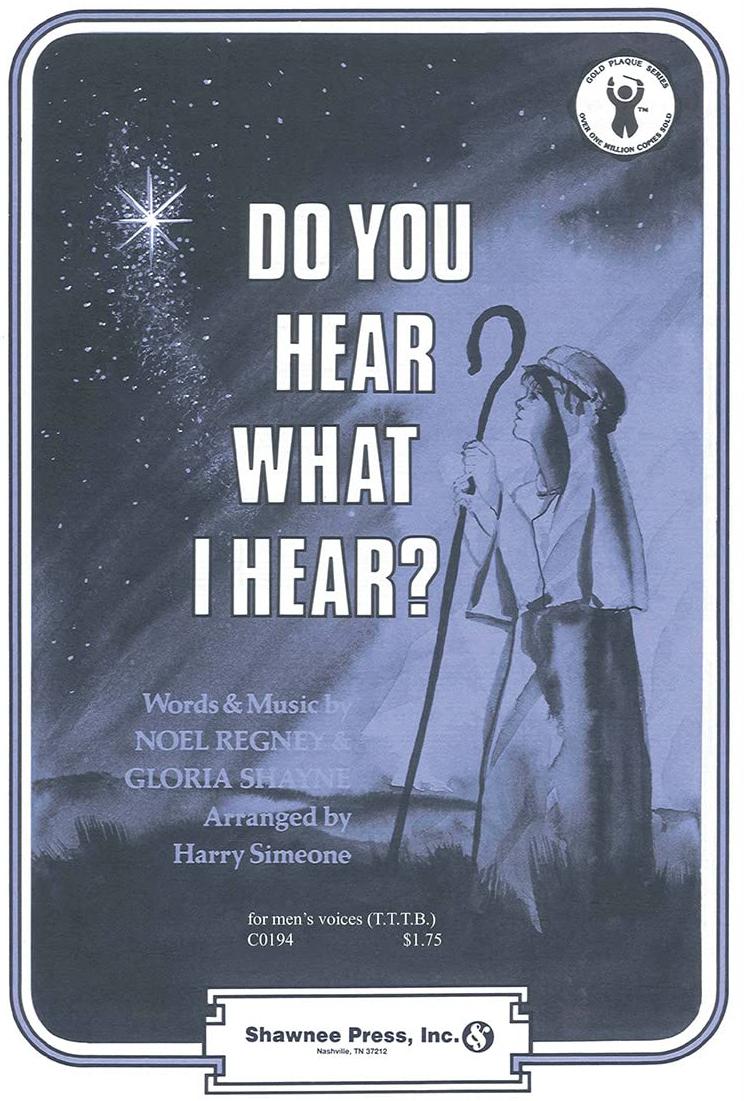
Sheet music for Noel Regney and Gloria Shayne's "Do You Hear What I Hear?" (Shawnee Press)
‘Let Your Heart Be Light’
Written in 1943 in the depths of World War II, “
Have Yourself a Merry Little Christmas” might serve as a dictionary example of the word “tweak.”
Commissioned to write the music for the 1944 Christmas movie “Meet Me in St. Louis,” composers Hugh Martin and Ralph Blane were working away when Martin, discouraged by several days of failure to get a certain tune to work to his satisfaction, was ready to throw the song away. Blane encouraged him to keep trying. The result was “Have Yourself a Merry Little Christmas.”
But that was only the beginning of the changes imposed on one of the most popular holiday hits.
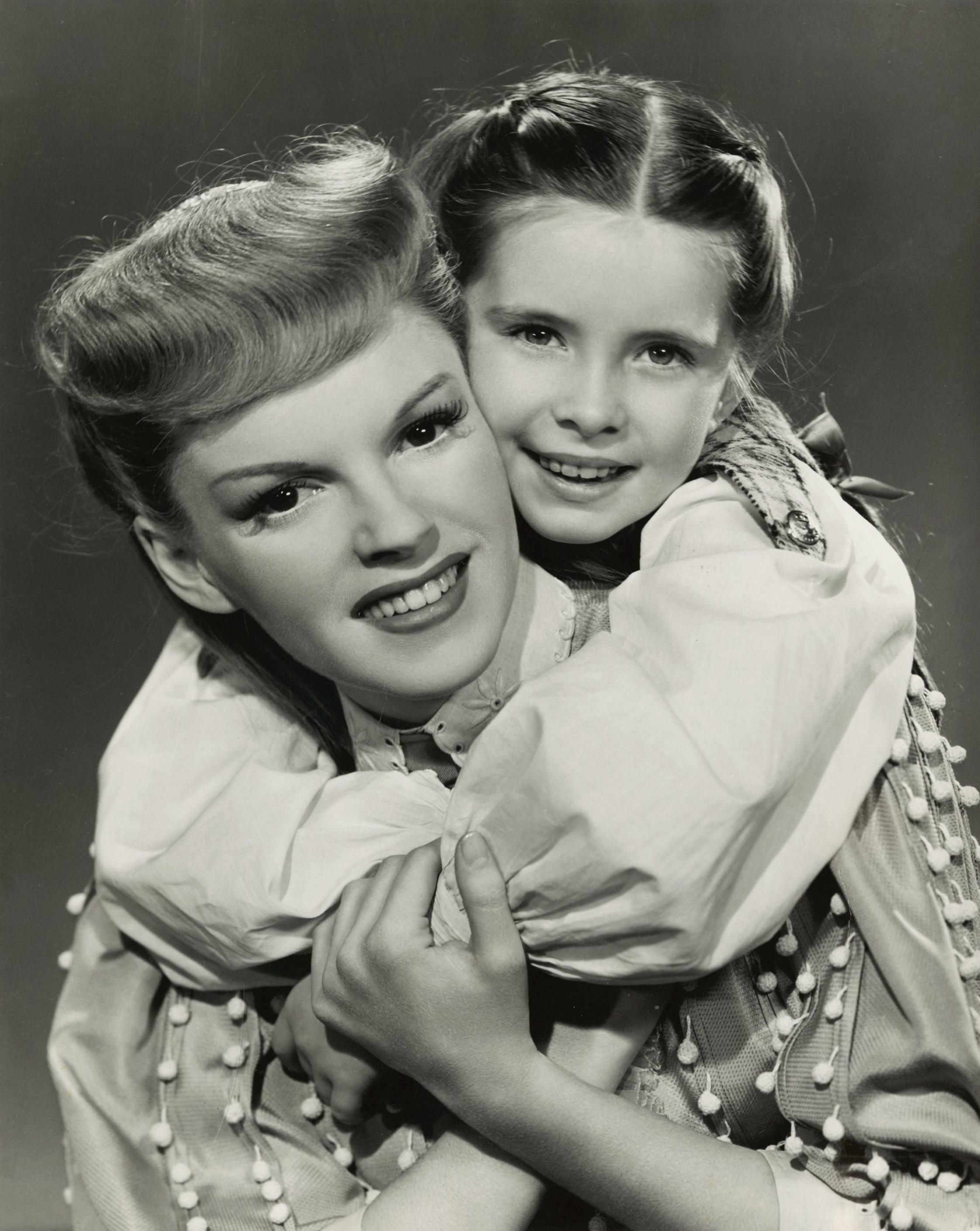
Judy Garland and Margaret O'Brien in "Meet Me in St. Louis." (MGM)
When production of the movie began in 1944, star Judy Garland played Esther Smith, the older sister to Tootie (Margaret O’Brien) in the film. The Smiths learn that a move to New York is in the offing, turning their lives upside down. To cheer up Tootie, Garland was supposed to sing Martin’s melancholic song about Christmas, but flat-out refused. “If I sing that,” she said, “little Margaret O’Brien will cry and they’ll think I’m a monster.”
Here are Martin’s original lyrics:
Have yourself a merry little Christmas.
It may be your last.
Next year we may all be living in the past.Have yourself a merry little Christmas.
Pop that champagne cork.
Next year we may all be living in New York.
No good times like the olden days.
Happy golden days of yore.
Faithful friends who were dear to us.
Will be near to us no more.
But at least we all will be together.
If the Lord allows.
From now on, we'll have to muddle through somehow.
So have yourself a merry little Christmas now.
“So I was young then and kind of arrogant,” Martin admitted later, “and I said, ‘Well, I’m sorry you don’t like it, Judy, but that’s the way it is, and I don’t really want to write a new lyric.’ But Tom Drake, who played the boy next door, took me aside and said, ‘Hugh, you’ve got to finish it. It’s really a great song potentially, and I think you’ll be sorry if you don’t do it.’ So I went home, and I wrote the version that’s in the movie.”
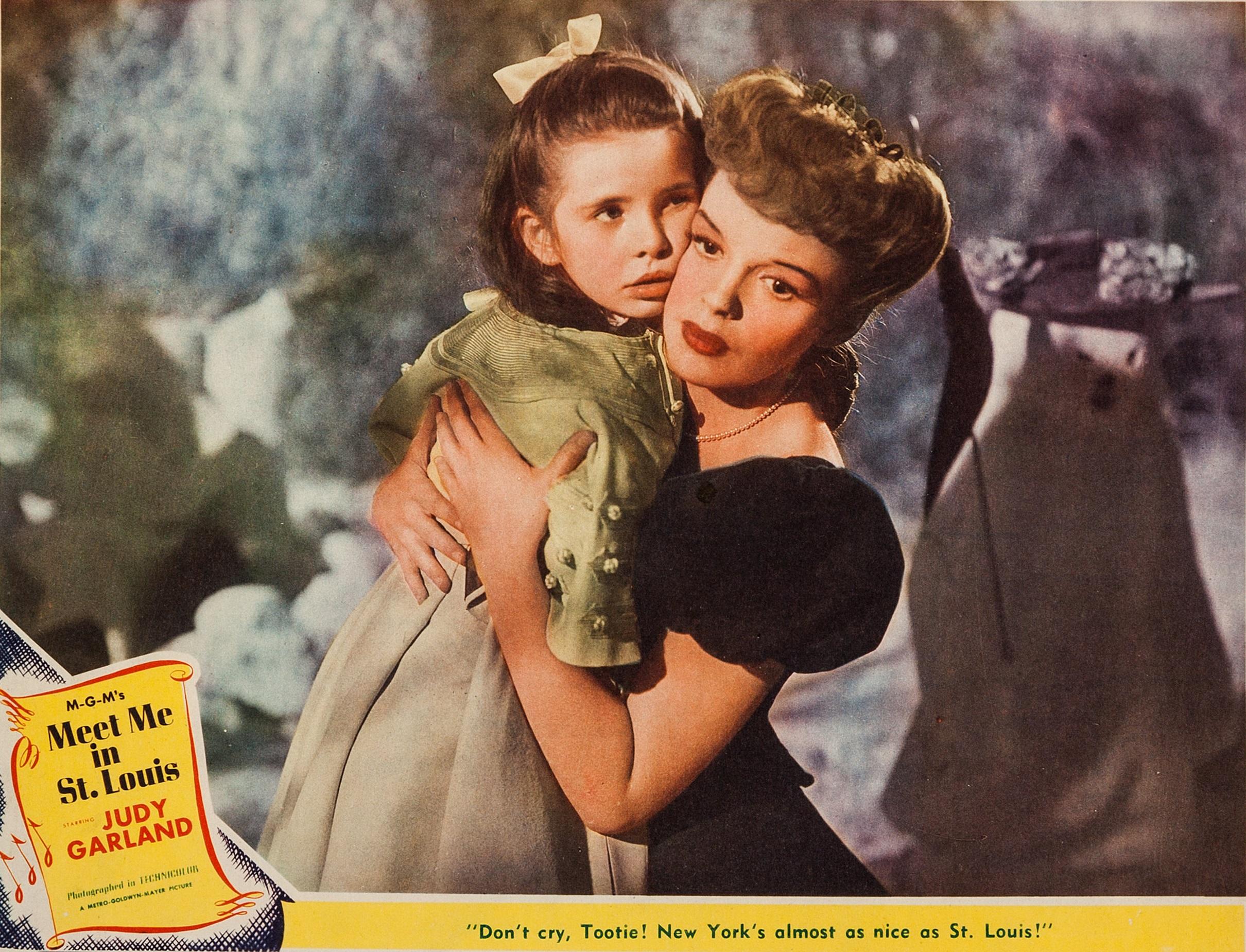
Lobby card for the 1944 film "Meet Me in St. Louis," starring Judy Garland (R) and Margaret O'Brien. (MGM)
Here are the lyrics as they appeared on-screen:
Have yourself a merry little Christmas
Let your heart be light
Next year all our troubles will be out of sightHave yourself a merry little Christmas
Make the Yuletide gay
Next year all our troubles will be miles away
Once again as in olden days
Happy golden days of yore
Faithful friends who were dear to us
Will be near to us once more
Someday soon we all will be together
If the fates allow
Until then, we'll have to muddle through somehow
So, have yourself a merry little Christmas now.
The song became a hit with movie audiences as well as with the troops fighting overseas. Given the war, Martin’s original lyrics, particularly that line “It may be your last,” would have proved an artistic disaster.
Yet still more tweaking came into play when in 1957 Frank Sinatra was producing an album, “A Jolly Christmas.” Though he and many others had already recorded Martin and Blane’s song, Sinatra called Martin and asked if he could “jolly up” the line about muddling through. Martin rewrote it as “hang a shining star upon the highest bough,” which is the version most of us know and sing today.
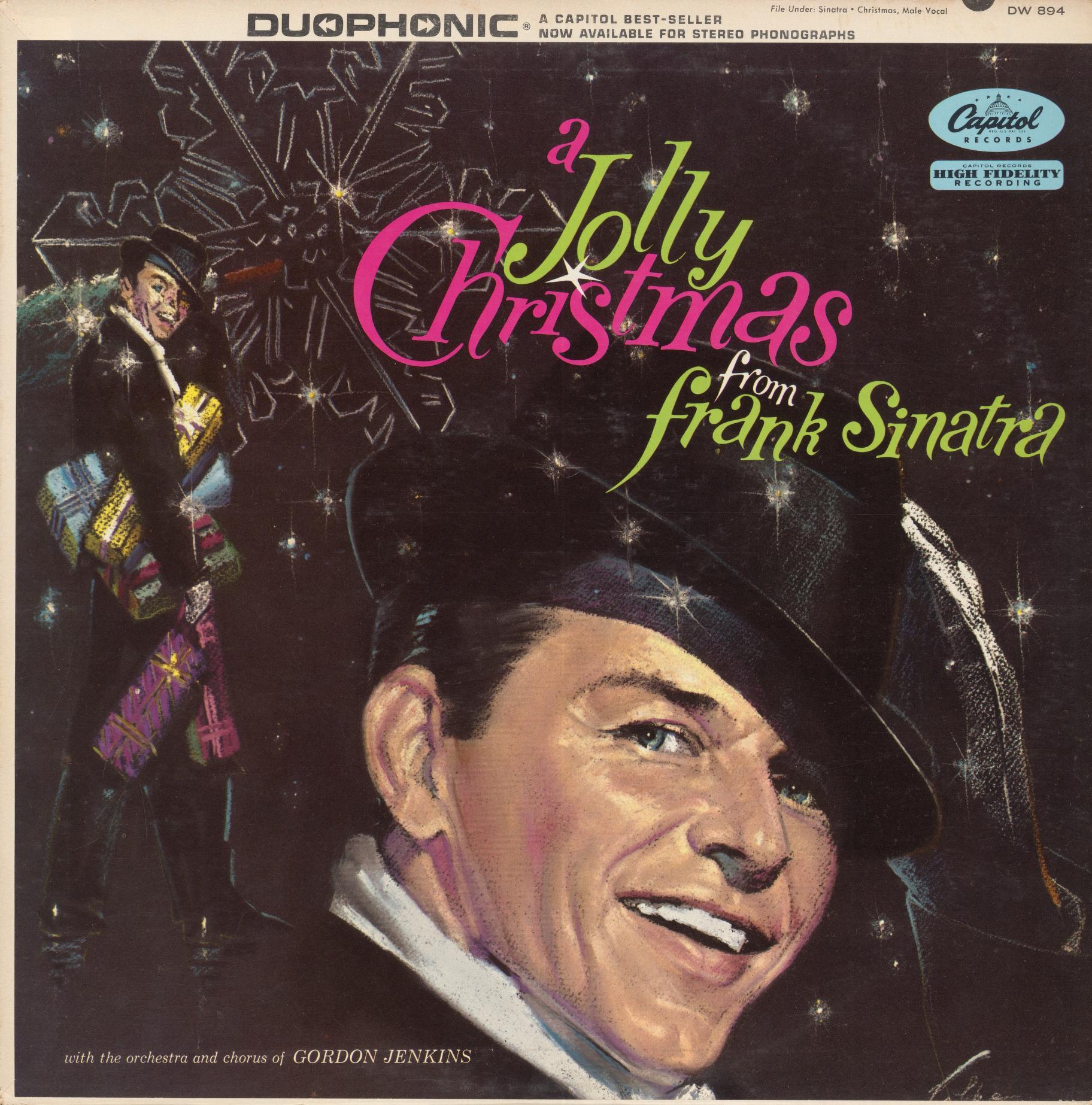
The cover of Frank Sinatra's 1957 album "A Jolly Christmas," featuring the third revision of "Have Yourself a Merry Little Christmas." Internet Archive. (Public Domain)
Like other holiday carols and songs, scores of performers have recorded “Have Yourself a Merry Little Christmas,” with its sweet blend of melancholy and hope making it a perennial favorite. Linda Ronstadt liked both the “muddle through” and the “hang a shining star” versions, so she sang both in her rendition.
It’s Beginning to Sound a Lot Like Christmas
Other Christmas favorites offer up a medley of interesting backstories.
For years, for example, millions believed that Martin Luther wrote and sang “Away in a Manger” for his children. For a time, the carol was even known as “Luther’s Cradle Hymn.” Today we know that an anonymous American likely came up with the lyrics.
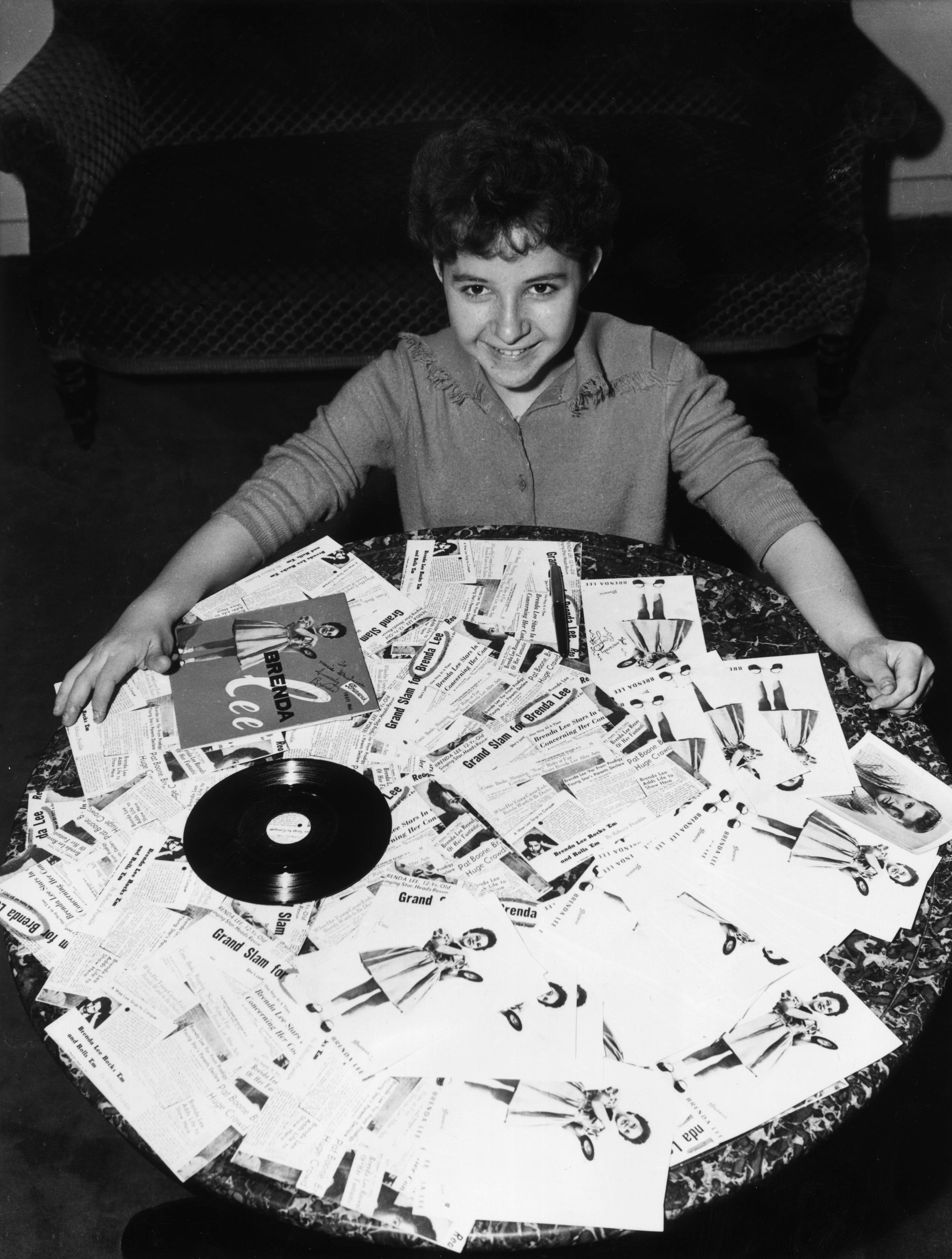
The young American pop/country singer Brenda Lee sits behind a table covered with copies of her album, "Brenda Lee," circa 1960. (Hulton Archive/Getty Images)
At age 13, Brenda Lee made “Rockin’ Around the Christmas Tree” a hit. Decades later, at age 78, she recorded a video of herself singing that popular tune and became the oldest artist ever to make Number 1 on the Hot 100 list for the season.
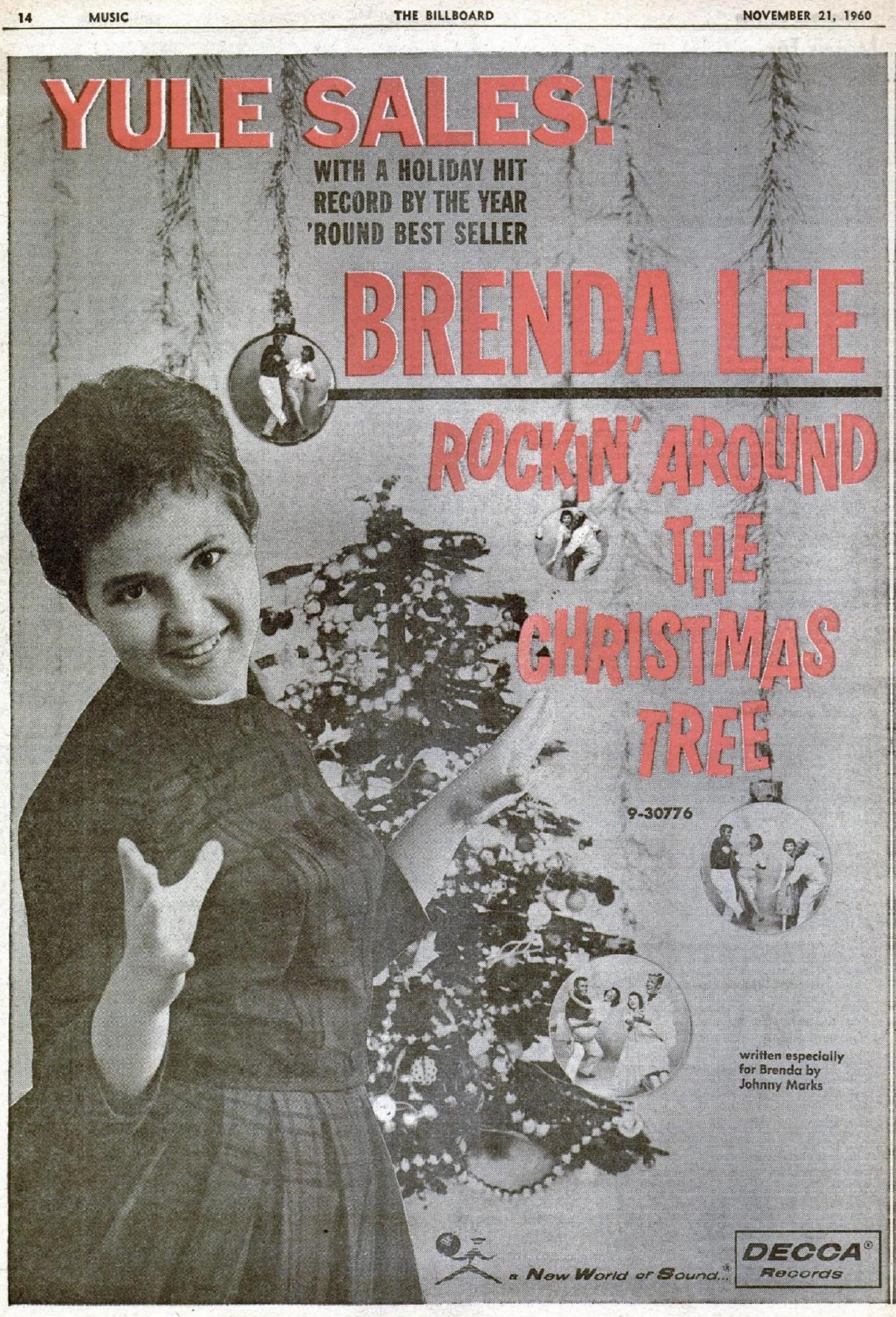
Advertisement for Brenda Lee's single, "Rockin' Around the Christmas Tree," in Billboard magazine on Nov. 21, 1960. (Public Domain)
Composed by Felix Mendelssohn, the tune and words for what we know today as “Hark, the Herald Angels Sing” originally celebrated the 400th anniversary of Gutenberg’s printing press. Hum the tune as you read the original refrain: “Gutenberg, du wackrer Mann, du stehst glorreich auf dem Plan!” which translates as “Gutenberg, you valiant man, you stand glorious on the square!”
While diving into the stories of songs and carols can be fun and entertaining, we must keep our perspective. For what matters most, of course, is the music itself—the old familiar tunes that annually add enchantment to what another holiday song calls “the most wonderful time of the year.”
What arts and culture topics would you like us to cover? Please email ideas or feedback to features@epochtimes.nyc