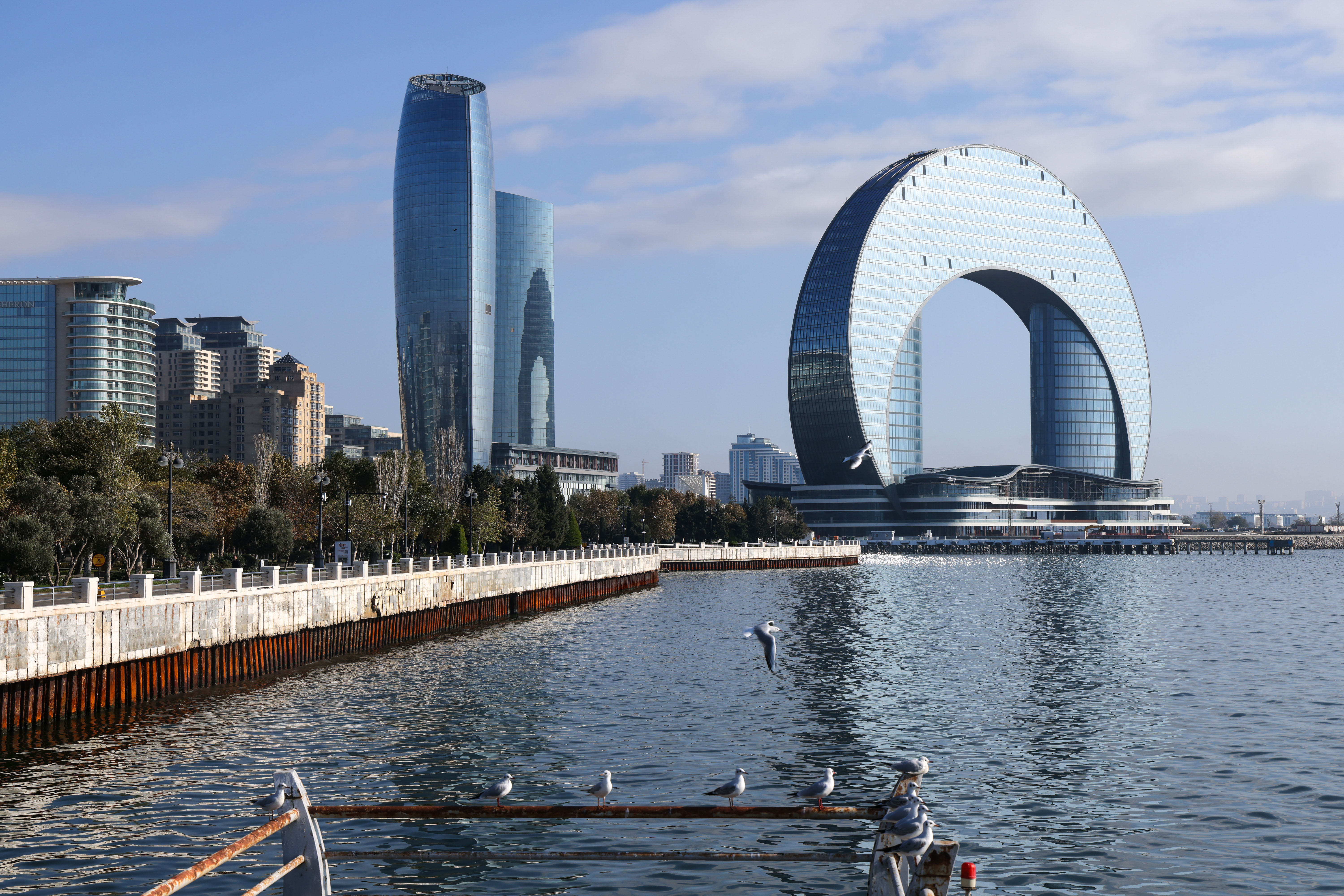

Authorities in Azerbaijan arrested two journalists from Russian state news agency Sputnik on June 30, in the latest sign of brewing tensions between Moscow and Baku, the capital of Azerbaijan.
According to AZERTAC, Azerbaijan’s state news agency, local authorities have “launched an investigation based on operational intelligence regarding [Sputnik’s] continued activities through illegal funding.”
Citing Azerbaijan’s interior ministry, the news agency said that “operational search measures were conducted at the branch office [of Sputnik in Baku] on June 30 and several individuals were detained.”
Later on the same day, Russia’s foreign ministry summoned Azerbaijan’s envoy to Moscow to voice its displeasure with what it called Baku’s “unfriendly actions” and the “illegal detention of Russian journalists.”
On July 1, Russia’s state-run TASS news agency reported that the Azerbaijani ambassador, Rahman Mustafayev, had visited the foreign ministry building in Moscow.
Tensions between Russia and Azerbaijan, a former Soviet republic in the South Caucasus region, have steadily mounted since late last week, when Russian authorities arrested several people in the city of Yekaterinburg.
An industrial city of roughly 1.5 million inhabitants, Yekaterinburg is located in south-central Russia, east of the Ural Mountains.
On June 27, local authorities in Yekaterinburg detained six ethnic Azerbaijanis following a series of police raids on what Russian state media outlets have described as “organized crime gangs.”
According to a Russian investigative committee cited by TASS, the arrested individuals are suspected of involvement in “several murders and attempted murders in Yekaterinburg in 2001, 2010, and 2011.”
The committee also confirmed that two suspects had died in police custody, claiming that one had succumbed to “heart failure” while the cause of death of the second suspect was still “being established.”
Baku Reacts
In a June 28 statement, Azerbaijan’s interior ministry decried the incident, voicing its “deep concern over the raids ... on the homes of Azerbaijanis in Yekaterinburg on the morning of June 27.”
The ministry said that the raids had led to the deaths of its “compatriots,” serious injuries to some, and the detention of nine people.
It also called on the Russian authorities to open an “urgent investigation” into the incident and “bring the perpetrators of this unacceptable violence to justice as soon as possible.”
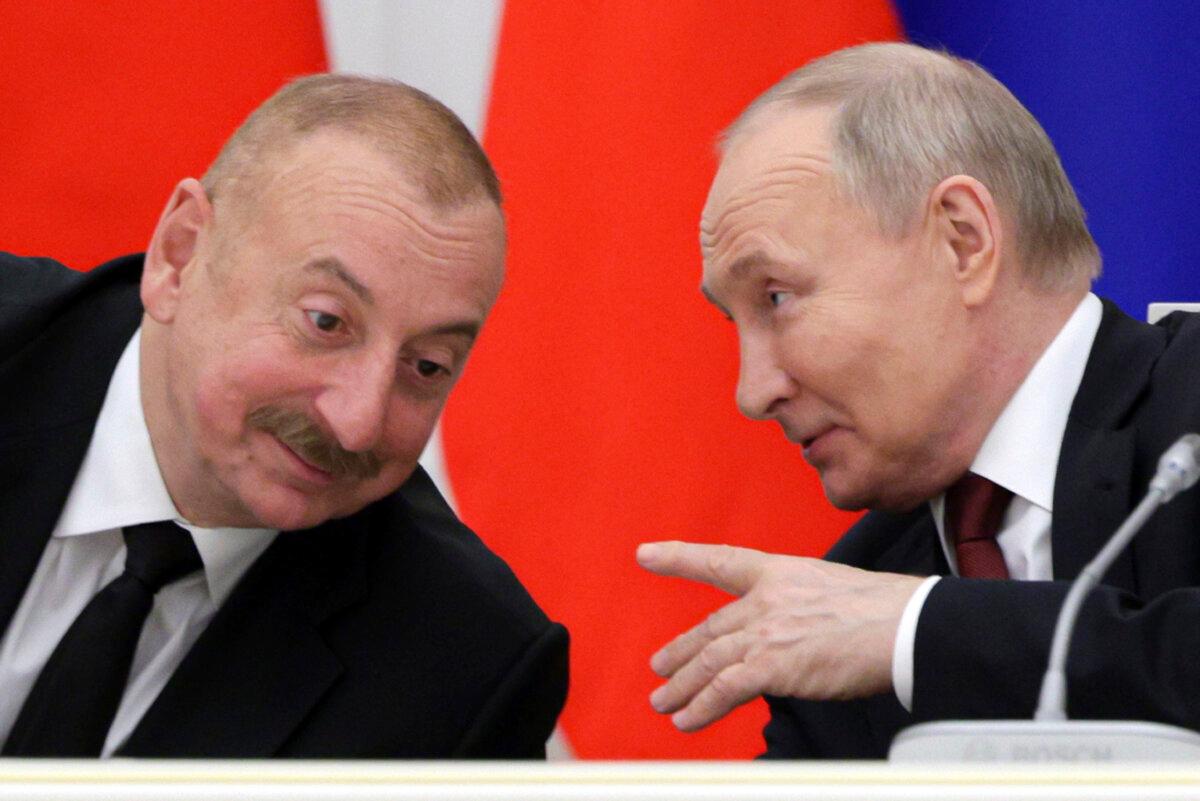
Russian President Vladimir Putin (R) and Azerbaijani President Ilham Aliyev attend a meeting with railway industry veterans at the Kremlin in Moscow on April 22, 2024. (Gavriil Grigorov/Sputnik/Kremlin Pool Photo via AP)
Meanwhile, a parliamentary delegation from Azerbaijan canceled a scheduled visit to Moscow, and a planned visit to Baku by a Russian deputy prime minister was abruptly called off.
On June 29, Azerbaijan’s culture ministry announced the cancellation of all scheduled Russian cultural events in the country, “including concerts, festivals, performances, exhibitions, etc.”
When asked about the moves by Baku, a Kremlin spokesman told reporters: “We sincerely regret such decisions. We believe that everything that’s happening [in Yekaterinburg] is related to the work of law enforcement agencies, and this ... should not be a reason for such a reaction.”
On June 30, the bodies of the two deceased suspects were repatriated to Azerbaijan, where they underwent medical examinations.
The following day, a state forensic examiner in Baku said that autopsies had shown that the two men had been beaten to death.
As of publication time, Russian officials had yet to respond to the forensic examiner’s claims.
In recent years, Baku has maintained good relations with Moscow, which has often played a mediating role in the decades-long territorial dispute between Azerbaijan and Armenia.
On July 1, Dmitry Masyuk, a high-ranking Russian foreign ministry official, claimed that there were “active efforts by certain forces to drive a wedge” in its relations with Baku.
Masyuk, whose remarks were quoted by TASS, did not provide any evidence for the assertion.
Reuters contributed to this report.