
CAPE CANAVERAL, Fla.—Humanity is on its way back to the moon.
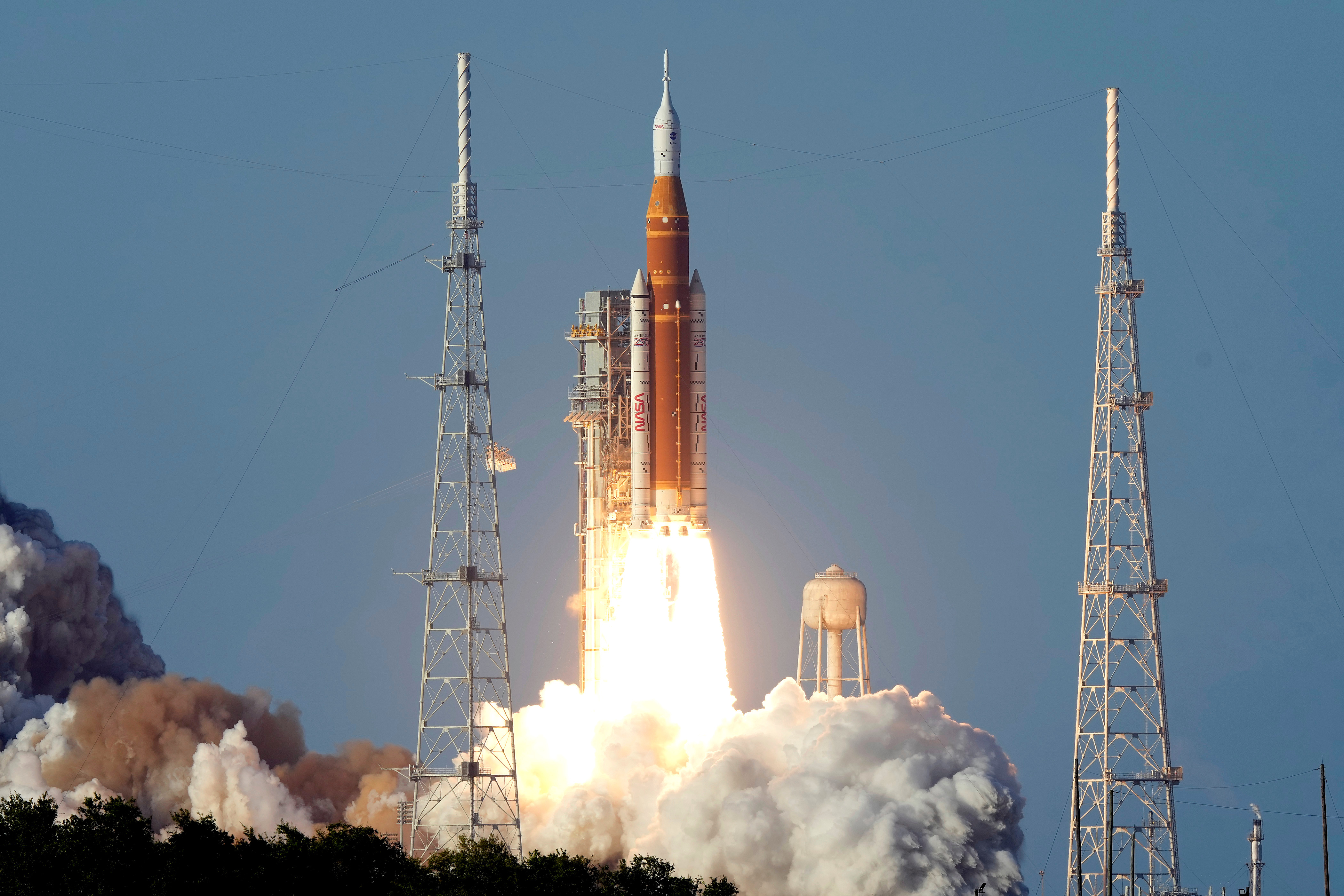
NASA astronauts Reid Wiseman (Commander), Victor Glover (Pilot), and Christina Koch (Mission Specialist), and Canadian Space Agency astronaut Jeremy Hansen (Mission Specialist) successfully launched from Florida’s Kennedy Space Center at approximately 6:35 p.m on April 1 on their 10-day Artemis II mission around the moon and back.
This marked the first crewed flight of both NASA’s behemoth moon rocket, called the Space Launch System, and the Orion Crew Capsule. It will also be the first crewed test flight of the Orion’s service module, which was provided by the European Space Agency and contains power, environmental controls, and propulsion.
As the countdown expired, the rocket’s four core-stage engines and two solid rocket boosters were lit, lifting the four astronauts beyond their home planet with 8.8 million pounds of thrust—1 million pounds more than the Saturn V that came before it.
A great roar rose in volume as the controlled explosion pushed the vehicle into the Florida sky.
In less than 60 seconds, the moonship was supersonic. And after just eight minutes, the white solid rocket boosters and orange core stage burned all their fuel and fell back to Earth.
The rocket’s smaller, single-engine upper stage will then assume responsibility and place the Orion spacecraft into a unique, elongated elliptical high Earth orbit. It will complete its job a little more than two hours into the mission.
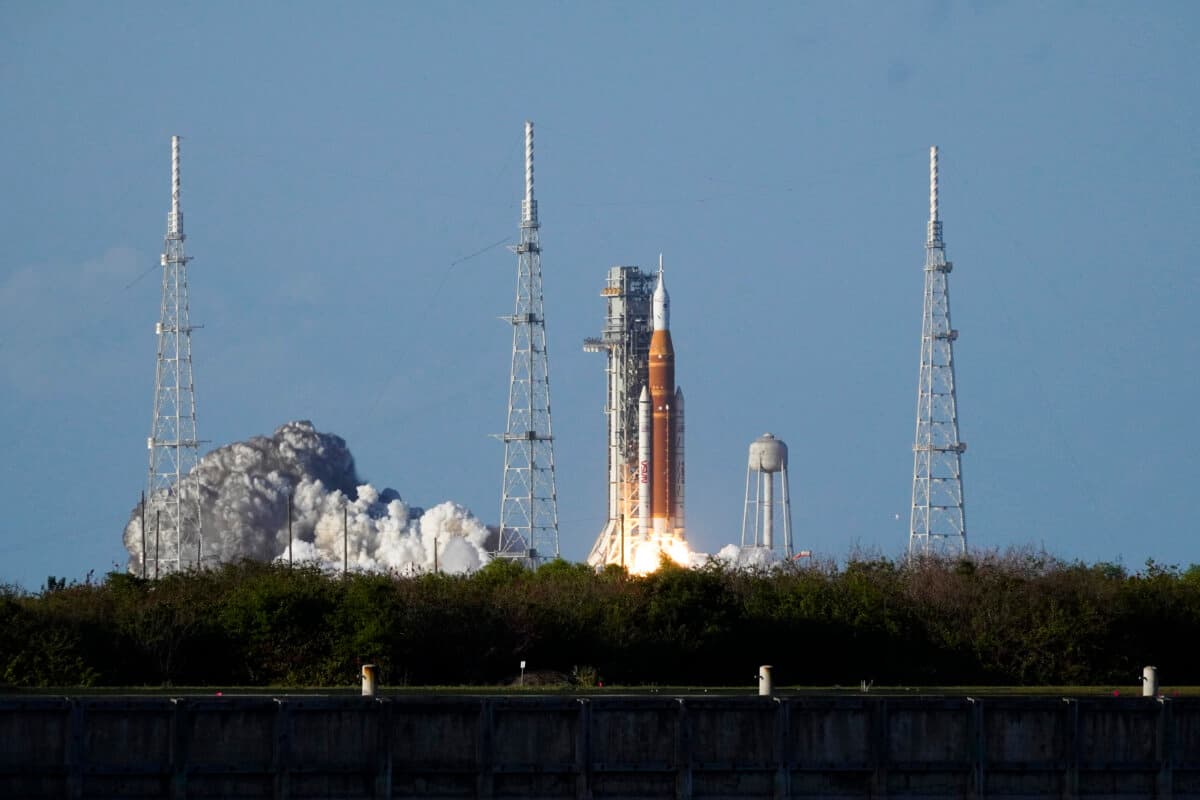
The NASA Artemis II Space Launch System rocket and Orion spacecraft blasts off at the Kennedy Space Center in Cape Canaveral, Fla., on April 1, 2026. (T.J. Muscaro/The Epoch Times)
That orbit was gained by two burns of the upper stage that established the lowest point and highest point of the orbit.
NASA Administrator Jared Isaacman and other leaders held a post-launch press conference, calling the launch a success, and said both burns of the engine were underway as planned.
However, there were some hiccups. A brief drop out in communications during a handover period, and an issue with setting up the toilet and opening valves on one of the water tanks were also noticed. Otherwise, things were going on track.
Shortly after that, the crew took manual control of their spacecraft to ensure they have full maneuverability and inform ground crews how the handling differs from the simulator. They used the upper stage as a target to demonstrate proximity operations that future missions will need to perform when docking with lunar landing spacecraft.
“Overall, guys, this flies very nicely,” Glover told Mission Control of the Orion spacecraft.
They will continue to check out their systems to ensure that their ship is good to go to the moon.
In less than 24 hours, if Mission Control gives them the go-ahead, the Artemis II crew will become the first four people to leave the Earth and fly around the moon since Apollo 17 in December 1972.
“We’ve certainly been here before, we know the challenges ahead,” Isaacman said. “We have a lot of checkouts to get through before [translunar injection], and when all goes well ... Artemis II will be moon-bound.”
But he and his fellow NASA officials are holding all celebrations until they are reunited with the crew upon their splashdown 10 days from now in the Pacific Ocean.