
Dairies that have supplied Fairlife, the dairy company owned by Coca-Cola, are being investigated by the Arizona Department of Agriculture for alleged animal cruelty.
The department confirmed to The Epoch Times that it’s investigating allegations of abuse at Rainbow Valley Dairy and Butterfield Dairy. The department declined to provide further details because the investigation is ongoing.
“We have nothing new to report at this time,” Sheldon Jones, the agency’s deputy director of programs, told The Epoch Times on June 17.
The investigation was triggered after Florida-based animal rights group Animal Recovery Mission (ARM) published a report in February that allegedly showed abuse at Rainbow Valley Dairy and Butterfield Dairy, which both supplied Fairlife.
The Fairlife media office told The Epoch Times via email that the company “has not received milk from [United Dairymen of Arizona’s] Rainbow Valley Dairy and Butterfield Dairy since learning about the animal welfare incident.”
A spokesperson for Fairlife wrote, “We are deeply committed to animal welfare and have zero tolerance for abuse; we work closely with our co-op partners to ensure the highest standards of care are consistently upheld across all their member farms that supply milk for fairlife products.”
The company (which spells its name with a lowercase F) has marketed its products as adhering to strict standards of humane treatment of animals.
Following publication of the ARM report, individual consumers of Fairlife products filed a class-action lawsuit against the company in February. The action was amended and refiled on May 29.
The lawsuit claims that as consumers pay more for products that promise humane animal conditions, the plaintiffs are entitled to recover the premium they paid for Fairlife products on that basis. The lawsuit alleges, among other things, that Fairlife engaged in false advertising in promising high standards of animal care.
Defendants in the lawsuit include Fairlife and The Coca-Cola Company. Also named are Select Milk Producers—a cofounder of Fairlife—and its husband-and-wife owners, Mike and Sue McCloskey.
Coca-Cola and the McCloskeys did not respond to requests for comment.
The lawsuit describes allegations made by ARM, whose founder, Richard Couto, told The Epoch Times that people working with ARM took photos and videos while working in the Rainbow Valley and Butterfield dairies, while they were supplying Fairlife.
Videos published on ARM’s website and YouTube channel show a wide range of abusive conduct, such as allegedly beating cows with sharp objects and dragging them by heavy equipment, at both dairies.
Newborn calves are seen in the videos being thrown and dragged by their legs at both dairies.
Dairy employees and managers are seen allegedly intentionally breaking cows’ tails at Rainbow Valley Dairy.
The lawsuit alleges cows at Rainbow Valley Dairy were “shot with [a] .22 rifle in the back of the neck in botched attempts to kill them, often causing pain and suffering.”
The evidence “reveals systemic widespread egregious animal cruelty, cruel standard practices, and extreme neglect, including at the hands of and with the awareness of management,” according to the lawsuit, which was filed in the U.S. District Court, Central District of California, Western Division. The three plaintiffs are seeking a jury trial.
After ARM published its allegations in February, Fairlife and United Dairymen of Arizona—a co-op through which Fairlife acquired milk—both pledged to end business with Arizona dairies accused of animal abuse, according to the lawsuit.
United Dairymen of Arizona did not respond to a request for comment from The Epoch Times.
ARM has conducted previous undercover investigations at other dairies that supply Fairlife in Indiana, Arizona, and New Mexico, some of which are also mentioned in the lawsuit.
The amended version of the lawsuit alleges that milk continues to be sent to Fairlife from dairies where abuse of animals was documented. Investigators with the Consumer Protection Foundation followed shipments from the dairies to facilities receiving milk for Fairlife, Bobak Bakhtiari, the foundation’s executive director, told The Epoch Times.
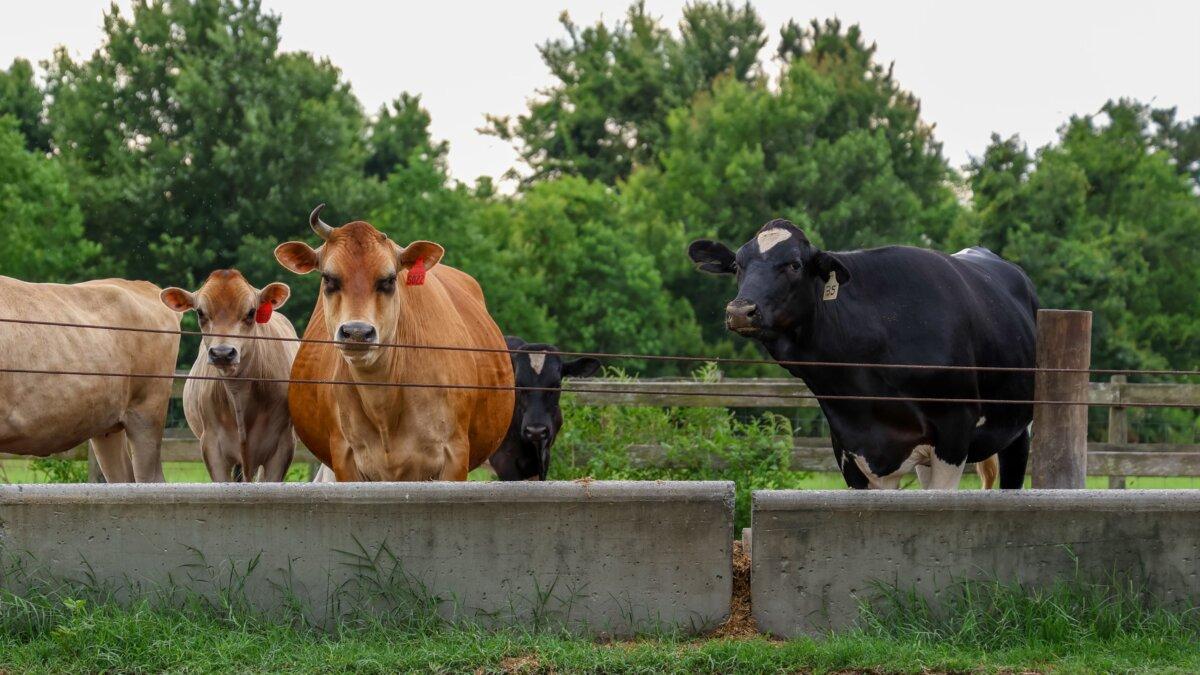
Cows look up while munching feed in a grassy pasture in Alachua, Fla., on June 18, 2025. (Natasha Holt/ The Epoch Times)
Seeking Damages
The three plaintiffs named in the lawsuit are California residents who say they purchased Fairlife products believing they were produced in ways that treated animals humanely. They’re seeking “damages, restitution, and injunctive relief” for “false advertising,” “unfair competition,” and more.
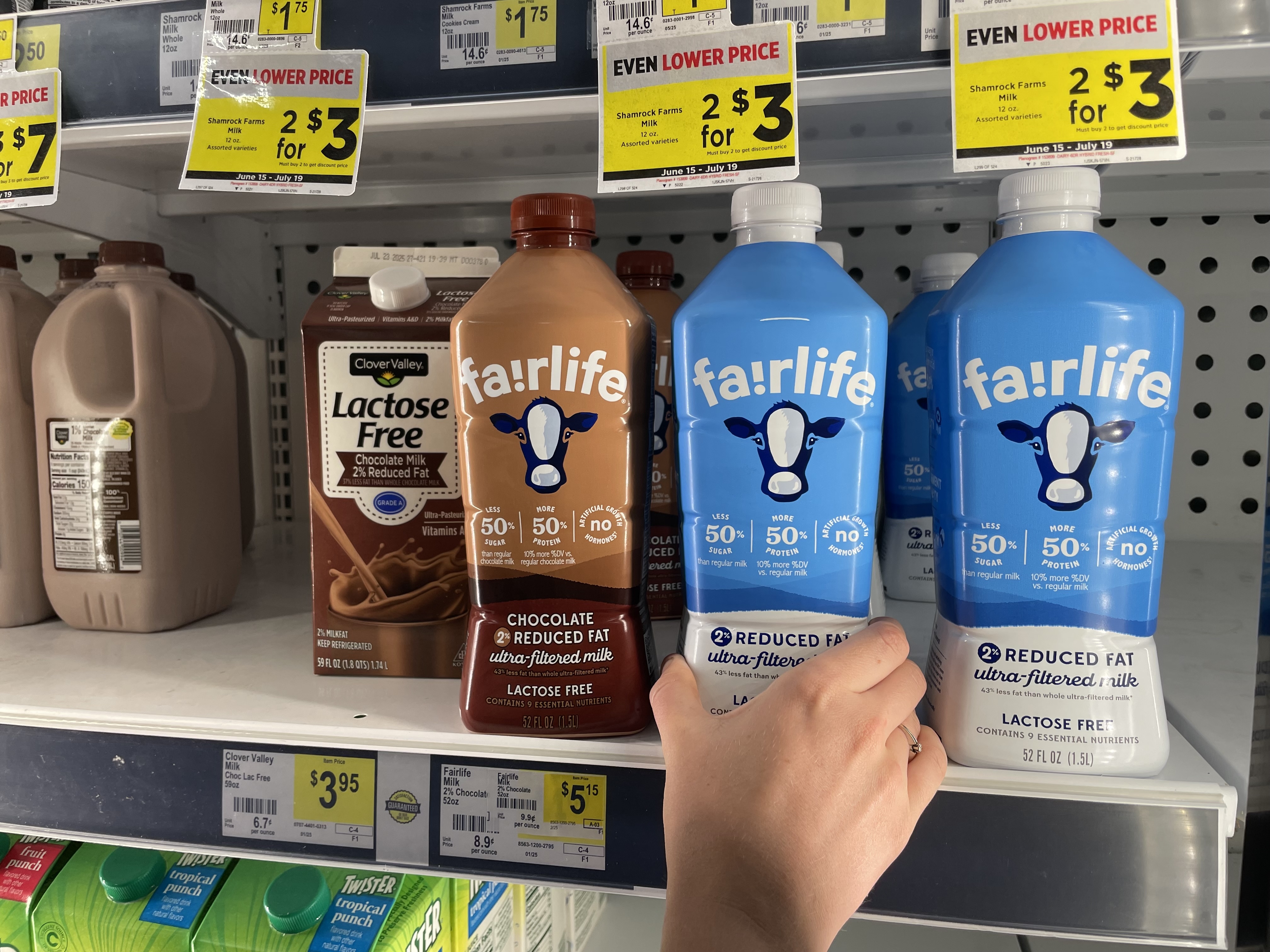
A 1.5-liter bottle of Fairlife milk was priced at $5.15. A similar milk product of the same volume was priced at $3.95 at a Dollar General store in Florida on June 18.
As late as March 21, Fairlife’s website included a page dedicated to describing its commitment to welfare and animal care standards.
A section titled “Industry Leading Animal Welfare Standards” stated that Fairlife’s “goal is that all cows and calves are provided with the best care possible.”
“As a dairy processor that doesn’t own farms or cows, we rely on the partnership of industry experts, advisors and our network of supplying farms to help us achieve this goal. We are committed to continuously evaluating our animal welfare program for areas of opportunity,” the company said.
The page is no longer part of Fairlife’s website, but it can be viewed via an internet archive.
In a study published in February in the journal Food Quality and Preference, researchers concluded that “animal welfare has priority for consumers and that improving and ensuring high animal welfare standards should be a prerequisite for other sustainability improvements in dairy production.”
The study documents an increasing willingness by consumers to pay more for products made with the promise of better treatment for the animals involved.
A 2018 study by the American Society for the Prevention of Cruelty to Animals found that 70 percent of respondents said they pay attention to food labels that indicate how animals were raised. And 78 percent said they believed there should be an objective third party to ensure farm animal welfare.
Respondents said they were willing to pay, on average, 32 percent more for eggs and 48 percent more for chicken breast from animals “raised under a trustworthy welfare certification,” according to the study.