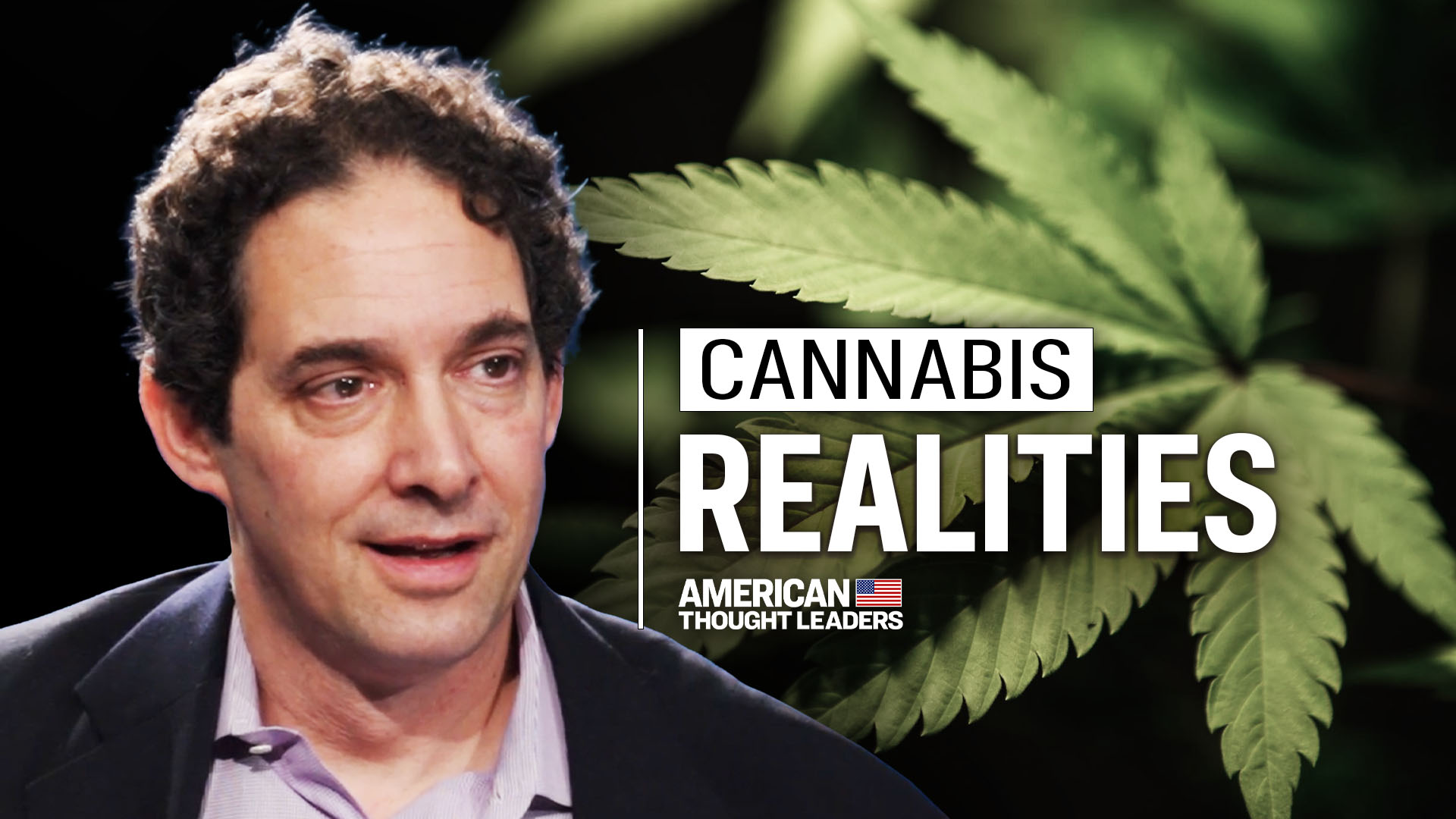

Former New York Times reporter and now independent journalist Alex Berenson is the author of “Tell Your Children: The Truth About Marijuana, Mental Illness, and Violence.”
In this episode, we dive into the debate around cannabis and THC and President Donald Trump’s recent executive order directing the Drug Enforcement Administration (DEA) to reclassify marijuana from a Schedule I to a Schedule III drug.
Berenson argues that it’s a bad move. Schedule I substances are defined as having high potential for abuse and no accepted medical use. Schedule III substances, in contrast, have medical uses and are regarded as having only moderate to low potential for abuse.
Rescheduling marijuana sends the wrong signal, Berenson says: “Do we want to be a society that, in general, encourages drug use?”
He believes the use of drugs should be stigmatized, including the use of marijuana: “In the U.S. we can’t stigmatize. And not to stigmatize in this case, as in so many cases, means we can’t be honest.”
In my interview with Berenson, he provides an overview of the dangers of marijuana use and why these have increased dramatically over the last half-century.
“Fifty years ago, cannabis that was in a joint that you smoked at Woodstock ... that might have been 1 or 2 percent THC, so a few milligrams of cannabis in a joint. ... When I was growing up in the ‘80s or in the ’90s, it might have been 5 percent THC. Now, if you go into a dispensary ... the bud tender will sell you a product that is 20 percent to 30 percent THC, if it’s flower cannabis,” he said.
And if it’s not smoked but vaped, then “that might be 95 percent THC. This is not a plant at all. It’s just a chemical to get you high,” Berenson said. “Now you can walk around with this little device and inhale massive amounts of THC, and that really is a change that has made the product a lot more dangerous.”
There is also a well-established link, Berenson says, between high-potency, frequent marijuana use, and severe mental health impacts such as psychosis and schizophrenia.
There’s even research suggesting THC causes heart damage. “There is a link to myocardial infarction, heart attacks, and that link is pretty strong. You can find papers that show a 3x increase over a multi-year period,” he said.
But what about its benefits as a pain reliever? Berenson said that he was surprised to discover that placebo-controlled studies showed only small and short-term pain relief effects.
“What cannabis and THC are really good at is enhancing sensation ... but if you’re in pain, in the long run, enhancing sensation actually is not a good thing for you. ... And so the idea that cannabis is a substitute or a way out of our opioid problem is just not true,” Berenson said.
“We as a society have to ... be honest with ourselves about what we are doing and what we are encouraging kids to do,” he said.
In our wide-ranging interview, we also discuss the overprescription crisis in America, the dangers of SSRIs, psychedelics, and stimulants such as Adderall that around 10 percent of teenage boys are taking in the United States, and his thoughts on vaccine policy in America.
Views expressed in this video are opinions of the host and the guest, and do not necessarily reflect the views of The Epoch Times.