

WASHINGTON—Since returning to the White House in January, President Donald Trump has rapidly reshaped America’s domestic and international priorities.
In the first year of his second term, his administration enacted sweeping tax reform, deported millions of illegal immigrants, imposed tariffs to balance trade relations, brokered several peace deals, overhauled U.S. foreign policy, and ordered the federal government to recognize only two sexes—male and female—among other measures.
Here is a look at key actions Trump has taken so far.
Border Security
One of Trump’s first acts was to address illegal immigration, an issue that became a crisis during President Joe Biden’s tenure. Trump prioritized securing the nation’s borders with a flurry of executive orders, which caused illegal immigration to plummet at the southern border.
Illegal immigration dropped to the lowest numbers in recorded history, according to Customs and Border Protection, and for seven straight months, border authorities released zero illegal immigrants after they were apprehended.
The Department of Homeland Security said that as of early December, more than 2.5 million illegal immigrants had been deported since the start of the year. Trump has said the removals will benefit Americans by reducing competition for housing and jobs.
In an unprecedented move, Trump also ordered in March that hundreds of illegal immigrants be deported to a prison in El Salvador. He invoked the Alien Enemies Act of 1798, which grants the president wartime authority, as the legal basis for expediting the deportations. His administration stated that the law granted him authority to target members of the MS-13 international criminal gang and terrorist group and the Tren de Aragua Venezuelan gang and terrorist group. However, the administration continues to face legal challenges and courts have blocked deportations under that law, for now.
The president took other immigration-related actions, including imposing a $100,000 annual fee on new H-1B visa applications for highly skilled workers, signing an executive order to end birthright citizenship, halting green card and naturalization applications for people from 19 high-risk countries, and suspending the diversity visa lottery program. He also introduced the Trump Gold Card, which costs $1 million for individuals and $2 million for businesses, to provide expedited residency status.
“[The Trump Gold Card is a] green card on steroids,” Trump said.
Immigration and Customs Enforcement and Customs and Border Protection will receive a large portion of $170 billion dedicated to immigration enforcement through September 2029. This is a large increase over their current annual budgets, and the funds are expected to support deportation efforts and the construction of more border wall and new detention centers in the coming year.

Border Patrol agents detain a man in New Orleans on Dec. 3, 2025, the first day of an operation in Louisiana launched by Homeland Security as a part of the immigration enforcement surge. (Ryan Murphy/Getty Images)
‘America First’ Trade Policy
Shortly after his inauguration, Trump described “tariff” as the most beautiful word in the dictionary. He drew inspiration from William McKinley, the 25th president, who championed steep tariffs to protect American industries in the late 19th century.
On April 2, Trump imposed levies of at least 10 percent on more than 80 countries. This was a significant shift from the trade policy of his first term, when tariffs targeted a few specific countries such as China.
In his second term, Trump is using tariffs as leverage to reduce tariffs and non-tariff barriers on U.S. goods.
He has frequently praised tariffs for attracting more than $17 trillion in new investment commitments this year. Data from the Bureau of Economic Analysis showed that the U.S. trade deficit also fell by 10.9 percent in September.
He also promised to send American taxpayers $2,000 tariff rebate checks directly, using funds from the tariff revenue.
After April 2, which he dubbed “Liberation Day,” Trump launched trade talks with key trading partners to revise long-standing agreements. He has announced new trade deals with 17 trading partners, including Argentina, the European Union, Japan, South Korea, Switzerland, Thailand, the UK, and Vietnam.
Since January, Trump has also increased pressure on China by significantly raising tariff rates on Chinese goods. Although some were reduced in a November truce, current tariffs remain high, at 47.5 percent. This is expected to lead to long-term economic decoupling between the United States and China.
Trump’s trade agenda faced legal challenges from businesses and from states in 2025. The Supreme Court is currently considering the legality of the president’s tariff actions after justices heard a case on Nov. 5 regarding whether Trump is in violation of the International Emergency Economic Powers Act.
Although some economists warned that tariffs would increase inflation, the Bureau of Labor Statistics recently reported that inflation cooled to 2.7 percent in September, below expectations.
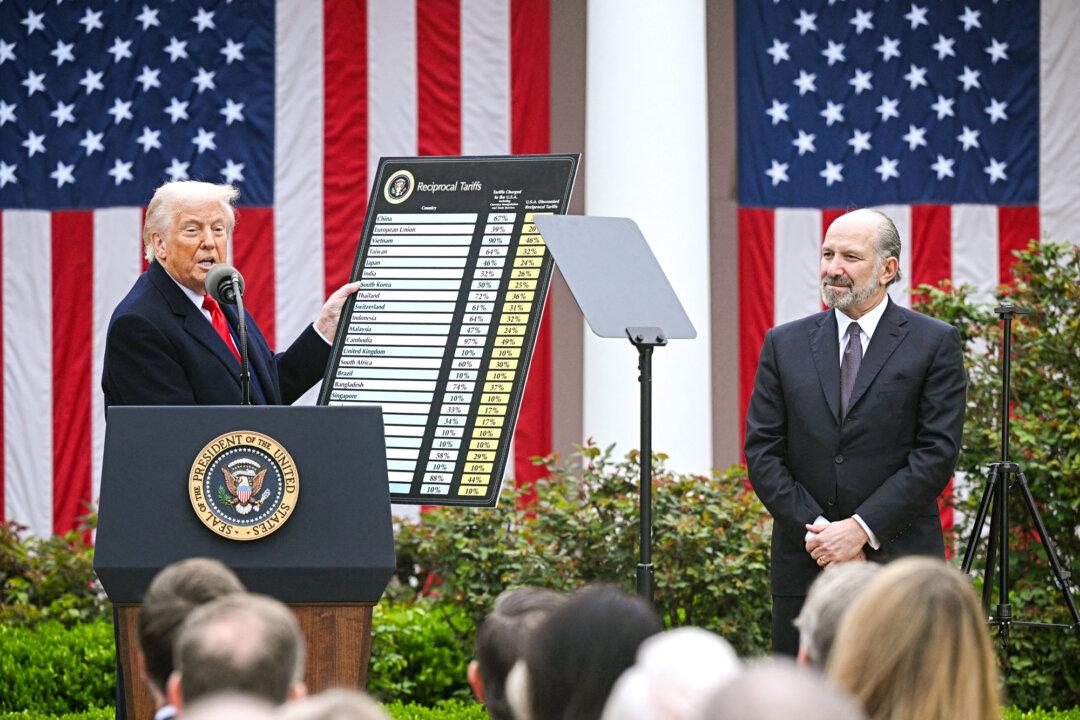
President Donald Trump holds a chart as he delivers remarks on reciprocal tariffs alongside U.S. Secretary of Commerce Howard Lutnick during an event in the Rose Garden at the White House on April 2, 2025. (Brendan Smialowski/AFP via Getty Images)
Shift in Foreign Policy
Trump’s foreign policy represents a significant departure from the policies established by previous presidents. The new National Security Strategy, released in November, outlines a shift in focus and resources from the Middle East and Europe to the Western Hemisphere.
“My key takeaway from the first year of the administration is that there’s been a huge shift in regional prioritization in the world, and Trump is putting incredible emphasis on the Western Hemisphere and the U.S. homeland,” Michael Walsh, a nonresident senior fellow at the Foreign Policy Research Institute, told The Epoch Times.
The recent military buildup near Venezuela and the appointment of Louisiana Gov. Jeff Landry as U.S. special envoy to Greenland reflect this change in strategy, according to Walsh.
After taking office, Trump closed the U.S. Agency for International Development, a move that Secretary of State Marco Rubio described as a major shift from a charity-based model in foreign affairs to one that emphasizes “trade over aid” and “investment over assistance.”
Trump has brokered the end of multiple wars since taking office in January. He has taken a transactional approach to diplomacy, using tariffs and economic pressure to encourage warring nations to enter peace talks.
The cease-fire agreement between Israel and the Hamas terrorist group, resulting in the return of all Israeli hostages after two years, is considered one of Trump’s most significant achievements this year. Since taking office, he has also actively sought a peace deal between Ukraine and Russia to help end Europe’s deadliest conflict since World War II.
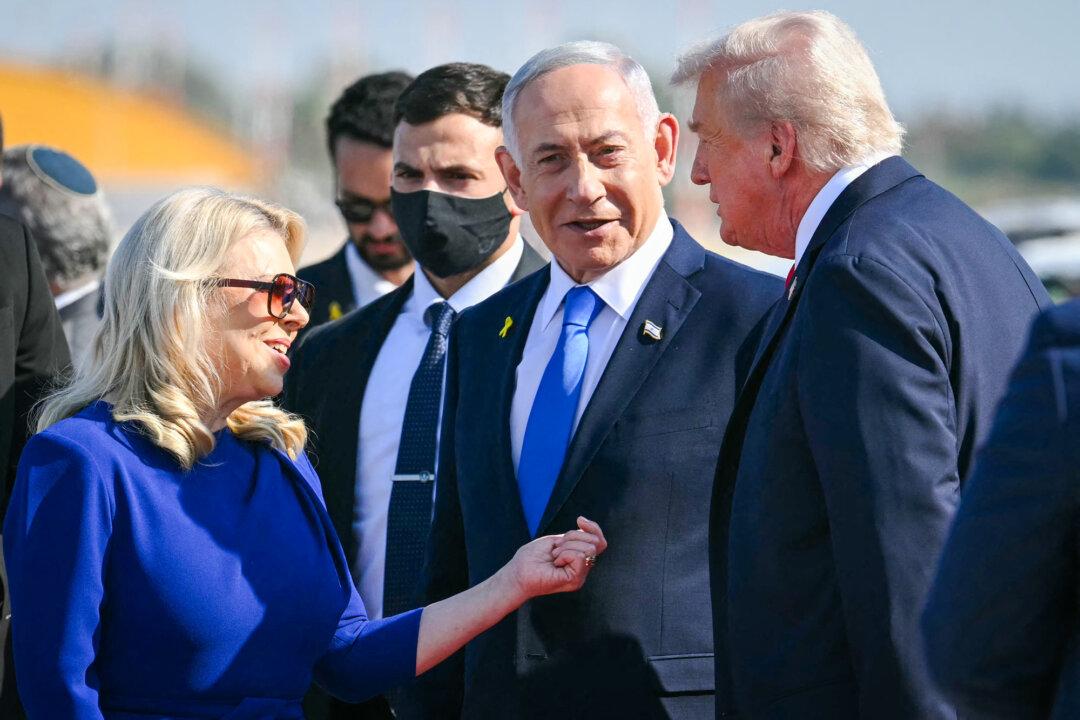

(Left) Israeli Prime Minister Benjamin Netanyahu and his wife Sara greet President Donald Trump at Ben Gurion Airport near Tel Aviv on Oct. 13, 2025. (Right) Released Israeli hostage, Guy Gilboa Dalal, is escorted into Beilinson Hospital in Israel on Oct. 13, 2025. (Saul Loeb/AFP via Getty Images, Ori Aviram/Middle East Images/AFP via Getty Images)
Trump also achieved other victories on the world stage, from getting NATO allies to agree to a larger defense budget at this year’s Hague summit to ordering precision strikes on Iran’s three main nuclear facilities.
He has championed strengthening the military by securing a major defense budget and signed an order branding the Department of Defense as the Department of War.
Additionally, he has influenced international policy discussions by urging Western allies to prioritize defense spending over environmental, social, and governance issues; diversity, equity, and inclusion initiatives; and climate change.
Sweeping Tax Reform Bill
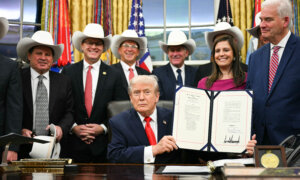
The president campaigned on a promise to reduce taxes, and he used his whip from the White House to push through a series of tax reforms in the One Big Beautiful Bill Act in six months, about half the time Congress typically takes to pass a spending package.
Trump signed the act into law on July 4, calling it “the most popular bill ever signed in the history of [the] country.”
Included in the bill are extensions of tax cuts passed in Trump’s first term that were set to expire at the end of 2025, in addition to clauses that remove taxes on tips and overtime—up to certain amounts—and on Social Security.
Administration officials promised big returns for tax filers in 2026, with average increases of $1,000 per filer.
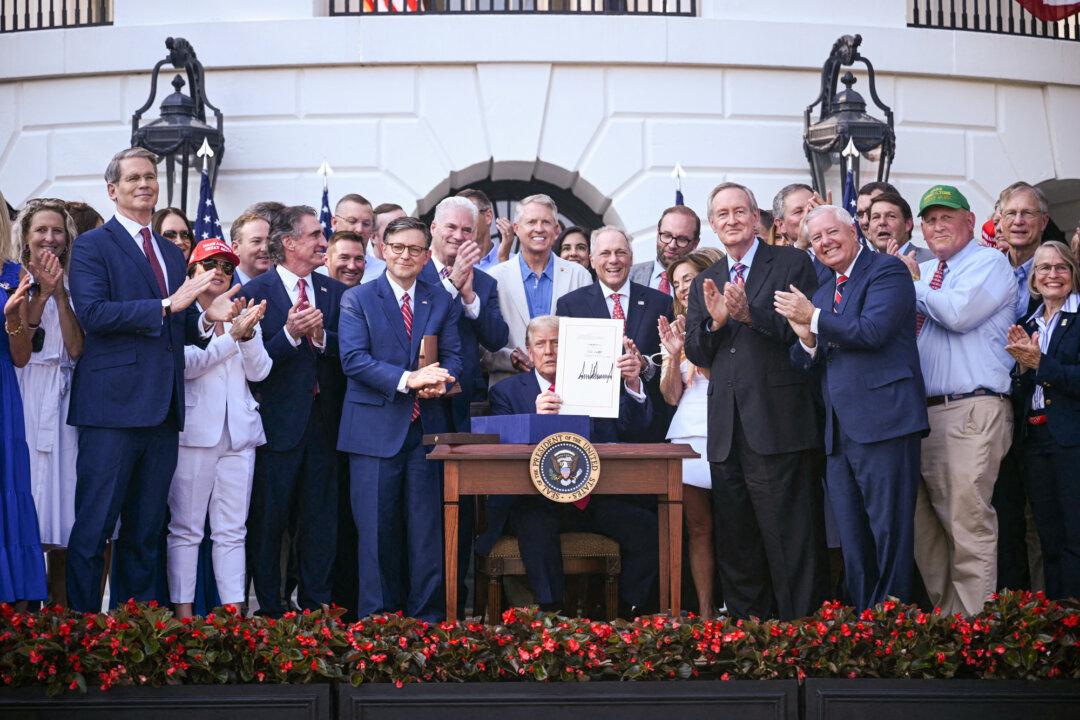
President Donald Trump shows his signature on the “One Big Beautiful Bill Act” at the White House on July 4, 2025. (Brendan Smialowski/POOL/AFP via Getty Images)
Analysts at the nonprofit Tax Foundation estimated that the tax reforms will increase gross domestic product by about 1.2 percent while reducing federal tax revenue by approximately $4.5 trillion annually through 2034.
Tariffs will make up the difference, according to Trump, who also suggested that tariffs could eventually replace income taxes.
“Whether you get rid of it or just keep it around for fun or have it really low, much lower than it is now ... you won’t be paying income tax,” Trump said in a Dec. 3 White House Cabinet meeting.
New Culture Wars
Since taking office, Trump has introduced reforms on public health and safety, climate, energy, education, gender ideology, and more through dozens of executive orders. The president repeatedly described these actions as part of his “common sense” agenda. The executive actions also led to a host of lawsuits from opponents.
“In order to win a culture war, you have to be willing to engage in the culture, and President Trump has unabashedly done so,” Tiffany Justice, cofounder of conservative parents’ group Moms for Liberty, told The Epoch Times in a recent interview.
On his first day in office, Trump signed an order that defined the federal government’s stance on gender.
“It is the policy of the United States to recognize two sexes, male and female,” the order reads. “These sexes are not changeable and are grounded in fundamental and incontrovertible reality.”
About two weeks later, Trump invited children, mothers, and women athletes to the White House’s East Room and signed an order that barred transgender-identifying male athletes from competing in women’s sports.
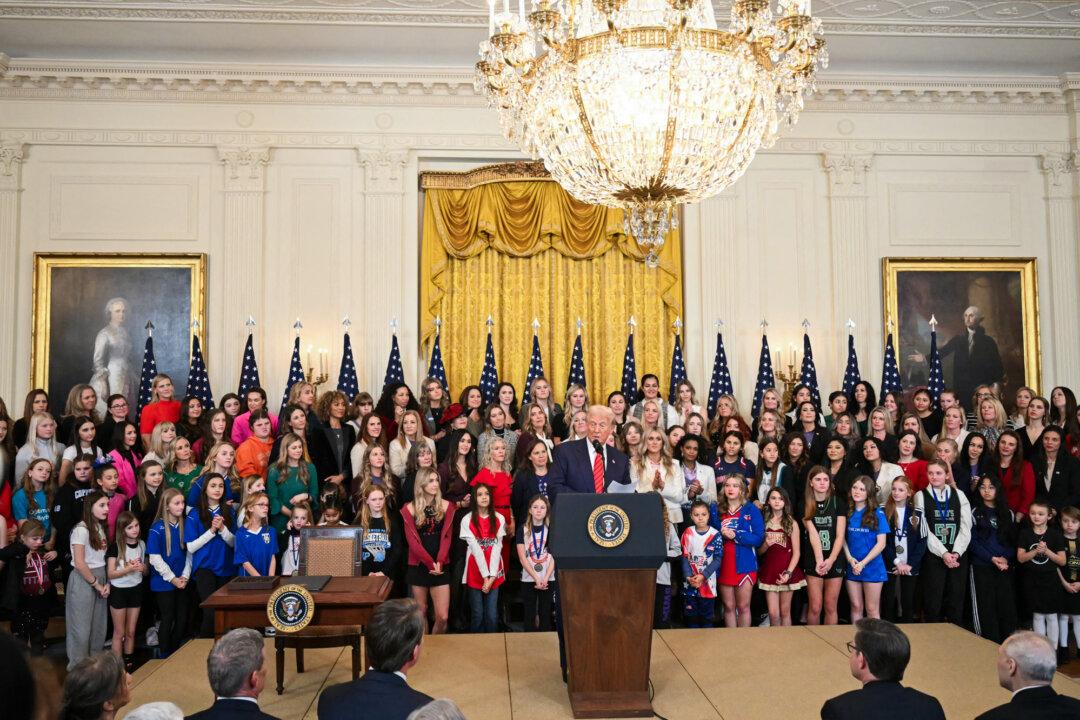
President Donald Trump speaks before signing the “No Men in Women's Sports” executive order in the East Room of the White House on Feb. 5, 2025. (Andrew Caballero-reynolds/AFP via Getty Images)
“With this executive order, the war on women’s sports is over,” Trump said.
He also signed executive orders aimed at eliminating diversity, equity, and inclusion programs across the federal government. Many corporations are also stepping back from these programs.
Trump’s appointment of Robert F. Kennedy Jr. as health secretary and the subsequent creation of the Make America Healthy Again Commission shifted the federal government’s approach to public health.
The president also sent the National Guard to address riots in Los Angeles and to tackle what he called “out of control” crime in cities including Chicago; Memphis, Tennessee; Portland, Oregon; and Washington. The deployments were challenged in courts, and on Dec. 23, the Supreme Court blocked the deployment of the National Guard in Chicago. This decision could affect the president’s ability to send troops to other cities.

National Guard members at Judiciary Square metro stop in Washington on Nov. 24, 2025. (Madalina Kilroy/The Epoch Times)
DOGE, Federal Trimming
One of Trump’s first actions on day one was to establish the Department of Government Efficiency (DOGE), led initially by Tesla CEO Elon Musk.
The department took bold action across Washington in the early months of Trump’s second term.
The department’s website lists $214 billion in savings—equivalent to approximately $1,300 per taxpayer—derived from asset sales, the elimination of fraud and improper payments, and the cancellation and renegotiation of contracts and leases, among other reductions.
DOGE facilitated the termination of 264 federal office leases managed by the General Services Administration, the nation’s largest leaseholder, saving more than $113 million.
Efforts to trim the federal payroll included buyout offers for employees across agencies. Approximately 317,000 federal government employees left the workforce, and nearly 92 percent of them left voluntarily, according to a Dec. 10 X post from Scott Kupor, director of the Office of Personnel Management.

White House senior adviser Elon Musk walks to the White House after landing with President Donald Trump in Marine One on the South Lawn of the White House on March 9, 2025. (Samuel Corum/Getty Images)
Trump’s One Big Beautiful Bill Act included $1.7 trillion in savings on mandatory spending programs.
“And yet you won’t even notice it,” Trump said during the signing ceremony. “Just waste, fraud, and abuse.”
Musk’s 130-day tenure as the head of DOGE ended on May 30, after which he became outspoken about the One Big Beautiful Bill Act’s failure to reduce the national debt.
In January, Trump issued an order requiring agencies to eliminate at least 10 existing regulations for each new regulation proposed. Agencies ultimately removed 129 regulations for every new regulation in 2025, significantly surpassing the president’s target.
Cutting red tape has saved $212 billion, more than $600 per American, the White House Office of Management and Budget said in a recent statement.