
WASHINGTON—An evening meant as a celebration of the First Amendment and the journalists who cover the White House went from glitz and glamour to fear and confusion in a matter of moments on April 25 when an attacker attempted to rush through security at the Washington Hilton hotel by shooting at Secret Service agents.
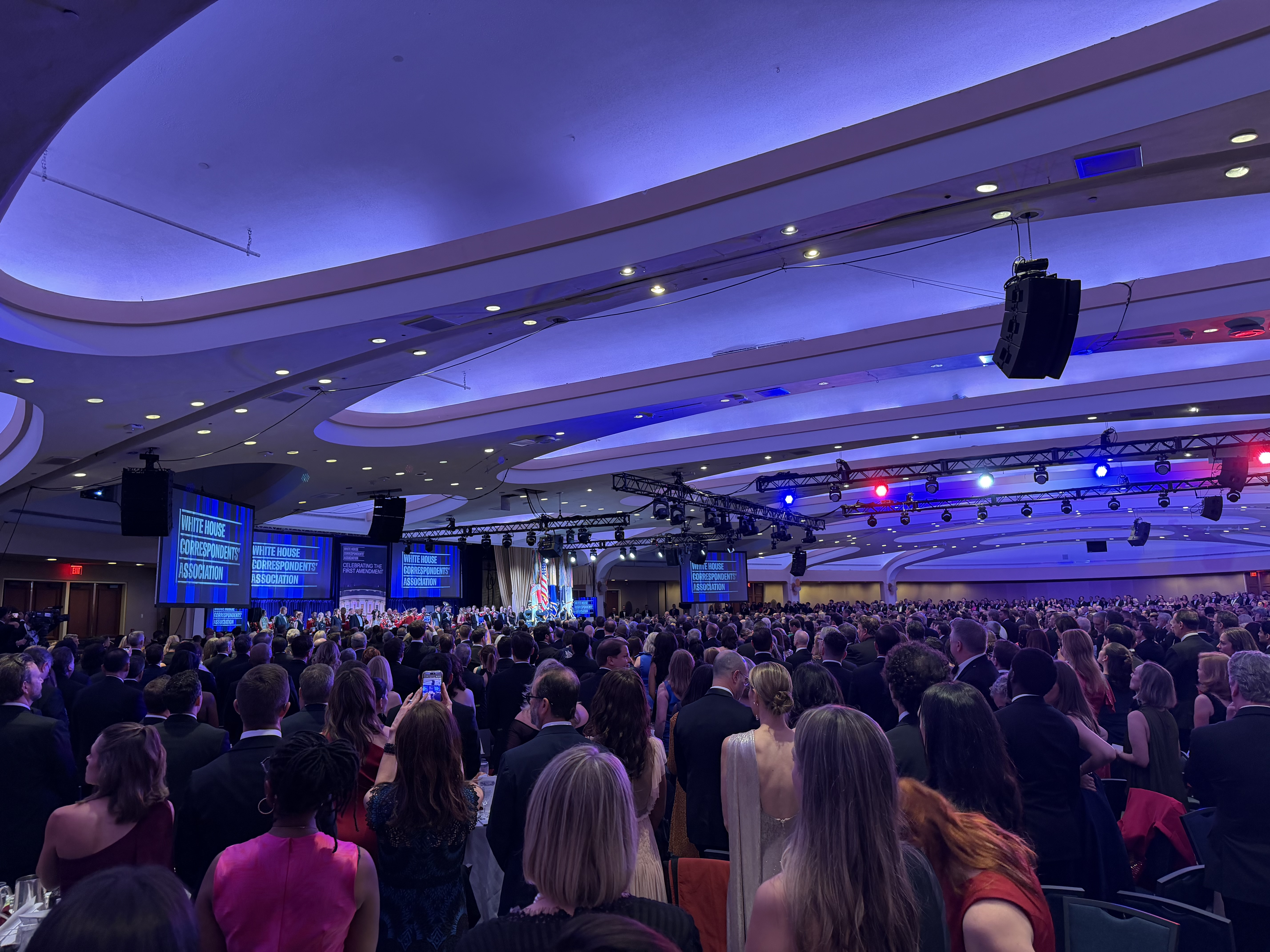
Nearly 3,000 guests dressed in tuxedos and gowns were packed into the approximately 29,000-square-foot International Ballroom, where the White House Correspondents’ Dinner has been held since 1968.
President Donald Trump and First Lady Melania Trump were introduced to the crowd, and the U.S. Armed Forces Color Guard and the U.S. Marine Band presented the colors.
Attendees had just finished their spring pea and burrata salads, and dozens of waiters were filing into the room to retrieve the plates when loud noises were heard coming from the back of the ballroom.
The sounds were muffled, and some guests believed that they were the result of an accident, possibly someone dropping trays or tray tables that the waitstaff were carrying.
However, the uncertainty quickly turned into what appeared to be an instantaneous reaction, as thousands of people hit the floor, many diving under tables for protection.
Agents grabbed the president, the first lady, Vice President JD Vance, and Second Lady Usha Vance, and swiftly removed them from the stage.
After scanning the room for signs of threats and observing none, an Epoch Times reporter and a few other reporters stood up and began covering the scene.
Dozens of heavily armed law enforcement and Secret Service agents flooded the area. They were climbing over tables—which were spaced so tightly with chairs that it was difficult to navigate through the room—to protect Cabinet members.
The Epoch Times witnessed agents grab Health Secretary Robert F. Kennedy Jr. and his wife, Cheryl Hines, removing them from the ballroom by kicking over barriers and taking them out a side entrance.
Once agents had secured the area, they ordered the attendees to leave through the entrance and back out through the magnetometers that secured the dining area. This was the same route that guests took to get to the dining room.
The area in question where suspect Cole Allen allegedly shot at Secret Service agents before he was detained was on the terrace level, a floor above the concourse level where the president was sitting at the dinner.
The distance between the two locations prevented the audience from clearly hearing the gunshots, and the room filled with journalists who were left wondering what exactly had happened.
White House staffers and members of the media mingled with guests in the various lobbies of the hotel while awaiting updates. Some people were visibly shocked, and others were less affected.
News of the shooting arrived with false claims from various news outlets, including one that reported that the shooter was dead.
For journalists on the ground, the scene was fast-changing, and facts were difficult to pin down.
Ambulances and other emergency vehicles parked in the circle drive near the hotel entrance, flashing lights illuminating the lobby and streets outside.
Numerous members of the Secret Service, law enforcement officers, and National Guard members were positioned throughout the hotel, many more visible than before the incident.
Once the president posted a message asking organizers to “let the show go on” to Truth Social, optimism briefly bubbled as hungry attendees thought there was a chance they might get to eat dinner—including the surf and turf main course followed by a grand opera cake for dessert.
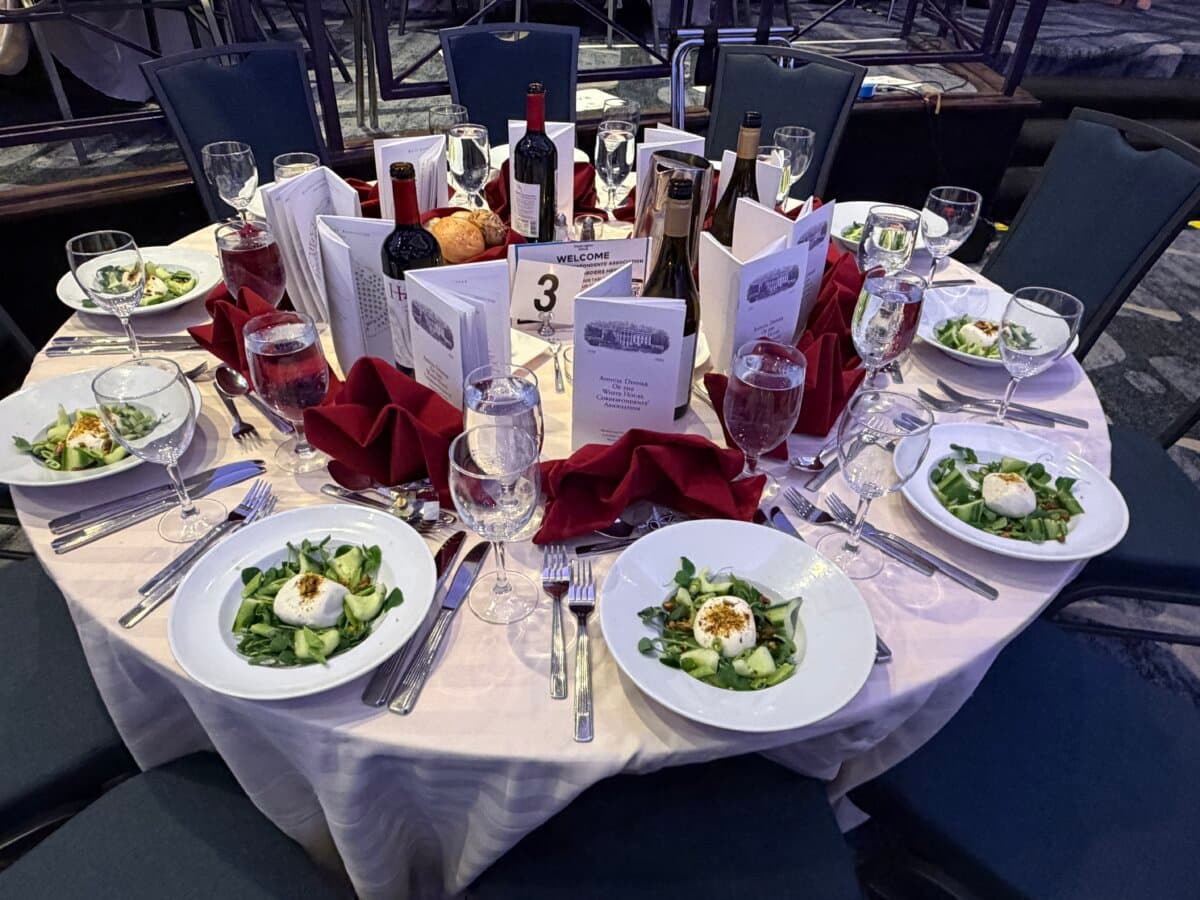
Attendees ate their salads and were awaiting the main course at the White House Correspondents' Dinner in the International Ballroom at the Washington Hilton hotel on April 25, 2026, when the event was disrupted by an attack. (Travis Gillmore/The Epoch Times)
That idea quickly faded, as law enforcement directed the president to cancel his appearance because of security protocols.
When Trump announced that he would hold a press briefing at the White House 30 minutes later, reporters scrambled to find a way through the now-intense security perimeters outside the hotel to attend the event.
Rideshare services were overwhelmed and blocked by street closures, so an Epoch Times reporter used a rental scooter to follow behind the motorcade, arriving at the Executive Mansion with minutes to spare.
The attacker’s reported manifesto—in which he allegedly claims that his goal was to assassinate Trump and administration officials—included remarks about a perceived lack of security, but the Secret Service perimeter matched similar Trump events attended by The Epoch Times in his second term.
Magnetometers, bag searches, K-9 units, and a large number of uniformed and undercover agents are customary, among other methods and techniques, and all standard protocols were visible on April 25.
Hotel lobbies are generally left open to the public, and the agents create a restricted perimeter near the area where the president will speak.
The incident occurred at the first line of defense, and several layers of additional protection were in place.
Trump has vowed to not let the attacker ruin the celebration, calling for a new dinner within the next 30 days.
He also suggested that the White House ballroom, which is now under construction, would make the perfect venue for the event after it is completed in 2028.