
The Trump administration has moved to close a loophole that allows Chinese companies to access Nvidia’s advanced computing power by leasing it from data centers in third countries.
In an interim final rule released on Nov. 16, the Department of Commerce said the new rule aims to “prevent certain foreign actors” from using U.S.-developed advanced computing power to threaten national security and foreign policy interests.
“These restrictions will undermine the ability of companies headquartered in countries of concern from using U.S. advanced Super Intelligence (SI) semiconductors to train advanced SI models,” the rule, issued by the department’s Bureau of Industry and Security, states.
Moving forward, companies will be required to obtain approval before exporting, reexporting, or transferring artificial intelligence chips to countries that “present a higher-than-normal risk of diversion.”
The department listed Brazil, Indonesia, Malaysia, Singapore, and Thailand in the rule.
The licensing requirement for these five countries would not apply to semiconductor shipments destined for U.S.-headquartered companies or firms whose parent company is based in the United States.
“Commerce will be actively monitoring for countries that tolerate evasion of this [interim final rule],” the department said.
Those in violation could face import restrictions, stricter licensing requirements, or placement on the blacklist.
Nvidia (NVDA) share prices fell by about 2 percent following the decision.
Share prices of other chipmakers were in the red, including Advanced Micro Devices, Broadcom, Intel, and Micron Technology.
Lutnick Under Pressure
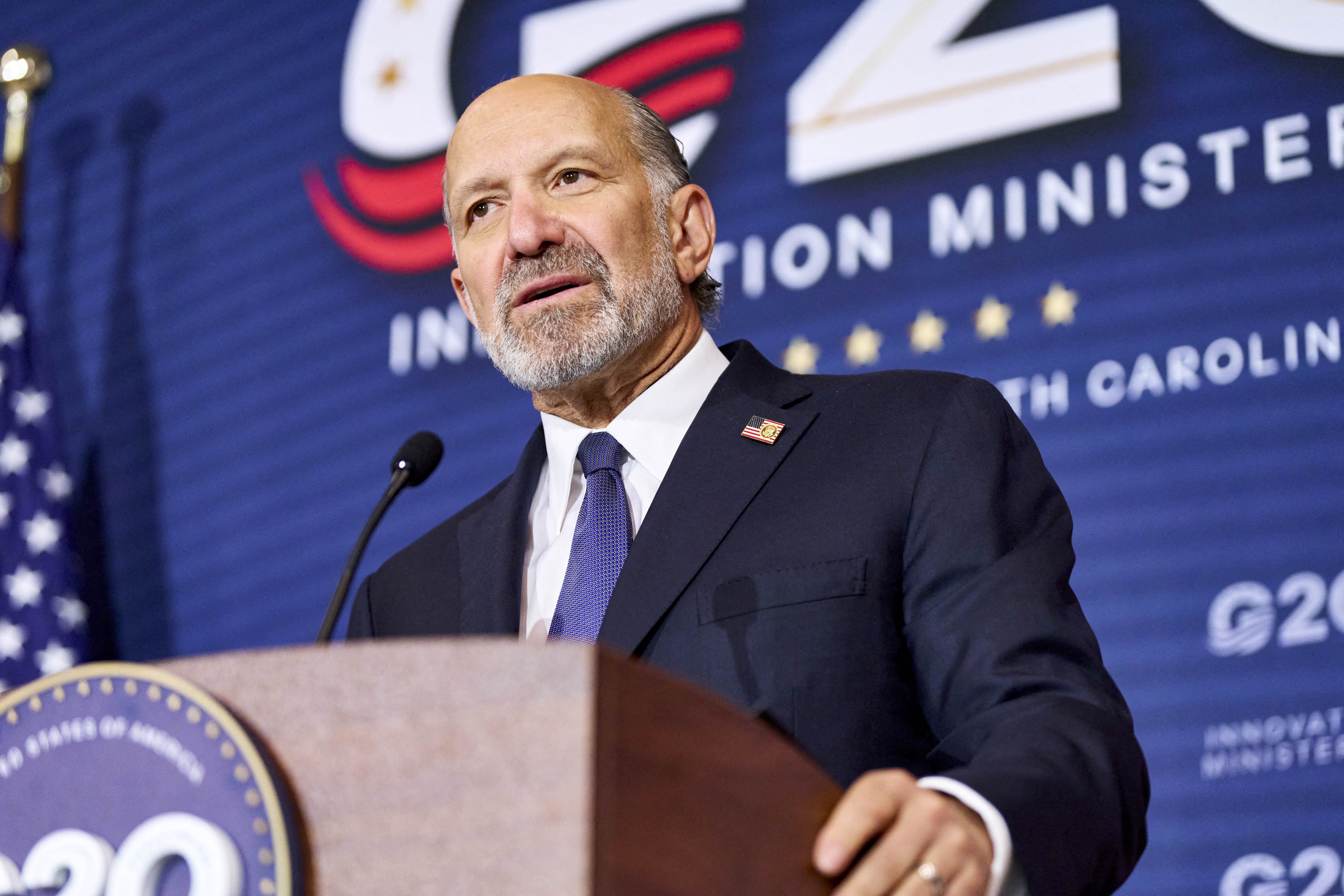
The latest measure comes as Commerce Secretary Howard Lutnick has faced criticism for failing to prevent Nvidia’s most advanced AI semiconductors from being diverted to China.
Treasury Secretary Scott Bessent blamed the Commerce Department for failing to blacklist Megaspeed, a Singapore-based company that identifies Nvidia as one of it’s “core partners” on its website. The New York Times reported that one of Megaspeed’s former top executives is Alice Huang, Jensen Huang’s mistress.
In a Nov. 13 interview with CNBC’s “Squawk Box,” Bessent said the Treasury was one of several agencies that had supported adding Megaspeed to the U.S. trade blacklist for months.
“But Commerce has the pen, and you will have to ask them about their internal process,” Bessent said.
Megaspeed has confirmed that Alice Huang left Megaspeed on Aug. 30, 2025, and “currently has no role with the company.”
“Megaspeed does not comment on Ms. Huang’s personal and private matters,” the company added in a statement to The Epoch Times on Nov. 15.
In response to Bessent’s criticism, President Donald Trump said Lutnick may have delayed putting Megaspeed on the threat list to avoid angering Beijing.
Trump said both men have “different viewpoints.”
“One wants to be friendly with China, and one wants to have a blow-up with China,” the president told reporters on Nov. 16.
Lutnick will testify before the Senate Banking Committee next month amid mounting scrutiny from lawmakers on both sides of the aisle.
Sen. Tim Scott (R-S.C.), chair of the committee, asked Lutnick to appear voluntarily for a Dec. 10 hearing.
“Given the Department of Commerce’s central role in issuing and enforcing export control regulations, your testimony before the Committee will be essential in our oversight of these efforts,” Scott said.
Scott also requested that Jensen Huang testify before the committee.
Several Democrats on the House Foreign Affairs Committee wrote a Nov. 9 letter to Lutnick demanding that the Commerce Department immediately stop exports of advanced AI chips to China amid national security concerns.
“You cannot claim to be protecting American leadership in artificial intelligence while allowing our most advanced technology to reach a strategic competitor. National security must come before corporate sales targets,” the letter reads.
Huang resigned as president, CEO, and board member at Nvidia on Nov. 12, days after admitting to infidelity. The New York Times reported that Huang may have had a relationship with Alice Huang, a business executive alleged to be a spy for the Chinese regime.
A petition called “Stand with Jensen” has been launched, urging the board to bring back Jensen Huang, “pending an independent investigation and clear evidence that his removal serves the company.”
As of Nov. 16 at 11:20 a.m., it has more than 181,000 signatures, including about 20 percent of Nvidia’s employees.