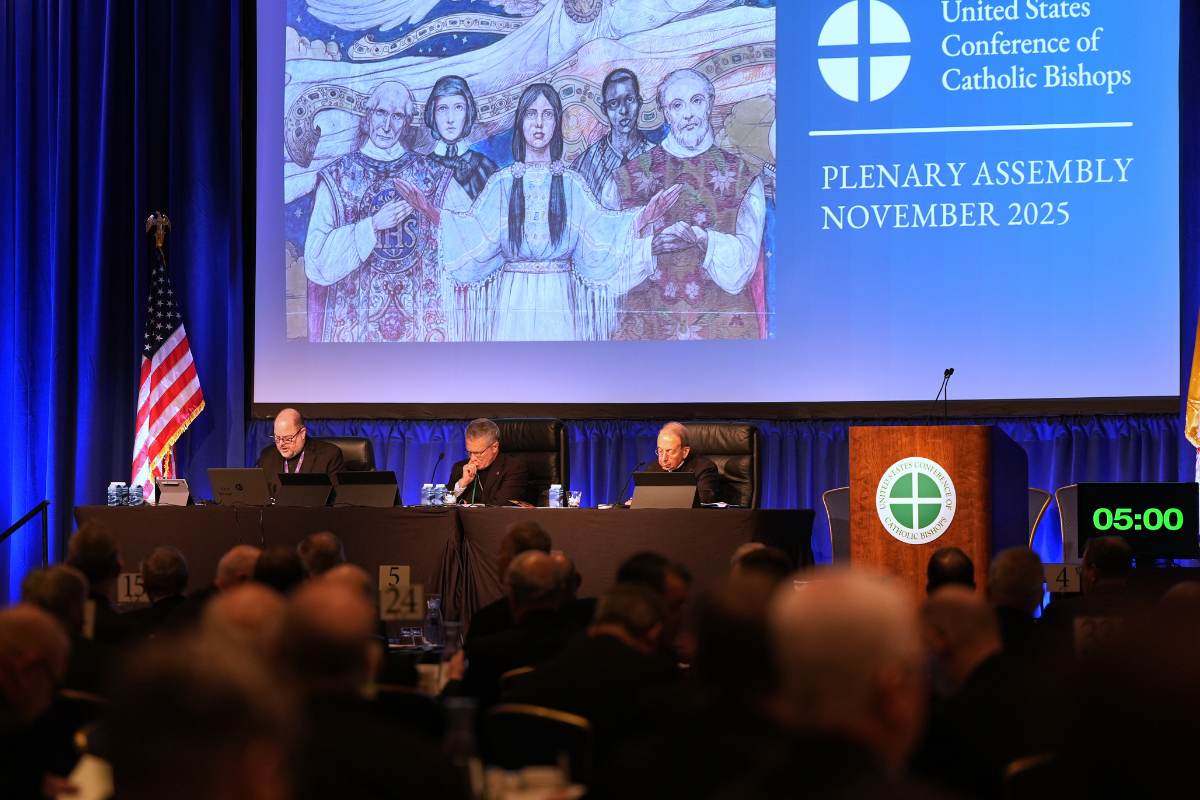

Catholic bishops in the United States, on Nov. 12, backed a decision to officially ban transgender-related procedures—including surgical and hormonal interventions—in Catholic health care facilities.
The U.S. Conference of Catholic Bishops (USCCB) voted to approve revisions to its Ethical and Religious Directives (ERDs) during its Fall Plenary Assembly in Baltimore.
The document explains how patients in the United States—including those who identify as transgender—are treated at thousands of Catholic health care facilities and by Catholic providers across the country.
The new wording to the ERDs for Catholic health care services was passed with a majority of 206 in favor, seven against, and eight abstentions.
When asked how quickly these new directives would be promulgated in the dioceses, Most Rev. James Massa, chairman of the Committee on Doctrine, said that he believed it would be posted on the bishops-only website in the coming days, “along with the instructions for making the ERDs particular law in your local church.”
According to the Catholic Health Association (CHA), one in seven patients in the United States is cared for by a Catholic hospital every day. Catholic health care encompasses more than 2,200 hospitals, care facilities, nursing homes, and related organizations.
The directive’s new wording says that Catholic heath care services “must not provide or permit medical interventions, whether surgical, hormonal, or genetic, that aim not to restore but rather to alter the fundamental order of the human body in its form or function.”
“This includes, for example, some forms of genetic engineering whose purpose is not medical treatment, as well as interventions that aim to transform sexual characteristics of a human body into those of the opposite sex (or to nullify sexual characteristics of a human body),” the directive adds.
It continues that as part of the mission of Catholic health care in serving those who are vulnerable, care providers must “mitigate the suffering of those who experience gender incongruence or gender dysphoria” by “employing only those means that respect the fundamental order of the human body.”
Fighting Gender Ideology
During the public discussion, Bishop Robert Barron of the Winona-Rochester diocese in Minnesota spoke in support of the revisions, particularly “with regard to the gender ideology.”
“I think it’s very important the Church makes a strong statement here,” he said, recounting that during a previous visit by bishops to the Vatican, then-Pope Francis told them at the end of a three-hour discussion to “‘fight gender ideology, which is repugnant to the Bible and to our tradition.’”
“I think in our culture, where this kind of neo-gnostic anthropology is on display—where the ’real me' is buried deep down inside, the body is there to be manipulated—if we can’t be a bulwark, we should at least be a countersign to that. So I think it’s very important that those changes are in these new ERDs,” Barron told fellow bishops on Nov. 12.
The CHA welcomed the revised ERDs and said it appreciated that the USCCB had incorporated input provided by the CHA during the revision process, leading to the finalization of the seventh edition of the ERDs.
“Regarding the new directives for the care of transgender persons, these changes are consistent with Catholic health care practice that does not allow for medical interventions that alter sexual characteristics absent an underlying condition,” the association said in a Nov. 12 statement.
“Catholic providers will continue to welcome those who seek medical care from us and identify as transgender. We will continue to treat these individuals with dignity and respect, which is consistent with Catholic social teaching and our moral obligation to serve everyone, particularly those who are marginalized.”
Francis DeBernardo, the executive director of New Ways Ministry, which advocates for LGBT inclusion in the Catholic church, called the adoption of the new guidelines “neither ethical nor religious.”
“Catholic social ethics has continually sought to promote justice and well-being for all persons. Ethical and religious guidelines should always be life–giving, not harmful, for people,” DeBernardo said in a statement on Nov. 13.
“The directives adopted by the USCCB will harm, not benefit transgender persons.”