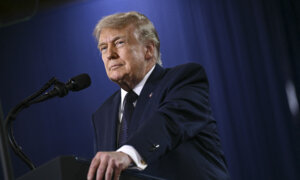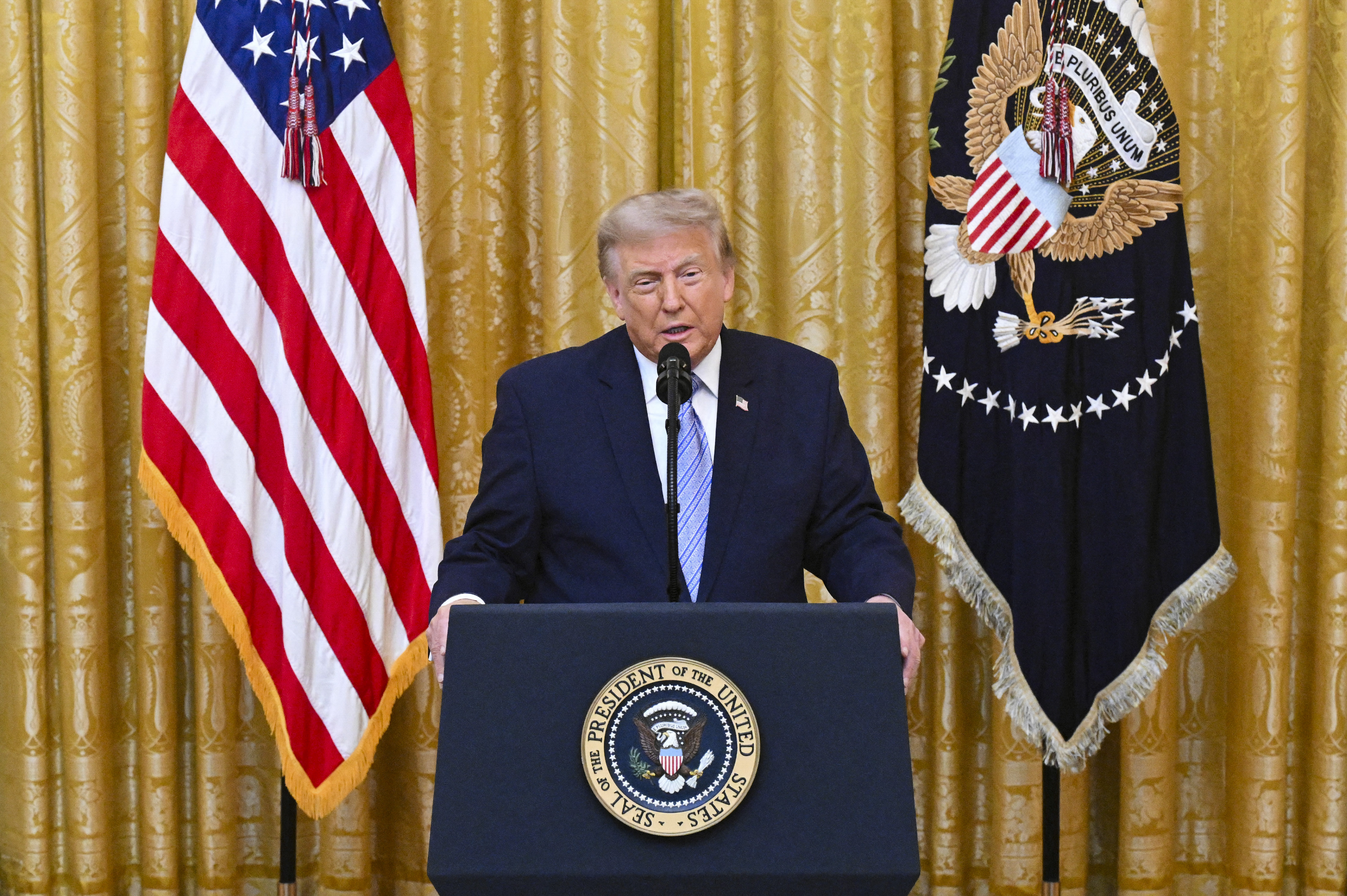

WASHINGTON—President Donald Trump, in a primetime address on July 16, announced the declassification of information that he said reveals large-scale Chinese hacking of American voter information.
“Over a period of years, starting during the 2020 election cycle, the People’s Republic of China carried out what is believed to be the largest compromise of election data in history, resulting in China’s illicit acquisition of 220 million U.S. voter files,” he said.
“That information includes names, addresses, phone numbers, political party preferences.”
An accompanying transparency report from the White House stated that China gained access to voter roll data across 18 states. One declassified document reviewed by The Epoch Times detailed a PRC-linked actor’s alleged use of commercial websites to acquire voter data from six U.S. states.
Trump further said that members of the intelligence community sought to suppress data on China’s attempt to influence American elections.
In addition, Trump detailed the findings of an investigation from the Department of Homeland Security that showed 278,000 noncitizens were registered on American voter rolls.
That analysis did not include blue states, according to Trump. Those states have fought against the Trump administration’s election security efforts, joining together in a lawsuit to prevent the president from obtaining voter information from them so as to compile a national list of eligible voters.
“These disclosures reveal an election system so broken and so vulnerable that no one can possibly defend it. It is not defensible,” Trump said.
“Tens of millions of voters’ data in 18 states have been bought, stolen, or hacked by China. Yet those responsible for sounding the alarm instead kept the information secret and hidden.”
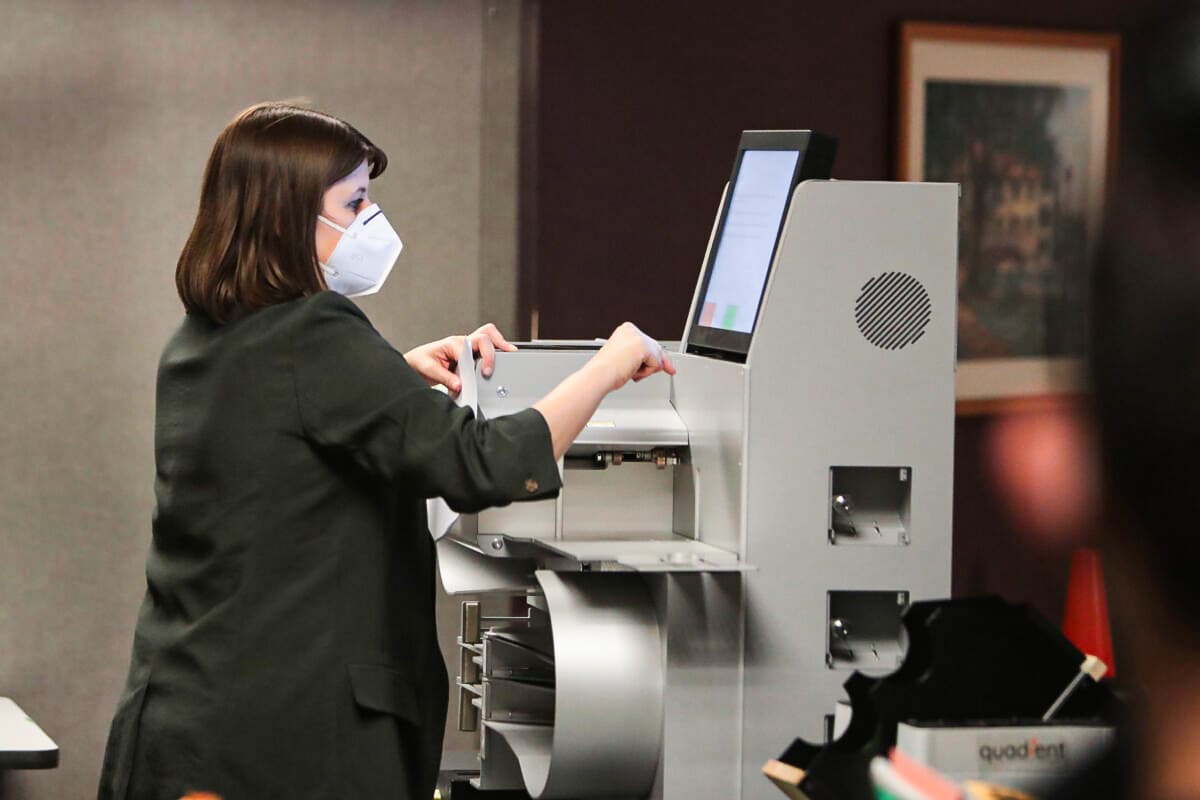
An election official collects data from absentee ballots from a voting machine in Milwaukee on Nov. 4, 2020. (Scott Olson/Getty Images)
The president outlined the declassification and release of multiple groups of documents, including assessments he said reveal “a cyber threat aimed at the very heart of our democracy”—vulnerabilities in election databases and other systems, including electronic voting machines.
“This data loss presents an unprecedented election security nightmare,” he said, referring to the information China obtained.
Citing reporting from the CIA, the president outlined what he described as a multi-year influence campaign by China during his first term aimed at American companies and journalists.
“The cover up of this colossal security breach is even more disturbing in light of the additional information showing that China engaged in other election related activities to undermine my first administration and our 2020 campaign,” Trump said.
“The Chinese government sought to identify U.S. journalists who had reported negatively on the U.S. president and pay them large sums of money to write more negative articles about him—as many as they could.”

Security guards stand behind a glass door at the Great Hall of the People in Beijing on March 6, 2024. (Greg Baker/AFP via Getty Images)
The president further said that intelligence reports outlining Chinese operations directed at the election were withheld from daily presidential briefings during his first term.
He said he was instructing the Justice Department, the Office of the Director of National Intelligence, and other top officials “to investigate how and why such crucial information was hidden, to fire those involved in the cover-up, and to file criminal charges if appropriate against these people.”
Trump did not confine his speech to U.S. elections.
He pointed to a CIA report that detailed former Venezuelan leader Nicolás Maduro’s bid to manipulate that country’s 2020 election.
The president ended his speech with an appeal to Congress to pass the SAVE America Act, election integrity legislation that has passed the House but continues to flounder in the Senate.
The legislation would require photo identification at the polls as well as proof of citizenship for those registering to vote.
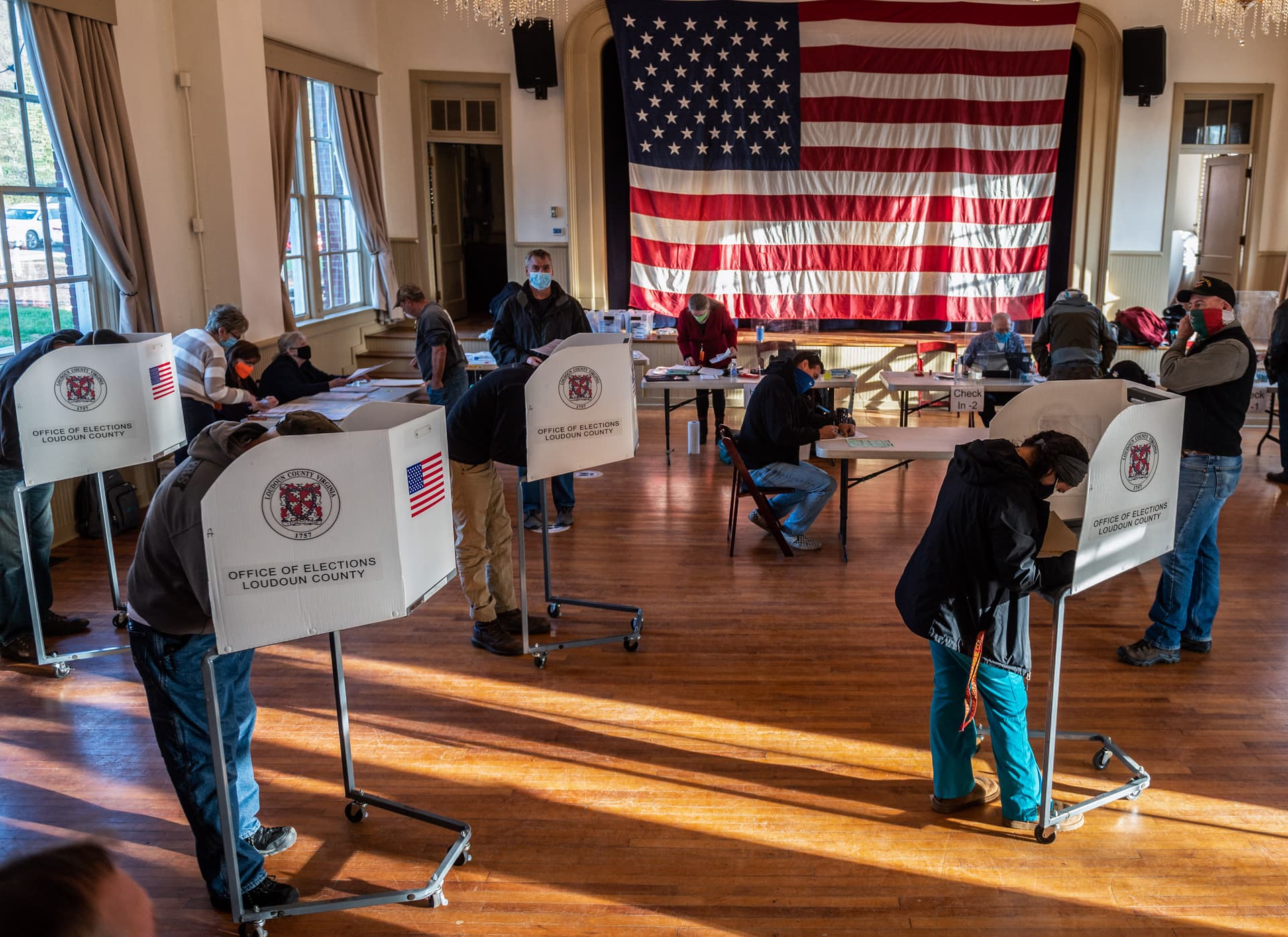
Voters cast their ballots on election day in Hillsboro, Va., on Nov. 3, 2020. (Andrew Caballero-Reynolds/AFP via Getty Images)
“No country could be great without fair and honest elections,” Trump said.
Earlier in the evening, Assistant Attorney General Harmeet Dhillon announced that the Department of Justice and the Department of Homeland Security were launching a website with a map outlining the Trump administration’s election integrity measures.
Trump delivered his speech less than four months ahead of what’s expected to be a tough midterm battle for Republicans.
Pushback and Support
Democrats immediately pushed back against the president’s claims.
Also on social media, Sens. Chris Van Hollen (D-Md.) and Ron Wyden (D-Ore.) similarly accused the president of seeking to affect the 2026 elections.
Senate Minority Leader Chuck Schumer (D-N.Y.) wrote on social media that Trump’s appeal on SAVE America would be lost on his colleagues, describing the bill as “dead on arrival in the United States Senate.”
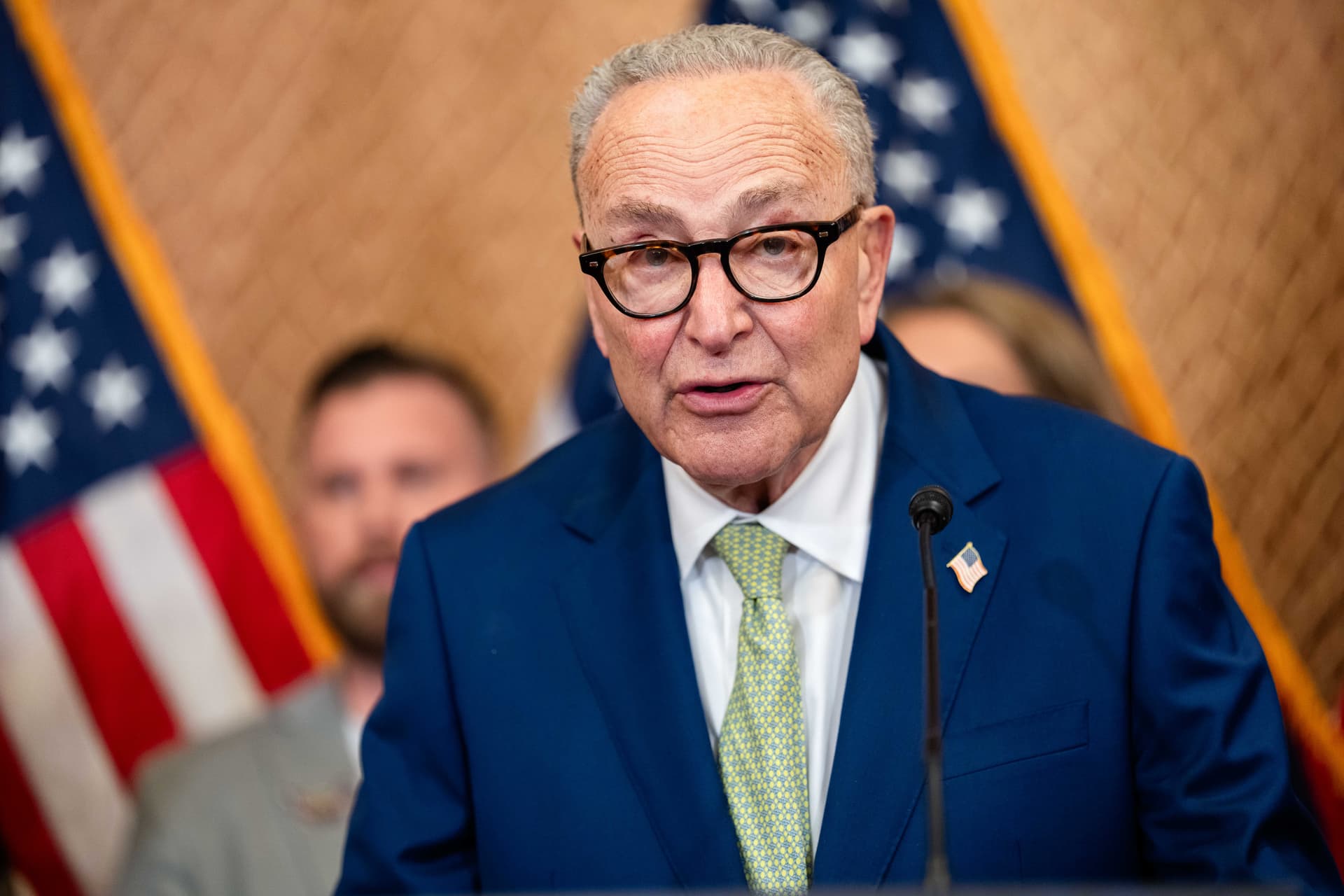
Senate Minority Leader Chuck Schumer (D-N.Y.) delivers remarks in the Capitol Building in Washington on July 15, 2026. (Aaron Schwartz/Getty Images)
On the other side of the aisle, Rep. Rick Crawford (R-Ark.), who chairs the House Select Committee on Intelligence, demanded that CIA Director John Ratcliffe “immediately take decisive action to hold all those involved at the CIA accountable for these egregious betrayals of the American people’s trust,” vowing that his committee would seek to backstop that push for accountability.
Rep. Austin Scott (R-Ga.), a member of the intelligence committee, wrote on social media that “the Chinese Communist Party is one of the greatest adversaries of the United States. Their efforts to influence our elections are apparent and we will not tolerate it.”
Rep. Ben Cline (R-Va.), a member of the intelligence committee and the House Budget Committee that advanced a budget reconciliation framework earlier in the day, wrote on social media that the reconciliation resolution gained his support “because it provides the strongest path forward to passing the SAVE America Act.”
“Americans deserve confidence that our nation’s elections are safe and secure from foreign interference, and that only American citizens are voting in American elections,” he wrote.
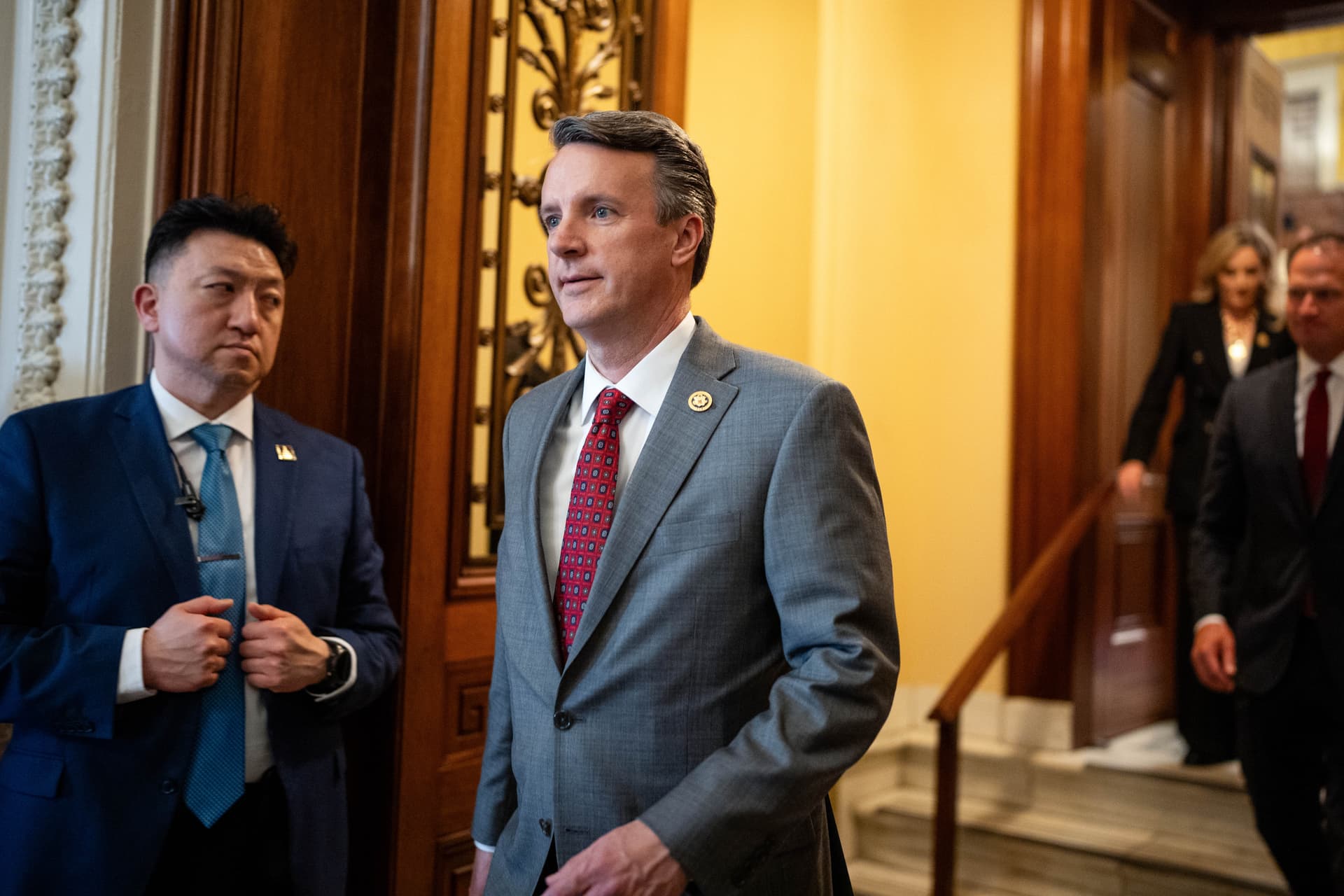
Rep. Ben Cline (R-Va.) on Capitol Hill in Washington on April 16, 2024. (Andrew Harnik/Getty Images)
Minutes before the speech, former Vice President Kamala Harris took to social media to defend the outcome of the race that elevated her to the vice presidency.
“The 2020 election was not stolen,” she wrote.
Ahead of the speech, Sen. Bernie Moreno (R-Ohio) wrote on social media that he had been briefed on its contents.
“This may be the most important Oval Office address since the Cuban Missile Crisis. The time for complacency with China is over,” Moreno wrote.