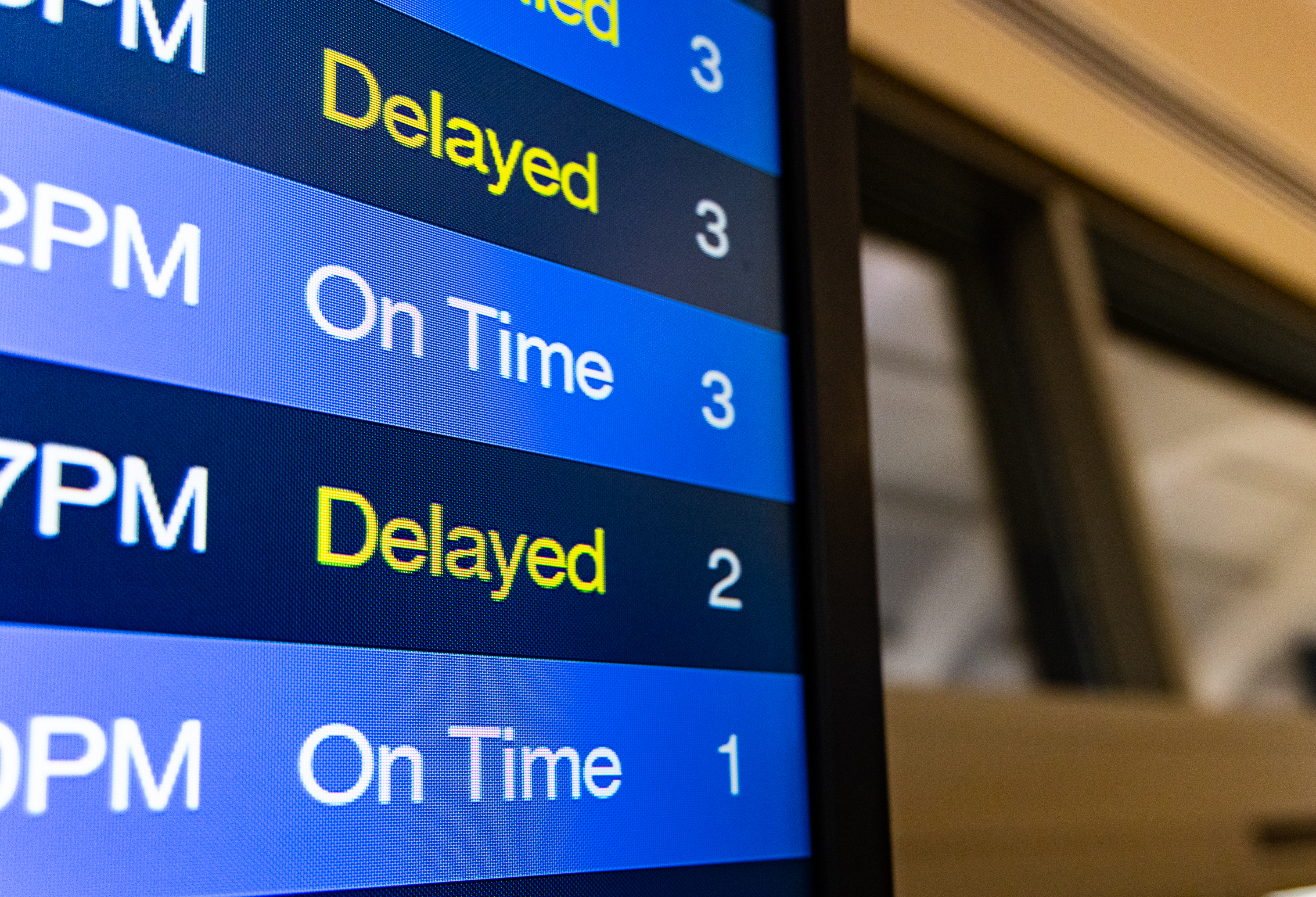

The Trump administration has formally withdrawn a Biden-era proposal that would have required airlines to compensate passengers for disrupted flights.
In a notice published in the Federal Register on Nov. 17, the U.S. Department of Transportation (DOT) said that pulling back the proposed rule is consistent with President Donald Trump’s efforts to roll back “overbearing and burdensome” government regulations.
“The Department concludes that regulatory action requiring specific services and compensation for significant flight disruptions would result in unnecessary regulatory burdens, does not correspond with the policies and priorities of the Department and Administration,” the Transportation Department stated in the notice.
The Biden administration issued its final version of the compensation rule in December 2024. It advanced to the final approval stage, with public comments accepted through February of this year, but was never enacted.
Under the now-rescinded proposal, travelers would have been entitled to automatic cash compensation when airlines were responsible for delays. Passengers experiencing domestic delays of at least three hours would have received up to $300, while delays exceeding nine hours would have qualified for payments up to $775.
The rule also would have required airlines, including U.S. airlines and foreign airlines serving U.S. destinations, to adopt plans to provide cash compensation as well as reimbursement for expenses such as meals and hotel accommodations for travel disruptions when airlines were responsible. These requirements would not have applied to disruptions caused by bad weather, air traffic control failures, or other events outside an airline’s control.
Airlines and aviation associations strongly opposed the measure. Industry groups, including Airlines for America and the International Air Transport Association, argued that mandatory compensation would significantly increase operating costs, estimating an annual burden of $5 billion or more. They contended that such expenses would ultimately be passed on to passengers through higher fares.
Consumer advocacy groups, meanwhile, argued that voluntary commitments by airlines to help travelers during airline-caused disruptions are insufficient, and that mandatory standards were needed to make sure that travelers get meaningful compensation.
The DOT sided with the airlines. In the Nov. 17 notice, the department said the nation’s 10 largest passenger carriers have “strong incentives to take care of passengers” during major disruptions and “already do so voluntarily.”
According to the agency, four of the 10 largest U.S. airlines currently include compensation for controllable cancellations and delays in their customer service plans, typically in the form of travel credits, vouchers, or frequent flyer miles. Existing federal rules already require airlines to fully refund passengers for canceled flights if they don’t choose to rebook the flight.
“Some airlines may even offer compensation to accommodate passengers on a case-by-case basis to encourage loyalty despite not being obligated to do so,” the DOT stated, adding that imposing a uniform compensation standard would not allow carriers to compete on the level of service and reimbursement they choose to provide.
A group of 22 Senate Democrats defended the proposal in a letter sent earlier to Transportation Secretary Sean Duffy, urging him to reconsider the withdrawal.
“This is a common-sense proposal: when an airline’s mistake imposes unanticipated costs on families, the airline should try to remedy the situation by providing accommodations to consumers and helping cover their costs,” the senators wrote.