

WASHINGTON—The United States and Iran have tentatively agreed upon a 60-day memorandum of understanding to extend their current ceasefire and enable further negotiations on Iran’s nuclear program, a U.S. government source has confirmed with The Epoch Times.
The deal is awaiting final sign-off by U.S. President Donald Trump, the source said on May 28. Axios was first to report the development.
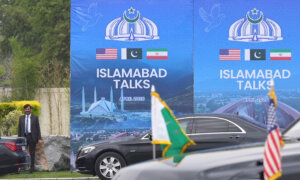
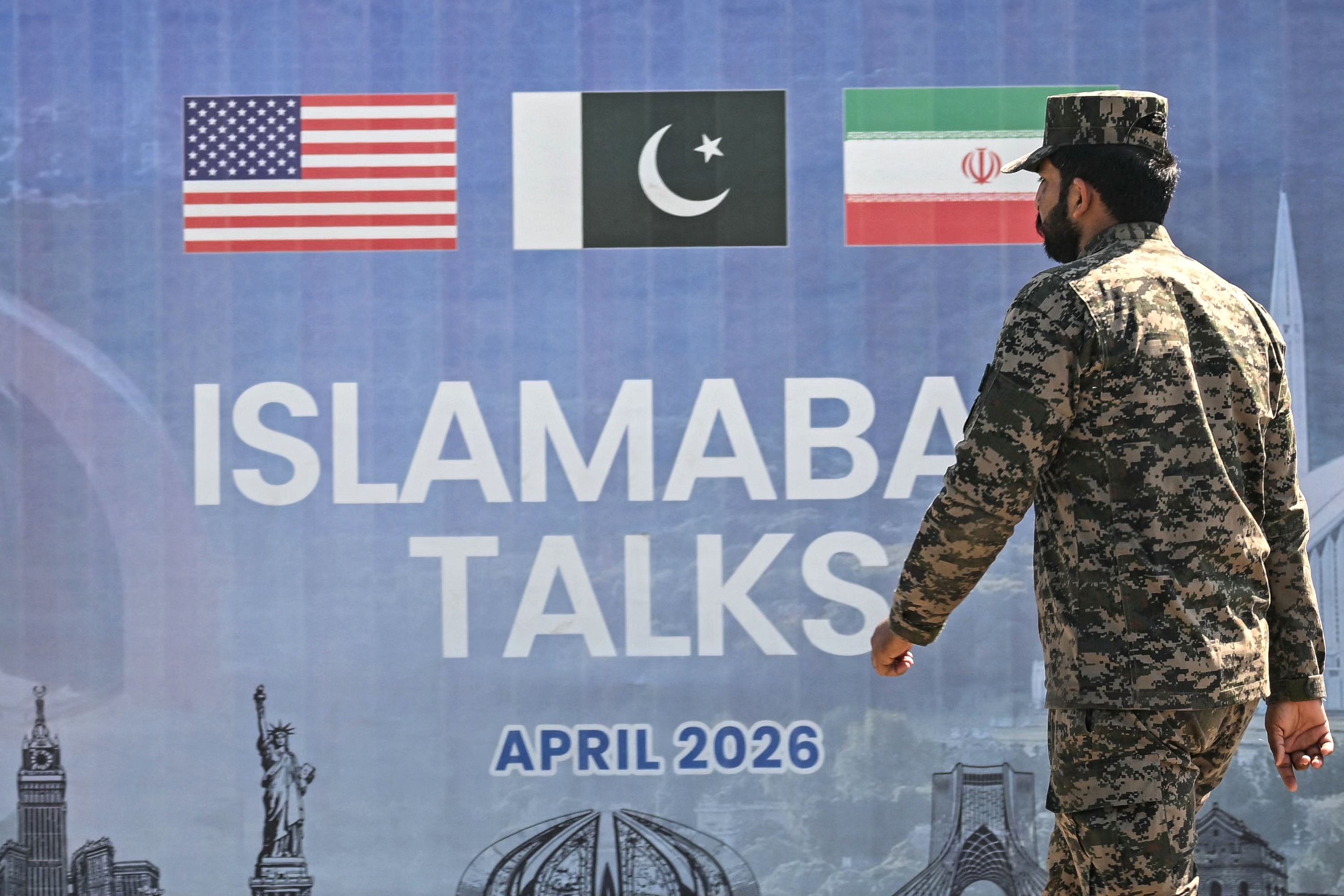
The understanding was reached after Trump directed offensive military actions against Iran on Feb. 28, leading to 38 days of large-scale fighting before Washington and Tehran agreed to a ceasefire on April 7.
Tensions have remained high despite the ceasefire, and U.S. and Iranian forces have traded fire on several occasions, including multiple rounds overnight on May 27.
The U.S. Central Command said the latest Iranian actions, including drone launches targeting the Strait of Hormuz and missile launches targeting Kuwait, represent “egregious ceasefire violations.”
Tehran, by contrast, has chafed at an ongoing U.S. blockade of Iranian ports, which Trump initiated just days after the April 7 ceasefire.
The U.S. Central Command on May 28 reported that U.S. forces had redirected 111 ships in connection with the blockade operation. U.S. forces have also employed disabling fire on multiple Iranian cargo vessels.
Nuclear Concerns Fuel Standoff
Trump has vowed to prevent Tehran from obtaining a nuclear weapon, and cited the threat in his justifications for launching combat operations.
Members of the Trump administration, including Secretary of War Pete Hegseth, have described recent U.S. combat actions as an effort to dismantle the military shield Iran could use to deflect attacks during a potential rush toward a nuclear weapon.
Iranian leaders have repeatedly said the country’s nuclear program is peaceful, although international observers remain skeptical, given its progress thus far.
After Trump pulled out of the Iran nuclear deal in 2018 and initiated a “maximum pressure” campaign of new economic sanctions, Tehran began increasing its overall uranium stockpile and directing higher levels of enrichment purity, closing the distance to weapons-grade nuclear fuel, according to the International Atomic Energy Agency.
Last year, Trump ordered U.S. forces, including B-2 Spirit stealth bombers, to conduct a set of strikes on Iran’s nuclear facilities at Isfahan, Fordow, and Natanz.
In the recent negotiations, Trump has focused on how to dispossess Iran of its stockpile of highly enriched uranium, which may still be buried at the facilities targeted last year.
At a May 27 Cabinet meeting, Trump dismissed the idea of allowing Iran to transfer its uranium stocks to China or Russia, which are both nuclear-armed states.
“I wouldn’t be comfortable with that,” the president said.
Trump has instead offered three options: Iran turns its uranium stockpile over to the United States, destroys it in place, or otherwise agrees to destroy it under the supervision of nuclear oversight monitors.
Throughout recent talks, Iranian officials have said a nuclear program is their sovereign right and have expressed a desire to retain some domestic enrichment capacity in the final outcome.
Other Issues Weigh on Negotiations
Several other factors could pose a challenge to Washington and Tehran reaching the 60-day memorandum of understanding and to advancing a lasting resolution to the current Middle East standoff.
Over the weekend, Iranian Foreign Ministry spokesman Esmail Baghaei said the emerging memorandum of understanding would prioritize the end of hostilities and of the U.S. blockade of Iranian ports before opening the way to later stages of negotiations to address Iran’s nuclear program and other topics of mutual concern.
Iranian forces began attacking commercial shipping in the Strait of Hormuz and the adjoining Persian Gulf as part of their overall response to the U.S. and Israeli attacks that began on Feb. 28. Amid the ceasefire and U.S. blockade, Tehran has moved to formalize Iranian control over transit of the strait by announcing a new toll administration.
The U.S. Treasury Department on May 28 issued new economic sanctions against Iran’s newly formed toll office.
Baghaei also indicated that the emerging memorandum of understanding would open the way for an eventual easing of sanctions on Iran.
During the May 27 Cabinet meeting, Trump said he is not considering immediate sanctions relief, but he indicated that he is open to the possibility of releasing frozen Iranian assets down the line.
“We have control of money that they claim is theirs,” he said. “We‘ll keep control of that money. When they behave properly, and when they do what’s right, we’ll let them have their money.”
Iran’s sponsorship of internationally-designated terrorist groups, particularly Hezbollah in Lebanon, could also add to the stakes of negotiations. In an April 1 primetime address, Trump said the joint U.S.–Israeli military operations against Iran were designed to cripple Tehran’s terror sponsorship.
As the United States and Israel launched strikes on Iran, Hezbollah began a new round of attacks targeting Israel. In turn, Israel’s aerial forces intensified strikes across Lebanon, and Israeli ground forces already occupying southern areas of the country ramped up ground patrols and raids.
Israeli forces continued striking Lebanon even after the United States and Iran entered into the April 7 ceasefire, drawing condemnations from Tehran. The United States subsequently brokered a parallel ceasefire for Lebanon, although fighting there has continued.