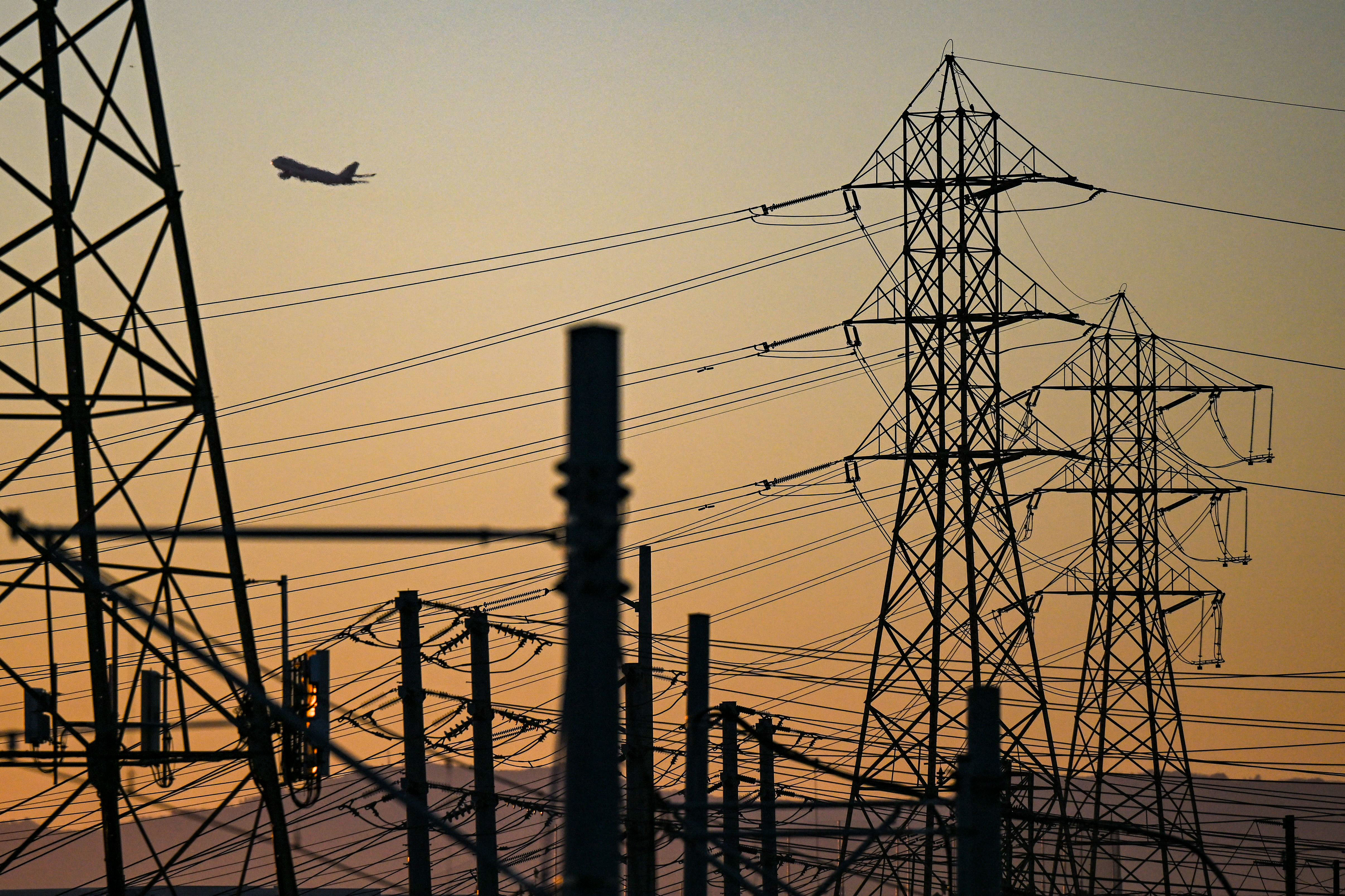

PJM Interconnection, which manages the electricity system serving 67 million people in 13 states and the District of Columbia, has issued emergency energy alerts amid expectations that hot summer weather will drive up power demand, the company said in a June 22 update.
The 13 states are Delaware, Illinois, Indiana, Kentucky, Maryland, Michigan, New Jersey, North Carolina, Ohio, Pennsylvania, Tennessee, Virginia, and West Virginia.
PJM issued two alerts: a maximum generation alert and a load management alert.
“PJM issues a Maximum Generation Emergency Alert a day in advance of conditions that may require all generators to operate at their maximum output capability,” the update stated. “This alert does not require any action from customers.”
PJM said the generation alert is directed at transmission and generation owners, who then determine whether any maintenance or equipment testing can be deferred or canceled. By deferring maintenance, “the units stay online and continue to produce energy that is needed,” the regional transmission organization stated.
The alert also acts as a notification for neighboring regions receiving electricity from PJM-covered areas that such exports could be curtailed.
The load management alert notifies the public that PJM may declare load management action, including emergency demand response programs, if necessary.
These programs pay customers who reduce their electricity usage during emergencies.
PJM is expecting electric loads to hit 160,000 megawatts on June 23, exceeding the company’s summer forecast peak energy use of 154,000 megawatts.
On June 19, PJM issued a hot weather alert for its entire service area between June 22 and June 25 in response to an expected heat wave. Temperatures are forecast to exceed 90 degrees Fahrenheit for an extended period, driving up electricity demand, it said.
A June 23 alert issued by the National Weather Service predicts an “extremely dangerous heat wave” this week in the eastern half of the United States.
“Extreme HeatRisk impacts will expand from the Midwest into the Mid-Atlantic today. This level of HeatRisk is known for being rare and/or long duration with little to no overnight relief, and affects anyone without effective cooling and/or adequate hydration,” the alert stated.
“High temperatures in the 90s to 100s and lows in the 70s to low 80s will break numerous records over the next several days. Dense urban centers like: Columbus, OH; Washington, DC; and Philadelphia, PA will experience especially significant heat impacts.”
On May 31, the Department of Energy issued an emergency order directing PJM to continue running two fossil fuel power generation units beyond their scheduled end dates to ensure the reliability of the electricity supply.
The units were scheduled to be retired by May 31. The order was issued “due to resource adequacy concerns given the timing of the retirement of the generation units coinciding with sustained increased energy demand,” it stated.
Blackout Risks
PJM’s alerts follow a warning issued by the North American Electric Reliability Corporation (NERC) in a report last month that some parts of the United States could face difficulties in meeting electricity demand this summer.
Several areas of the country have been classified as facing an “elevated risk” of supply disruptions for the June through September period, including parts of Louisiana, Texas, New Mexico, Arizona, California, Illinois, and Iowa.
The high-risk determination was made based on several factors, including potentially low solar or wind energy conditions that can result in lower electricity supplies.
Michelle Bloodworth, CEO of America’s Power, a partnership of industries involved in producing electricity from coal, said the NERC report reveals that the U.S. grid has become “increasingly reliant on weather-dependent sources of electricity” such as solar and wind, putting “one-third of the country at elevated risk of blackouts this summer.”
During a conference earlier this month, PJM CEO Manu Asthana raised concerns about resource adequacy that could negatively impact electricity supplies, PJM said in a June 6 post.
Asthana said that thermal generators are now retiring at a rapid pace “due to certain government and private sector policies, as well as economic pressures.” Such retirements are “at risk of outpacing the construction of new resources,” he said.
PJM’s interconnection queue is primarily made up of “intermittent and limited-duration resources” such as wind and solar power, Asthana said.
“Given the operating characteristics of these resources, we need multiple megawatts of these resources to replace one megawatt of thermal generation,” he said.