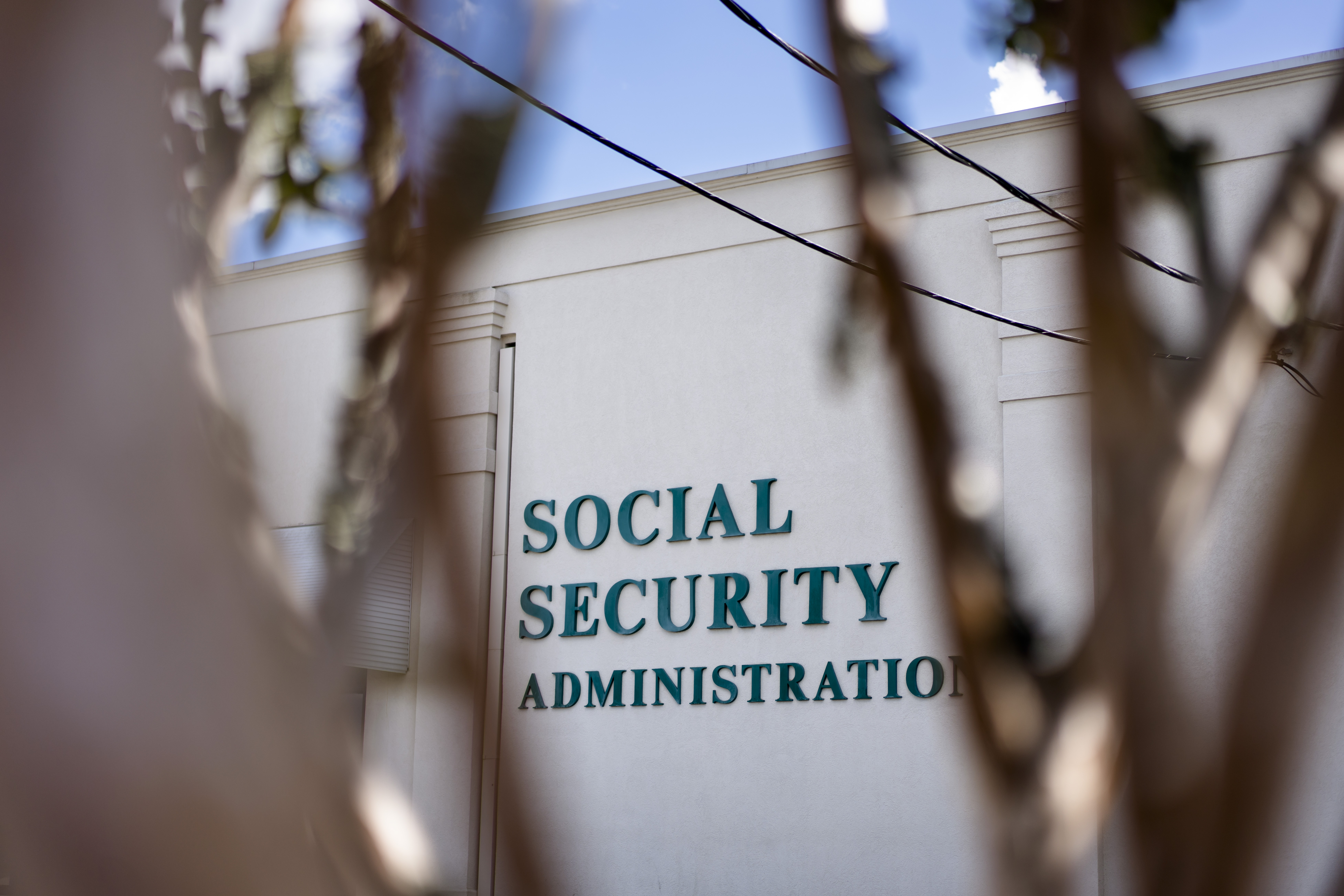

An estimated 21.8 million senior citizens in the United States make ends meet solely using their Social Security funds, advocacy group The Senior Citizens League (TSCL) said in a June 20 statement.
There were more than 68 million Social Security beneficiaries as of 2024, according to data from the Social Security Administration (SSA).
“Almost two-thirds of seniors who completed the survey said they were dissatisfied with the amount they receive from their monthly Social Security checks,” the TSCL stated.
Ninety-four percent said the 2025 cost-of-living adjustment (COLA) of 2.5 percent was too low, and their benefits did not keep pace with economic inflation. COLA is an annual adjustment to Social Security payments made to ensure that benefits keep pace with inflation. The SSA announces the COLA every October, and it takes effect in the following year.
Moreover, many believe that last year’s actual inflation was considerably higher than the government’s estimate. The Bureau of Labor Statistics estimates 2024 inflation to be 2.9 percent.
Nearly all (95 percent) said that reforming Social Security and Medicare should be taken as a top priority by the federal administration and Congress. A majority were in favor of “calculating the COLA with an inflation index that better represents seniors’ economic experiences.”
The survey was conducted from January through March among 3,050 American seniors ages 62 and older who were eligible for their Social Security benefits. Out of those who took the survey, 1,920 provided enough data to use in the study.
According to the survey report, the median U.S. senior lives on $1,000 to $2,000 a month. This includes 13 percent of seniors living on less than $1,000 a month.
“TSCL estimates that approximately 7.3 million American seniors survive on less than $1,000 a month, which would put them below $15,650 for the year, the 2025 Federal poverty line for a household of one. TSCL also estimates that another 24.5 million survive on between $1,000 and $2,000,” the report stated.
“This is especially challenging for seniors who rent, like 36 percent of those who participated in this study. The average U.S. rent for a one-bedroom apartment is $1,327 as of May 2025.”
Nearly 40 percent of seniors were found to be dependent on Social Security “for the entirety of their income.” About 73 percent depend on these benefits for more than half their income.
“Seniors who live on only Social Security are much more likely to live on extremely meager incomes. In total, 20 percent of seniors who depend on Social Security for 100 percent of their income live on $1,000 or less per month, compared to 13 percent of seniors overall,” the report stated.
The survey found that many seniors claimed their benefits early at the cost of penalties.
People who wait for retirement, at ages 66 to 67, get benefits based on their historical earnings. However, those who start claiming benefits as early as age 62 will suffer a permanent reduction in monthly receipts of up to 30 percent.
“About 68 percent of seniors start claiming their Social Security benefits before retirement age. A plurality, 42 percent, claim their benefits as soon as they are eligible in exchange for a 30 percent reduction,” the report stated.
The biggest reason seniors choose to claim their benefits early is financial pressure, according to the report.
One-third of the respondents reported taking benefits early because they were unable to meet living expenses, such as groceries or rent, without these benefits. In addition, 22 percent said they took benefits early to handle a medical emergency or deal with a medical issue.
Calculation Reforms
Most survey participants advocated reforms in COLA calculation, with the popular opinion being to use an inflation index representing their economic experiences rather than solely relying on urban wages.
At present, COLA is calculated using the Bureau of Labor Statistics’ Consumer Price Index for Urban Wage Earners and Clerical Workers, based on the spending patterns of the named groups in the United States. TSCL advocated switching the COLA calculation to the Bureau of Labor Statistics’ Consumer Price Index for the Elderly, based on the spending patterns of Americans ages 62 and older.
“The data in this study shows what seniors have been telling TSCL for years: Social Security checks aren’t keeping up with inflation,” TSCL Executive Director Shannon Benton said.
“If four in five seniors think inflation was higher than the government reported in 2024, maybe we should stop questioning their experiences and start questioning why the COLA is failing to measure them.”
Benton warned against any move to cut Social Security. Given that it makes up at least half of the incomes earned by almost three-quarters of seniors, cuts to the program would “push millions of hard-working Americans further into poverty, robbing them of their right to retire with dignity.”
According to data from the SSA, before 2020, the last time there was a COLA adjustment of 5 percent or more was in 2008, when COLA was 5.8 percent. After 2020, COLAs of 5.9 percent and 8.7 percent were implemented in 2021 and 2022, respectively.
In 2023, COLA dropped to 3.2 percent, moving down to 2.5 percent in 2024, with the same rate implemented this year as well.
In a June 11 statement, TSCL predicted COLA for 2026 to be 2.5 percent.
If inflation were to rise in any significant manner over the coming months, for instance, because of Trump administration tariff policies, COLA for next year could be pushed up as well.
$2,000 Checks, Fund Depletion
The TSCL survey comes at a time when the average Social Security payment for retired workers has hit $2,000 per month for the first time ever. According to SSA data, the average monthly payment stood at $2,002.39 in May, up by 4.5 percent from a year ago. Retired workers make up 75 percent of Social Security beneficiaries.
The average benefit for all individuals—including retired and non-retired people—was $1,857.75 last month.
Meanwhile, Social Security funds are at risk of being depleted earlier than expected.
The 2025 Old-Age, Survivors, and Disability Insurance program trustees report, published on June 18, revealed that the cost of the Social Security program started exceeding its income in 2021. The funds are expected to be depleted by 2034, one year earlier than last year’s projections.
After this date, the SSA will be able to pay beneficiaries only 81 percent of the scheduled benefits.
“The Trustees recommend that lawmakers address the projected trust fund shortfalls in a timely way in order to phase in necessary changes gradually and give workers and beneficiaries time to adjust,” the report stated.
“Implementing changes sooner rather than later would allow more generations to share in the needed revenue increases or reductions in scheduled benefits.”
In February, a group of lawmakers introduced the Social Security Expansion Act to tackle the issue, according to a Feb. 7 statement from the office of Rep. Val Hoyle (D-Ore.).
The legislation seeks to ensure that Social Security remains fully funded for the next 75 years by applying the Social Security payroll tax to all annual incomes higher than $250,000. The bill also aims to boost benefits by $2,400 per year.