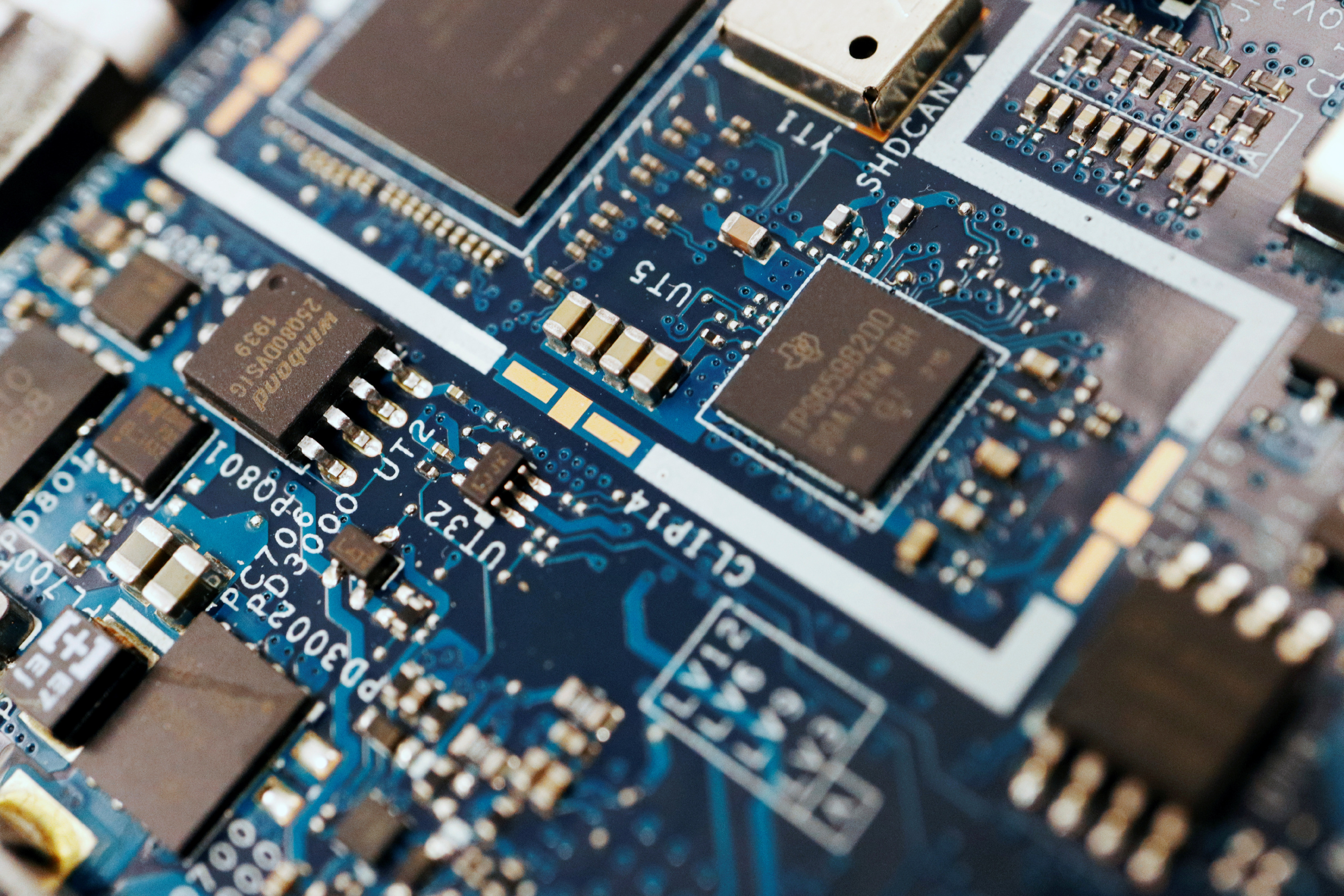

President Donald Trump announced on Aug. 6 that tariffs on semiconductors and computer microchips will be as high as 100 percent—but indicated that companies could avoid the tariffs by committing to building facilities and making products in the United States.
“We'll be putting a tariff of approximately 100 percent on chips and semiconductors,” Trump told reporters. “But if you’re building in the United States of America, there’s no charge, even though you’re building and you’re not producing yet.”
It’s unclear when the tariffs will go into effect.
In a lengthy Aug. 5 interview hinting at the announcement on CNBC’s “Squawk Box,” Trump said increasing U.S. manufacturing of microchips was the next major push his administration would undertake.
Increasing U.S. independence over the manufacturing of the chips and semiconductors that power the modern world—a field currently dominated by foreign nations and China, which controls much of the world’s supply of rare earth metals—is a bipartisan goal.
During President Joe Biden’s tenure in office, Congress passed the CHIPS and Science Act, which encouraged the production of these components in the United States. The bill passed the Senate with the support of most Democrats and 17 Republicans and was signed into law by Biden in August 2022.
It authorized about $280 billion in funding for domestic research and manufacturing of semiconductors in the United States. The bill dedicated about $52.7 billion towards supporting and funding domestic manufacturing.
Trump’s threat to increase tariffs to 100 percent on these components could raise a near-existential threat to tech companies that don’t manufacture in the United States and aligns with Trump’s larger goal of decreasing U.S. reliance on foreign supply chains.
The president made the remarks at about the same time that he announced a $100 billion deal with Apple, the California-based tech company that, for years, has manufactured its devices in East Asia.
Now, Trump told reporters, tech companies like Apple “are coming home.”
Flanked by Apple CEO Tim Cook, Trump announced from the Oval Office on Aug. 6 that the $100 billion investment—on top of more than $500 billion that the company has dedicated to building in the United States over the coming four years—would “directly create more than 20,000 brand new American jobs and many thousands more at the Apple suppliers like Corning, Broadcom, Texas Instruments, and Samsung.”
Trump called Apple’s new investment “a significant step” toward his long-standing goal of bringing iPhone production to the United States.
Speaking to reporters about his proposed semiconductor tariffs, Trump cited Apple as an example for others in the tech field to follow.
“We’re going to treat them really well,” he said.
“They’re all coming home, and we want them to come home. They have to come home. We’re going to be putting a very large tariff on chips and semiconductors. But the good news for companies like Apple is if you’re building in the United States or have—without question—committed to build in the United States, there will be no charge.”
Discussing both the semiconductor tariffs and proposed pharmaceutical tariffs during an April 13 interview with ABC’s “This Week,” Commerce Secretary Howard Lutnick explained that the goal is to ensure that the United States has a strong industrial base for producing modern necessities.
“We can’t be beholden and rely upon foreign countries for fundamental things that we need,” Lutnick said.
Emel Akan and Andrew Moran contributed to this report.